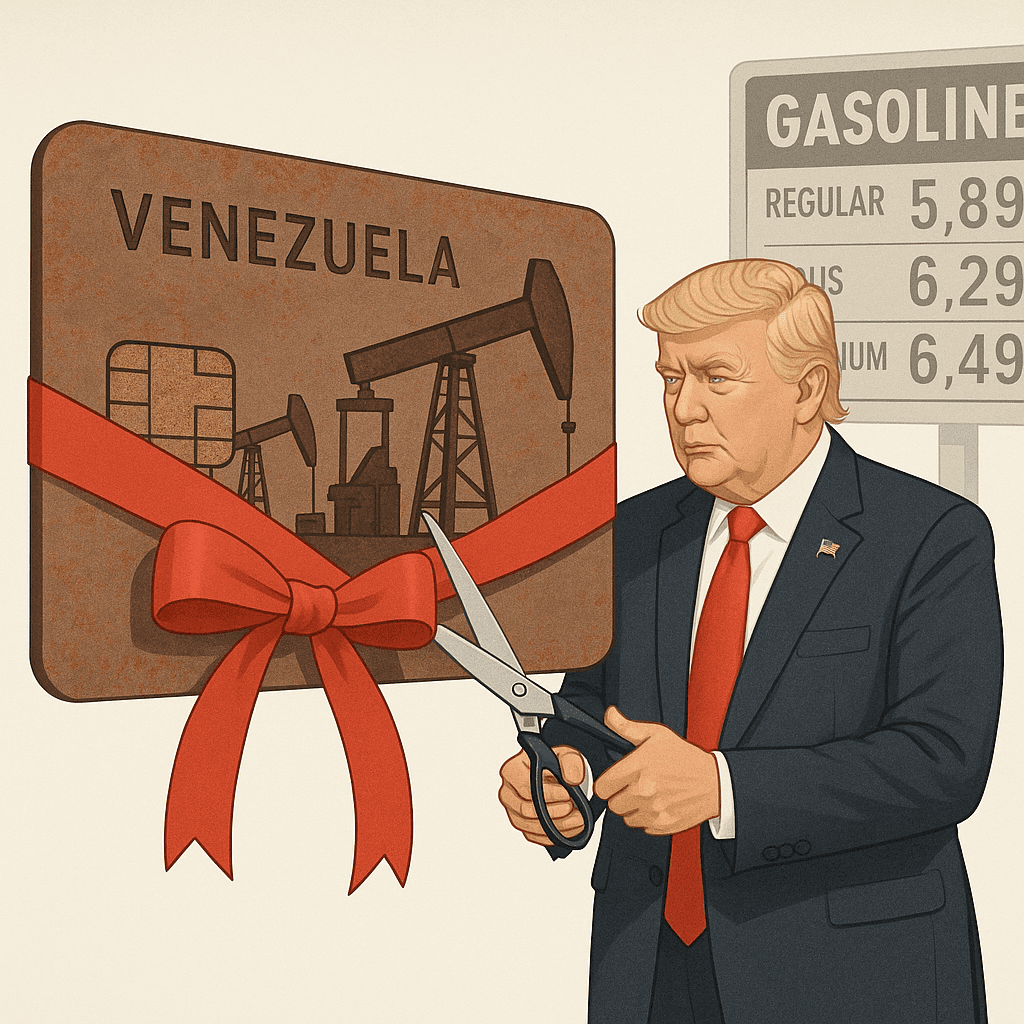
Donald Trump has unveiled what PBS politely describes as a deal "giving U.S. access to vast oil reserves in Venezuela," and what Trump himself has branded with a more traditional slogan: "to the victor belong the spoils." On paper, Washington now holds effective control over more than 65 billion barrels of Venezuelan crude, a 55% output share, and the political conviction that calendars are a liberal hoax.
The White House is marketing the move as a real-time brake on gas prices driven higher by the Strait of Hormuz closure during the U.S.-Israel war on Iran. Energy analysts, including Amy Myers Jaffe cited by PBS, keep pointing to the calendar instead. The relief, they say, will arrive on the same schedule as all other campaign miracles: sometime after the next election, assuming Congress keeps appropriating money, investors keep pretending not to read the risk disclosures, and someone eventually remembers to fix the refineries.
In crypto, this would be a "future utility token" backed by an asset that is technically real but functionally imaginary. In Washington, they call it Tuesday.
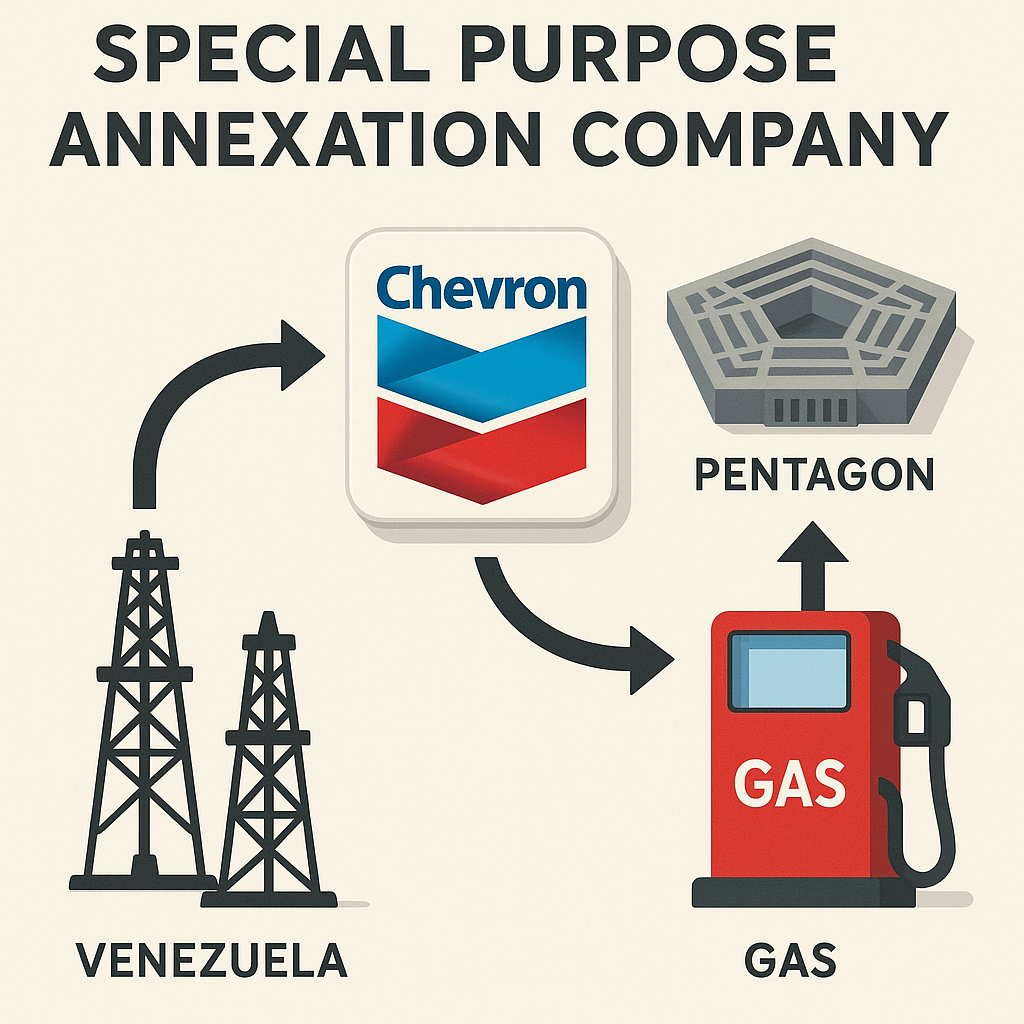
Structurally, the United States and a to be named private partner will operate 17 Venezuelan oil fields through a new company that officials say would instantly rank second only to Saudi Aramco in proven reserves. It is, in financial terms, a textbook SPAC: Special Purpose Annexation Company, complete with projections, disclaimers, and a slide titled "Please Ignore Geology and Congress."
The business model is admirably concise.
- Step 1: Acquire majority control of another country’s subsoil using emergency authorities.
- Step 2: Use equity and cost price rights to top up the Strategic Petroleum Reserve and fuel the Pentagon.
- Step 3: Ask voters to grade you on the price of regular unleaded by Labor Day while the first engineering team is still looking for replacement gaskets.
As Al Jazeera notes, Trump has already told rally crowds that he has "paid for the war" with what has been taken out of Venezuela and that this is the "old fashioned way." Historians confirmed that yes, the method is ancient. So is the practice of selling it at a discount to suburban swing voters staring at a Costco pump.
Senator Marco Rubio hailed the deal as a triumph of "America First" strategy. Senator Tim Kaine labeled it "corruption at epic scale." On a spreadsheet, it is the same cash flow statement written in two fonts. The explicit pitch is that the Iran war will be financed with foreign oil, like a Pentagon punch card. Ten bomb runs, your eleventh barrel is free, and bonus miles post in a separate classified annex.
Senior adviser Stephen Miller has framed Venezuela’s earlier nationalization of its own oil as "the largest recorded theft of American wealth and property." In this taxonomy, U.S. control over Venezuelan crude is not neo colonial seizure. It is simply theft recovery. From the future. In another jurisdiction. Using a court that has not been built yet.
International law scholars point to the doctrine of "permanent sovereignty over natural resources," drafted specifically to block this kind of external control. Administration lawyers respond with a newer doctrine known as "majority voting in the National Security Council." Under that rule, sovereignty is permanent on paper and transferable in practice if your foreign exchange reserves are low, your opposition is divided, and Washington needs a press conference beside a map.
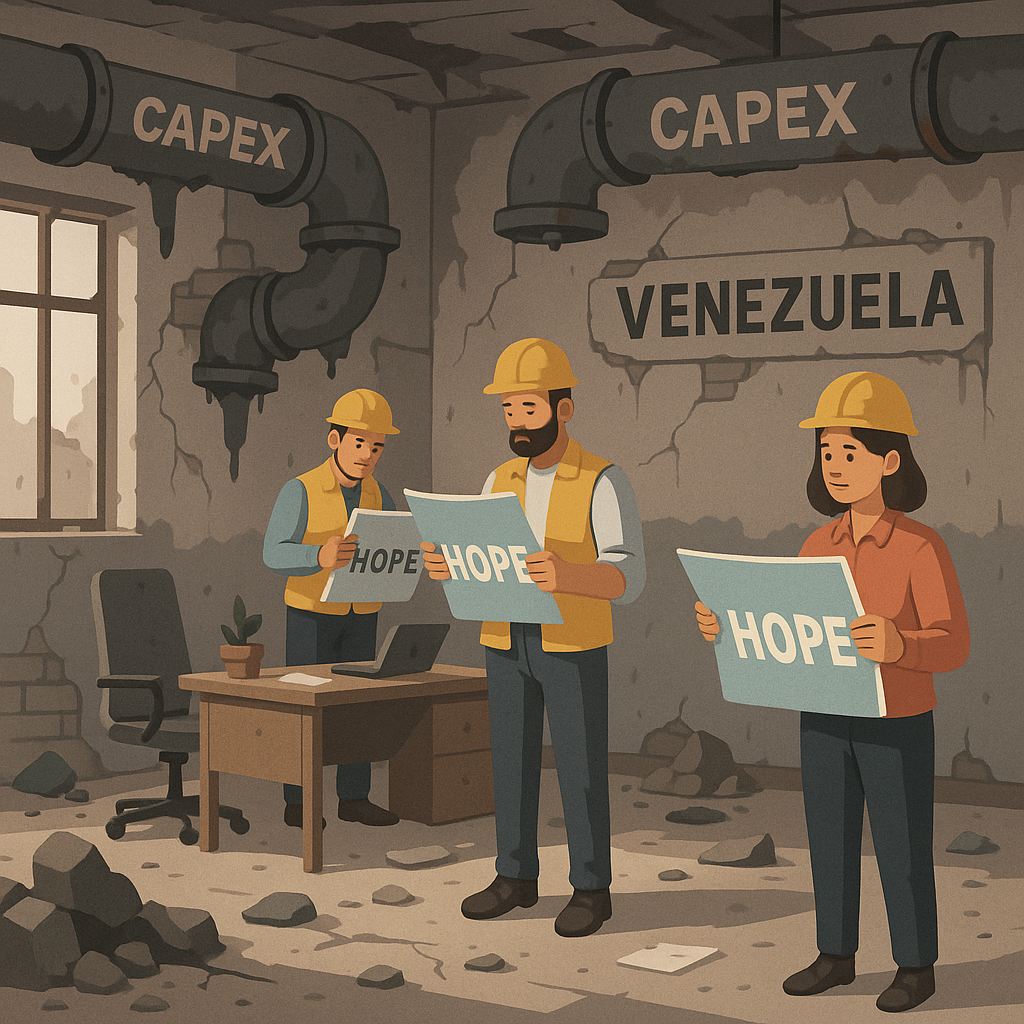
The entire strategy relies on one operational detail that keeps showing up in footnotes. Venezuela’s oil infrastructure currently resembles a DeFi protocol after a rug pull. Fields are underproducing, pipelines are corroded, offshore platforms are decommissioned in place, and refineries are where capital expenditures and safety audits go to die. Experts quoted by PBS and other outlets say meaningful output gains will take years and "billions of dollars" in repairs. In finance jargon, this means: more than you are willing to spend before November and less than you will admit on cable news.
Trump has still reassured supporters that the deal "will substantially lower Gas Prices for all Americans" in roughly the same way NFTs promised to "democratize art." The mechanism is identical. You build a complex ownership structure, attach it to a physical thing people think they understand, then ask them to ignore latency, counterparty risk, and the refinery that keeps catching fire.
From a tech and finance angle, the Venezuela arrangement fits neatly into a pitch deck.
Problem: Voters are staring at gas station price boards while the Strait of Hormuz is closed and the Iran conflict drags through another news cycle.
Solution: Acquire distressed sovereign assets in a different hemisphere, spend a decade on capex, declare victory in year one.
Go to Market: Hold rallies in Las Vegas, blame OPEC, announce a task force.
Meanwhile, U.S. officials quietly concede that much of the Venezuelan crude will be allocated at cost to the Strategic Petroleum Reserve and the military, not pumped directly into consumer fuel tanks. What has been purchased, in practice, is not cheaper road trips. It is an option on future wars, a buffer against the next shipping crisis, and a much larger underground steel bathtub in Louisiana.
Venezuelans are watching a familiar film in a slightly different language. Interim president Delcy Rodriguez gets to sign a historic deal. Nicolás Maduro’s camp gains a future talking point that the agreement is illegitimate. The United States books a new asset on its geopolitical balance sheet. Ordinary Venezuelans get another tutorial in how their national heritage can be securitized into a hedge against someone else’s inflation and someone else’s sanctions problem.
Tim Kaine has framed the episode as proof that Trump was "always after Venezuela’s oil." Markets, which had penciled this in around the time of the first "military option" comment, reacted with what Bloomberg described as routine volatility. Traders completed the usual scroll through sanctions updates and tanker insurance quotes, then went back to tracking interest rates and shipping routes.
For the tech inclined, the transparency is almost charming. After a decade of pretending to solve resource scarcity with apps, the administration has effectively shipped a geopolitical API: GET /v1/spoils?country=Venezuela&fields=oil. Authentication is handled by the Navy, rate limits are set by Congress, and error codes are translated by the State Department.
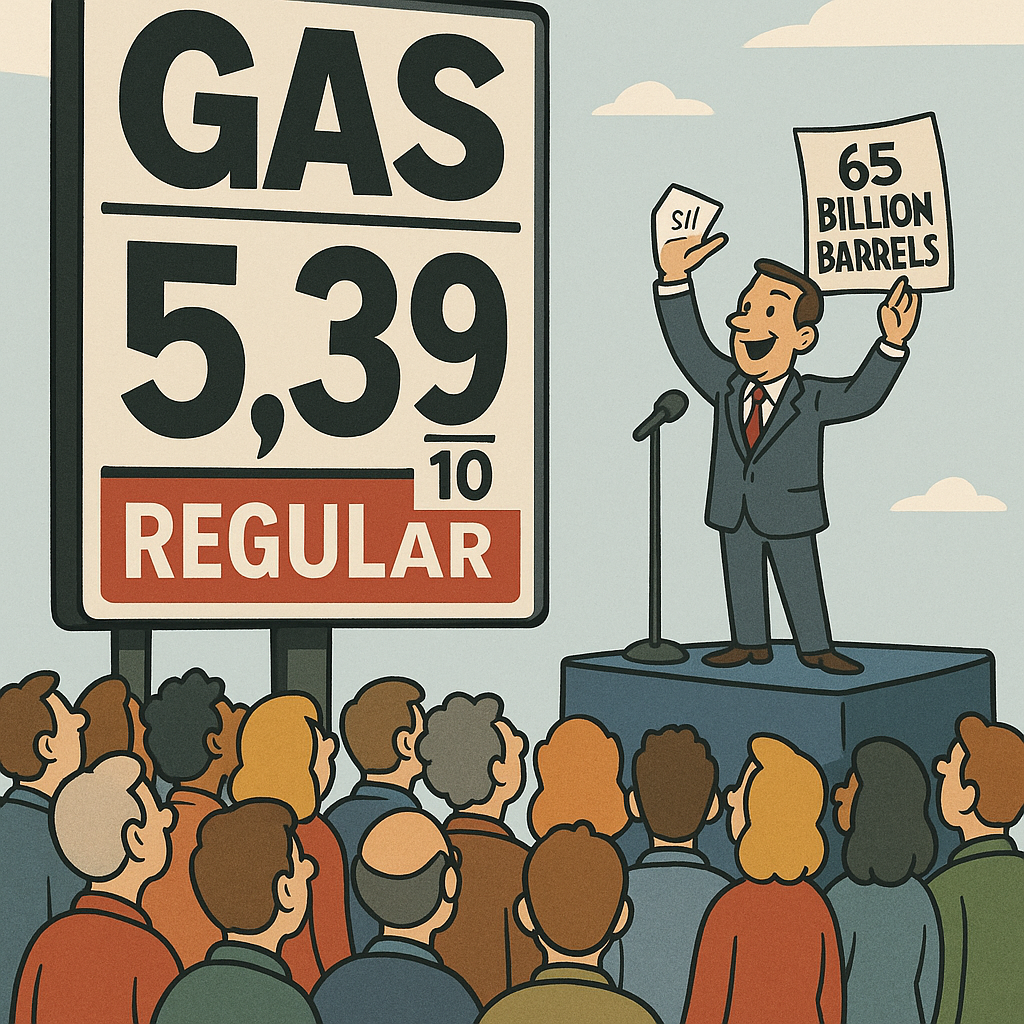
Energy transition advocates, who spent the last decade building slide decks about decarbonization pathways and stranded assets, now have to coexist with a White House that treats 65 billion barrels of heavy crude as an in game loot crate. Officially, the United States remains committed to phasing out fossil fuels. Practically, it just purchased the legendary ultra rare skin for them and is showcasing it at every rally.
Among financiers and policy staff, the phrase of choice is "alignment of incentives." The Venezuela deal finally delivers a version of that. When gas prices rise, you are encouraged to support a war that is allegedly paid for by foreign oil that might someday lower the prices that rose because of the war that is financed by the oil. It is a closed loop system, the energy policy equivalent of a snake carefully writing its own term sheet.
Everyone’s portfolio is now long circular logic and short basic chemistry.
In the closing sales pitch, the Trump team calls this the "biggest oil deal in world history" and promises visible benefits at the pump. Energy analysts insist the impact will not be measurable for years. International lawyers warn about a precedent that turns the resource sovereignty doctrine into a suggestion. Venezuela’s infrastructure needs tens of billions just to bring output back to the level where pipes leak at a normal industry rate.
For the moment, consumers receive one immediate, tangible benefit. There is a fresh explanation on cable news for why gas still costs what it costs, this one featuring a map of Venezuela, a graphic of the Strait of Hormuz, and a lower third that reads "Markets Cautious As War Oil Deal Enters PowerPoint Phase."
To the victor belong the spoils. To everyone else belong the receipts, amortized over an election cycle.