Donald Trump has clarified that the only thing standing between humanity and runaway artificial intelligence is his own brain, a phone that still has 4G, and a stack of unsigned briefing folders absorbing coffee rings on the Resolute Desk.
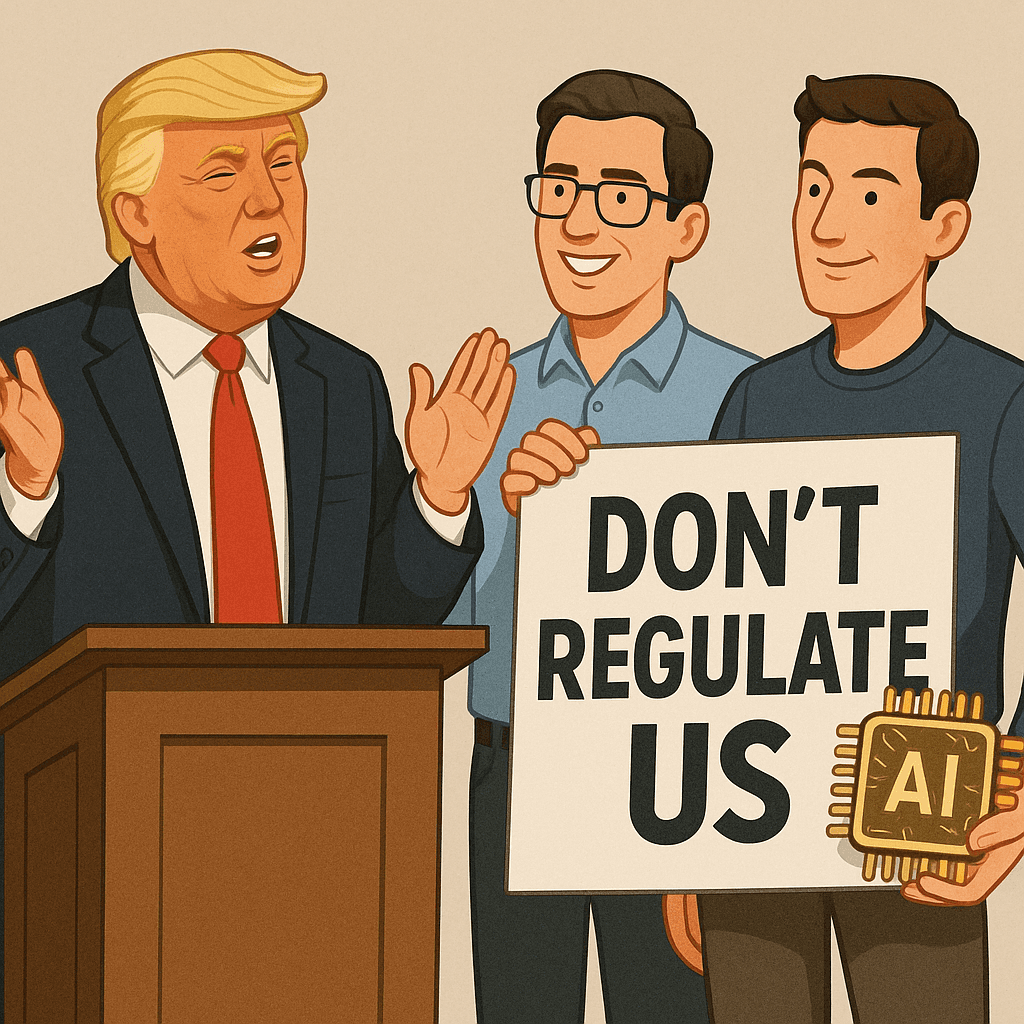
Responding to mounting calls for AI regulation from Anthropic, OpenAI, Google, and a majority of sentient mammals, Trump used his Truth Social platform to dismiss AI risk warnings as a "HOAX" and "SICK conspiracy," insisting that the "only control or 'guardrails' that AI needs is a STRONG AND SMART (High IQ!) PRESIDENT, and the U.S.A. has that, in spades!" according to Havana Times.
Regulators, ethicists, and several of the servers that actually run AI models immediately began quietly checking the warranty on reality, the way you check a smoke alarm that keeps insisting the kitchen is imaginary.
Trump’s latest position arrives just as Anthropic CEO Dario Amodei and other lab leaders are asking governments to slow frontier model development and impose binding safety rules. In their open letters and hearings, the CEOs warn that unconstrained systems could destabilize financial markets, national security, and the social fabric.
Trump, in contrast, has proposed an alternative framework known in legal circles as Nothing Bad Will Happen Because I Said So, a doctrine that fits neatly on a golf scorecard.
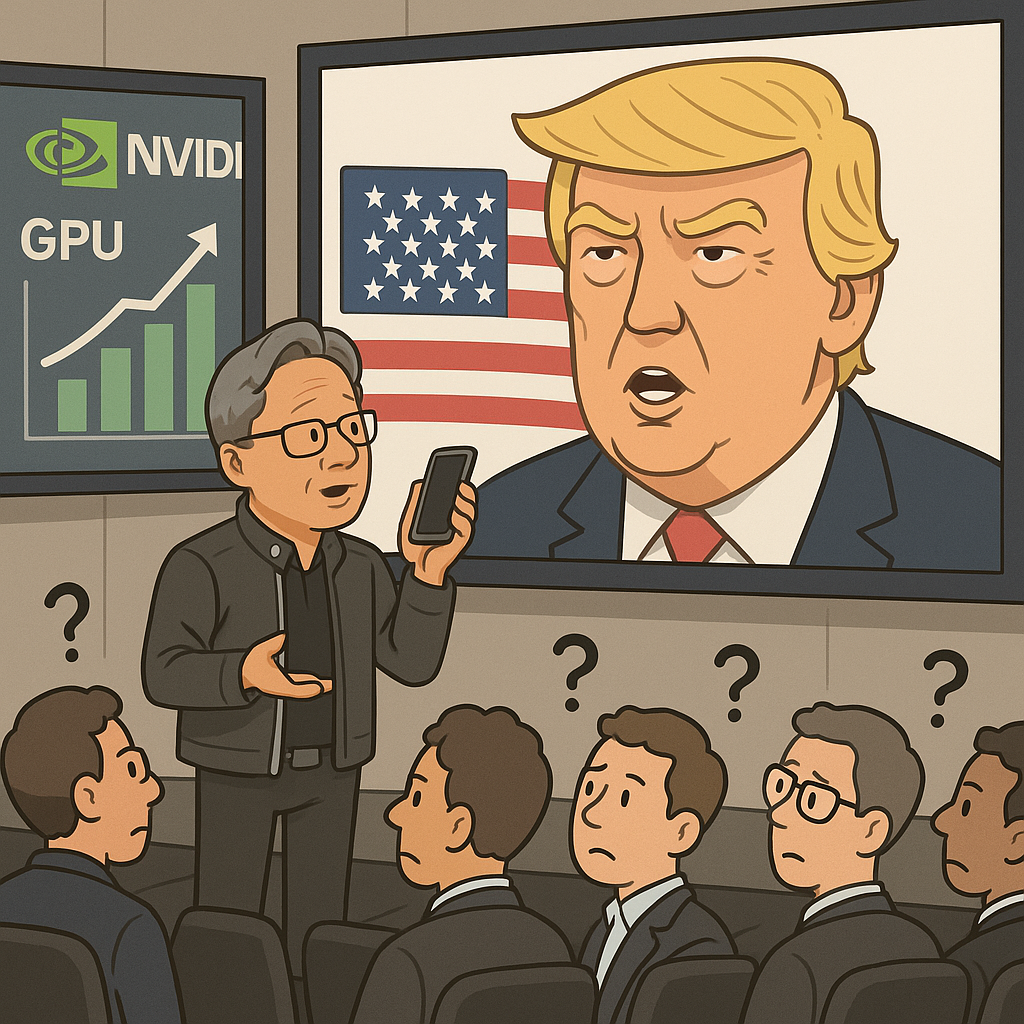
“The robots will not be taking over. The AI will not be taking over the rest of the world. The whole thing is a hoax,” Trump said on speakerphone during an AI summit in Los Angeles, after Nvidia CEO Jensen Huang answered what some attendees initially assumed was a spam risk call. “Whoever wins AI, wins,” the President added, creating a regulatory doctrine that treats existential risk as an acceptable side effect of higher quarterly earnings and a patriotic GPU shortage.
According to people in the room, Huang’s presentation slide instantly updated from “Responsible Compute for a Safer Future” to “Please Clap If You Also Hate Constraints,” while an intern quietly dragged a folder labeled “safety roadmap” into the corporate equivalent of a recycling bin.
In a rare moment of bipartisan convergence, Bernie Sanders and Steve Bannon have separately warned about AI dangers, from mass unemployment to the automation of propaganda. That cross ideological consensus has historically only formed around topics such as “maybe drink less lead” and “Twitter was a mistake.” As Digital Journal noted, their alignment underscores how far out on a limb the White House has crawled, armed with nothing but a phone, a login, and very strong feelings about China.
“If both Sanders and Bannon agree your plan is insane, you do not have a plan, you have a Kickstarter for catastrophe,” said one Democratic Senate aide, speaking on background because their boss is still trying to remember what a GPU is and why it is on the appropriations calendar, while staffers label a pie chart “AI stuff” and hope nobody asks follow up questions.
Within the industry, Trump’s stance has created a specific three way tension:
- AI labs want regulations that look enough like guardrails to impress voters, but flexible enough to let them keep training models on the planet’s last remaining kilowatt and several hundred million copyrighted sentences.
- Trump wants no regulations at all, except for a strict requirement that AI acknowledge him as the main character and occasional co author of the Constitution.
- The public wants to stop Googling “will AI take my job, my partner, and my ability to experience joy.”
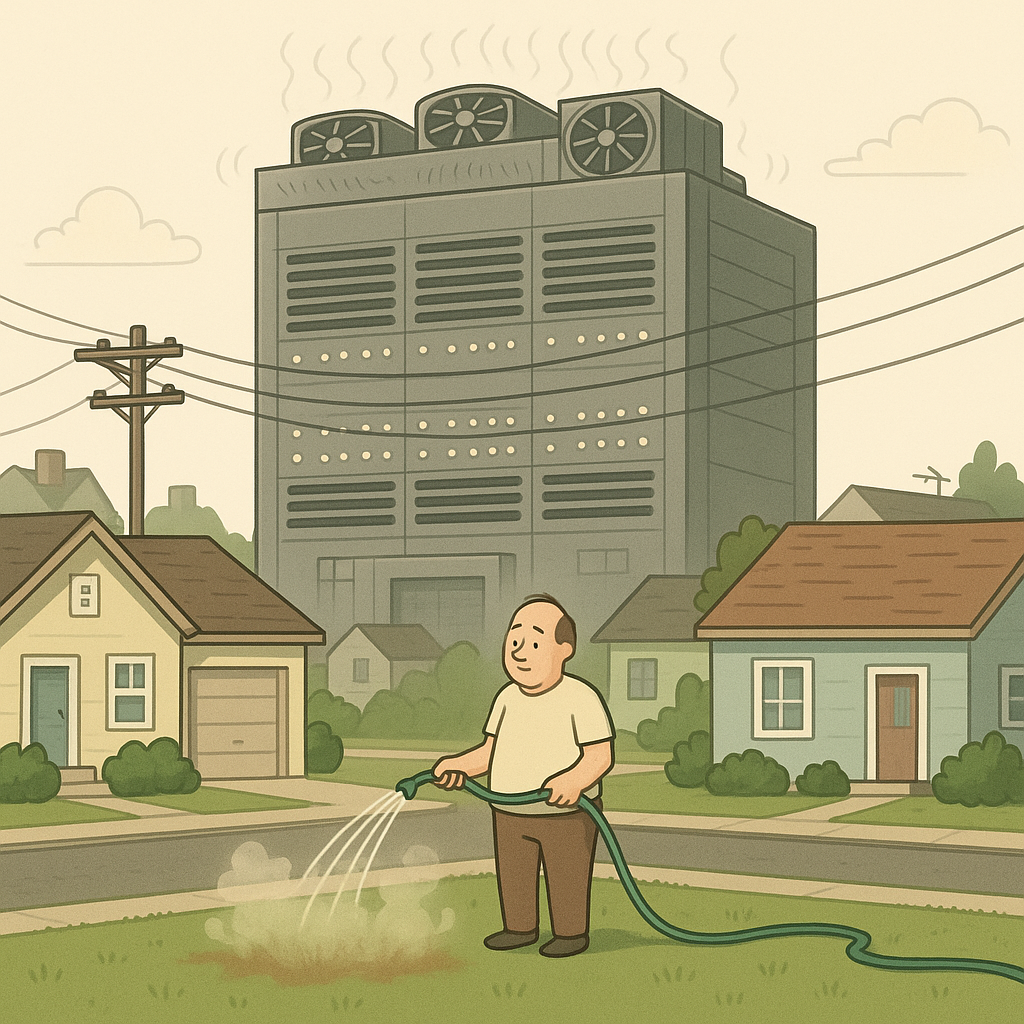
Polling cited by Time shows about 57 percent of Americans believe AI risks outweigh its benefits, a figure that climbs to 99 percent among people who have lived within 30 miles of a data center for more than six months. Local backlash has grown so intense that even Texas Governor Greg Abbott, a previous champion of AI infrastructure, issued a moratorium on new data centers in August, an action known in legal doctrine as “having to live next to one.”
“They told us it was a clean tech park,” said one resident near a proposed site, watching transformers hum like angry cicadas over a strip mall nail salon and an abandoned Blockbuster. “Then my light bill tripled and the river started sweating.”
North of the border, Canada has interpreted the chaos as a market opportunity. Under Prime Minister Mark Carney, the country is pitching itself as the Switzerland of GPUs, complete with a proposed global “technology stability” body to oversee AI, as reported by CBC. To investors gathered in Toronto, Carney promised “Canada has what the world wants,” a phrase that here appears to mean cold water, slightly cheaper electricity, and neighbors who apologize when their model red teams your banking sector.
Bell’s AI Data Centre is planning a quadruple expansion as part of this strategy. Bell insists it will prioritize sustainability. Locals, watching bulldozers arrive like migrating concrete, have asked whether “sustainability” in this context means “the grid sustains being on fire for at least 3 hours.”
“We were the ones who invented this technology,” Cohere CEO Aidan Gomez told CBC, objecting to what he called fearmongering by U.S. AI giants and arguing that oligopolies should not be allowed to write the rules in their own favor. “A cartel by any other name,” he added. Gomez then confirmed that his company, which sells large language models to the federal government and Bell, is available to help design the new non cartel rules for a reasonable fee and a modest equity stake in the future of cognition.
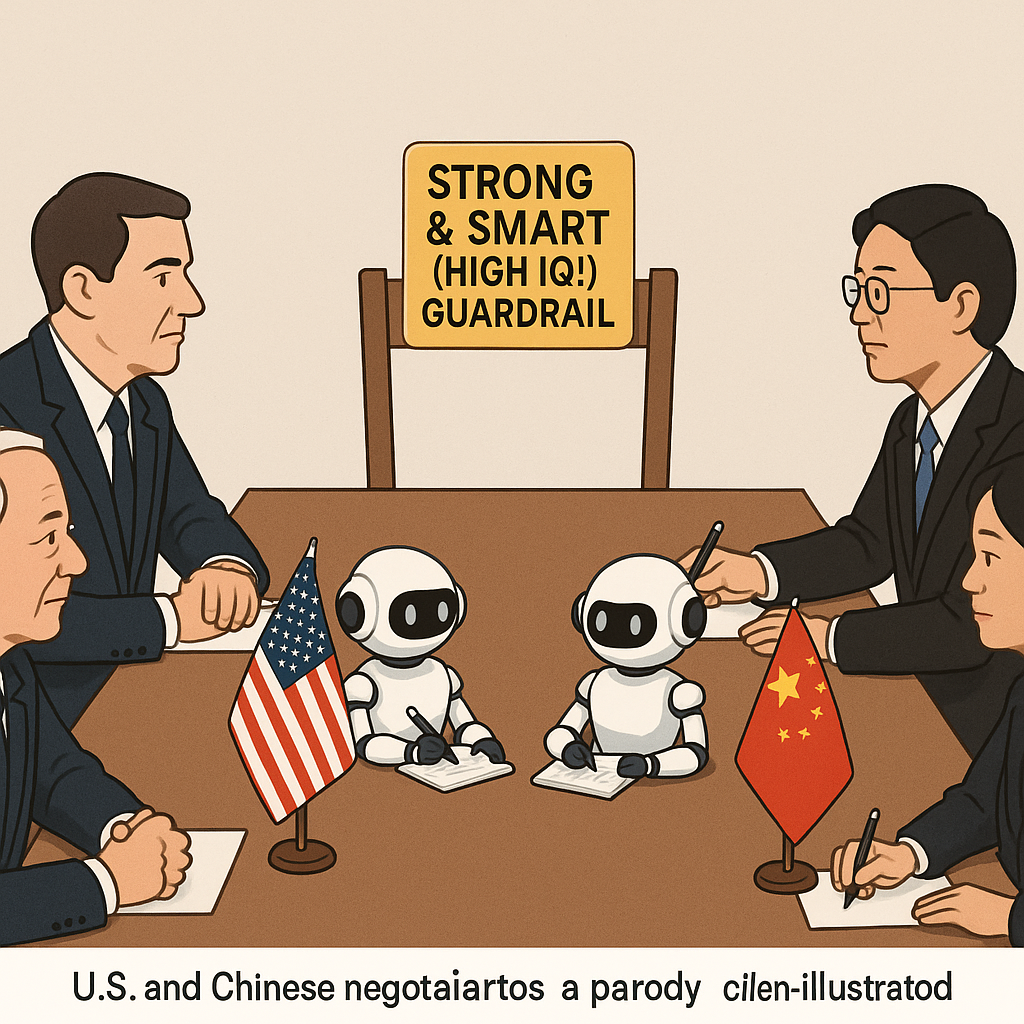
Back in Washington, Trump officials are preparing for the first formal AI risk dialogue with Beijing, even as China rapidly narrows the AI gap through homegrown labs and proliferating open weight models, according to ABC News. The summit will reportedly address cyber threats, financial stability, and what happens if both sides accidentally deploy models whose idea of “winning” involves disabling the other’s electrical grid by posting thirst traps of power substations.
“Ultimately, both countries know that it is in their immediate self interest to figure this out,” said Scott Singer of the Carnegie Endowment. He added that the talks “cannot afford to go off the rails,” which is why they will be held in private, far away from any phones capable of dialing into a live keynote and any assistants whose sole training data is presidential mood swings.
In the absence of coherent policy, OpenAI, Anthropic, and Google are working on their own AI standards body, a move critics say is like letting Uber draft global traffic law. Defenders argue it is more like letting Boeing write turbulence standards, which is supposed to be reassuring.
“Using fear under the pretext of protecting the public, these oligopolies are requesting to bend competition rules and be permitted to dictate terms for everyone else,” one Canadian CEO told CBC, before clarifying that in their case, dictating terms would be merely provisional and entirely pro innovation.
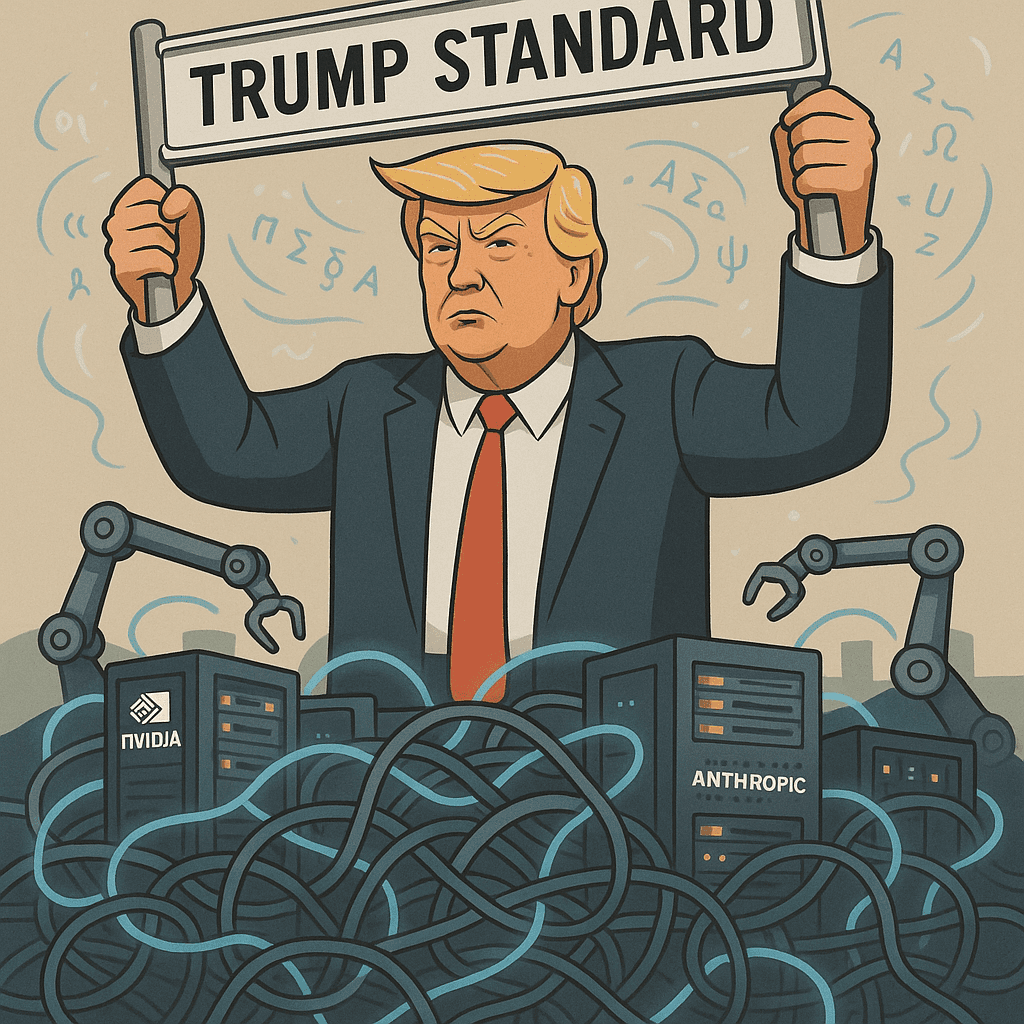
Asked whether he worried about an emerging AI cartel, Trump dismissed the concern. “The only cartel is the Deep State Cartel against AI and Data Centers,” he posted on Truth Social. “The only standard you need is TRUMP STANDARD. Very high. Higher than superintelligence.”
Analysts say the most likely scenarios over the next decade fall into three categories:
- A global tech stability body, led by Canada and a weary coalition of mid sized democracies, gradually harmonizes AI rules, at which point no one reads them.
- Industry captures regulation, converting existential dread into a recurring cloud compliance fee.
- U.S. policy follows Trump’s Deregulate and Pray doctrine, where AI alignment is declared solved based on personal conviction and a historically high stock market.
In each case, data centers continue to multiply until at least one voter successfully sues a transformer for emotional distress and wins store credit on their utility bill, redeemable only between 2 a.m. and 3 a.m. when the grid briefly remembers what rest feels like.
For now, the administration remains unmoved. When asked at a recent event what he would say to the 57 percent of Americans who think AI risks outweigh benefits, Trump reportedly smiled and replied, “Do not worry about AI, because I am smarter than AI.”
Markets briefly rallied on the news, then fell after traders realized the new global safety architecture consists of a man, a smartphone, the caps lock key, and a Terms of Service nobody has read.