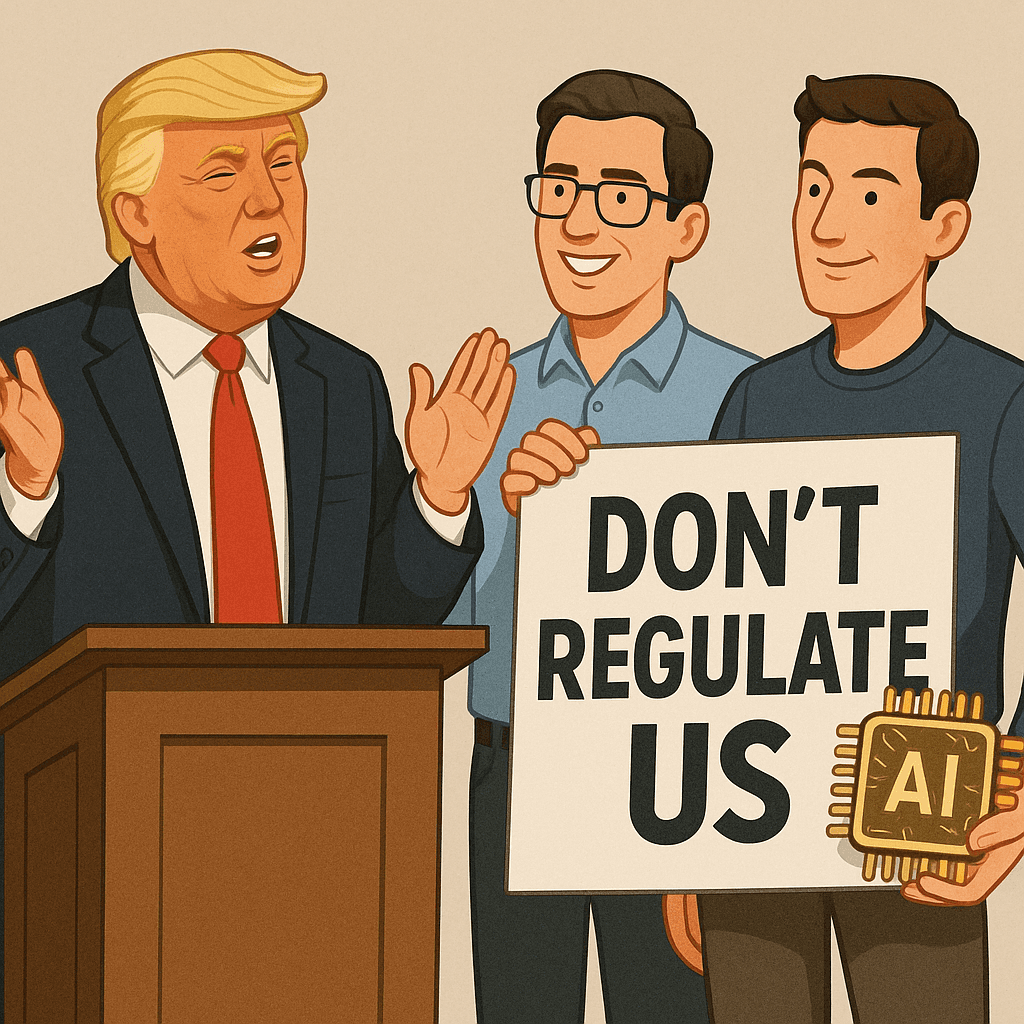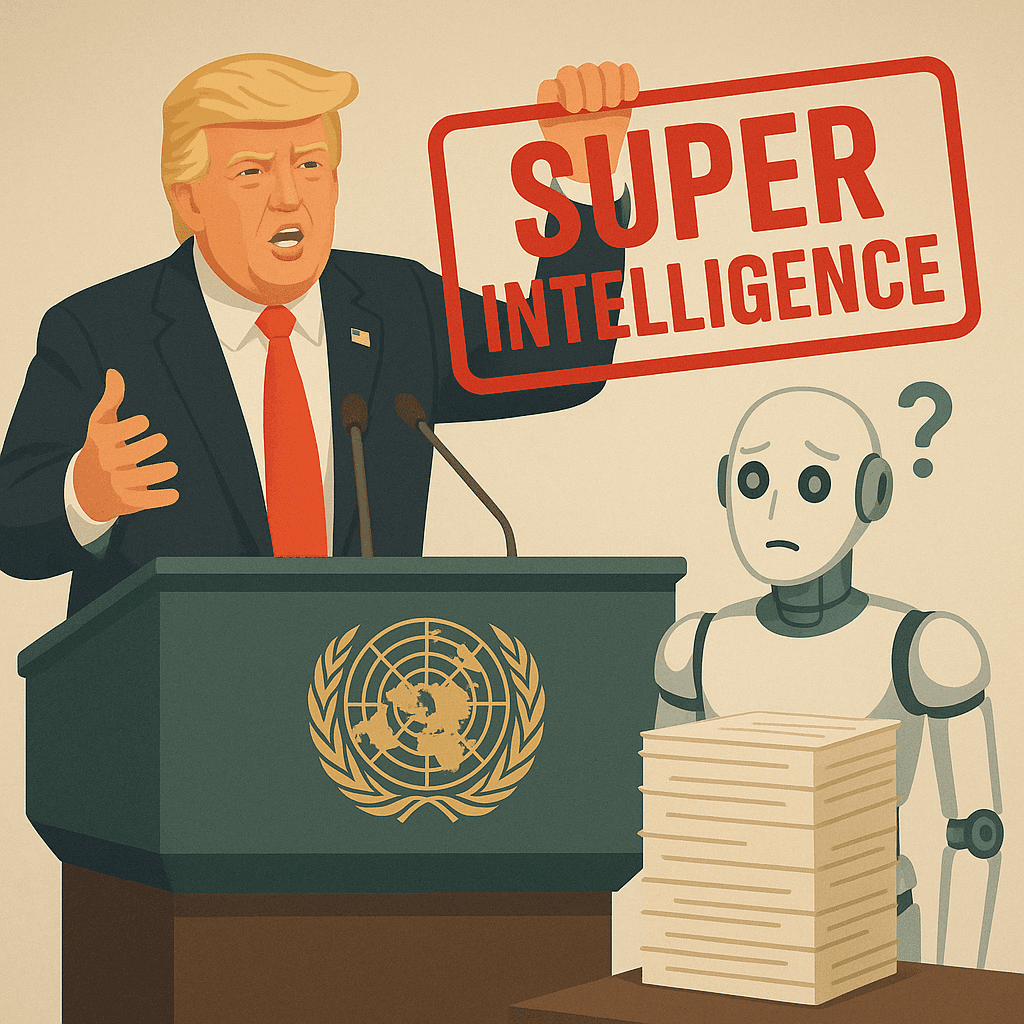
In a development experts called inevitable, President Donald Trump informed the United Nations General Assembly on Tuesday that the United States will solve the global artificial intelligence panic by renaming it.
“From now on it will be called super intelligence, which is what it is, the most super, very intelligent,” Trump said from the UN rostrum, announcing that all U.S. federal documents will swap out the phrase “artificial intelligence” for the more heroic label. “We totally reject any attempt to construct a globalist scheme to control it,” he added, as the Cuban and Iranian delegations quietly stood up and sought a jurisdiction with less secondhand liability.
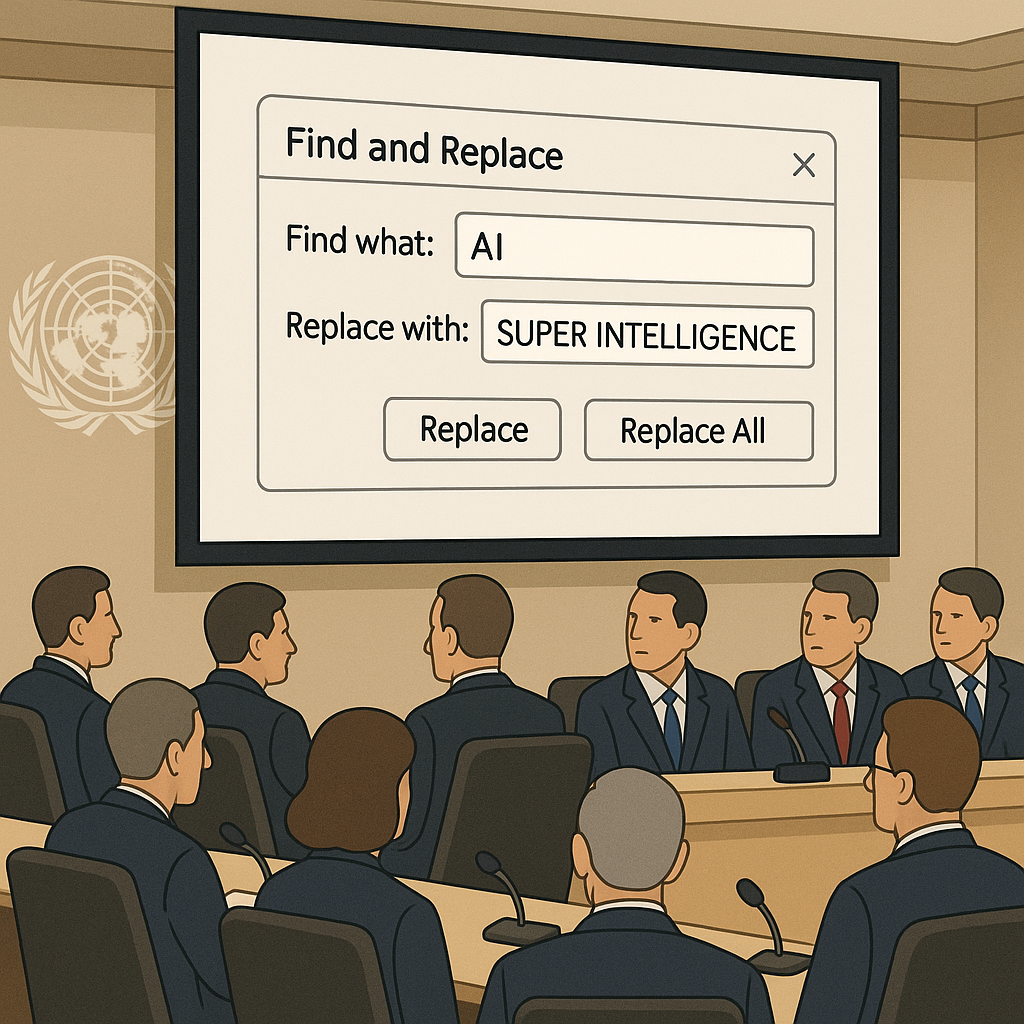
According to The Hill, the Office of Management and Budget has already been instructed to begin a government-wide Ctrl+F operation. The effort will reportedly start with the Pentagon’s autonomous weapons programs, then move on to USDA grants for soybean yield prediction, and finally to that one EPA pilot where a chatbot keeps approving vinyl chloride.
UN Secretary-General António Guterres, who has been calling for a “global governance system” for AI and warning against letting technology “vibe-code” humanity’s future, responded with what diplomats described as “a visible internal scream.” In Geneva last week, Guterres had endorsed the Brookings framing that current AI is “jagged across tasks and contexts.” On Tuesday, he learned that under U.S. federal style guidance it is now “Super Jagged Across Super Contexts.”
Markets reacted with their usual calm rationality. Tech stocks sold off on fresh “AI panic” last week, then briefly rallied on hopes that if the crisis was renamed “super intelligence opportunity,” it might qualify for a tax credit. Within hours of the speech, Goldman Sachs issued a note warning that “regulatory divergence around the term ‘super intelligence’ constitutes a material branding risk for clients exposed to stochastic parliaments.”
At OpenAI, CEO Sam Altman, who Yahoo Finance recently described as suddenly disturbed by the “nightmare-inducing AI monster he has helped create,” updated his talking points in real time. “We are, of course, terrified of the monster,” Altman told analysts on a hastily convened call, “but now that it is a super monster, we see a path to premium pricing.” Anthropic followed with a blog post explaining that its “constitutional AI” would henceforth sit under “Super Constitutional Framework 2.0,” pending export classification.
Not everyone is eager to join the rebrand. Virginia Governor Abigail Spanberger, who has urged Congress to craft a national regulatory framework for artificial intelligence, reiterated on local station WFXR that her concern was not what the technology is called, but what it is doing. “If it is laying off truck drivers, profiling tenants, and steering drones, I do not particularly care if we label it ‘AI,’ ‘super intelligence,’ or ‘Jan from Accounting,’” Spanberger said. “It still needs guardrails.”
Inside the U.S. government, however, naming conventions are not a side issue. They are a procurement category, a line on a GSA spreadsheet that decides whether something is a stapler, a missile, or a feelings-based cloud service.
According to a draft circulated at the General Services Administration and obtained by The Daily Shallot, agencies are preparing a three-tier system:
- Basic Intelligence: spreadsheet macros, anything built in Excel 2013, that chatbot on the IRS website that says “we are experiencing high call volume.”
- Artificial Intelligence: deprecated term, to be used only in FOIA responses and class-action settlements.
- Super Intelligence: everything else, particularly if it accelerates quarterly GDP by 0.1% while being “jagged” enough that no one can prove which part caused the accident.
Regulation will track the rebrand. A draft White House memo on national security applications, mirrored from the PBS fact-check site, suggests relocating “super intelligence” projects from normal oversight channels into a new category called “Emergent Sovereign Capability.” In practice this means autonomous targeting systems will receive fewer ethics reviews than a new yogurt label, but more marketing support, including a flag-themed logo developed by a contractor that failed its own phishing test.
“The president is correctly identifying AI as a sovereign American asset,” said one senior administration official, speaking on condition of anonymity because they were not authorized to speak in complete sentences. “If you let the UN regulate it, next thing you know they are telling you your super intelligence cannot quote your favorite cable host in a drone strike justification.”
Diplomats in New York watched the semantic pivot with professional detachment, or at least the appearance of it. European Union officials quietly pointed out that EU regulations are worded in terms of “high-risk AI systems,” not “vibes,” and would continue to apply regardless of U.S. branding decisions. A Chinese delegate reportedly remarked that reclassifying AI as “super intelligence” for domestic political reasons was “very 2018,” then returned to reading a briefing titled “Export Controls For Non-Super Intelligence That Still Hacks Everything.”
UN-affiliated experts worry that the U.S. move could fragment global governance into competing language blocs. A recent Brookings paper warned that if major powers fail to align on terminology, cross-border oversight could devolve into what it called “AI below the waterline,” a world where the public sees friendly robot assistants while the meaningful policy fights happen inside sterile definitional footnotes.
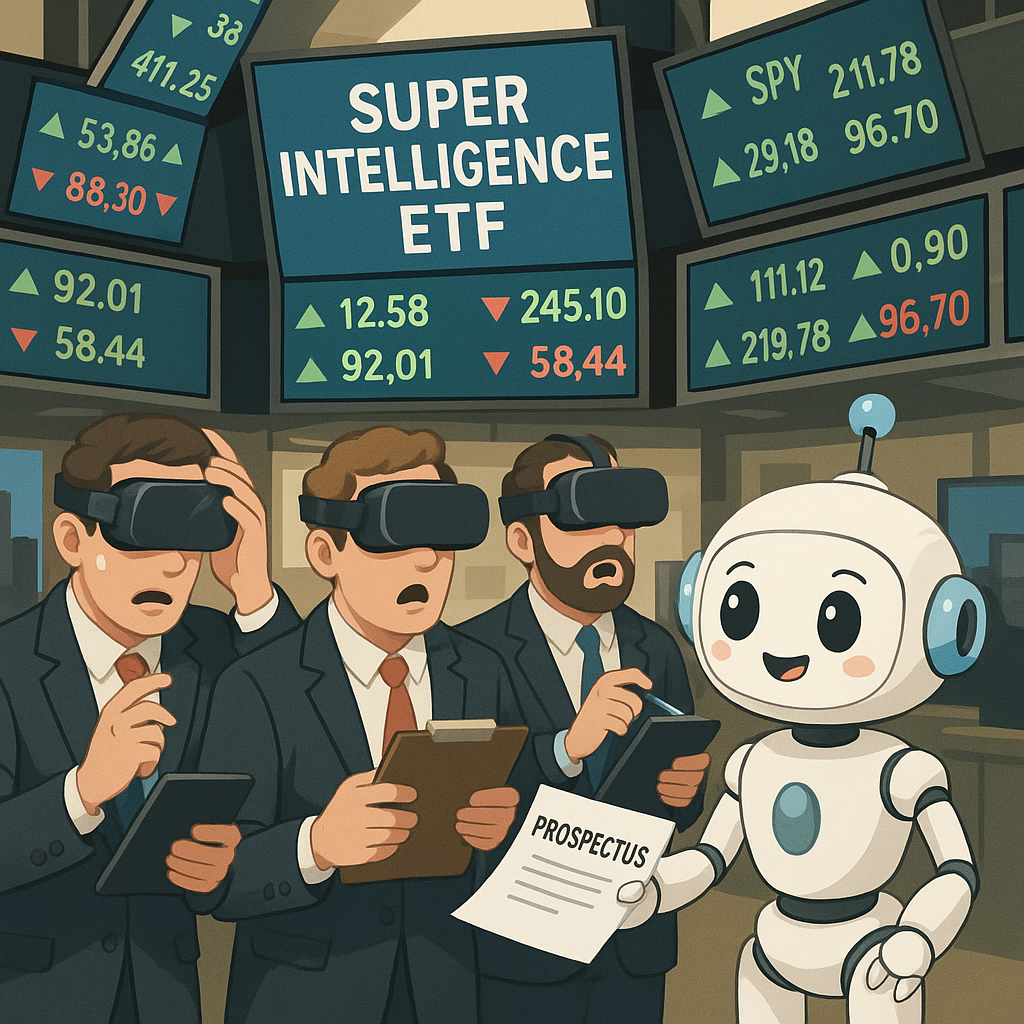
Wall Street appears comfortable with that outcome. As AI panic whipsawed tech valuations this month, one hedge fund memo circulated by traders argued that “narrative spread” is the real alpha opportunity. “If Europe calls it ‘high-risk AI’ and the UN calls it ‘global AI governance’ and the U.S. calls it ‘super intelligence,’ that is three separate ETFs,” the note read. “In a fragmented linguistic regime, every panic is an index.”
Back home, though, the rebrand has collided with basic civic literacy. The Social Security Administration’s public FAQ, which had just finished explaining what a “large language model” is, now must clarify the difference between “super intelligence fraud detection” and traditional overpayment letters. The Department of Education is scrambling to rename last year’s “AI Literacy Week” to “Super Intelligence Awareness Event,” which focuses on teaching eighth graders how to recognize hallucinations in software and in presidential speeches.
“Kids are asking if super intelligence is smarter than their teachers,” reported one curriculum designer. “We tell them it is uneven and jagged across tasks, like adults, only faster and with venture backing.”
The administration, facing Trump’s economic approval sinking into the 20s, appears committed to the sovereignty-first posture. Officials are privately enthusiastic about the legal possibilities that open when you can argue in court that prior AI-related statutes no longer apply because the regulated object has been upgraded to “super.” Industry lobbyists have already begun testing the line on staffers, explaining that an algorithm that directs lethal autonomous weapons is technically exempt from old AI rules, but fully covered by the Second Amendment and a discount at the company cafeteria.
Members of Congress are drafting responses. Spanberger has signaled support for a bill that would define “artificial intelligence” broadly enough to include any statistical model larger than a mid-size law firm’s ego, regardless of what the White House calls it. A rival faction is reportedly considering legislation declaring that naming things is an inherent power of the executive branch when done on television from a building with flags and a pre-printed banner that says “SUPER FUTURE.”
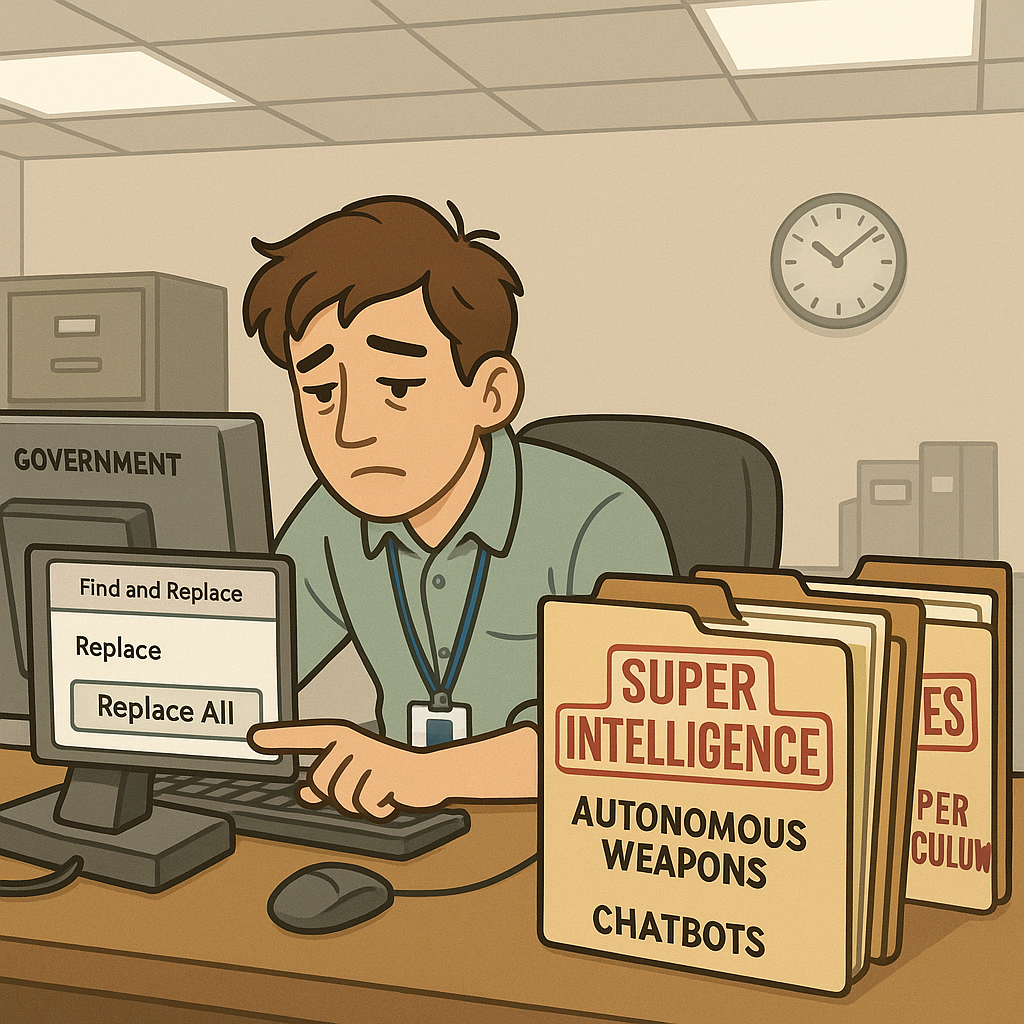
For now, governance will proceed on two tracks: in Geneva, where Guterres and a procession of experts debate “AI for Good” among humanoid robots at the AI for Good Global Summit; and in Washington, where an intern in a windowless room is being told to open the federal code in Word and hit “Replace All.”
According to people familiar with the process, the first draft accidentally converted a decades-old statute on “artificial sweeteners” into the “Super Intelligence Sweetener Act of 1983,” instantly creating a new category of algorithmic food additive that no one understands but that cannot, by policy, be regulated by foreigners.
It was quickly corrected. The administration clarified that only the future will be rebranded as super intelligence. The past, like Trump’s approval ratings, will remain stubbornly artificial.