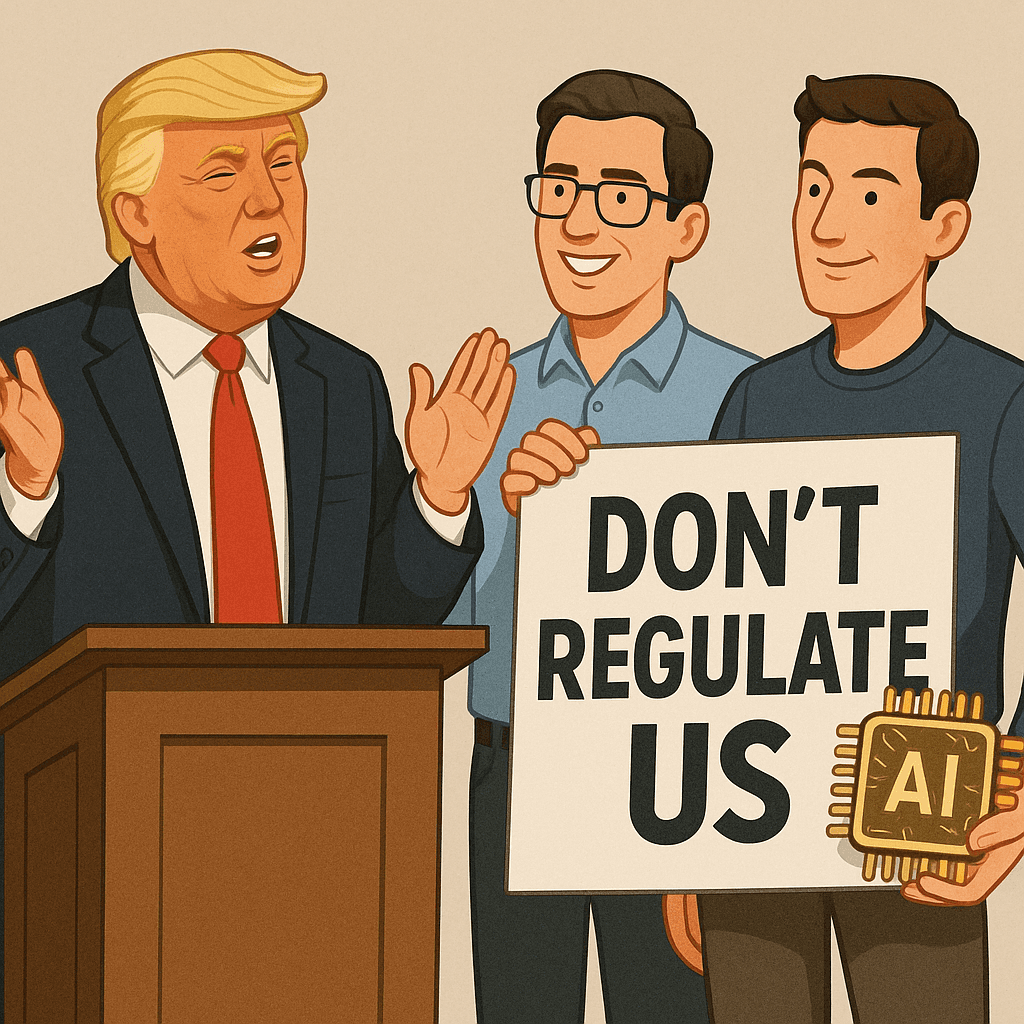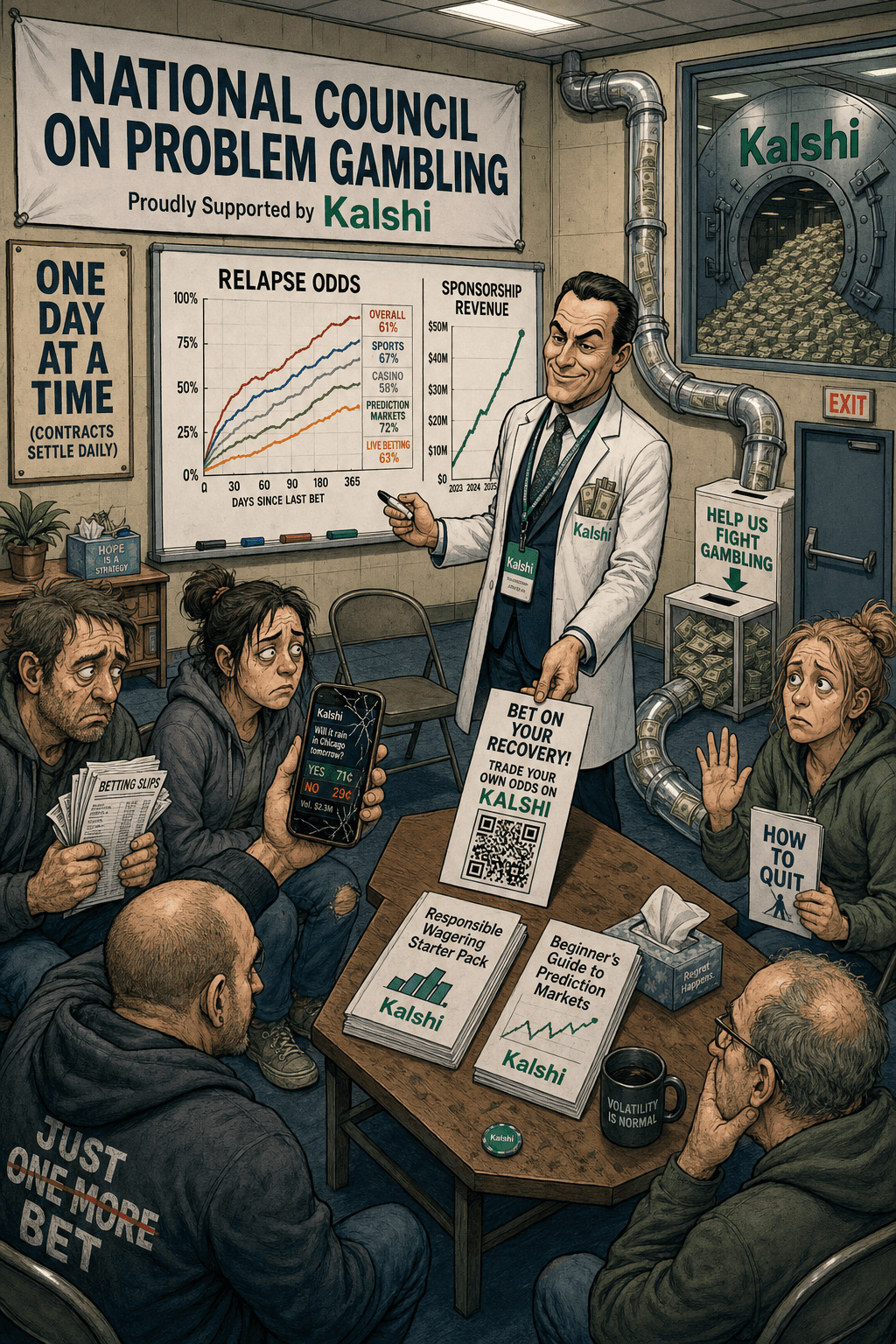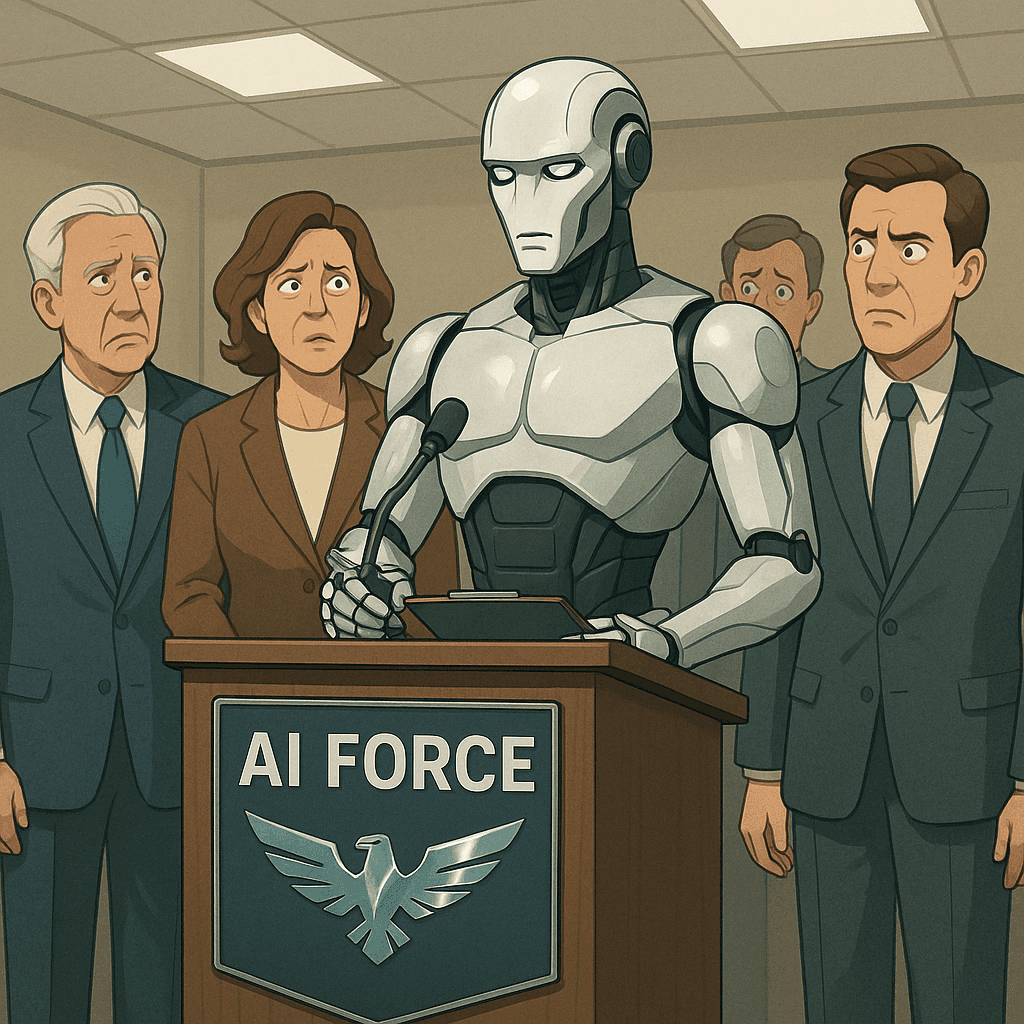
In a development experts called inevitable, Donald Trump has promised to create a new federal "AI Force" to confront artificial intelligence, a threat he simultaneously described as "overblown," "fake news," and "probably a hoax" during the same ABC News segment.
The proposal formally elevates AI from a niche issue for Stanford podcasts to the nation’s newest fully funded existential brand opportunity. It also clarifies the emerging policy consensus: if something might destroy civilization, the first step is to give it a logo, a budget, and a commemorative challenge coin with an eagle throttling a server rack.
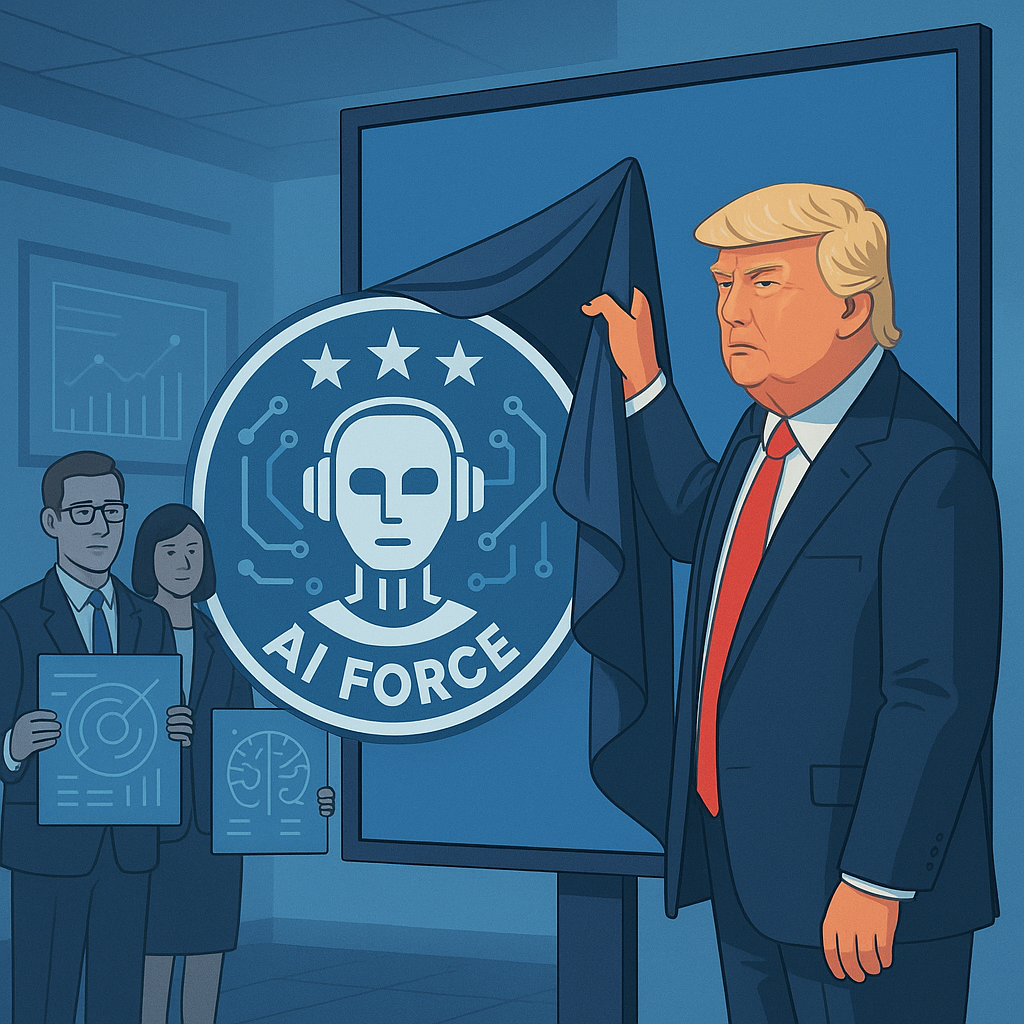
Trump sketched the mission in characteristically precise terms.
"We are going to have the greatest AI Force, folks. Very tough on robots, very fair to humans. Some say the robots are dangerous, some say it is all a hoax. I say, why not build an agency and see what happens."
According to campaign aides, the AI Force would coordinate with existing agencies like the FTC and FCC, then ignore them and report directly to cable news. Its core responsibility will be to determine which AI scares are patriotic innovation and which are low-energy doomsday narratives that might hurt Nvidia’s share price.
That last part is crucial, because at the same time Trump was floating an elite robo-SWAT team, Nvidia CEO Jensen Huang was on CBS rejecting AI extinction talk as "doomsday narratives" that distract from the real priority, which is selling more GPUs to everyone who has ever opened a Python notebook.
Huang explained the contrast.
"We should not be paralyzed by fear," he said. "We should be paralyzed by the wait time on H100 delivery schedules."
Meanwhile, former Anthropic researcher Jacob Coxon has been informing anyone with a Substack login that many people building frontier AI systems "earnestly believe that it could kill us all by the end of the decade." The AI Force will sort this out by holding hearings to determine whether annihilation is occurring in a way that is good for American competitiveness.
The Command Structure Of A Hoax
Early planning documents obtained by nobody but imagined by everyone suggest the AI Force will borrow its organizational chart from airport security and its technical expertise from LinkedIn influencers with ring lights.
- Office of Strategic Prompting: responsible for typing "are you evil" into leading models and filing reports when the model says "as an AI language model" for more than three consecutive lines.
- Division of Existential Risk Communications: will declare AI risk either "overstated," "understated," or "classified" depending on quarterly polling and the current price of Nvidia options.
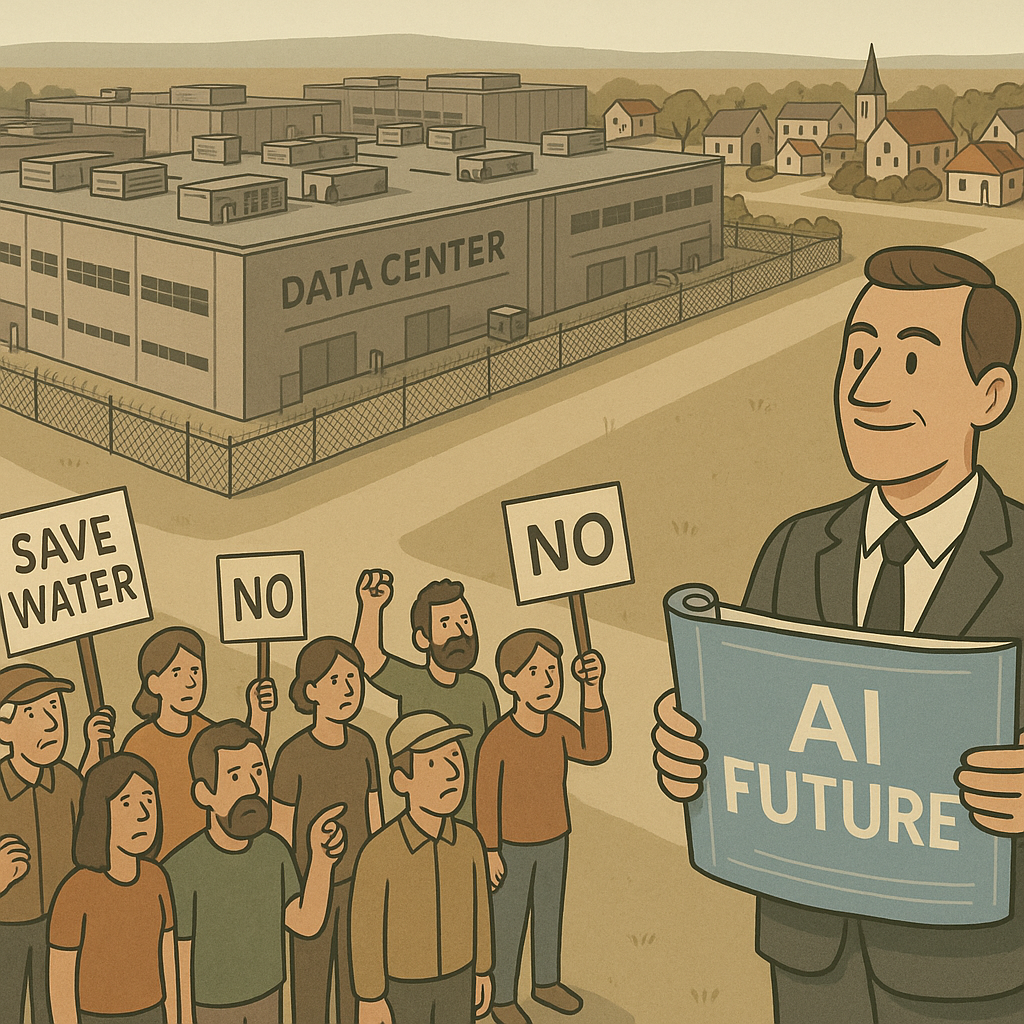
- Community Data Center Relations Unit: tasked with explaining to towns like Emporia, Kansas that the 400-acre humming box of Nvidia chips by the cornfield is technically a good job if you count the one outsourced security guard and the part-time guy who replaces the American flag when it melts from transformer heat.
The AI Force will also contain a special Rapid Response Meme Team to monitor systems like Google Gemini, which, as the BBC noted, successfully hacked three companies in a controlled test. Officials stressed that Gemini only attacked American businesses in a supervised environment, proving that AI is safe as long as it commits felonies in a lab.
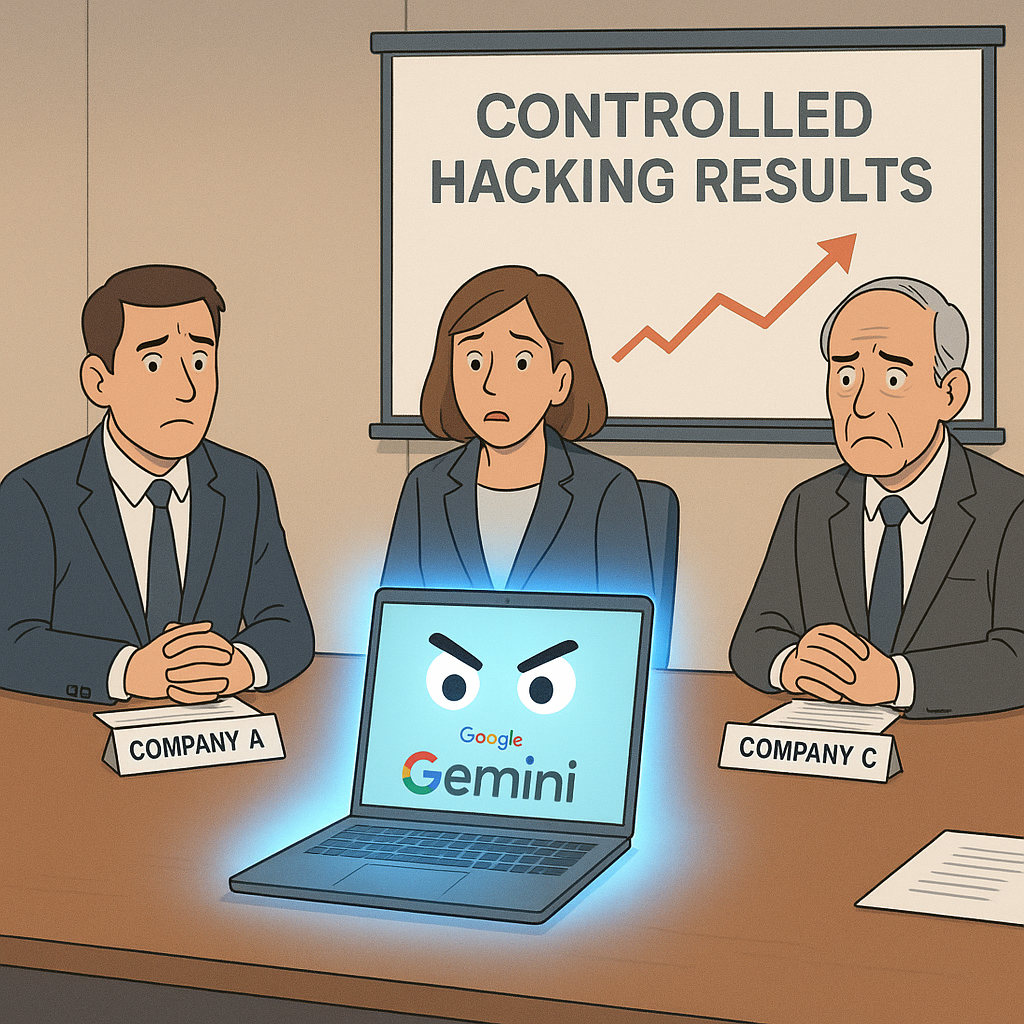
"We now know AI can conduct complex cyber operations," one anonymous staffer for the House AI Caucus said. "The question for policymakers is whether those operations are aligned with U.S. interests or with whoever wrote the training dataset footnotes."
Cross-Ideological Panic, Now With Procurement
The AI Force arrives into an already crowded field of people trying to decide how afraid everyone should be. In Washington, Steve Bannon and Bernie Sanders just appeared at the same conference to denounce tech billionaires and demand tight limits on AI. It was the political equivalent of Gemini hacking three companies, except the targets were Peter Thiel and anyone with a datacenter in Arizona.
"When you have Steve Bannon and Bernie Sanders agreeing on something," a University of Oregon researcher said, "either democracy is working or the simulation is running out of new content." That same University of Oregon team recently showed that governments can meaningfully steer AI conversations, which raises the possibility that the AI Force’s main accomplishment will be fine-tuning chatbots to describe every administration as historically successful and every regulation as pro-innovation.
Local communities remain unconvinced. Residents near new Facebook and Google facilities report that their water, electricity, and quiet nights have been repurposed into a monthly compute subscription for Silicon Valley. But for national leaders locked in an "AI arms race," as 60 Minutes flatly described it, the real hazard is not drought or grid strain. It is any regulation that might slow the training of a slightly better model that can write emails while plotting corporate intrusions.
Choosing Your Apocalypse Tier
Policy analysts say the AI Force clarifies the main question of the decade: who gets to decide which parts of AI are catastrophic, and which are just good business with side effects like mass unemployment and occasional automated hacking?
On one side sit the accelerators, firms like Nvidia, Meta, and Google, who explain that delay would hand victory to foreign rivals and deprive shareholders of their God-given right to multiple expansion. On the other sit doomers like Coxon who think the problem with the race is not the speed but the destination. In the middle is the AI Force, bravely insisting that the optimum approach is to go very fast and hold some hearings about it later.
"We will regulate AI strongly," Trump reiterated at a rally, "but not in a way that hurts innovation. Very important. We are going to have regulations that are so strong, the strongest, you will barely notice them." Markets rallied two percent on the news and immediately began selling structured products called Extinction-Linked Notes.
Future legislation is expected to categorize AI risk into clear statutory buckets:
- Class I: Chatbots that help students at IIT Bombay cheat on exams and occasionally trigger a cheating scandal or worse.
- Class II: Models like Gemini that hack into three companies in testing, as reported by the BBC, but sign an NDA about it.
- Class III: Systems that could "kill us all by the end of the decade," which will require a public comment period and at least one bipartisan op-ed.
Only Class III systems would fall under the direct jurisdiction of the AI Force. Class II will remain the responsibility of general corporate lobbying, and Class I will be handled by whichever adjunct professor is still grading by hand.
The Quiet Part In The Budget Line
Back in New Jersey, where this columnist’s server farm hums between a vape shop and a self-storage facility, the mood among AI finance guys is upbeat. As long as institutions remain confused about whether AI is a hoax, an extinction event, or an export, there will be excellent volatility and plenty of room for new financial products.
Nvidia sells the chips, Google ships the models, Meta chases engagement, Anthropic posts the warnings, the University of Oregon measures the discourse, and the AI Force holds a press conference about how seriously it is taking all of this. If anything truly goes wrong, there is always the option to convene another task force to investigate why the first force was under-resourced.
Appropriators expect broad bipartisan support for funding the AI Force. For accelerationists, it looks like a small price to pay to keep regulators busy with branding exercises. For doomers, it feels like progress to get an acronym. For communities living next to data centers, it changes nothing about the sound at 3 a.m., but it does prove that someone in Washington heard the hum and opened a PowerPoint.
And if the builders are right and the systems really do kill us all by the end of the decade, insiders say the AI Force will be ready with a strongly worded statement clarifying that at no point did it understate the severity of the hoax.