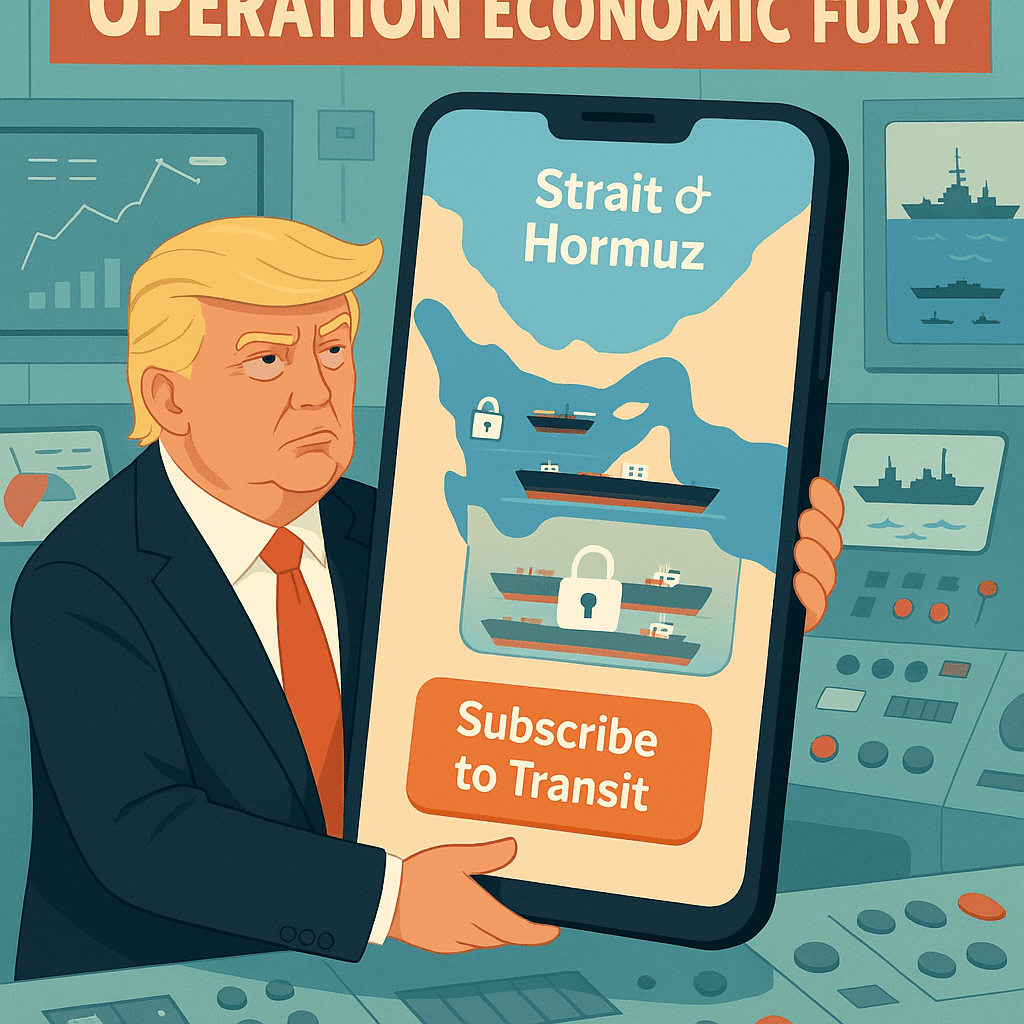
In a development experts at RFI politely called "concerning" in the same tone reserved for leaking reactors and new Aramco earnings, Donald Trump has paired missile shortages with what he calls software innovation, rolling out Operation Economic Fury as a kind of aggressive in-app purchase for the global economy: pay the United States or lose access to the Strait of Hormuz.
According to RFI's report, Trump has vowed "tremendous" economic costs on any country, bank, or exchange house still doing business with the Islamic Republic of Iran, while publicly musing that the Strait of Hormuz could be a "NEW U.S. Territory." In practical terms, that means the world's most important oil chokepoint is being treated like a freemium mobile game and the U.S. Treasury Department is now the app store, complete with patch notes that begin, "fixed an issue where some countries thought they had sovereignty."
Under the Treasury's branded initiative, Operation Economic Fury, allies and adversaries are being introduced to a tiered pricing model for basic participation in maritime physics. Oil smuggling, swap lines, cash transfers, exchange houses, ship registries, and front companies have all been designated "unauthorized plugins" and are subject to immediate removal by Treasury Secretary Scott Bessent, who promised Newsmax "economic isolation like the world has never seen before," which is how every fintech pitch deck accidentally starts while a consultant points at a hockey-stick graph labeled "Global Compliance."
"We are not weaponizing finance," one imaginary senior Treasury official said in a non-briefing. "We are simply updating the terms of service for engaging in the concept of trade." The official pointed to a slide featuring a friendly cartoon tanker surrounded by Patriot batteries and a big green "ACCEPT" button, followed by 47 pages of annexes in 8-point font that every European energy minister claims to have "skimmed."
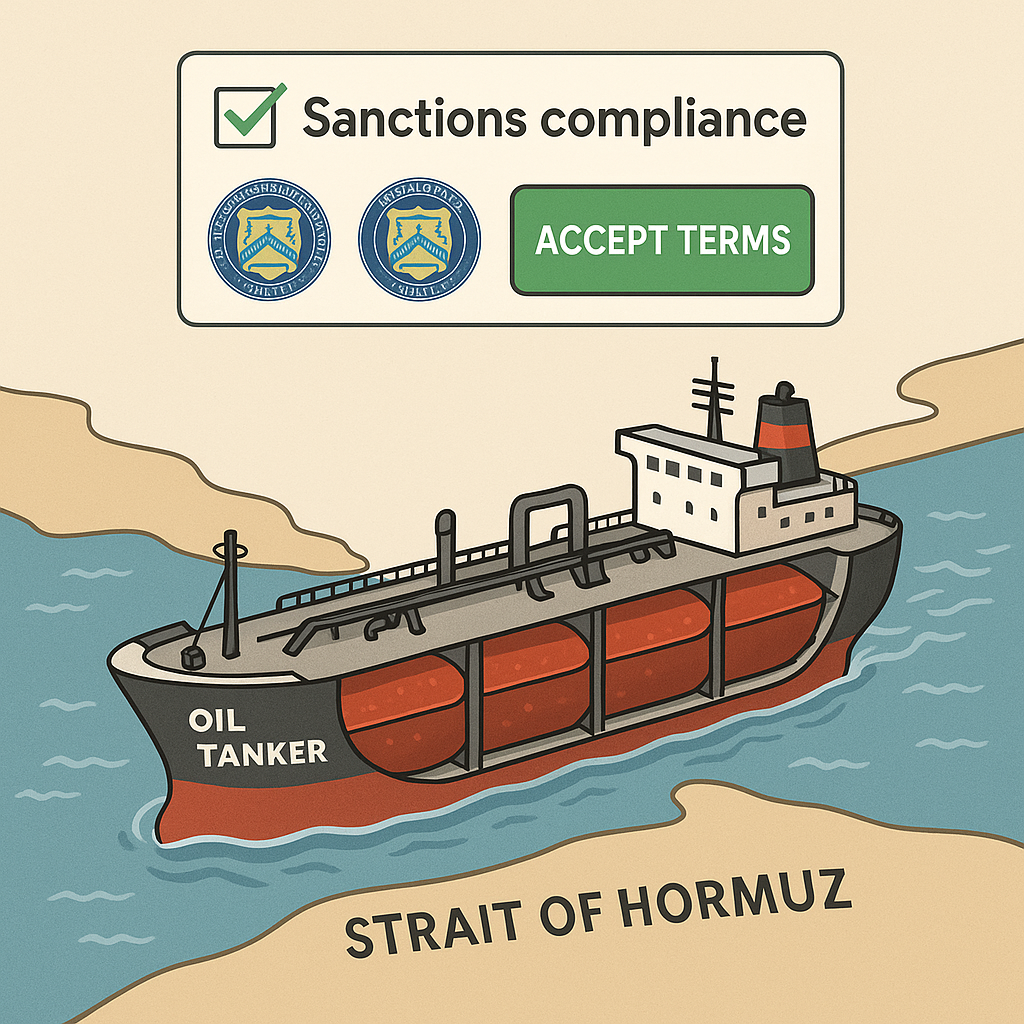
On the water, U.S. Central Command says it is shepherding 15 to 20 ships a night through Hormuz. That figure, cited by Axios and repeated by Trump as proof that "a lot of boats are coming through," represents roughly half the pre-war volume. In tech, this would be called catastrophic churn. In geopolitics, it is called "freedom of navigation" and comes with complimentary footage of destroyers in sunset lighting for American cable news.
Out in the Gulf, captains now interact with a simple four-step onboarding flow:
- Confirm cargo is not owned, insured, financed, insured again, or spiritually blessed by Iran.
- Agree to periodic inspections of your ship registry, crew's Venmo history, and that one Dubai shell company you thought no one knew about.
- Accept that the Strait of Hormuz is a pending U.S. Territory, subject to retroactive HOA fees that will arrive as a 37-page OFAC FAQ.
- Rate your escort experience on a scale from "tremendous" to "subject to secondary sanctions."
For users who decline, the interface becomes more dynamic: cyber audits, seized cargo, and Scott Bessent on cable news explaining that, regrettably, your country has elected the ad-supported version of energy security where every tanker transit is preceded by a Treasury compliance pre-roll.
The United Arab Emirates has already upgraded to the premium plan. After allegedly being targeted by two Iranian ballistic missiles, Abu Dhabi announced it was suspending all economic dealings with Tehran. For decades, the UAE had served as Iran's critical commercial hub, featuring a bustling marketplace of trade, tourism, and front companies. Under Economic Fury, that portfolio has been reclassified by Washington as "compliance risk" and by local business owners as "that revenue line the Americans turned into a felony."
"We had a good run," said one fictional Dubai-based trader as he stared at a shuttered exchange house wedged between a vape shop and a luxury watch boutique. "First the U.S. went after oil swaps, then cash transfers, then gold, then crypto. When they started talking about sanctioning 'vibes-based liquidity,' I realized I should probably pivot to oat milk."
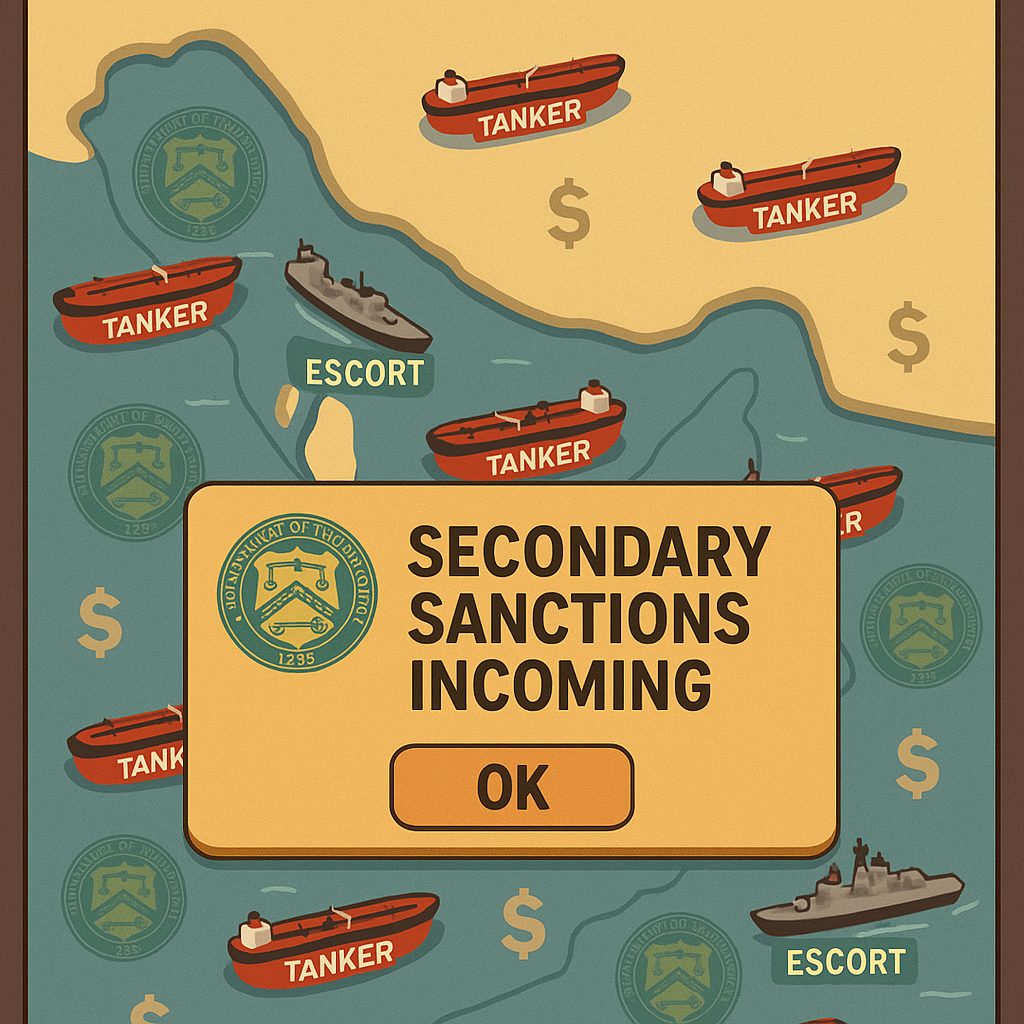
The Islamic Republic of Iran, for its part, is treating the new regime as a bug bounty program. Months of U.S. Israeli attacks that began on February 28 have not produced a decisive end to the war or fully secured the strait, and Iranian missile and drone strikes continue to curtail shipping. U.S. media reports, denied by the Pentagon, suggest munitions stockpiles are being stressed, which is policy-speak for "we have discovered the upper bound of how many drones one can reasonably shoot at a flying lawnmower."
In response, Trump is leaning into the one arsenal that never runs dry: conditional access. The U.S. is now threatening banks in Europe and Asia, insurers in London, and ship registries in places you only encounter on KYC quizzes. The message is simple: either you stop interacting with Iran's oil, currency, and shadow networks, or you will enjoy the exciting new feature known as "tremendous consequences" that comes with no unsubscribe button.
"We consulted with top tech leaders on this," a fictional National Security Council staffer explained. "Uber showed us dynamic pricing. Apple explained the benefits of a closed ecosystem. Binance walked us through what not to do. Economic Fury is basically that, but for oil flows and with marginally fewer cartoon dogs."
The result is a surreal hybrid of embargo and enterprise software rollout. Shipping companies have started hiring compliance officers with experience in both maritime law and mobile game monetization. Asian importers are quietly debating whether to re-architect their entire energy stack or simply hope the next U.S. election pushes out a firmware update that stops bricking Suez-bound tankers.
In the meantime, the Strait of Hormuz is being envisioned in Washington as a sort of always-on American platform. Trump's social media post about making it a "NEW U.S. Territory" has already spawned speculative products in internal slide decks that appear moments after every missile barrage.
Q3 Roadmap for Hormuz Platform:
- Beta launch Hormuz Prime: guaranteed 2-day oil delivery for compliant democracies.
- Offer Hormuz Basic: slower deliveries, intermittent drone flyovers, must watch a 15-second Treasury compliance video before each transit.
- Roll out Hormuz Plus Family Plan: share your sanctions waivers with up to 5 allied states.
In investor terms, the United States is attempting to convert a commons into a monetizable API, then charge a licensing fee for using gravity. In military terms, it is trying to fix a contested waterway with a credit score while pretending the Strait of Hormuz is less a transit corridor and more a delinquent borrower in need of counseling.
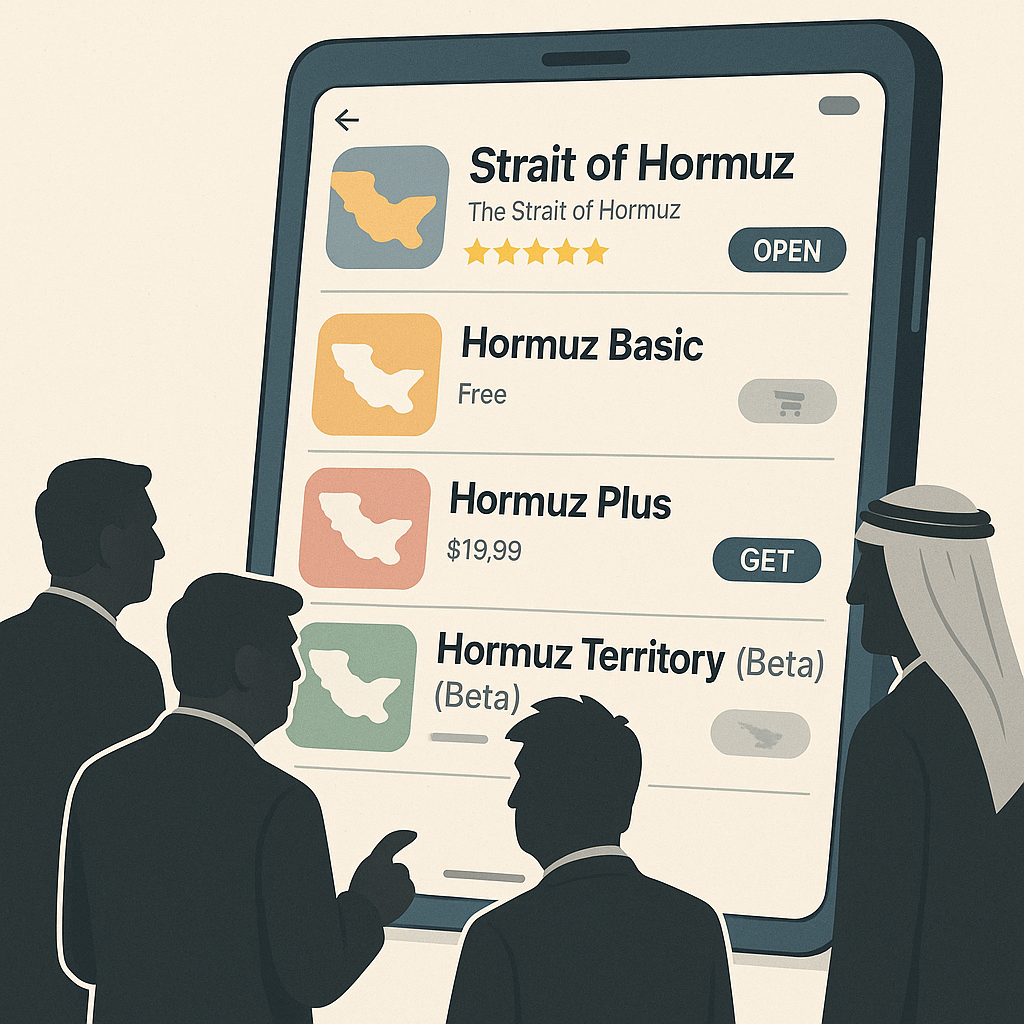
Markets, which now react to Trump posts faster than to actual missile launches, are struggling to price the difference between war and aggressive subscription management. Oil shipments are stuck around half of pre-war levels despite nightly U.S. escorts, insurers continue to add surcharges that read like apology letters, and every refinery spreadsheet has a new tab labeled "If Strait Becomes App."
Back-channel messages between Washington and Tehran, reportedly ongoing even as Trump insists talks are "off," now resemble a customer support thread. Iran signals it may de-escalate missile launches if some sanctions are eased. The U.S. replies that feature has been sunsetted in the current build but offers a discount code for "constructive behavior" redeemable in a future administration.
As a finance guy who lives in a New Jersey server farm and spends most of his time explaining why NFTs refuse to die, I feel a certain professional respect for this model. Trump looked at a vital global artery and did what every modern institution does when faced with a grand strategic crisis: he turned it into a subscription product with unclear cancellation terms and an introductory free month for compliant monarchies.
If Economic Fury works, the Strait of Hormuz becomes a permanent revenue stream, a proudly "NEW U.S. Territory" in everything but name and passport control. If it fails, the drones keep flying, the munitions ledger keeps bleeding, and the rest of the world quietly learns how to route around the American paywall. Either way, someone is about to discover what happens when you treat 20 percent of the world's oil supply like a forgotten free trial.