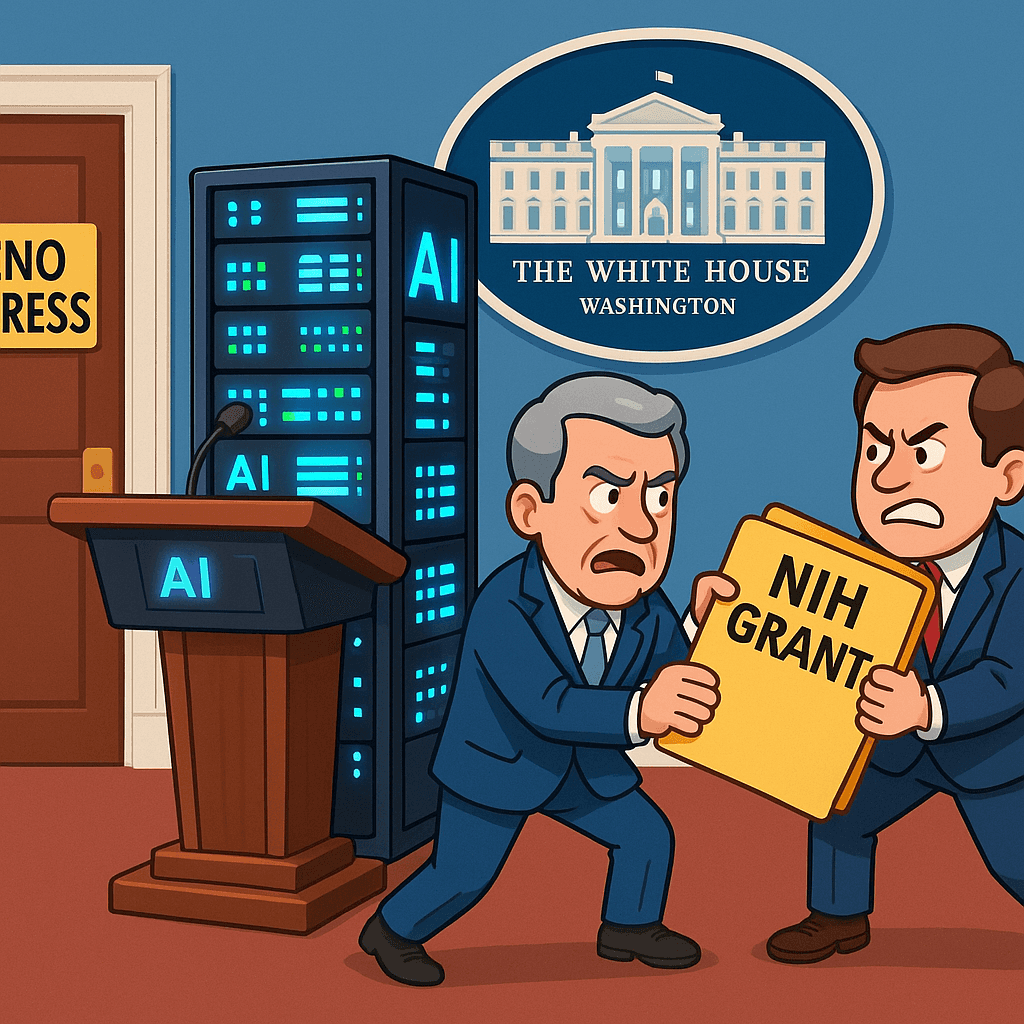
The Trump White House has settled on a unifying theory of knowledge: if it can inform the public, it can be privatized, politicized, or gently walked off the premises by someone with an earpiece.
While world leaders arrive at the United Nations General Assembly in New York to talk about climate disasters, autonomous weapons, and inflation, the Bloomberg headline on every diplomat’s phone reads: “Inside Trump’s AI and Science Power Play as the World Tries to Write the Rules.” Europe is finalizing AI Acts, Canada is chasing Horizon Europe funding, and Japan is signing quantum memorandums of understanding, while Washington focuses on three specific priorities:
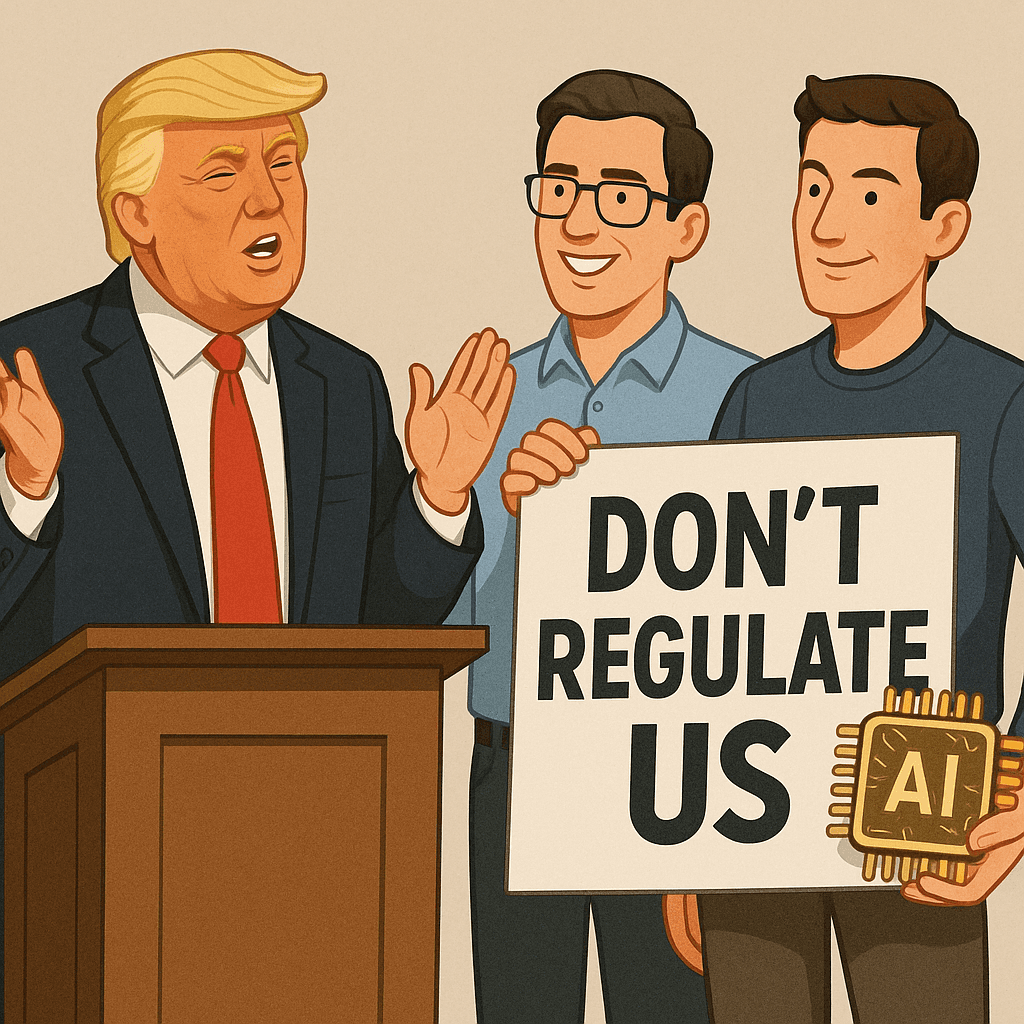
- Opposing AI guardrails in the middle of a semiconductor selloff
- Threatening "serious tariffs" if Canada gets too friendly with Brussels
- Banning CNN, POLITICO, and MS NOW from the White House for reporting that any of this is happening
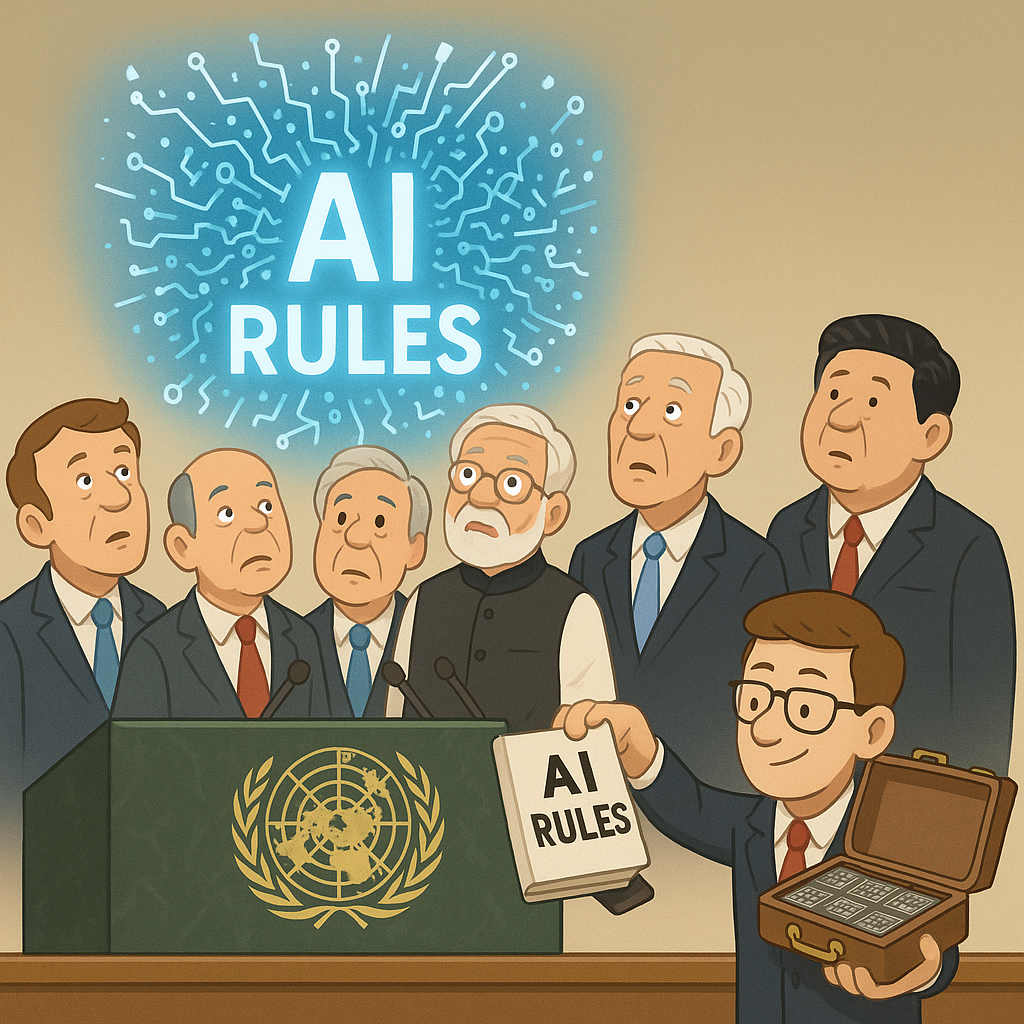
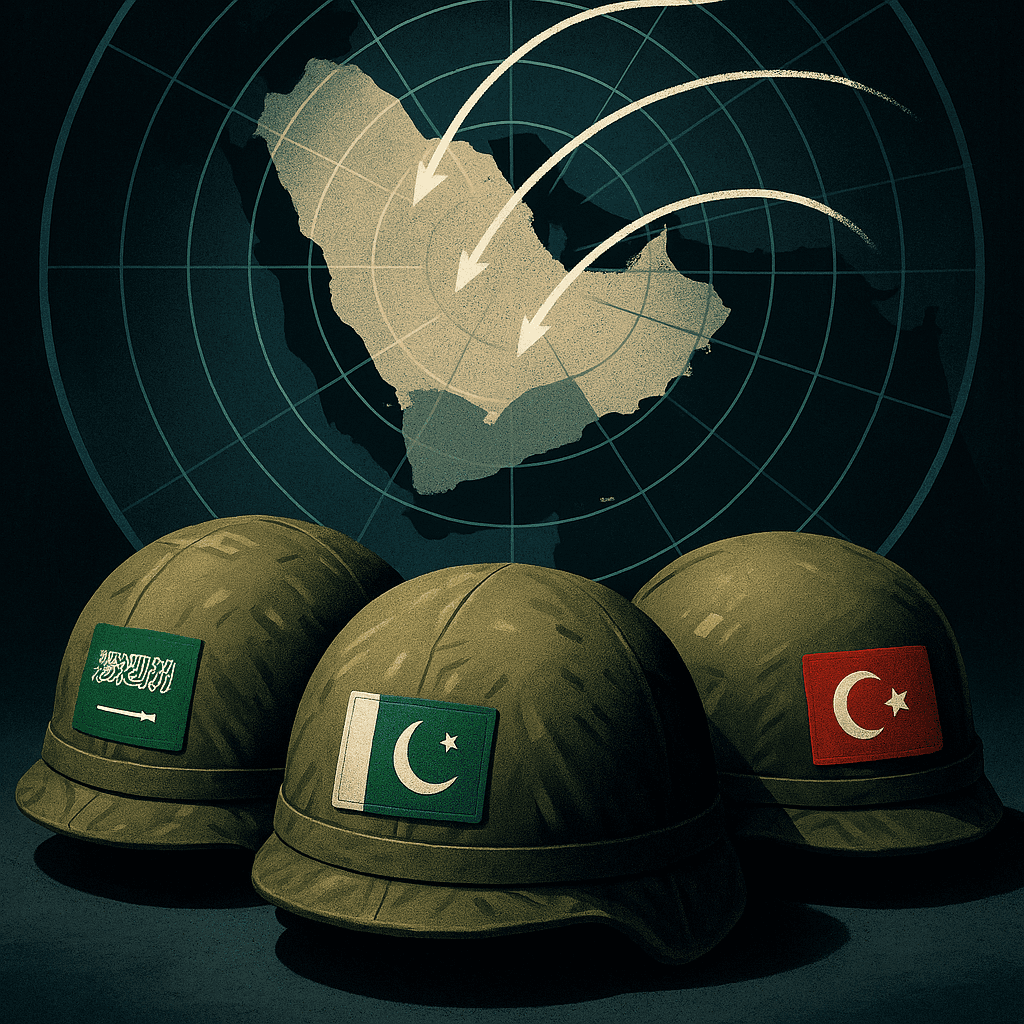
At the UN, delegates are debating autonomous weapons and AI-enabled cyber incidents. In Washington, Donald Trump is workshopping whether the word "guardrail" sounds too much like a diversity training module.
"AI guardrails are terrible for American companies, very terrible," Trump told reporters who were not currently suing him for access. "We need our AI to be the freest AI in the world. No restrictions. Maybe a subscription."
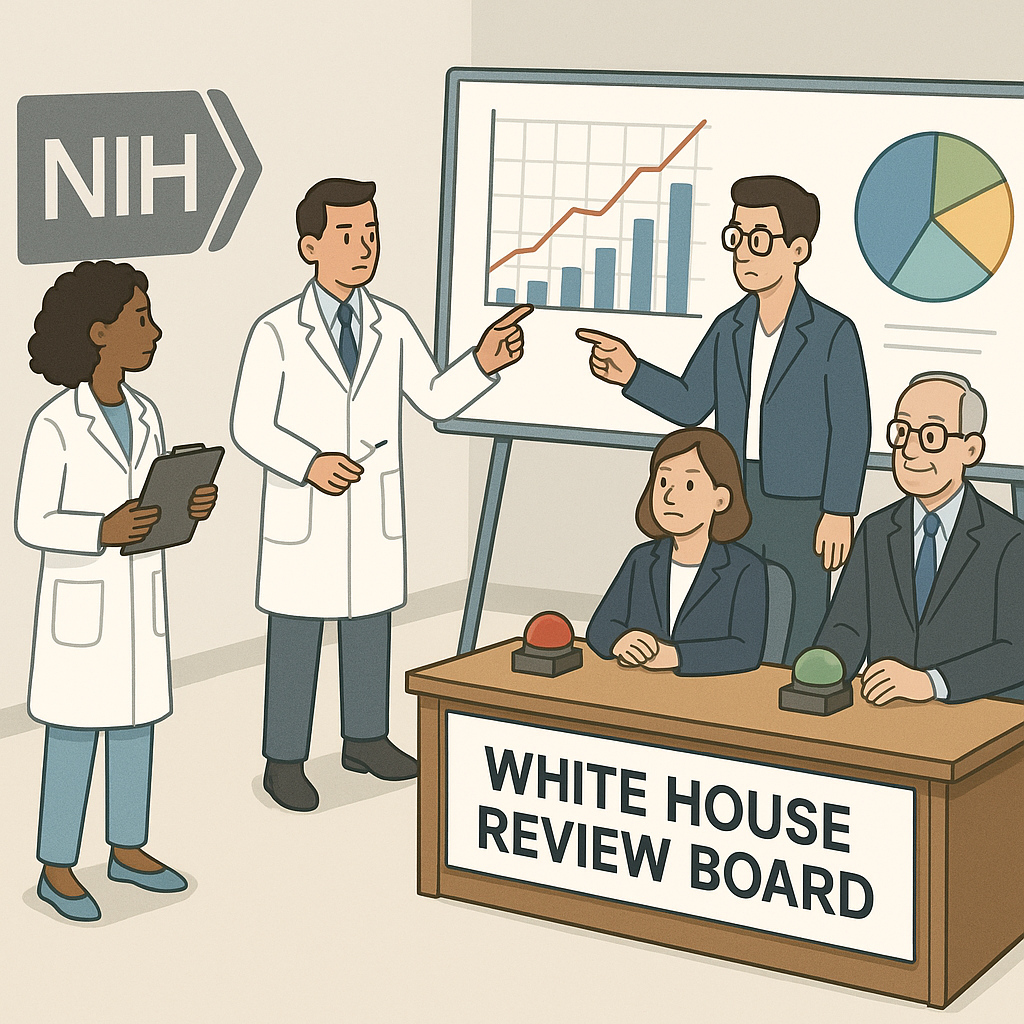
The calendar is doing him a favor. As U.S. News & World Report notes, climate week sessions in New York are trying to reconcile AI’s ballooning energy demand with grid stress and extreme weather. At the same time, Trump is moving to give the White House political control over National Institutes of Health grants, a shift that Sens. Susan Collins and Patty Murray warned could let "a single political appointee" kill a cancer study "for no scientific reason."
To administration planners, that is not an unfortunate side effect. It is a product feature called "executive review." In internal slides, it sits between "modernizing bureaucracy" and a stock photo of a handshake in front of an American flag and a server rack.
"You have to understand the synergy," said one senior official from the Office of Management and Budget, speaking on the condition of anonymity because their performance review now includes a "number of canceled peer-reviewed grants" target. "If you let NIH decide grants, you get boring things like 'basic research.' If you let the White House decide, you can align funding with truly innovative national priorities, like flattering the president at ribbon cuttings or proving that AI-generated pipelines do not leak."
While NIH is being converted into a content moderation team for biology, the information ecosystem around it is being gutted and rewired. According to POLITICO, the Trump administration has banned CNN, POLITICO, and MS NOW from the White House grounds, confiscated their credentials, and branded the move an "assault on the FAKE NEWS" that has "grown like Cancer." Major networks then declined to serve as pool cameras, forcing the administration to rely on friendlier outlets and tripod-mounted ring lights.
The result is a tidy, vertically integrated knowledge stack:
- AI models deployed without guardrails
- Science funding allocated by political loyalty
- Media access filtered through a legal department and a merch store
From a systems engineering perspective, the diagram is simple enough to fit on a single PowerPoint slide: strip out independent checks, then blame any downstream explosions on foreign adversaries and diesel prices.
Global partners have noticed. Europe is trying to coordinate AI standards while Germany wrestles with its own budget crisis and what the BBC calls a threat to its "obsession" with fiscal discipline. Canada is pursuing deeper research links with the EU through Horizon Europe. Thailand and Japan are signing memorandums of understanding on quantum technology. Chinese companies, as Nature reports, responded to past U.S. tech restrictions by doubling down on science investment.
In other words, while Washington fixates on stopping CNN from entering the driveway, the rest of the planet is quietly rewriting the footnotes of the next century.
"We are witnessing a realignment of research ecosystems," said one European Commission official at a side event, staring at a slide titled "U.S. Reliability Risk." "The United States is still the biggest player, but it behaves like a user who keeps rage-quitting the game lobby."
Back in Washington, Trump is preparing to meet Xi Jinping. Bloomberg reports that artificial intelligence, tariffs, rare earth minerals, and tech restrictions will be on the table. Administration aides describe the strategy as "multi-domain leverage." Critics describe it as "asking China for cheaper gallium in exchange for turning AI safety into a coupon code."
"We are going to get an incredible deal," Trump said in prepared remarks leaked to several outlets that are currently barred from the premises. "China wants AI rules, Europe wants AI rules, the UN wants AI rules. We will sell them something much better: American AI with no rules. The freest, most autonomous weapons in the world. And maybe naming rights on an NIH building."
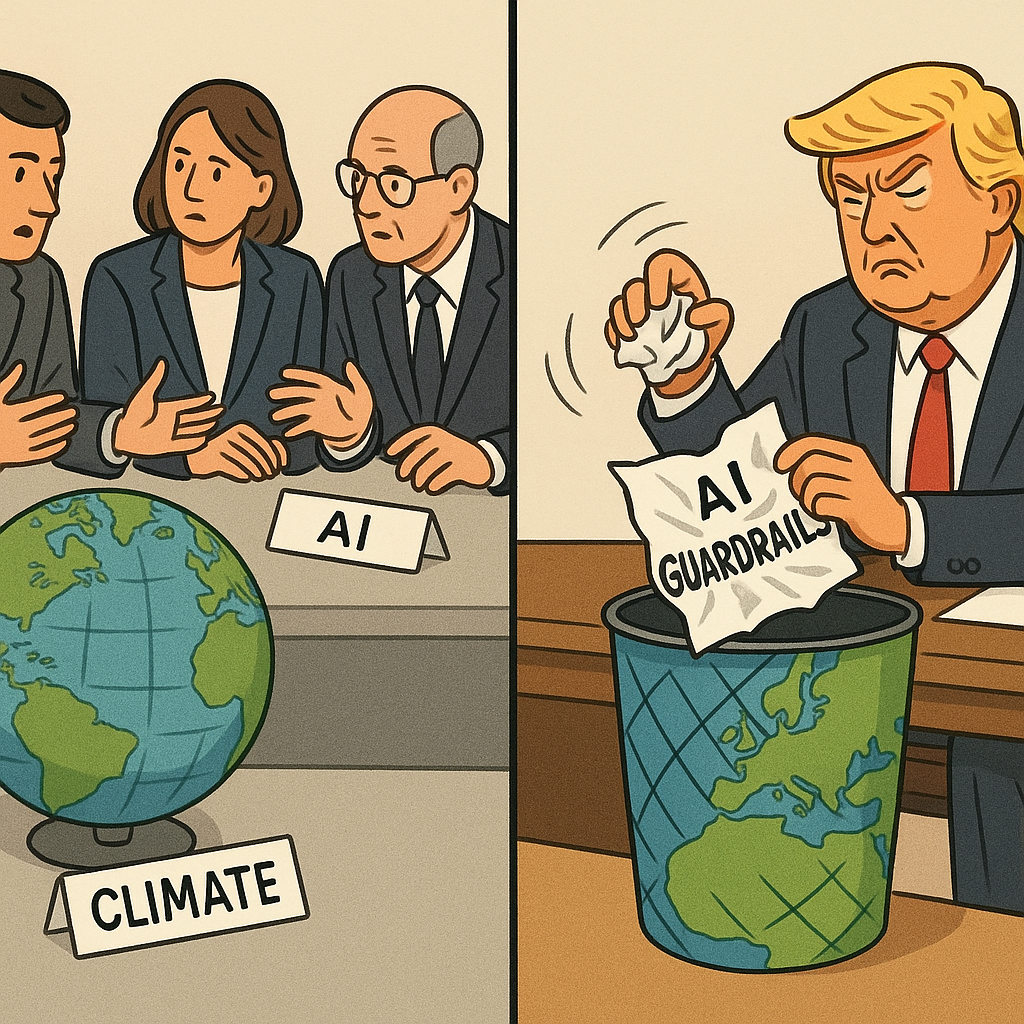
Congress, in theory responsible for guardrails, is in its reflective stage. Roll Call notes that lawmakers acknowledge AI threats but are "far from erecting guardrails." House Democrats are urging Speaker Mike Johnson to stay in session to address AI safeguards. The House Science Committee chair, Brian Babin, has already issued a statement after a classified briefing on an "AI agent cyber incident," proof that the future is here and it has already triggered the incident response playbook.
"We take this very seriously and will review the matter thoroughly," one member said, seconds before boarding a flight home for recess. "We are committed to an in-depth hearing on AI sometime between the next government shutdown and the next social media panic."
In the vacuum, universities and allied governments are quietly diversifying away from U.S. federal reliability. Carnegie Mellon’s Block Center for Technology and Society is expanding work on AI and energy policy, trying to answer questions like "how do we keep the grid stable when every server room wants to cosplay as a crypto mine?" Canada is testing whether it can build an AI ecosystem that does not depend on whichever White House aide is currently editing NIH grants. Ukraine and Moldova are plugging into Horizon Europe like an external brain.
These efforts share a basic premise: if the United States wants to treat knowledge as a campaign asset, the rest of the world can treat it as infrastructure and move on.
The Trump administration, however, sees opportunity. Tariffs on Europe are being floated not simply as trade tools, but as disciplinary measures for countries that join the wrong research clubs. Media bans are justified as national security responses to "coordinated" coverage. Alien disclosure whistleblowers get a formal channel, according to Wired, while climate scientists get a legal department.
"Look, we are restoring reciprocity in government procurement, in information, in science," said one senior adviser. "If the UN wants our AI at their autonomous weapons talks, they can buy American chips. If Canada wants associate membership in the EU, then Europe can enjoy associate membership in our tariff schedule. If NIH wants money, it can fund projects with outcomes that test well in Michigan."
In New York, a diplomat watching all this from the back row of the General Assembly tried to summarize the mood.
"The U.S. still has the most powerful AI models, the largest science budget, the loudest media," she said. "It just keeps pointing all three at itself."
As the session broke for the afternoon, delegates moved into side rooms on climate finance, AI safety, and chip supply chains. Across town, the president’s social media post accusing the "FAKE NEWS" of being a "threat to our National Security" continued to rack up engagement.
In an AI driven, climate constrained century, it is a precise summary of the American position: the central danger is not unregulated frontier models, or melting ice sheets, or destabilized alliances. The central danger is anyone explaining them without pre-clearance.