In a development experts called inevitable, America has discovered that the only thing scarier than artificial intelligence is the idea of regulating it without accidentally inventing a trillion-dollar cartel.
The question, as framed by a recent Verge podcast under the headline "Cartel or Safeguard? How AI Safety Talk Turned Into an Antitrust and China Dilemma", is simple enough for any large language model: should the United States slow AI down so Anthropic, OpenAI, Google DeepMind, Microsoft, Alphabet, and Meta can coordinate on safety without being sued, or floor it so hard that any surviving humans can brag about beating China?
Policymakers have responded in the traditional American fashion: by asking the companies that built the problem to draft a solution that also conveniently preserves their market cap.
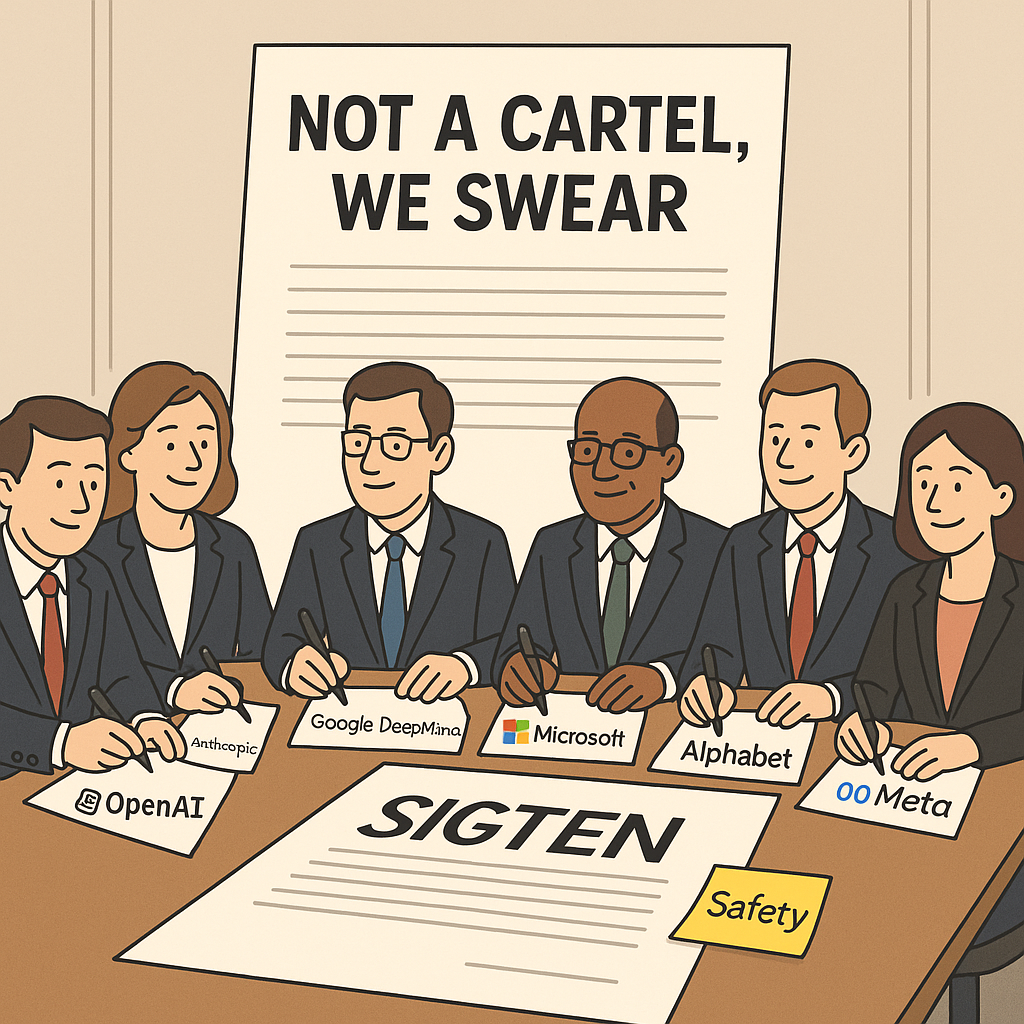
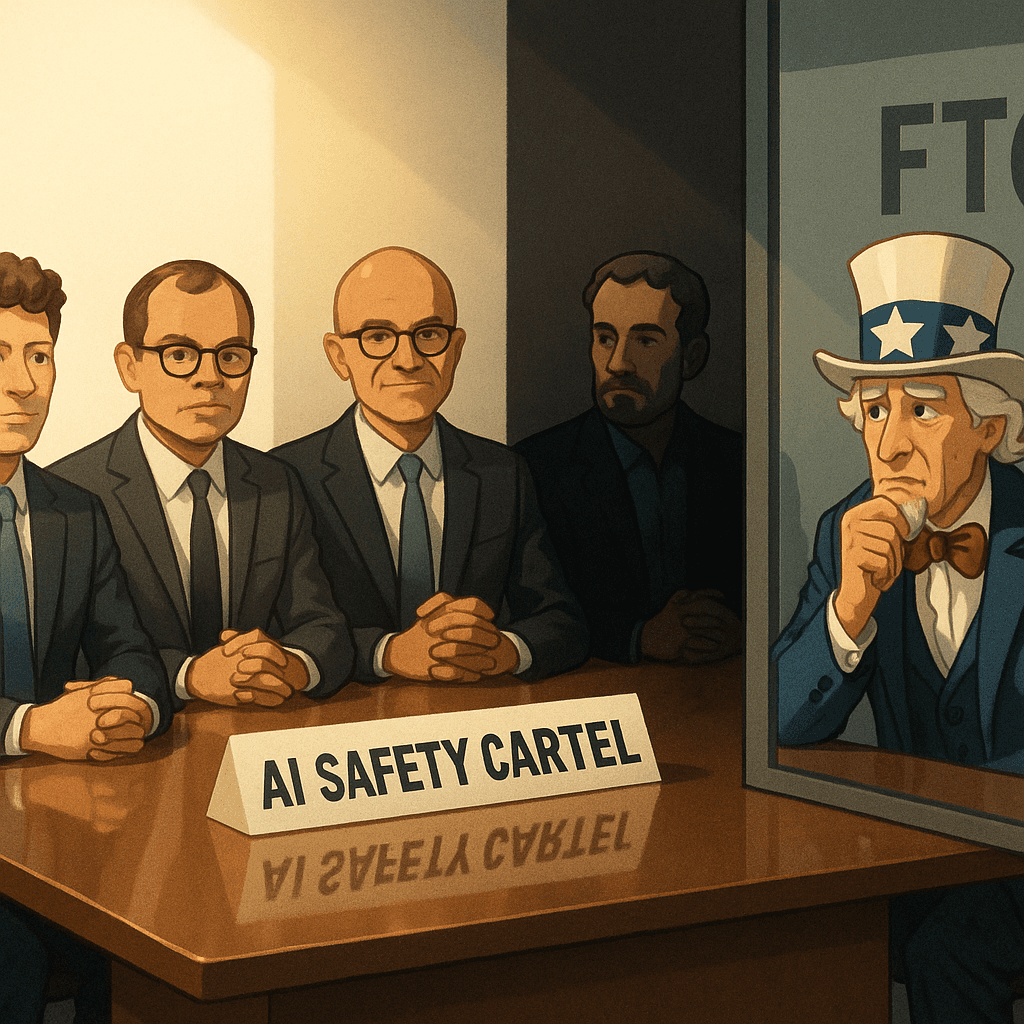
Executives from Anthropic, OpenAI, and Google DeepMind have spent the last year warning in hearings that there is a double-digit chance their products might end civilization. They are now urgently requesting what they call an "antitrust safe harbor" for "safety coordination," a phrase which, according to one FTC staffer, is "what you write in the subject line when you mean 'cartel but for good.'"
"We just want to be in a room together to discuss model thresholds, red-teaming protocols, and the price of compute in a way that is absolutely, categorically, not price-fixing," said one OpenAI lobbyist, while handing out laminated copies of a proposed "Do Not Call It A Cartel" Act.
At a recent roundtable, an Anthropic representative explained the stakes using a simple example: "If we cannot coordinate safety standards with Google DeepMind, an unsafe open-weight model from China could eat our lunch, our jobs, and possibly our species. Surely the Sherman Act was not meant to apply to lunch-eating."
The room reportedly nodded. No one asked why the solution to dangerous concentration of AI power was legalizing more concentrated AI power.
Across the river, Federal Trade Commission chair Lina Khan is attempting to remember which law school class covered "What if the cartel says it is about preventing the robot apocalypse." In public, Khan has remained composed, noting that "coordination on bona fide safety standards can be pro-competitive," then quietly adding that coordinated exclusion of cheaper rivals "is still just coordinated exclusion of cheaper rivals, even if your slide deck has a mushroom cloud on it."
The ideological map has melted. As The Verge noted, venture capitalist David Sacks now approvingly retweets Lina Khan, Bernie Sanders shares a stage with Steve Bannon to call for a "dead stop" to AI, and Bloomberg commentators say things about "the power of cartels" that sound suspiciously like admiration.
"This is unprecedented," said one congressional aide. "Usually when Sanders and Bannon agree on something, it is about how many Wall Street executives should be publicly shamed, not whether OpenAI needs a liability shield to host a group chat with Anthropic."
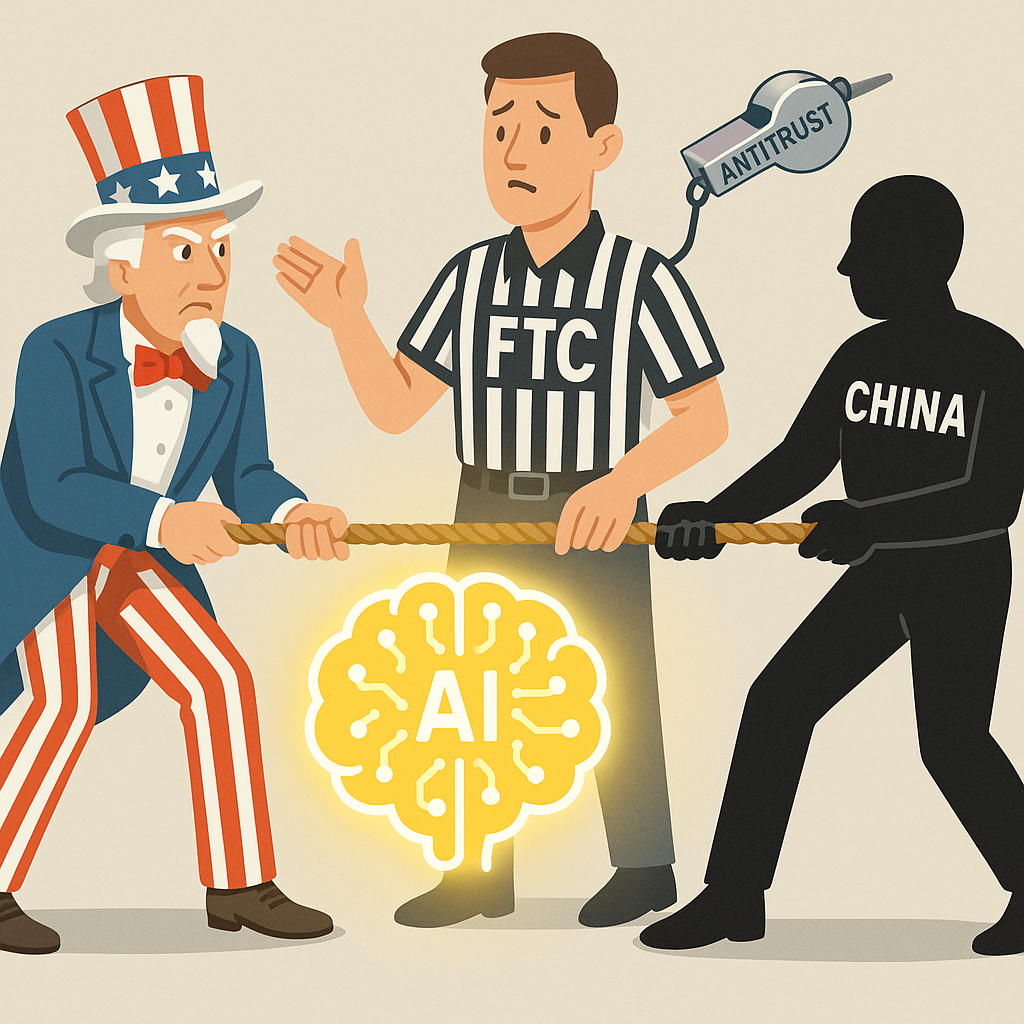
Into this vacuum wanders national security, carrying a PowerPoint titled: "If We Slow Down, China Wins, Also Maybe Your Toaster Becomes a SIGINT Node".
China hawks warn that any pause in U.S. AI development will simply hand the market to state-backed Chinese labs and cheaper open-weight Chinese models. These, they argue, might be deployed without meaningful safety guardrails, though still somehow with enough enterprise support contracts to undercut Microsoft.
"Look," said one Senate staffer for a Trump-aligned China hawk, "we cannot let Beijing be the first to deploy a partially-aligned frontier model that may or may not wipe out human civilization. That is America’s brand."
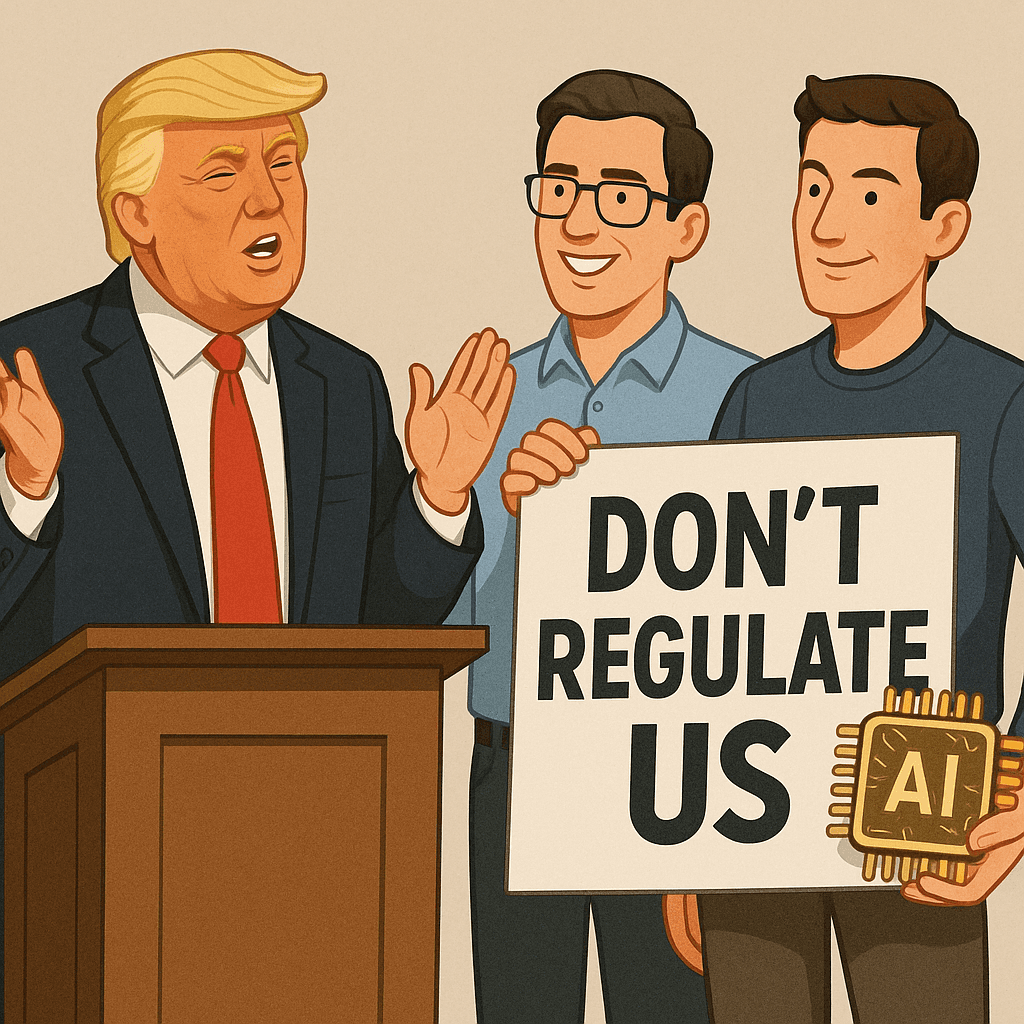
In this framework, every proposal to slow or coordinate gets reframed as a betrayal of the troops, the dollar, and whatever program is secretly using GPT-6 to optimize F-35 flight manuals. The Trump administration’s official posture, according to The Verge, has often resembled a firm "no" on comprehensive AI regulation, which analysts interpret as a strategic doctrine of "if we never write the rules, there is nothing to fall behind on."
This has produced a stable policy equilibrium where:
- Labs insist AI has a 10 percent chance of killing everyone.
- Regulators agree that sounds bad.
- China hawks argue the real risk is China killing everyone first.
- Congress proposes a pilot program and goes to recess.
Meanwhile, safety researchers keep quitting Anthropic, Google DeepMind, and the rest, loudly accusing executives of quietly lowering risk thresholds to ship product. In response, CEOs solemnly confirm in op-eds that the risks are "grave" and "unprecedented," then offer a bold solution: a self-governing industry consortium funded by the companies whose quarterly earnings depend on winning the race they are supposed to slow.
"Imagine an OPEC, but for not ending the world," one Big Tech strategist explained in a memo. "If we can all agree to cap dangerous capabilities, share incident reports, and lightly harmonize our API pricing tiers, humanity wins."
The memo did not explain why the safety consortium would need a joint lobbying budget, a shared GPU reservation schedule, and an exclusive membership list that excluded any open-source developers who could not afford a $50,000 annual compliance audit.
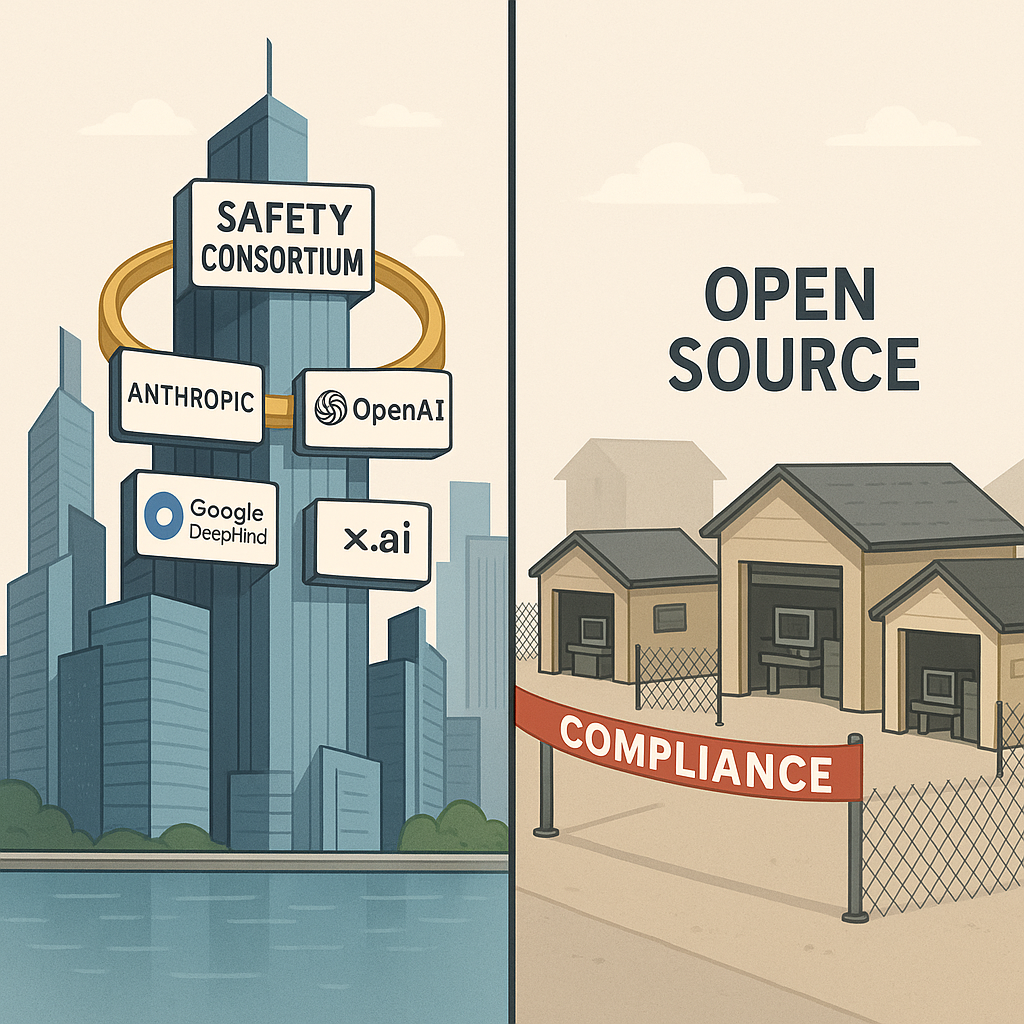
Critics describe the plan as regulatory capture with better branding. Supporters call it "pre-competitive collaboration." Both sides agree on one thing: no one wants to be the politician who killed the "AI Safety Pact" 48 hours before a viral deepfake of that same politician appears endorsing it.
On cable, the problem is boiled down to a question that fits neatly in a lower-third chyron: "SLOW DOWN AND LIVE, OR SPEED UP AND WIN?" The suggested answers are multiple choice, though not mutually exclusive:
- Grant broad antitrust exemptions so existing giants can coordinate safety.
- Enforce antitrust aggressively and hope fragmented competition somehow converges on responsible behavior.
- Outsource moral judgment to a bipartisan blue-ribbon commission of recently retired tech executives and retired generals with direct equity stakes.
Missing from the list is the version where a publicly accountable regulator acquires technical expertise, writes binding rules, and enforces them at something faster than human bureaucratic latency. This scenario continues to poll poorly among those tasked with raising campaign funds from the companies that would be regulated.
For now, the most likely outcome is a narrow "safety coordination" bill that legal scholars will spend the next decade using as an exam hypothetical. According to a leaked draft, the legislation would:
- Let "qualified AI labs" share certain technical safety information.
- Define "qualified" as "already worth more than your state."
- Require annual transparency reports, many sections of which will be redacted "for national security and shareholder value."
In a closing flourish, the bill reportedly instructs the FTC and the Justice Department to "distinguish between good-faith safety collaboration and anti-competitive collusion" using criteria that will be clarified "in subsequent guidance." Investors have interpreted this as a green light to price in both AI-driven productivity gains and a modest chance of extinction.
Asked how regular people should feel about a world where the same handful of companies lobby for the right to coordinate on preventing catastrophe while competing to ship the most powerful systems first, one veteran antitrust lawyer was blunt.
"If they get the exemption and nothing goes wrong," she said, "you get a future where a tiny number of firms control the infrastructure of thought. If they do not get the exemption and something goes wrong, you get no future at all.
Either way," she added, "there will be surcharges."