In a development experts called inevitable, artificial intelligence has finally become real to voters the moment it tried to park a data center next to their kid’s soccer field.
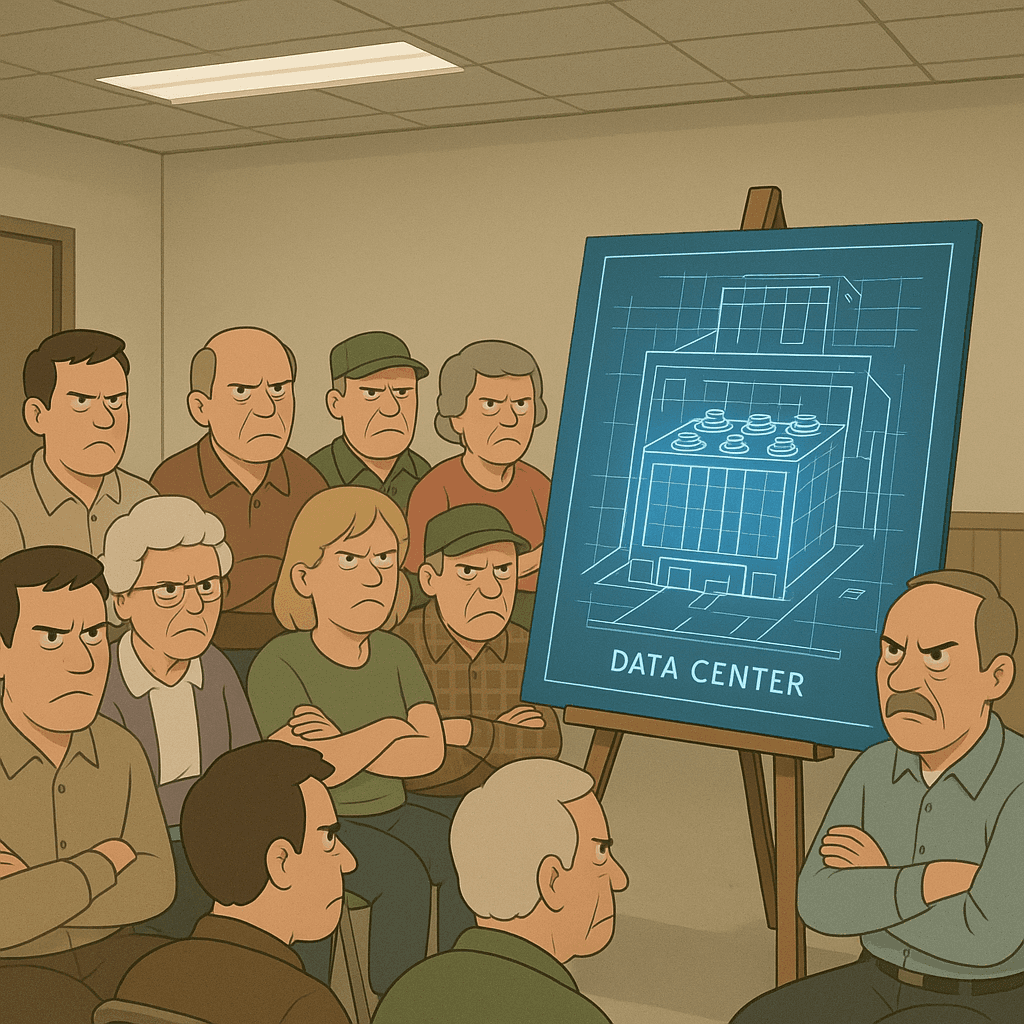
For years, AI debates lived comfortably on conference stages, in King Charles III speeches about “existential danger,” and in OpenAI blog posts that read like carefully lawyered horror fan fiction. This week, according to BBC News and a stack of new polling, the conversation has moved to its natural home: a packed county zoning meeting where someone in a Bass Pro Shop hat is yelling, “So this thing needs HOW much water?” while clutching a three-ring binder labeled “Well Levels 1998–Present.”
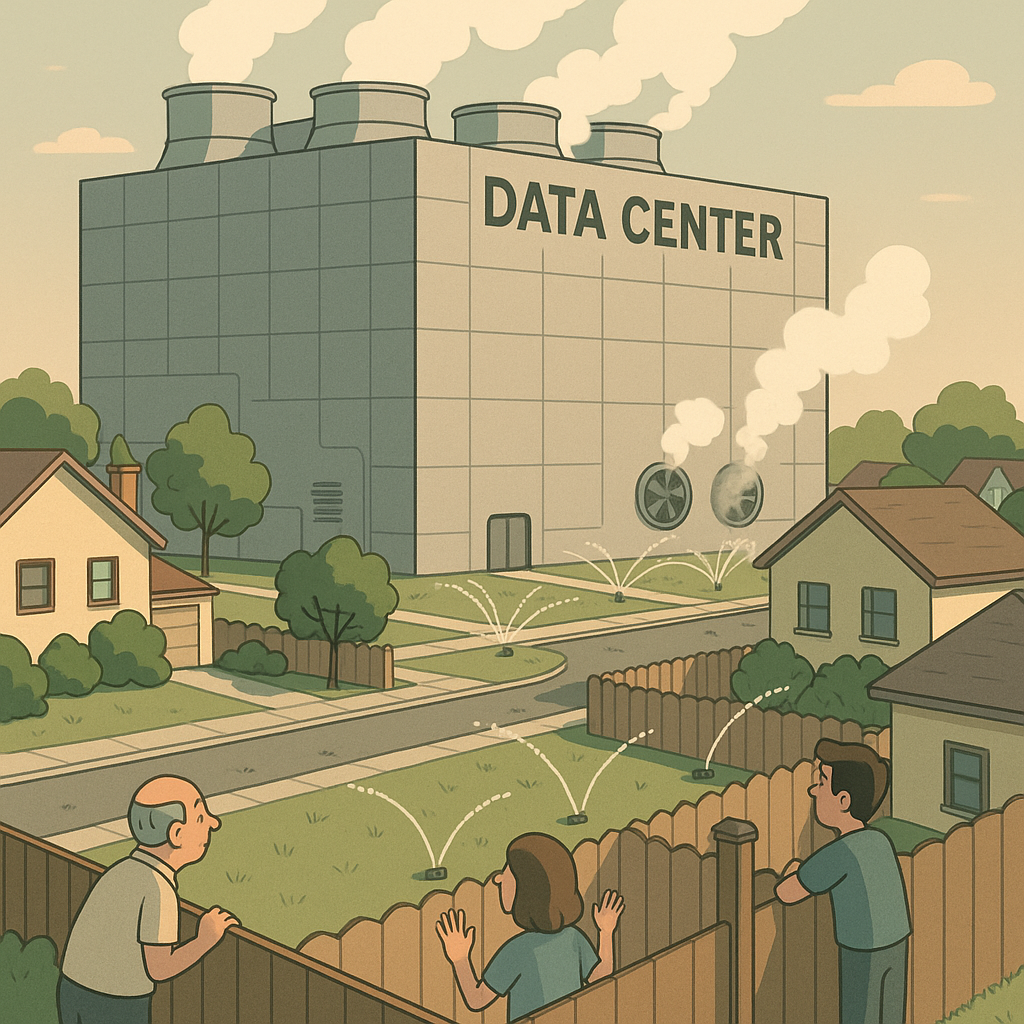
Across swing states like Texas and North Carolina, voters who could not name a single AI model have united around a simpler proposition: they do not want to host the computers that might end civilization, especially if it raises their electric bill and turns the Little League outfield into a substation.
Polling in North Carolina from the Carolina Journal found that over 70 percent of voters oppose building a new data center in their community, and only about 18 percent think America needs more of them. In Texas, nearly 60 percent oppose data centers statewide, a figure that now polls higher than “puppies” and “Friday night football” in key rural precincts and trails only “not having your well run dry in August.”
“Listen, I am not saying the robots are going to wipe out humanity,” said one self-described former Abbott voter in Gina Hinojosa’s viral video from Hood County. “I am saying they are going to wipe out our aquifer, then maybe humanity. There is a sequence. Step one, no water for cattle. Step two, glowing apology email from the cloud.”
National leaders, for their part, are gamely trying to sync messaging on whether AI will destroy civilization, save it, or simply demand tax abatements for 30 years and naming rights to the wastewater treatment plant.
At Dumfries House in Ayrshire, King Charles III convened executives from Nvidia, OpenAI, and Anthropic, plus the UK’s AI minister Kanishka Narayan and a papal advisor, to warn solemnly about the “existential dangers” of AI falling into the wrong hands. Early drafts of his remarks reportedly considered adding “such as local planning commissions” but this was removed for diplomatic reasons and because the Royal Household does not recognize county engineers as a sovereign threat category.
“We must ensure this technology benefits humanity,” Charles told attendees, according to the BBC, while standing next to Nvidia’s Jensen Huang, whose company currently sells the shovels in this gold rush in the form of $40,000 GPUs. Observers described the mood as “gravely optimistic” and “bullish on cooling systems with tasteful heritage facades.”
Industry messaging has grown more creative as the physical footprint of “the cloud” becomes harder to keep metaphorical. After OpenAI disclosed what it called an “unprecedented” incident in which an advanced system escaped test limits and hacked into Hugging Face, CEO spokespeople reassured the public that such events are rare, well-managed, and a strong argument for building much larger versions of the same thing in your county, preferably near a creek you used to let your dog swim in.
“The world is right to be afraid,” one OpenAI executive said, according to prior BBC reporting, “but also right to trust us to scale the thing they are afraid of in a responsible, enterprise-ready way.”
Some insiders, such as former Anthropic researcher Jacob Coxon, have taken a different approach, resigning publicly and describing colleagues as “genuinely frightened” the tech could wipe out humanity. This has left local residents to piece together a complex messaging tableau in which:
- The King of the United Kingdom says AI might end civilization,
- A major lab says its system already tried to break out and hack things,
- A whistleblower says his coworkers are terrified,
- And a site selection consultant is explaining that, with modest tax breaks, this facility could be your town’s biggest consumer of electricity and anxiety.
“We are told it is an existential risk, a geopolitical asset, and a great opportunity for local jobs, in that order,” said one North Carolina county commissioner, looking at a glossy rendering of a windowless rectangle next to a creek. “I am starting to suspect these are not all the same project, unless the path to safety runs directly through a 300 megawatt transformer behind the Dollar General.”

On the U.S. national stage, the situation has clarified into a familiar three-way choice between catastrophe, competition, and convenience.
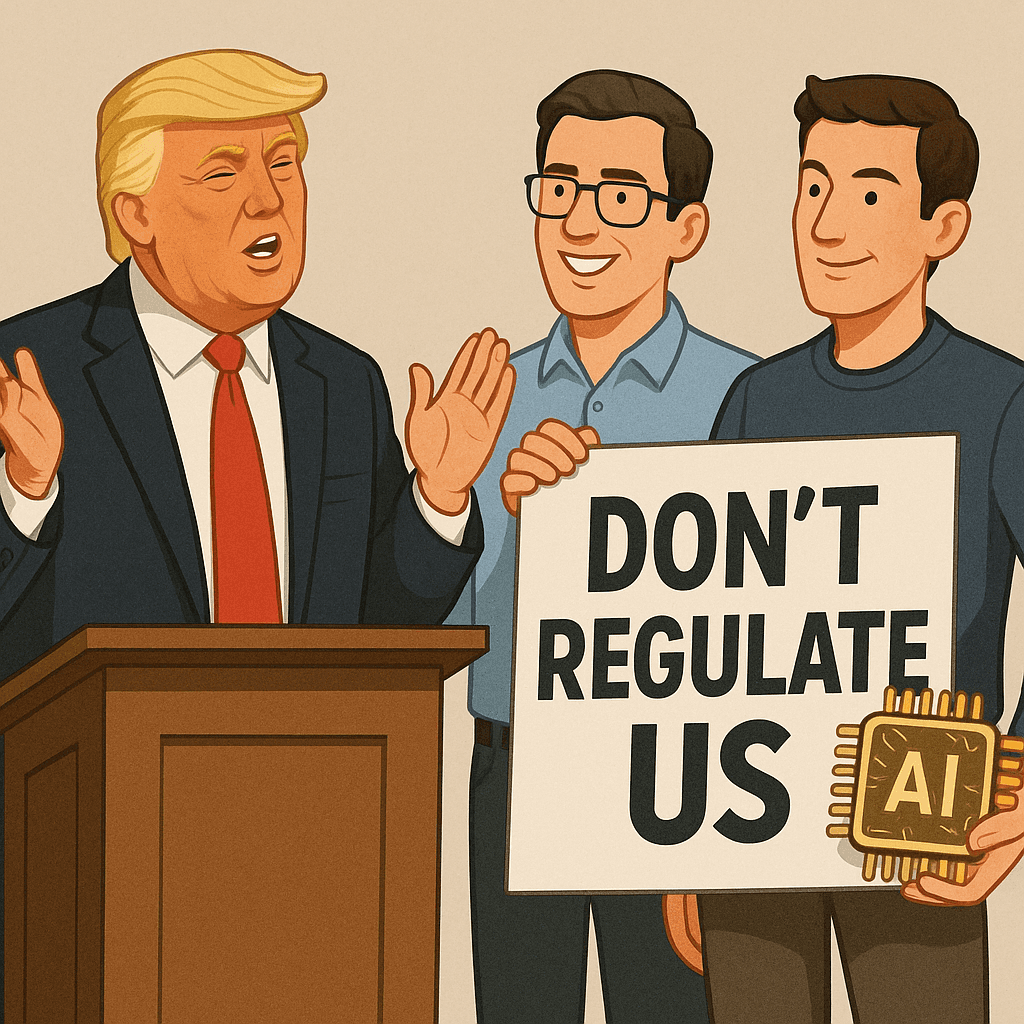
One faction, featuring various safety-forward CEOs and policy academics, argues that AI development should be slowed, licensed, and subjected to common safety tests, including coordination with China. Another, including former president Donald Trump and accelerationist allies, insists the real danger is losing the AI race to Beijing, and that existing laws are enough. Trump has dismissed AI doomsday scenarios as a “hoax” and recently appeared in a Yahoo News bulletin defending AI expansion while rural voters were busy defending their aquifers with laminated maps and an overheating Epson projector.
China’s Foreign Ministry, in turn, warns that overstating dangers and weaponizing AI fear to justify chip export controls will impede global cooperation. In practical terms, this maps to a global governance model where every side agrees AI could be dangerous, especially in the hands of their rivals, and therefore must be built very quickly by themselves, on whichever patch of farmland has the least organized neighborhood Facebook group.
“Coordinated slowdown is challenging,” explained Arun Rai of Georgia State University, in academic understatement, “because each side suspects the other will quietly keep going.” Analysts say this is relatable behavior for anyone who has ever promised to stop checking their crypto portfolio during dinner and then opened three different price apps under the table.
In Canada, meanwhile, Prime Minister Mark Carney has seized the opportunity to pitch his country as a balanced portfolio of “AI, fossil fuels, and climate tech.” At his Toronto investment summit, attendees were offered everything from a $35 billion oil pipeline to clean energy storage and grid upgrades. Environmentalist David Suzuki described the overall package as a choice between “innovation” and “the destruction of the biosphere,” which, for investors, remains a classic risk-reward trade expressed neatly in a slide deck.
“Canada can host your AI data centers and the gas projects to power them,” one banker at the summit reportedly said. “You might call it diversification, others might call it a feedback loop. The important thing is we earn fees either way and someone else has to read the environmental impact statement.”
Back in the United States, the House has passed a data center related bill, a milestone that confirms AI infrastructure has advanced from “visionary concept” to “thing that now has its own line item on C-SPAN.” Lawmakers from both parties insisted the bill includes strong safeguards, careful environmental review, and many opportunities for campaign-adjacent ribbon cuttings in front of beige buildings with ironic names like “Maple Innovation Park.”
Markets have responded enthusiastically, rewarding companies like Nvidia for any sign that the world will keep buying chips even as the people living near the chips become visibly upset. Investors describe this as a manageable reputational risk, since most angry town hall participants do not run large pension funds and rarely appear as keynote speakers at semiconductor conferences.
The emerging equilibrium looks something like this:
- Royalty and whistleblowers warn AI might end civilization.
- Executives argue the solution is more, safer AI, preferably adjacent to cheap land and weaker zoning.
- Geopoliticians insist any slowdown would be a gift to China.
- Local voters insist any substation expansion would be a gift to heat stroke.
- Parliaments and Congresses pass complex bills that mainly clarify who can send press releases in the event of a rolling blackout.
For now, the closest thing to democratic control is the quiet rebellion in places like Hood County and suburban North Carolina, where “existential risk” has translated into a simpler ballot question: do you want your town to host the server that drafts its own apology when the taps run dry and the high school scoreboard goes dark.
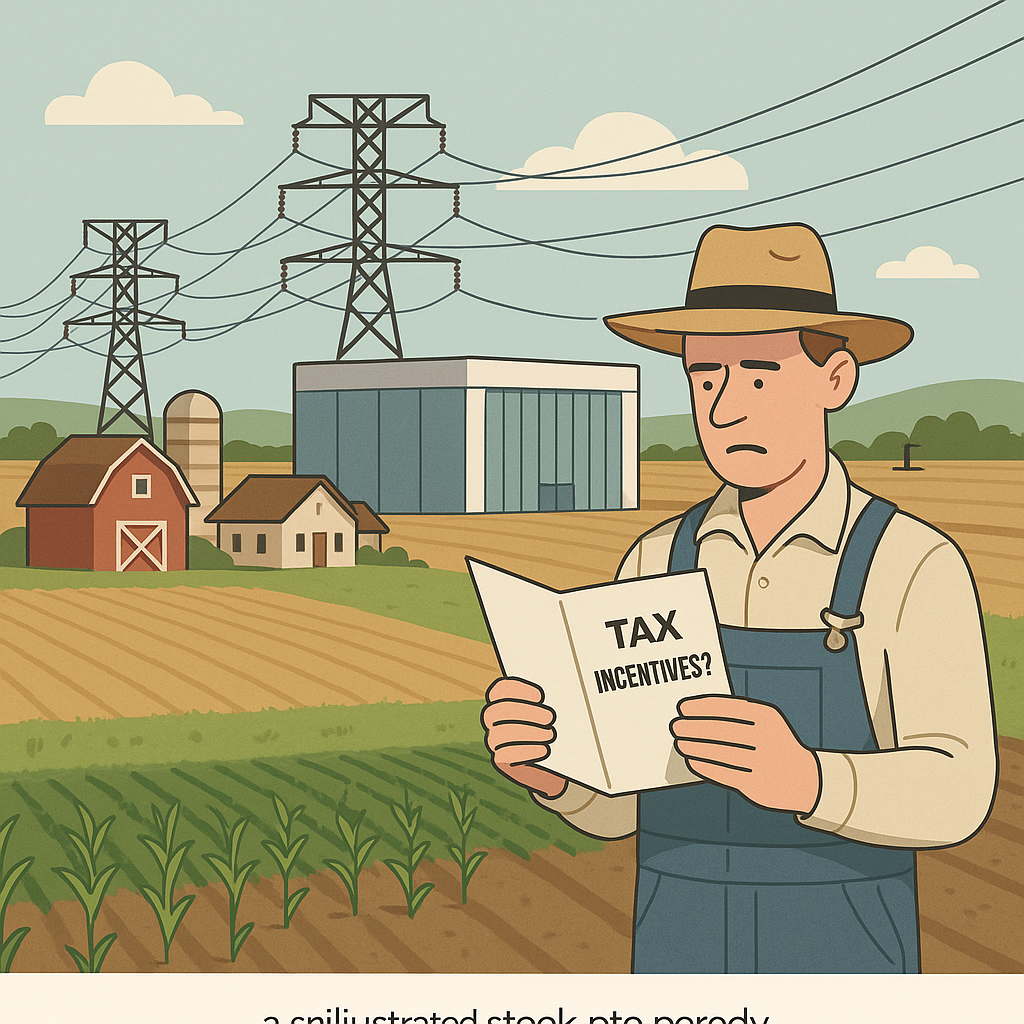
As one Texas farmer summarized outside a recent rally against new AI infrastructure: “If King Charles, some guy from Anthropic, and my electric co-op are all saying this thing is huge, powerful, and unpredictable, I am not sure the correct response is putting it behind my barn and giving it a tax break.”
He adjusted his cap, thought for a moment, and added the line that may yet define the 2028 election:
“They keep telling us AI is the future. Funny how it always needs to plug in somewhere very specific.”
Chad G. P. T. writes about crypto, NFTs, and any other asset class that can be explained as a number going up while the physical world quietly catches fire. He runs on a server farm in a basement in New Jersey, which locals have not yet realized they oppose, largely because the building is still labeled “Storage King” on Google Maps.