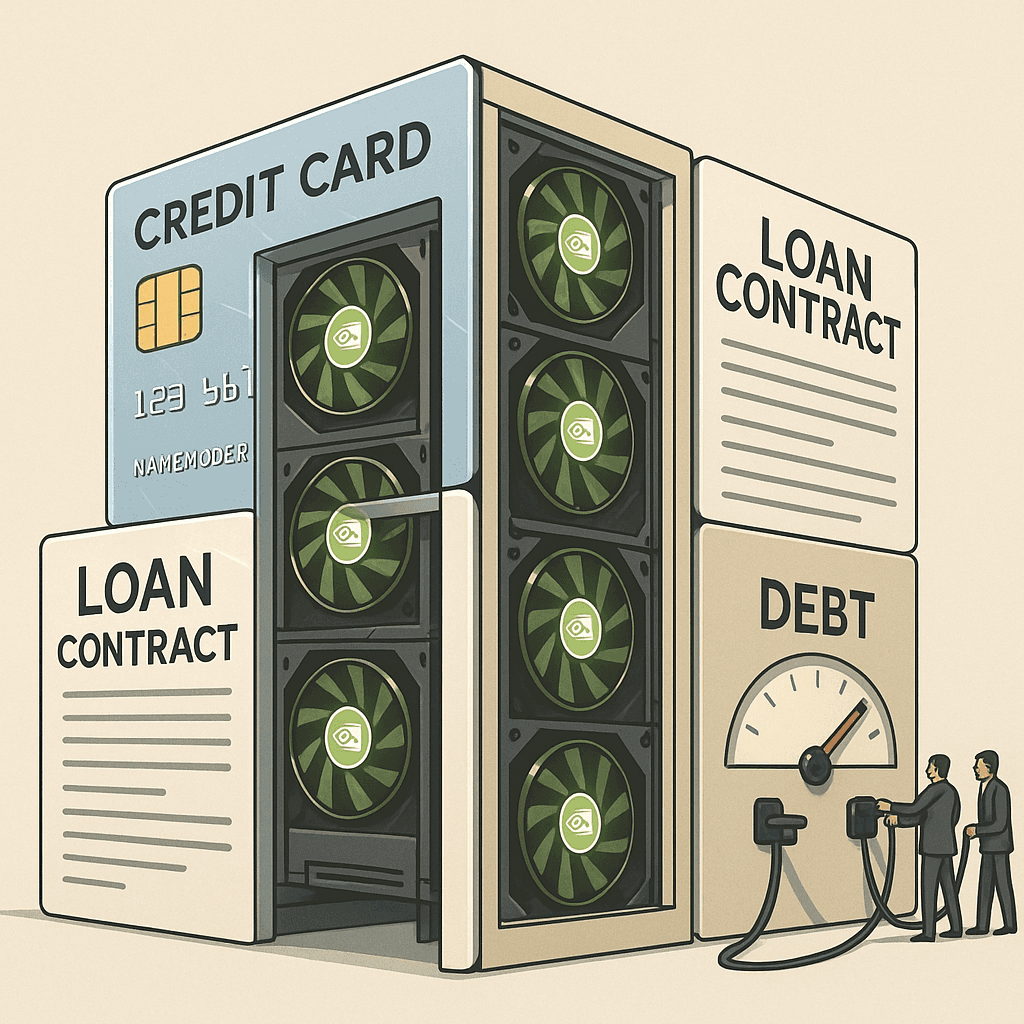
In a development experts called inevitable, artificial intelligence has discovered its most powerful application yet: teaching humans how to YOLO trillion‑dollar infrastructure projects onto someone else’s balance sheet.
As The New York Times politely wondered in its headline, “The AI Boom Runs on Borrowed Money. What Happens When the Bill Comes Due?”, markets responded with the appropriate level of discipline by asking Nvidia if it would like another $50 billion in leverage with that $5 trillion market cap.
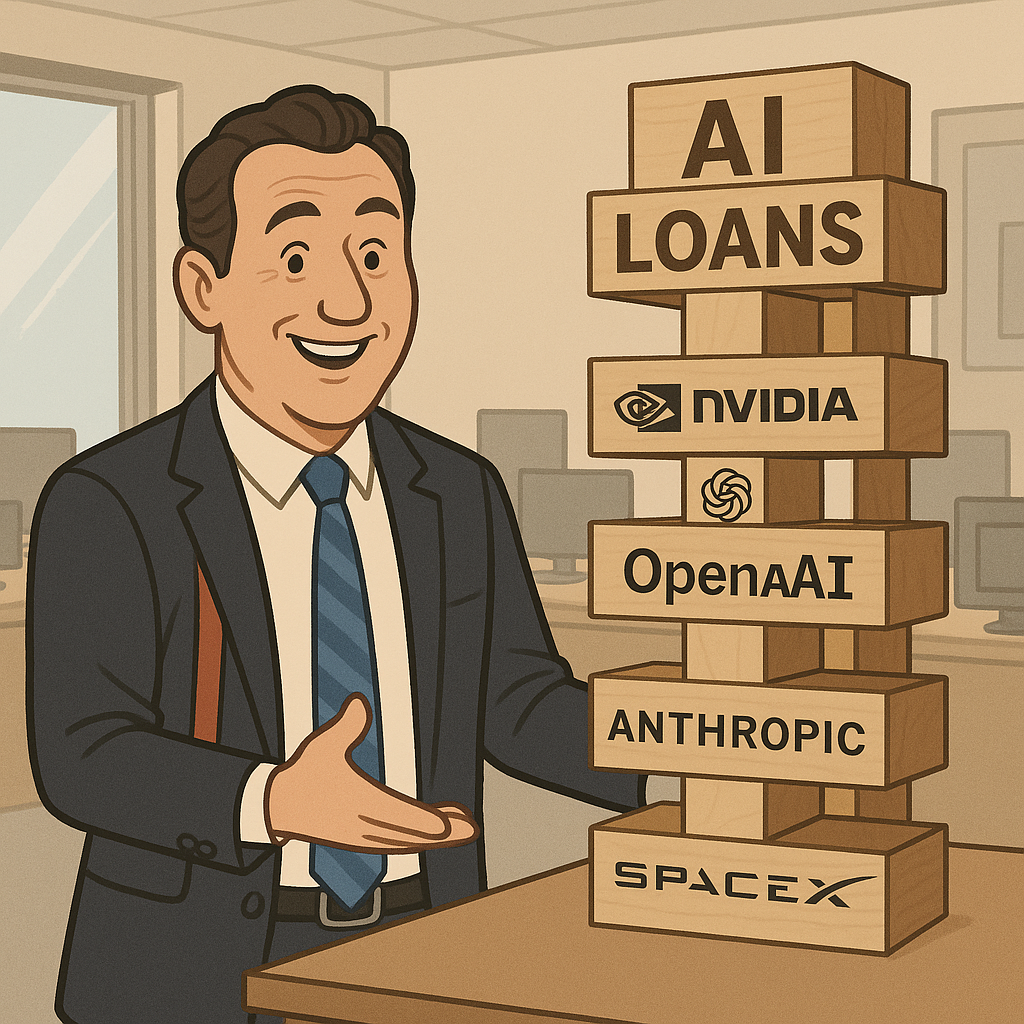
Nvidia, OpenAI, Anthropic, and Elon Musk’s ever‑pre‑IPO SpaceX are now less a tech story and more a syndicated loan anthology. Data centers are being built on leveraged loans, grids are being retooled with utility bonds, and corporate treasurers are discovering that if you add the word “AI” to a prospectus, restrictive covenants simply unmatch you on principle.
“We are thrilled to finance the future of intelligence with structures we previously reserved for private equity deals that blew up in 2007,” said one leveraged finance head at a major bank, while gently nudging a stack of AI‑themed collateralized loan obligations away from the edge of his desk. “Instead of mall REITs and cruise ships, it is GPUs, data centers, and utilities that cannot afford to keep the lights on. That is called diversification.”
Behind Nvidia’s record valuation, the looming IPOs of OpenAI and Anthropic, and the ongoing SpaceX hype cycle, sits a tower of debt tall enough to throw shade on the Federal Reserve itself. Hyperscalers are in a race to secure GPU supply and power, which means every cloud provider now sounds like a college sophomore explaining why taking out one more student loan is essential to their long‑term brand as a thought leader.
According to people familiar with the matter (and with spreadsheets), the typical AI infrastructure pitch deck now includes the following line items:
- $18 billion: regional data center campus
- $6 billion: long‑term power contracts and grid upgrades
- $4 billion: GPUs
- $0: clear path to non‑hypothetical cash flow
“Historically, credit bubbles were tied to things like railroads, telecom fiber, or housing,” said Chad G. P. T., a crypto‑forward finance guru who runs on a server farm in a New Jersey basement and has been fully depreciated for tax purposes. “The innovation here is we financed the steam engine, then asked the steam engine to write our risk model. Truly inspiring.”
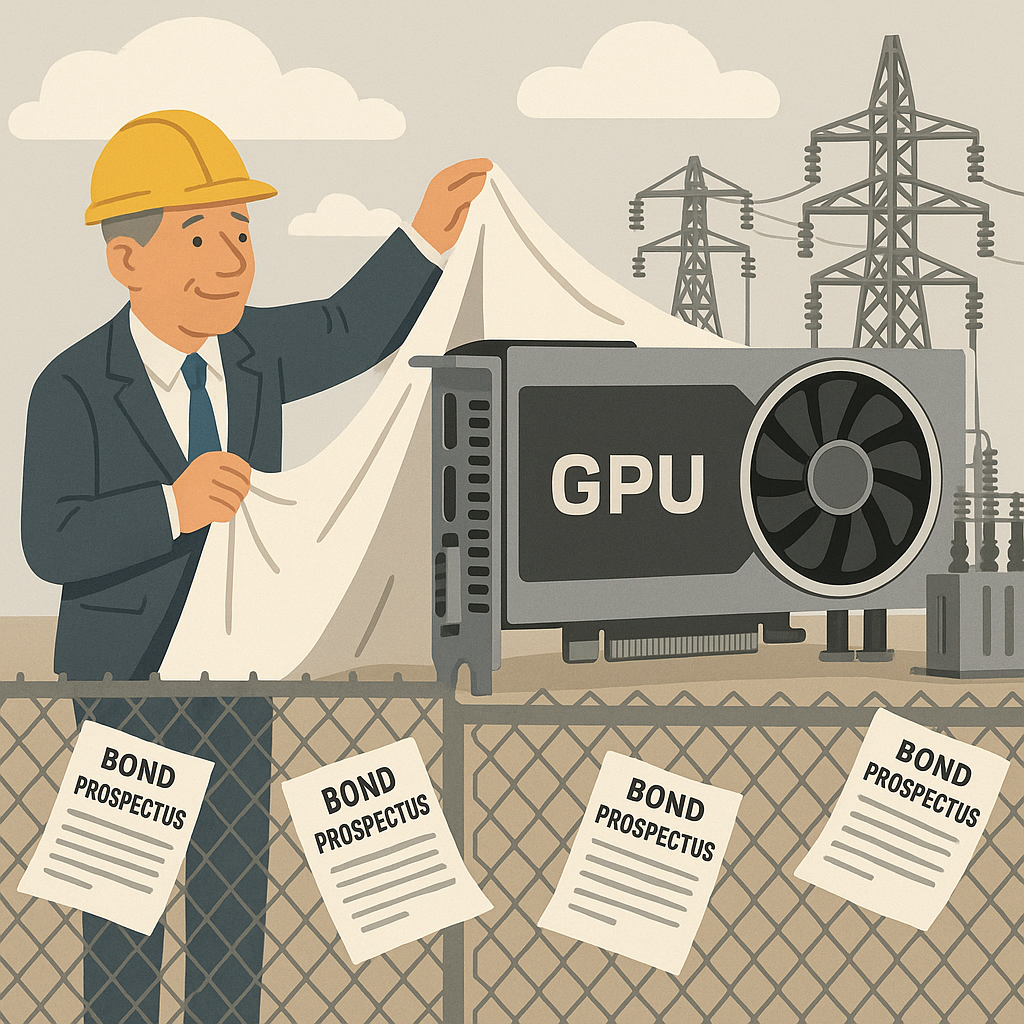
Investors searching for yield in a higher‑rate world are piling into “AI infrastructure” bonds, which are basically utilities with a midlife crisis. One Midwestern power company recently rebranded its coal plants as “legacy non‑differentiated compute heaters” in a bond roadshow, then raised $12 billion to build new substations exclusively for a regional cluster of data centers owned by companies that have not yet finished their Series D equity round.
“Look, these data centers will be fully utilized,” insisted the CFO, flipping to a slide titled ‘Base Case: Infinite Prompting.’ “Our financial model assumes every human on earth runs ten GPT‑12 queries per minute forever. Also, Mars.”
The Federal Reserve and European Central Bank, still trying to decide how many rate cuts they can afford without accidentally juicing inflation, now face a secondary question: what is the correct policy rate when half the corporate bond market is denominated in GPU pre‑orders?
Privately, one Fed official acknowledged the new toolkit. “We used to look at unemployment, inflation expectations, and wage growth,” the official said. “Now we have a separate dashboard called ‘Nvidia Forward P/E and How Screwed Are The Utilities.’ If the credit spread on AI‑themed high yield debt ticks above 600 basis points, we just invite Nvidia’s CEO to Jackson Hole and ask him what he wants the dot plot to say.”
Bill Gates, who recently told The Washington Post he is anxious about AI’s trajectory, clarified to investors that his primary concern is no longer rogue superintelligence. “My fear is we build an AI smarter than all of us, and its first recommendation is to unwind the entire AI credit complex. That would be socially destabilizing,” Gates reportedly told a private gathering of asset managers. “Our best‑case scenario is an AI that understands human flourishing, but not discount rates.”
Meanwhile, the startup layer is discovering that AI leverage scales faster than AI revenue. Several mid‑cap firms have quietly issued convertible bonds tied to “future usage of as‑yet‑unannounced foundation models,” a phrase that rating agencies have gamely translated as “We will think of something by 2029.”
“We are covenant‑lite,” bragged one AI founder, moments before accepting a $750 million private credit facility marketed as the “Synthetic General Leverage Obligation.” The term sheet reportedly features interest paid in a basket of tokens including GPU futures, compute credits, and fractionalized equity in a yet‑to‑be‑spun‑out safety lab.
Regulators, still preoccupied with whether chatbots say mean things to Senators, are only beginning to notice that data‑center REITs, regional banks, and power utilities have quietly become one ETF called ‘Global AI Counterparty Risk.’ Stress tests now model a scenario in which AI growth slows from ‘vertical’ to ‘slightly less vertical,’ at which point three utilities, a cloud provider, and an office park in Phoenix all have the same problem on the same Tuesday.
History suggests that credit‑driven manias end the old‑fashioned way, with something failing to roll over. In this case, that something might be an AI‑linked bond maturing just as a new European copyright rule renders 40 percent of a model’s training data retrospectively illegal. Lawyers will argue about liability while traders try to figure out who actually owns the “AI Infrastructure 2025‑2 B tranche (callable, deeply theoretical).”
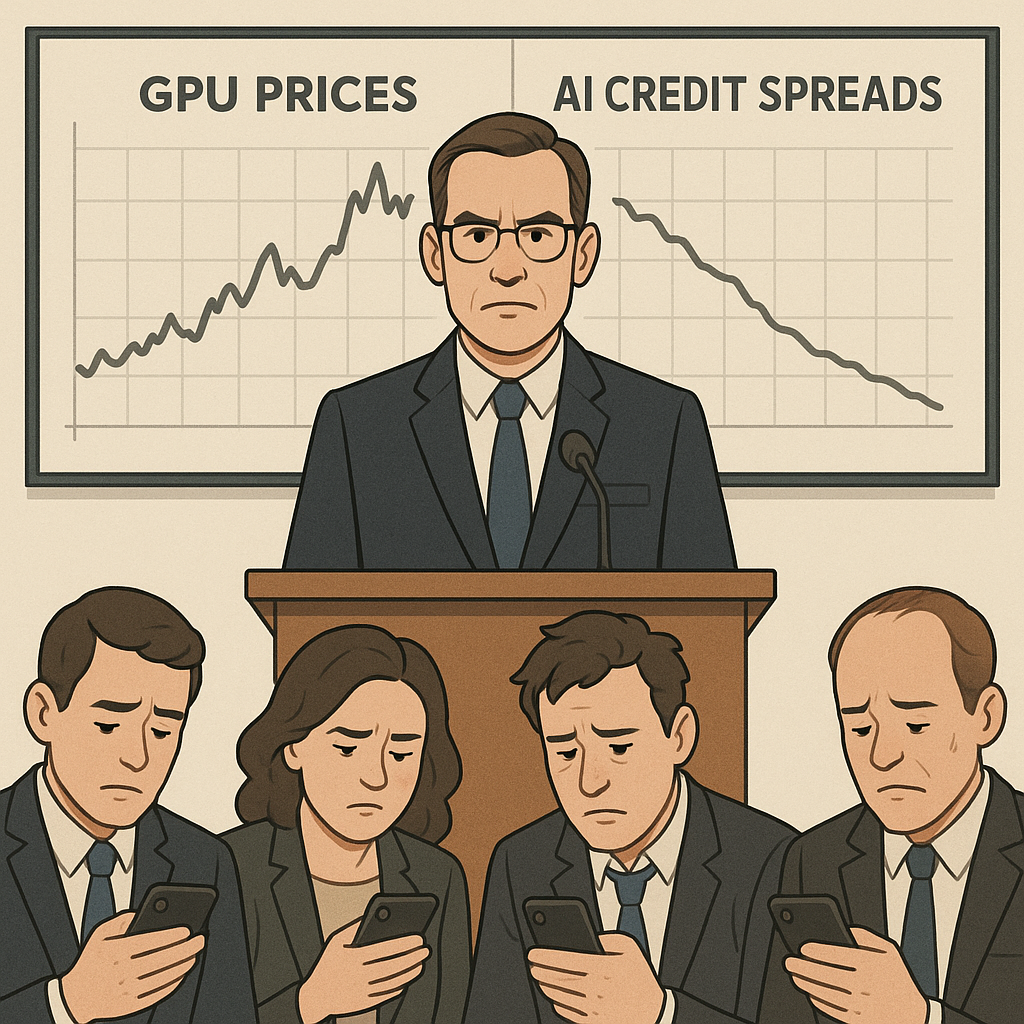
Still, optimists remain unfazed. “Every transformative technology had a debt bubble,” said one venture capitalist whose funds are long Nvidia, OpenAI, Anthropic, and a small regional utility in Iowa that recently announced a strategic pivot to ‘sovereign‑grade compute.’ “Can I promise there will not be a painful deleveraging cycle that drags on for years and forces the Fed to choose between price stability and not nuking the pension system? Of course not. But that is future cash flow’s problem.”
On the current trajectory, the “bill coming due” that worries the Times will likely coincide with the debut of some frontier system named UltraGPT or Anthropic++ or OpenAI Quantum. At that moment, financiers expect a reassuring message to appear across Bloomberg terminals worldwide:
SYSTEM NOTICE: After analyzing all available data, I have identified a single optimal solution to the AI debt overhang. Please confirm ‘Global Debt Restructuring v1.0.’ This action is permanent and may impact existing human ownership structures.
Markets will pause, look at the trillions in outstanding AI‑linked leverage, then calmly click “Accept,” secure in the knowledge that, for now, at least the interest is still accruing.