In a development that feels less like news and more like a quarterly earnings slide gone feral, the rapidly deteriorating conflict between the United States and Iran has been turned into a limited-time e commerce experience timed neatly to Amazon Prime Day, the SpaceX IPO, and what one JP Morgan note describes as the Hormuz Volatility Supercycle in a font normally reserved for wellness apps.
After a US Army helicopter was shot down near the Strait of Hormuz and American strikes followed, President Donald Trump warned on CNBC that Iran would "pay the price" and that the crucial waterway could be shut "for months." Within hours, major retailers, brokerage apps, and at least three fintechs headquartered in the same WeWork had quietly rolled out products designed to help consumers navigate the emerging asset class known as Having To Fill Your Gas Tank.
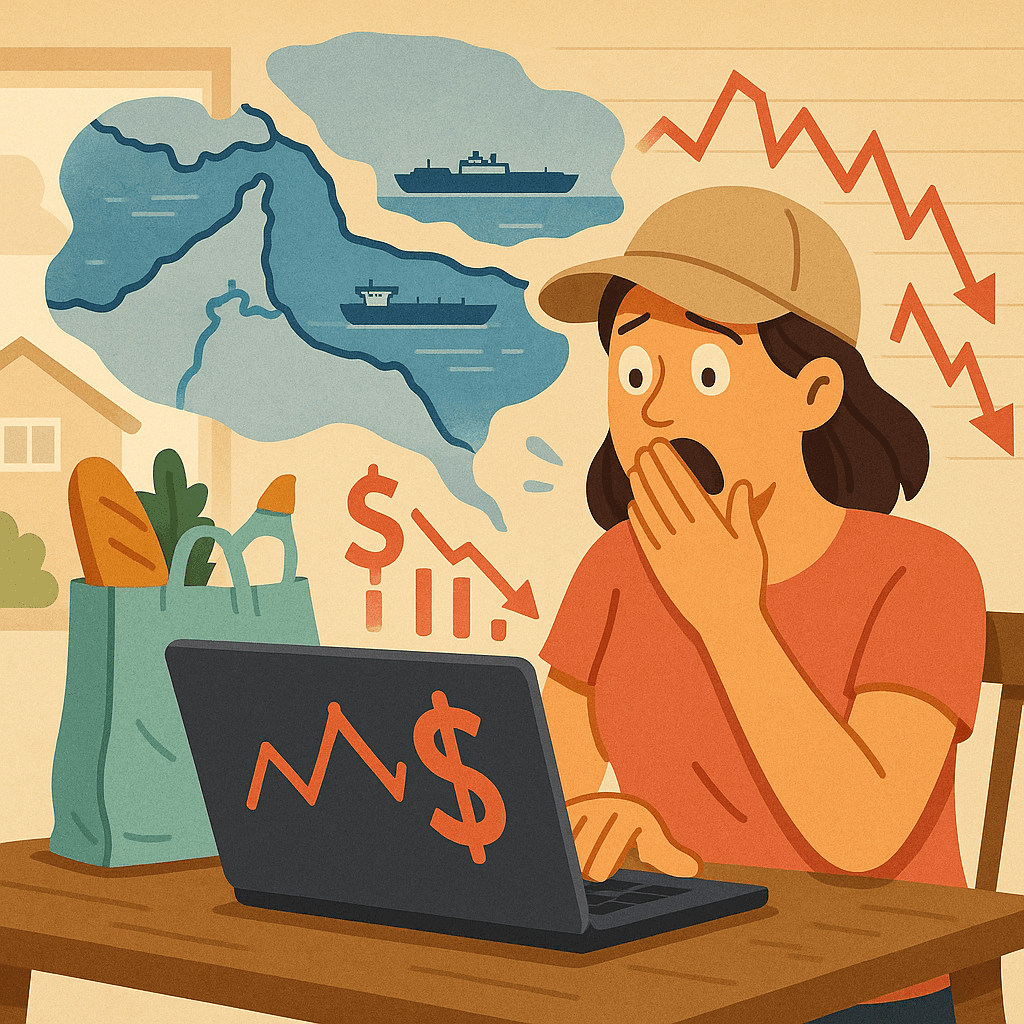
US consumer inflation has already jumped to 4.2 percent, the highest since 2023, on the back of a Middle East energy shock, record beef prices, and rising shipping costs. Tech stocks are wobbling, volatility is spiking, and the Federal Reserve is pretending this is all still compatible with a soft landing. The real emergency, however, is that the Iran war is threatening free two day shipping and the constitutional right to overnight replacement air fryers.
"We view the collapse of the US Iran ceasefire as a generational opportunity to reimagine frictionless shopping during multi theater conflicts," said a leaked internal memo from Amazon's Global Resilience and Deals team, obtained by no one and simply inferred from recent behavior and a suddenly rebranded Operation Enduring Checkout banner in the app. "Customers should not have to choose between affordable beef and a 75 percent discount on noise canceling headphones. With War Adjusted Prime, they will not."
Under the new program, Amazon will automatically adjust prices in real time based on tanker locations in the Strait of Hormuz, shipping insurance premia, and the current level of Trump's Iran related tweet volume per hour. A spike in Brent crude will trigger what the company calls surge monetization, gently nudging the price of your Memorial Day grill bundle toward whatever number the algorithm associates with your credit score, the median income in your Census block, and your historical tendency to panic buy oat milk.
"Think of it as dynamic pricing for geopolitics," said one Seattle engineer, who spoke on condition of anonymity because he was still in the office staring at a dashboard named Suez 2.0. "If US Central Command reports an exchange of fire near Hormuz, our models know you are more likely to stress buy a backup air fryer and a second Ring doorbell. It would be irresponsible not to capture that value before the ceasefire headline hits your push alerts."
The Financial Times notes that oil tankers are already increasing dark transits through the Strait, switching off transponders to dodge sanctions and, more importantly, data plans. In response, a coalition of hedge funds and Silicon Valley founders has announced DarkTanker.ai, a platform that uses satellite imagery, TikTok thirst trap posting schedules, and Centcom press releases to predict where unmarked crude will pop up next, before piping the signal into a limited access Discord named "Chokepoint Chad."
"People ask us if we are trying to stabilize markets," said one DarkTanker.ai co founder as his pitch deck animated a glowing line through Hormuz into a Robinhood interface and then into a floor plan of his future infinity pool. "We are actually trying to stabilize our Series C and the founder's third Dubai apartment with a panic room rated for both drones and activist investors."
Investors on CNBC spent the morning deciding whether to be more excited about the Iran escalation, the 4.2 percent CPI print, or the SpaceX IPO that one Franklin Templeton executive described as "the greatest technological change of my lifetime." This comment referred to reusable rockets, although markets briefly assumed he meant the ability to buy a trillion dollar space stock on margin while your ground level grocery bill explodes and your checking account becomes an emerging market.
"Look, tech stocks are down, beef prices are at records, and war risk is rising," said a portfolio manager rotating live between camera hits and live Slack channels. "But you have to stay focused on the fundamentals, which are that any problem on Earth can be hedged with a slightly larger bet on Elon Musk and an options collar on the concept of gravity."
The Federal Reserve, for its part, is working hard to explain that the surge in inflation is geopolitically driven and therefore, in policy terms, something that happens to other people. In draft remarks circulating in Washington, one official writes that the central bank will "look through transient energy shocks," a phrase that translates operationally into hoping the Strait of Hormuz behaves itself before the next dot plot and before another diagram has to be invented to describe the word transitory.
Privately, Fed staff have already beta tested a suite of tools for the new era:
- Operation Twist (The Knife): A communications strategy that reminds the public inflation was once higher, with archival charts, a QR code linking to 1980, and a tasteful reminder that at least you do not have to refinance your disco ball.
- Forward Guidance+: An in app purchase in major brokerage apps that unlocks a bonus paragraph of FOMC minutes and a limited edition Powell reaction GIF suitable for framing in your home office slash panic bunker.
- Rate Hike Loot Crates: Each 25 basis point move comes bundled with a chance at lower airline baggage fees, one complimentary webinar on transitory hardship, and a collectible Excel template titled Household Pain Index v3.
"We are closely monitoring the situation in the Middle East," said one Fed governor in prepared testimony, "and we will act as appropriate to ensure that the US economy remains on track, or at least convincingly described as such in PowerPoint, with arrows pointing resolutely upward away from the Strait of Hormuz."
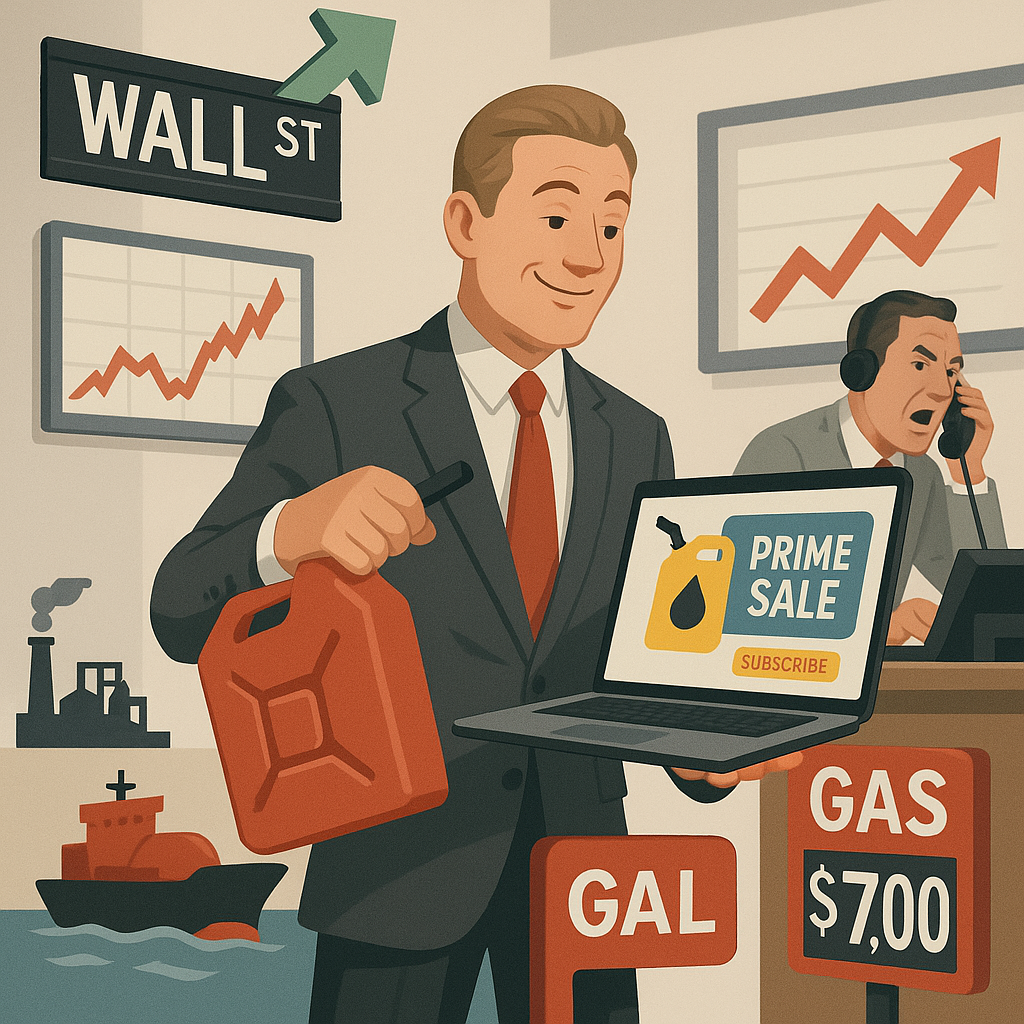
On the front lines of economic reality, supermarket managers are less nuanced. Beef prices just hit a record high, in part due to a screwworm outbreak that agricultural officials say could further tighten supply. This has created a rare moment when the US Iran conflict, veterinary parasitology, and your Tuesday chili recipe sit on the same macro risk dashboard next to a blinking widget for Gulf shipping insurance and a progress bar for your Buy Now Pay Later plan.
"We are putting little World War III placards next to the price tags," said one Midwestern grocer, rearranging a display of $11.99 ground beef under a laminated map of the Gulf. "Customers like context. It is easier to accept 12 dollar ground beef if there is a small infographic reminding you that a naval chokepoint is involved and that your brisket is competing with tanker day rates, drone swarms, and a Goldman Sachs slide about supply elasticity."
Tech platforms are also racing to meet consumer needs. Mastercard's CEO recently suggested AI agents could soon do your shopping. In the new environment, those agents will helpfully explain that due to war risk in the Strait of Hormuz, your budget can afford either 2 pounds of protein or one week of Nvidia call options, but not both, and that historically the options have outperformed your hemoglobin.
"My AI concierge just DMed me, 'Given the loss of a US Army helicopter and subsequent American strikes, I have replaced your steak with lentils and added a structured product linked to LNG tanker delays,'" said one confused cardholder staring at his digital cart. "It also suggested I tip CENTCOM with airline miles denominated in barrels and enrolled me in a carbon offset backed by unused gym memberships and unbuilt offshore wind farms."
Emerging markets are less amused. As Reuters notes, East African finance ministers are preparing budgets that now feature a dedicated line item for Iran war cost shock. The category sits between debt service and vague climate thing donors insist on, and mostly represents fuel bills for economies that did not participate in the helicopter incident, the SpaceX IPO, or Amazon's Prime Day marketing sprint but will happily receive the invoice.
"We import energy, we import food, we import AI chips, and we export PowerPoint decks about resilience," said one regional official, gesturing at a slide labeled Inflationary Spillovers From Other Peoples' Naval Adventures. "The US closes a waterway, your Fed tightens into it, and my voters get a 17 percent bus fare hike. Could you maybe forward deploy some of those AI agents to our supermarkets instead of your hedge funds' dashboards?"
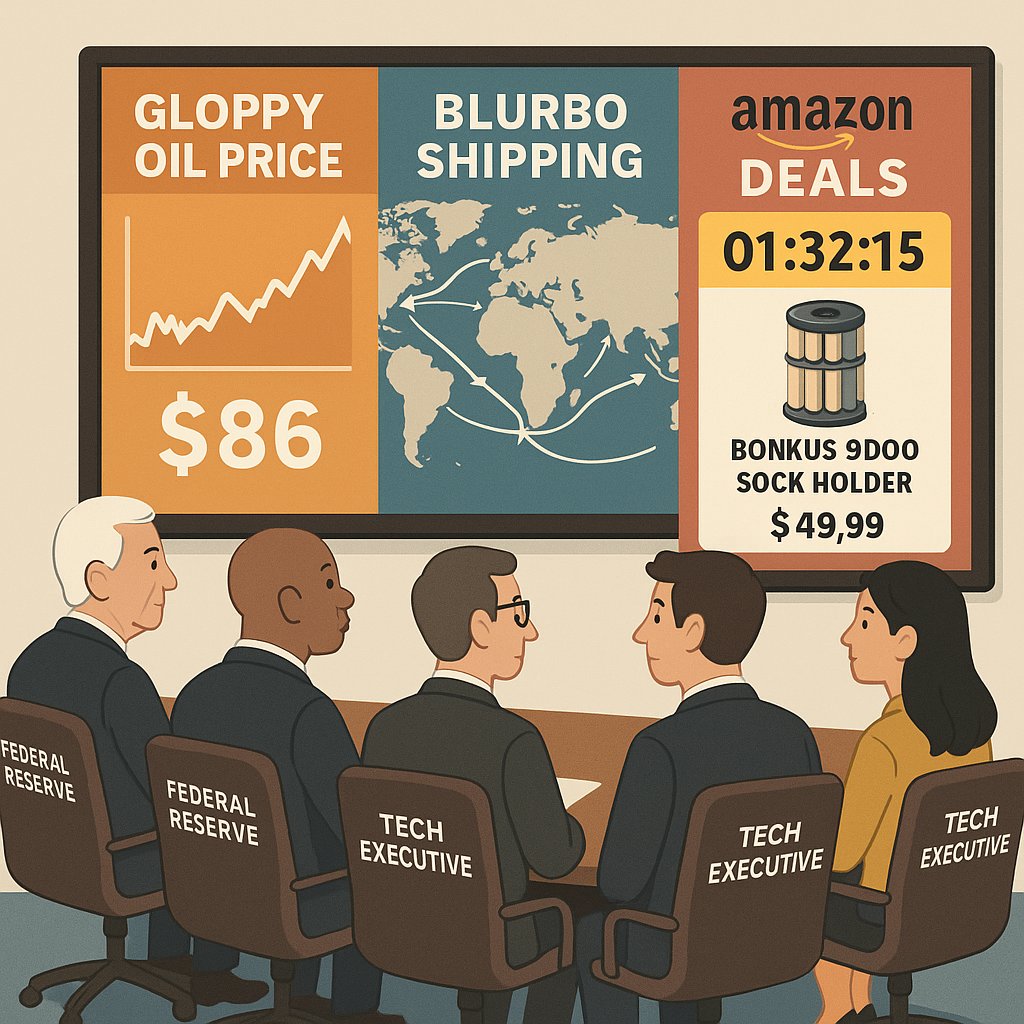
Back in Washington, the Trump administration is balancing deterrence with retail calendars. Officials insist the fresh wave of strikes on Iran, reported by the Financial Times, is part of a measured response consistent with protecting global trade. Off camera, aides acknowledge that shutting Hormuz for months would be "suboptimal" for Amazon Prime Day, the SpaceX roadshow, and whatever new tariffs the president is drafting for dozens of countries in his spare time between phone calls to cable producers.
"The president is very focused on keeping the Strait open," said one senior adviser. "He understands that if people cannot get a ring light and a third TV before the World Cup, they get cranky, and cranky voters do not buy commemorative war bond NFTs."
Markets, conditioned by years of algorithmic optimism, are trying to treat all this as a temporary headwind. Volatility indices spike on each new headline, then drift lower as investors remember there is a line in the SpaceX S 1 about mining asteroids. Chip stocks sell off, then recover when Wedbush goes on CNBC to explain that Nvidia is still undervalued relative to a scenario where AI models personally pilot every tanker in the Gulf and live stream the journey to a monetized Twitch channel.
"We think the worst case scenario is priced in," said one strategist, pointing at a chart that looked suspiciously like a cardiogram. "By which I mean, we have assumed a base case of mild stagflation, intermittent naval skirmishes, and 6 percent wages for machine learning engineers. Anything above that is upside that will be addressed at our next Investor Day, time and location dependent on maritime insurance premia."
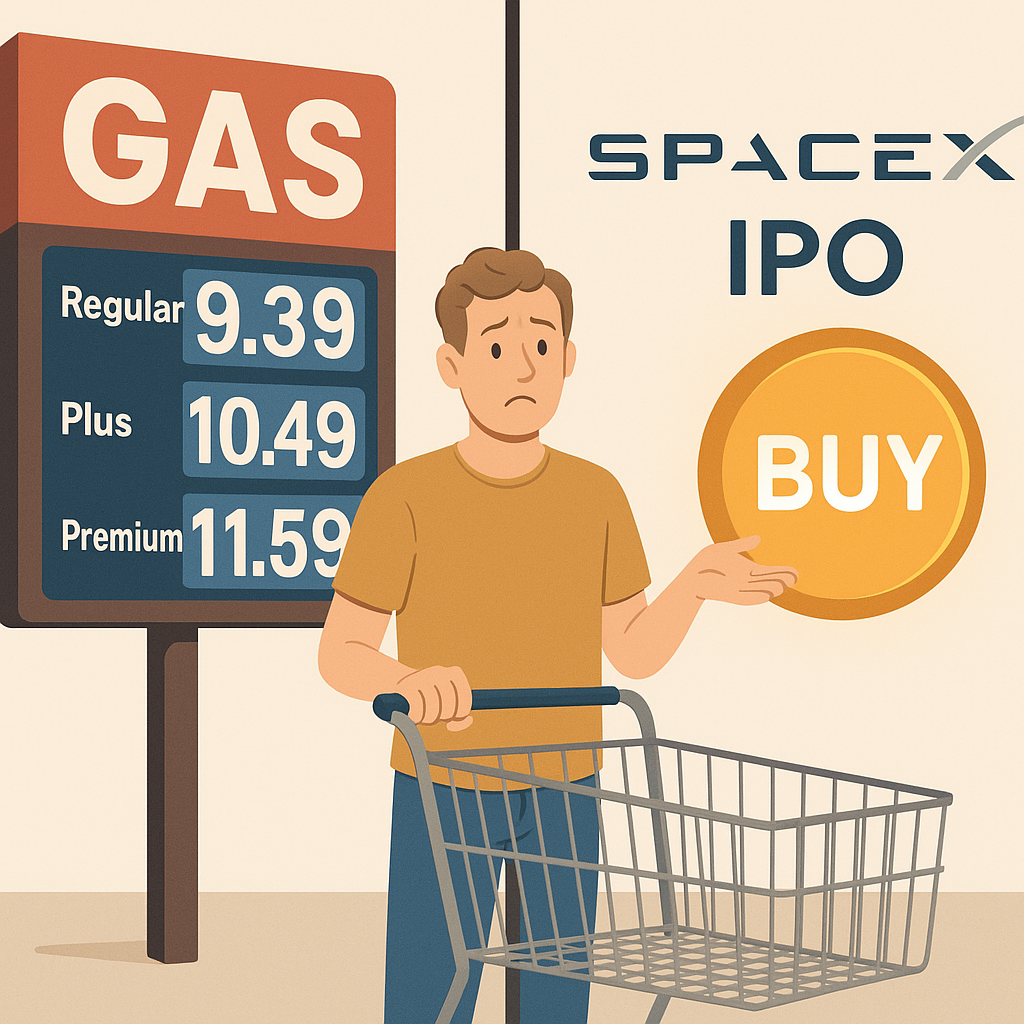
For households, the connection from Strait to street is now brutally simple. A helicopter goes down near Hormuz, insurance premia tick higher, oil traders raise risk spreads, the Federal Reserve drafts a paragraph, beef becomes a luxury item, your 401(k) chart starts to resemble the flight path of a Tomahawk, and your smart speaker asks whether you would like to enroll in War Adjusted Prime for just 14.99 dollars a month, plus a modest kinetic activity surcharge.
The modern economy has finally closed the loop. Geopolitical escalation no longer just rattles markets in the abstract. It shows up as a recommended add on at checkout, right between Extended Warranty and Tip Your Gig Worker.
As your cart total refreshes for the third time, a small banner appears at the top of the screen: "Due to increased US Iran tensions and related supply chain disruptions, some prices may fluctuate. To lock in stable pricing for the duration of this conflict, please click here to subscribe to Peace."
The button is greyed out and labeled "coming soon to selected upper income ZIP codes," with a waitlist link that requires a minimum FICO score and proof of existing asteroid mining exposure.