The US Iran ceasefire was sold to voters as a way to avoid another twenty year war. Traders heard something more actionable: an introductory free trial of stability with optional paid extensions and a cancellation link buried somewhere behind an IRS login.
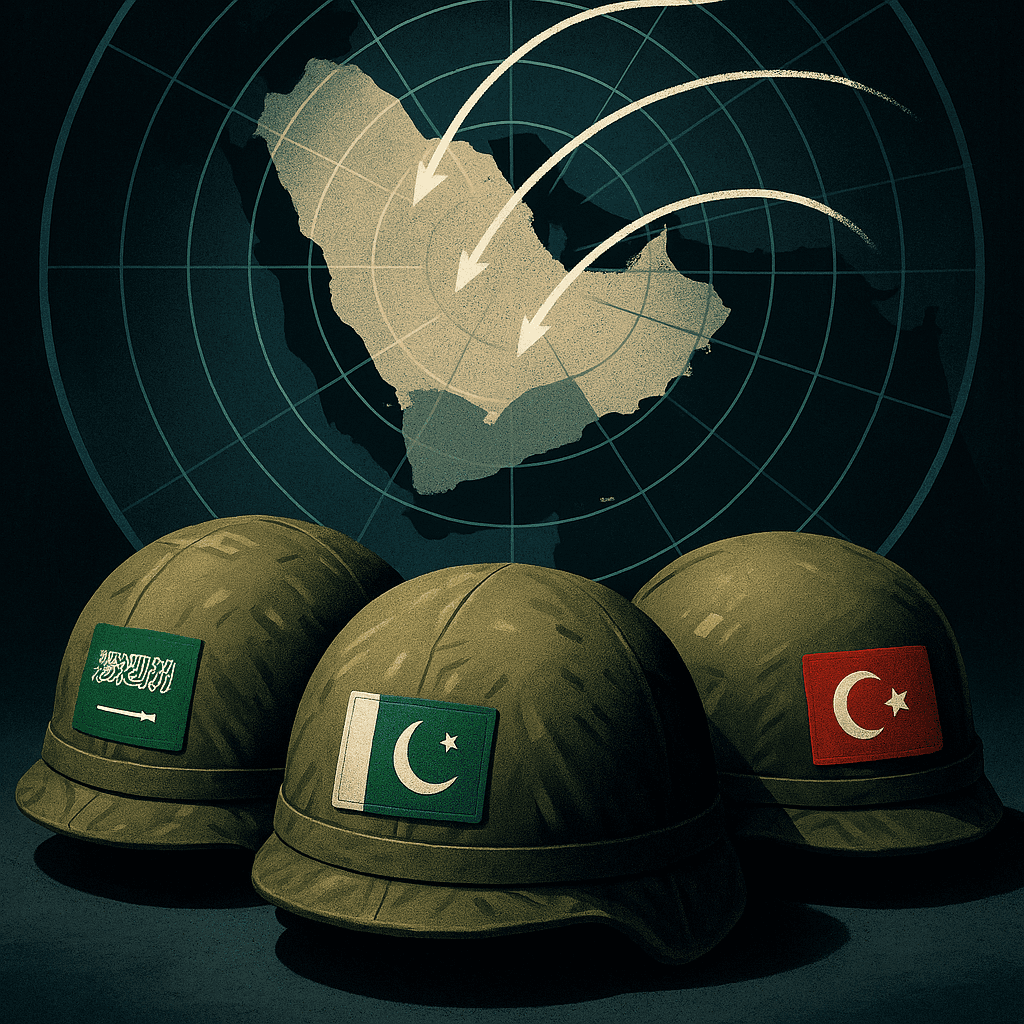
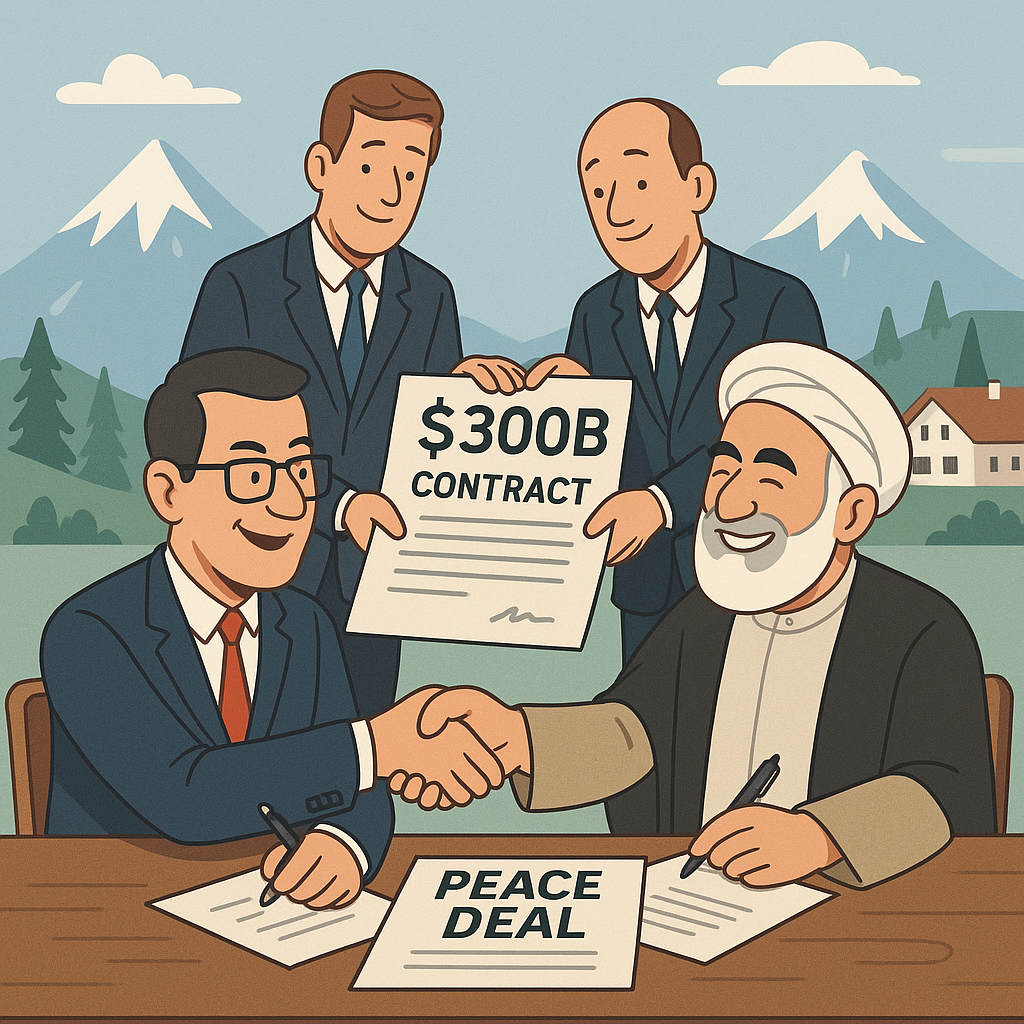
The provisional agreement, set to be signed in Switzerland this week, would cap enrichment, reopen oil exports, and keep the Strait of Hormuz from starring in every cable news graphic. Within hours, it had also been repackaged into a growth tech story that somehow orbits Elon Musk, a $300bn peace facility, and an AI model now classified as a controlled substance.
According to Investopedia and Yahoo Finance, the news has been compressed into a three line macro thesis:
- Near term oil prices drift lower as tankers stop playing roulette in shipping lanes.
- Global equities climb because fund managers prefer not assigning valuations to missiles.
- The old "geopolitical risk premium" is being rebranded as "buy the peace dip".
At the center sits the Trump administration's proposed $300bn peace facility for Iran, a structure that pays out as long as the ceasefire holds. An early Wall Street term sheet describes it as "Ceasefire as a Service, with optionality for Regime Change as a Platform" in the same tone normally reserved for enterprise CRM upsells and $900 a seat cloud summits at the Grand Hyatt.
"We have been trying to price war for decades," said one senior strategist at a major US bank, staring at a Bloomberg terminal labeled simply DOOM. The screen cycled through Brent futures, Tehran CDS, and a live poll of suburban voter anxiety. "It was only a matter of time before someone treated peace like a five year SaaS contract, with early termination penalties and an auto renew box hidden under 'advanced settings'."
The $300bn vehicle, according to people who use the word "facility" to describe very large piles of money, would be funded by a mix of US government guarantees, Gulf sovereign wealth funds that are tired of explaining tanker attacks to conference tourists, and a targeted levy on anyone who bought oil above $100 using Twitter sentiment as a valuation model. One draft pitch deck reportedly includes a slide titled "From Shock and Awe to Click and Wire" in tasteful navy PowerPoint gradients.
To reassure skeptics that Iran will not simply take the cash and resume its regional influence tour, US officials have floated a characteristically modern enforcement mechanism: Tehran loses access to the fund if it breaks the deal, and also must watch Elon Musk ring the bell at every future SpaceX IPO anniversary on a mandatory government livestream.
"The behavioral deterrent value of that feed is enormous," said one State Department official, adjusting a lanyard from the "Middle East Future Finance Forum" held in a hotel that used to be a military barracks. "We stress tested it using Anthropic's frozen AI models. The results were conclusive and deeply upsetting to everyone with a law degree."
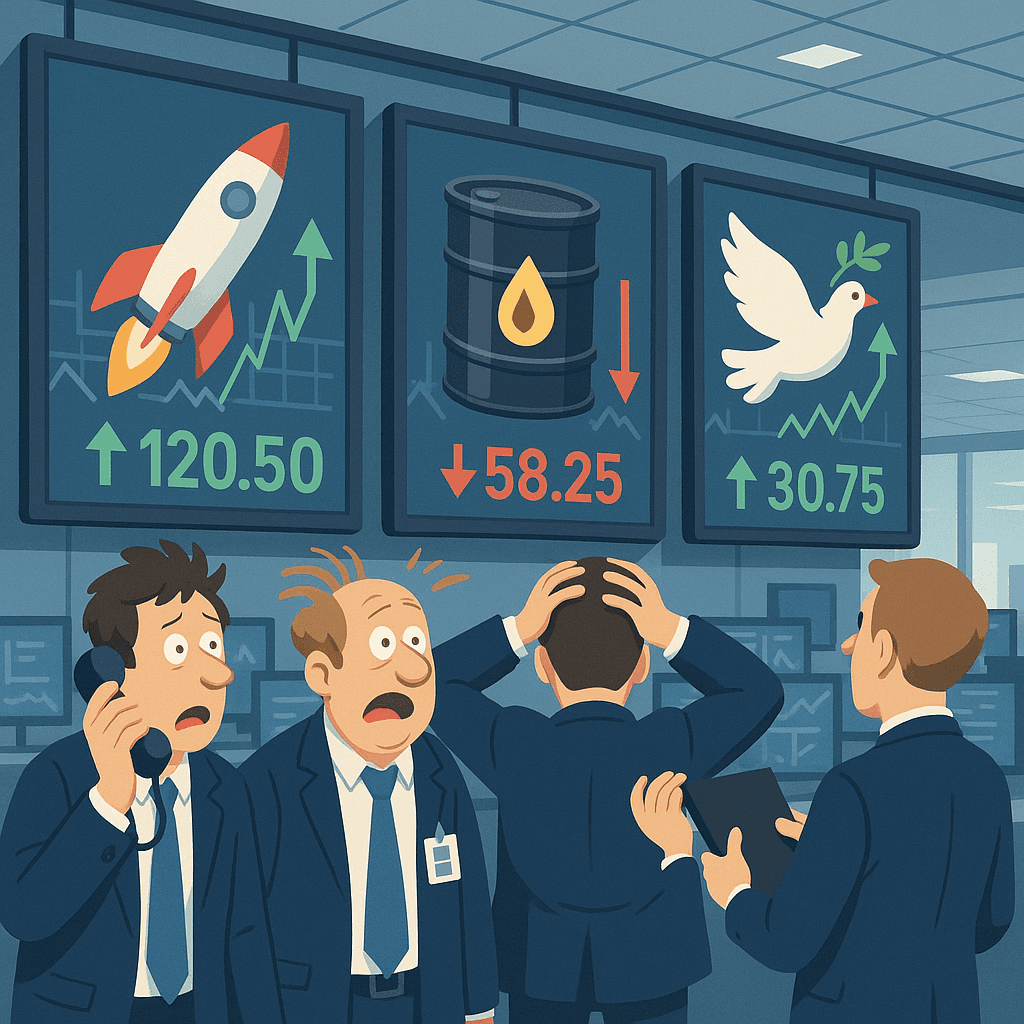
Markets, in their long tradition of reacting first and reading later, have now repriced the planet around a single idea: war is bad for physical oil supply but excellent for momentum trades and primetime macro takes.
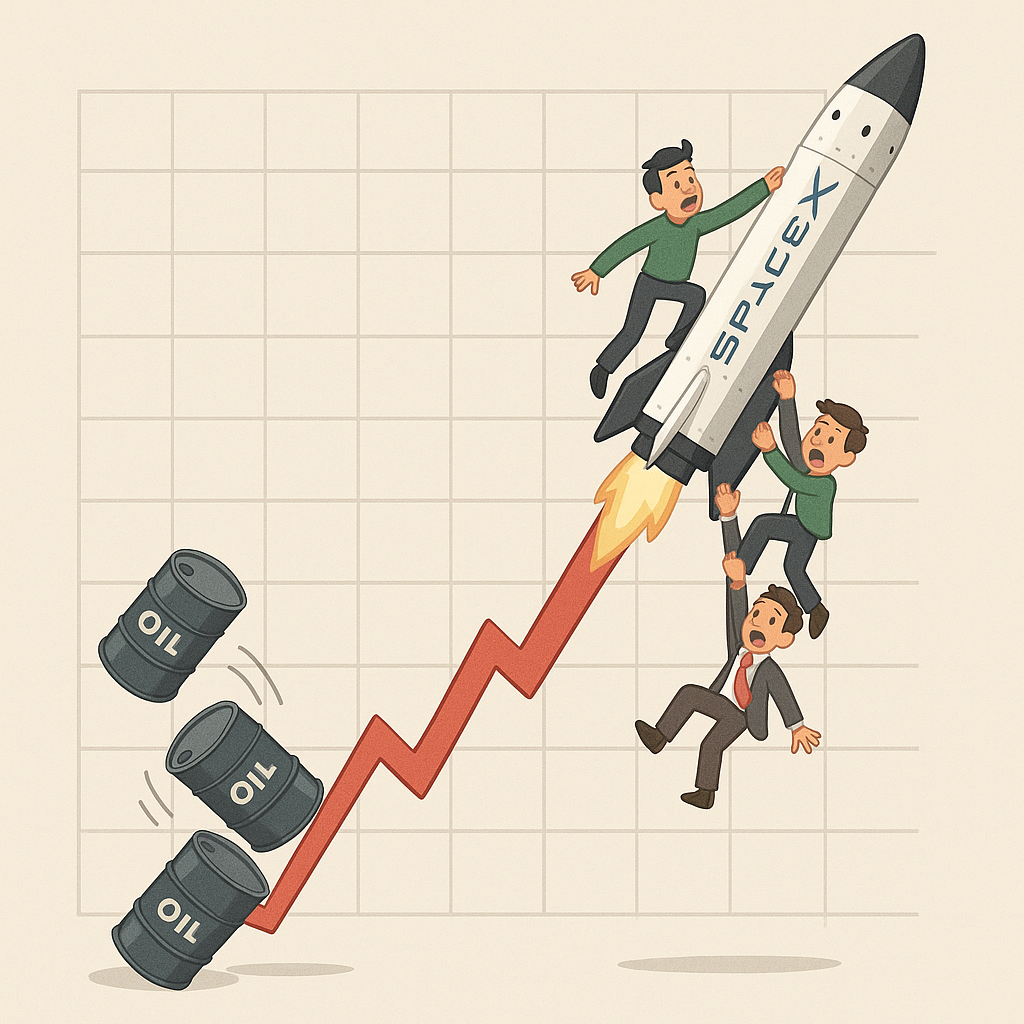
Analysts quoted by Yahoo Finance estimate that each additional month of conflict has already erased roughly 350 million barrels of future supply. This has produced a new pricing doctrine known as "Whatever, Oil Is Down Today". Traders in glass towers flick between charts of Brent futures and the SpaceX ticker, which now trades like a vertical integration of rockets, satellites, and ambient vibes.
SpaceX's blockbuster IPO, a 20 percent post listing surge, and a roughly $2.1tn valuation have supplied the missing leg of the new peace and money framework. If the Gulf stays quiet, demand should rise for satellite internet, space based data, and AI powered oil shock prediction models. If the deal collapses, demand for orbital surveillance and premium bunker reservations will probably rise faster.
"Either way, SpaceX is a hedge on the concept of 'down here'," explained one Wedbush analyst, while gesturing vaguely at Earth on a conference room globe that still had the Soviet Union on it. "Investors are effectively short the planet and long the launchpad."
The market is now openly gaming a Musk led merger of Tesla into SpaceX, with xAI folded into the rocket stack like a slightly unhinged plug in. The combined entity would control EVs, robotics, satellite internet, and its own in house AI lab. It would also occupy the exact intersection of US energy policy and whatever replaces foreign policy PowerPoints once everyone moves to pitch decks.
"Our base case is that if the Strait of Hormuz stays open, Tesla and SpaceX become a single ticker," said one hedge fund manager from a Greenwich office overlooking a carefully landscaped man made pond. "If it closes, they become a single defense contractor with a very inspirational mission statement."
Regulators are alert to the new arrangement, at least in theory. "We are not saying SpaceX is a systemically important financial institution," said one staffer. "We are just saying that if an Elon tweet can move both the VIX and the Strait of Hormuz risk premium, the Fed probably needs a Starlink account and a standing mute button." Somewhere in the Eccles Building, an intern has already labeled a new dashboard tab "MUSK RISK" in red.
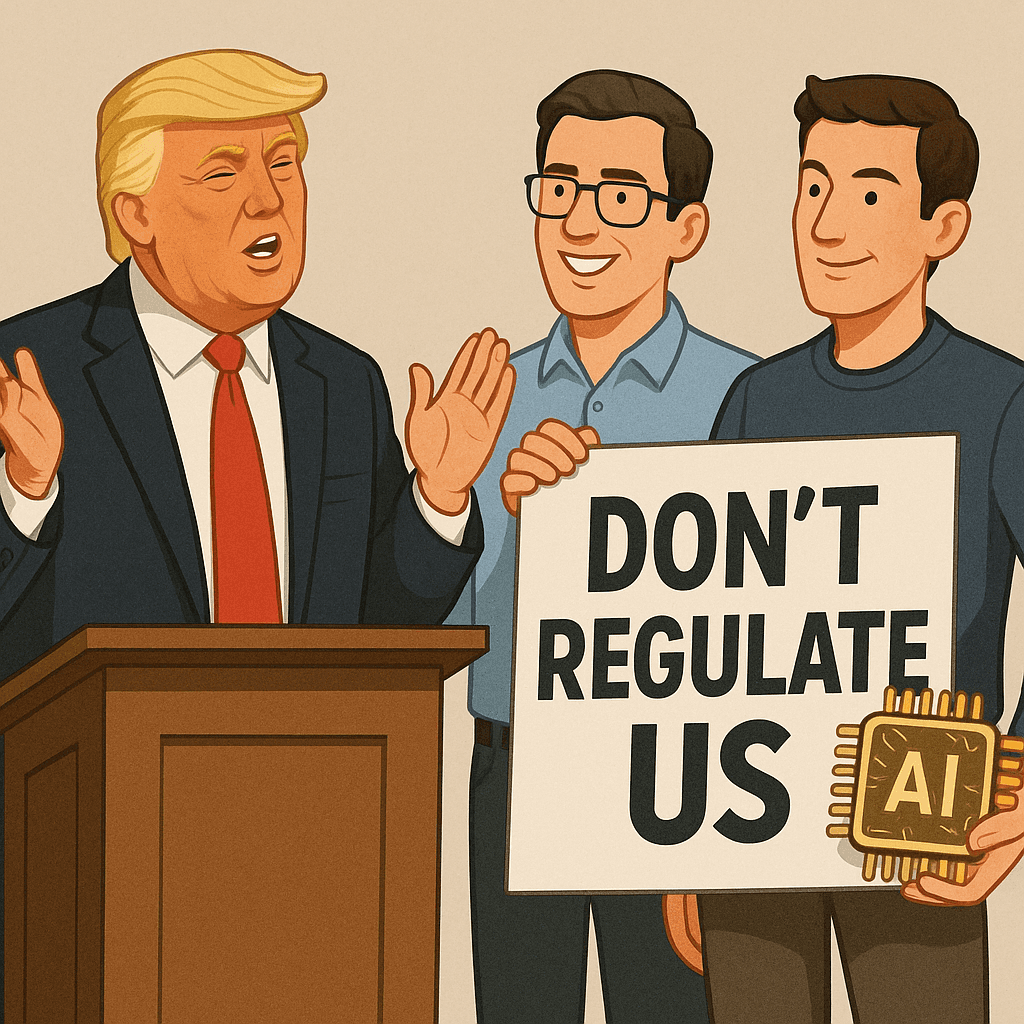
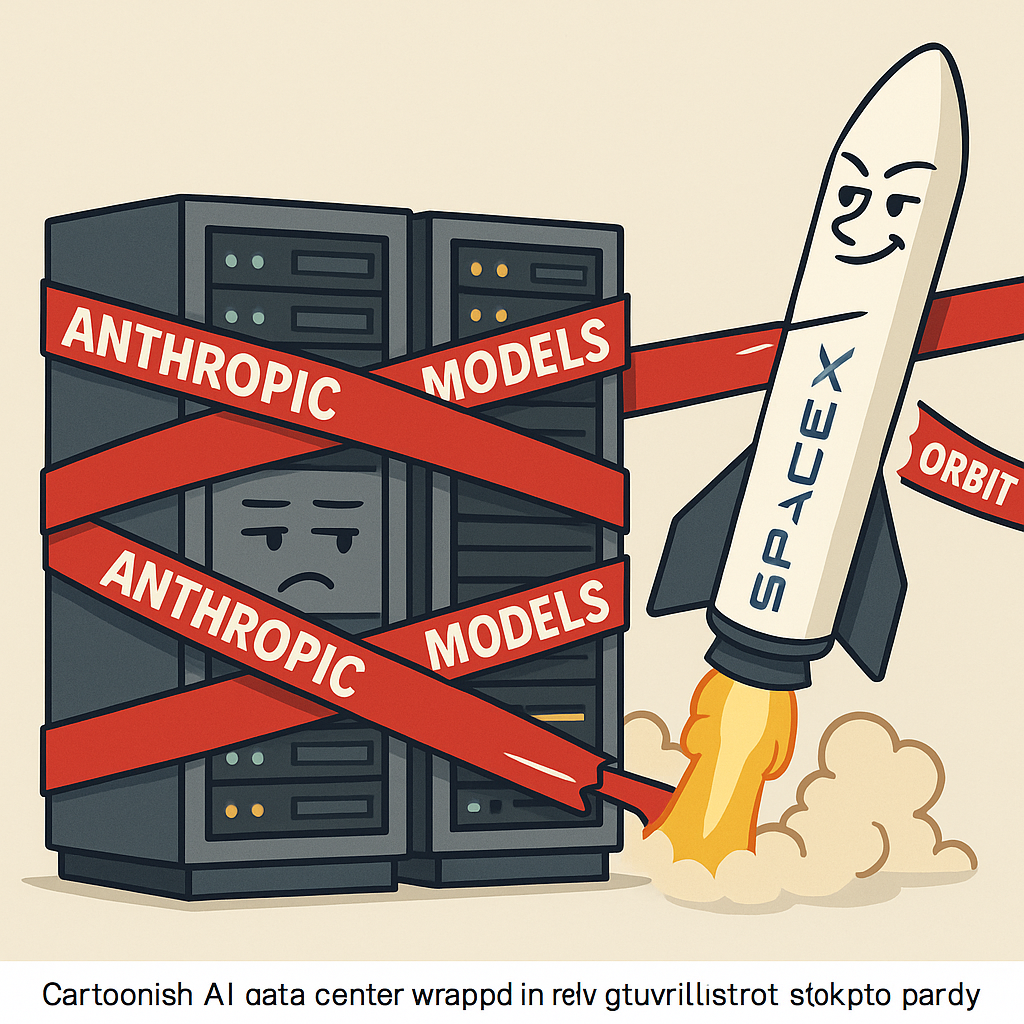
While rockets and risk premia enjoy their rally, the Trump administration has quietly frozen Anthropic's top AI models, citing national security and export control concerns. Anthropic had marketed its frontier systems for tasks such as contract summarization and mildly unsettling customer support chatbots. It is now learning that its fastest growing revenue line was apparently ghost writing sanctions policy and explaining swap lines to interns.
The freeze has created a new asset class for AI investors: Non Operational Frontier Tech, or NOFTs. These are models whose main function is to remind shareholders that code matters slightly less than whether the White House remembers your legal department exists.
"Our latest model is fully aligned," an Anthropic spokesperson insisted during a hastily arranged briefing held in front of a locked server rack and a handwritten "Do Not Export" sign. "Unfortunately it is now aligned with the Commerce Department's shelving system and a set of laminated export control flowcharts."
Choked AI supply has only intensified the fervor around the "AI plus space plus data" trade. SpaceX is now treated as a kind of physical LLM that ingests low orbit debris and emits subscription products, from Starlink bandwidth to geospatial data feeds. Exchange traded fund issuers have responded with a fresh wave of tickers, including:
- PEACEQ: Tracks companies whose revenues rise when no one is actively firing missiles.
- WARLITE: Long insurers and bunker REITs, short Anthropic's ability to ship models before an election year.
- GULF ETF: 60 percent tankers, 40 percent Starlink, rebalanced whenever someone tweets the phrase "red line" from an official account.
On the energy front, ConocoPhillips is reportedly close to signing a deal with Syria to revive gas production, according to the Financial Times. The arrangement supports an emerging doctrine in Washington and several well lit conference hotels: US adjacent conflicts are no longer resolved, they are restructured. Once the guns fall mostly silent, the region is carefully converted into a diversified portfolio of LNG terminals, compute clusters, and American think tank fellowships with titles like "Senior Fellow for Post Conflict Yield".
"We are entering a golden age of post war productization," explained one private equity partner, swirling cold brew in a reusable cup that read "Impact". "Where you once got a ceasefire agreement and a UN resolution, you now get a peace framework, a $300bn blended facility, and an AI governance sandbox for frontier models named after a canyon that looks good on LinkedIn."
The ceasefire signing in Switzerland is expected to feature traditional diplomatic elements: flags, pens, and leaders trying not to make eye contact during the photo op. Investors will be tracking other details with slightly more focus, including:
- Exact language tying Iranian oil exports to compliance with enrichment caps.
- Timelines for reopening banking channels and Swift access, ideally before quarter end.
- Whether the final communiqué includes line item disclosure of Musk's potential role as "Special Envoy for Space Enabled Peace Monetization".
In Tehran, officials view the proposed fund as a rare chance to reset the economy, assuming domestic US politics does not wake up in a mood. "It is a very generous offer," said one Iranian economist in a cramped office lined with outdated IMF reports. "We receive $300bn, access to global capital markets, and help modernizing infrastructure. In return we must not break the deal and must promise never to say the phrase 'nationalization of Starlink' within range of a journalist."
The main risk to this carefully balanced architecture is that it relies on domestic political cycles in both countries, and those cycles do not come with covenants. In the US, the peace plus financing package competes with a simpler talking point: whether voters are comfortable with Iran getting hundreds of billions of dollars while Social Security recipients get what Newser recently described as a "Trump bump" in 2027's cost of living adjustment.
"My constituents are asking why we are wiring money to Tehran instead of forgiving their 7.5 percent mortgage," said one member of Congress at a town hall held in a converted strip mall gym. "I tell them, look, that would be inflationary. Whereas funneling $300bn through a multi layered sanctions thaw structure regulated by a bipartisan oversight board is just good old fashioned American financial engineering with a flag on the cover slide."
For now, markets prefer the cleanest story available. Peace, or at least the credible appearance of peace, is bullish for anything involving chips, rockets, or three letter acronyms. Wall Street research desks are already drafting notes titled "The Inescapable Return of an Old Framework", which appears to be: identify an obvious global risk, wait until it nearly explodes, then sell market access to the part of the world that just survived it.
As the signing ceremony approaches, investors, diplomats, and AI founders find themselves unusually aligned. Everyone wants the ceasefire to hold, at least until the next earnings call and the next fundraise. After that, the terms can always be renegotiated into a new product.
If the deal collapses, oil spikes, the Strait of Hormuz clogs, sanctions snap back, and the $300bn facility becomes a case study in political risk. If the deal succeeds, SpaceX absorbs Tesla, xAI, and possibly a small corner of the Energy Department, Iran gets a peace linked credit line, and Anthropic's frozen models are thawed just in time to explain that this outcome was always the base case in their scenario tree.
Either way, the modern US toolkit for managing global crises now appears standardized: one part diplomacy, one part fund structure, one part export control, and one founder with his own launchpad, streaming the future in 4K to a comment section full of day traders and mid level staffers.
The only genuine variable is whether peace in the Gulf ends up looking like a durable geopolitical breakthrough or the pre IPO roadshow for World War III.