In a development experts called “basically the Series C of the military-industrial complex,” Donald Trump’s second-term administration has quietly shipped a new defense platform where the same venture capitalists funding autonomous weapons also sit on the federal boards deciding which autonomous weapons to buy.
The system is called the United States government.
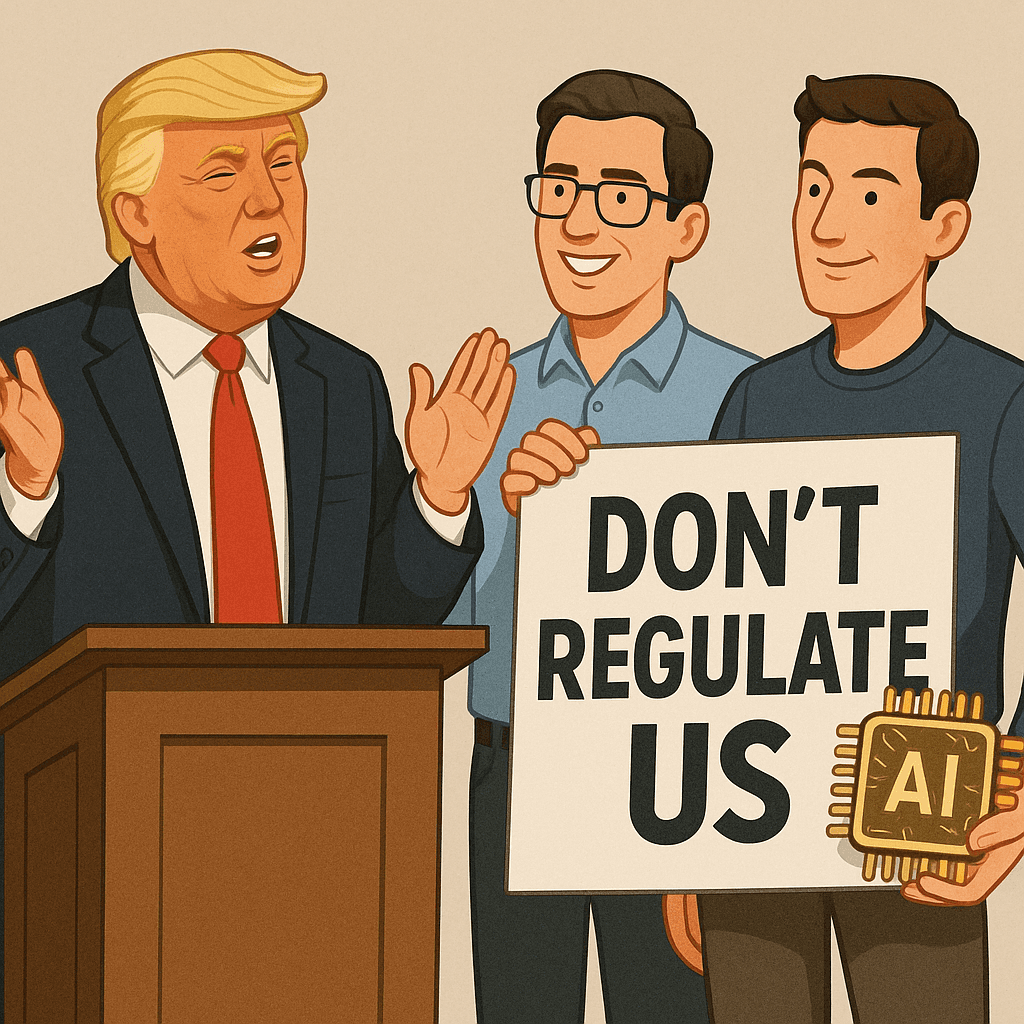
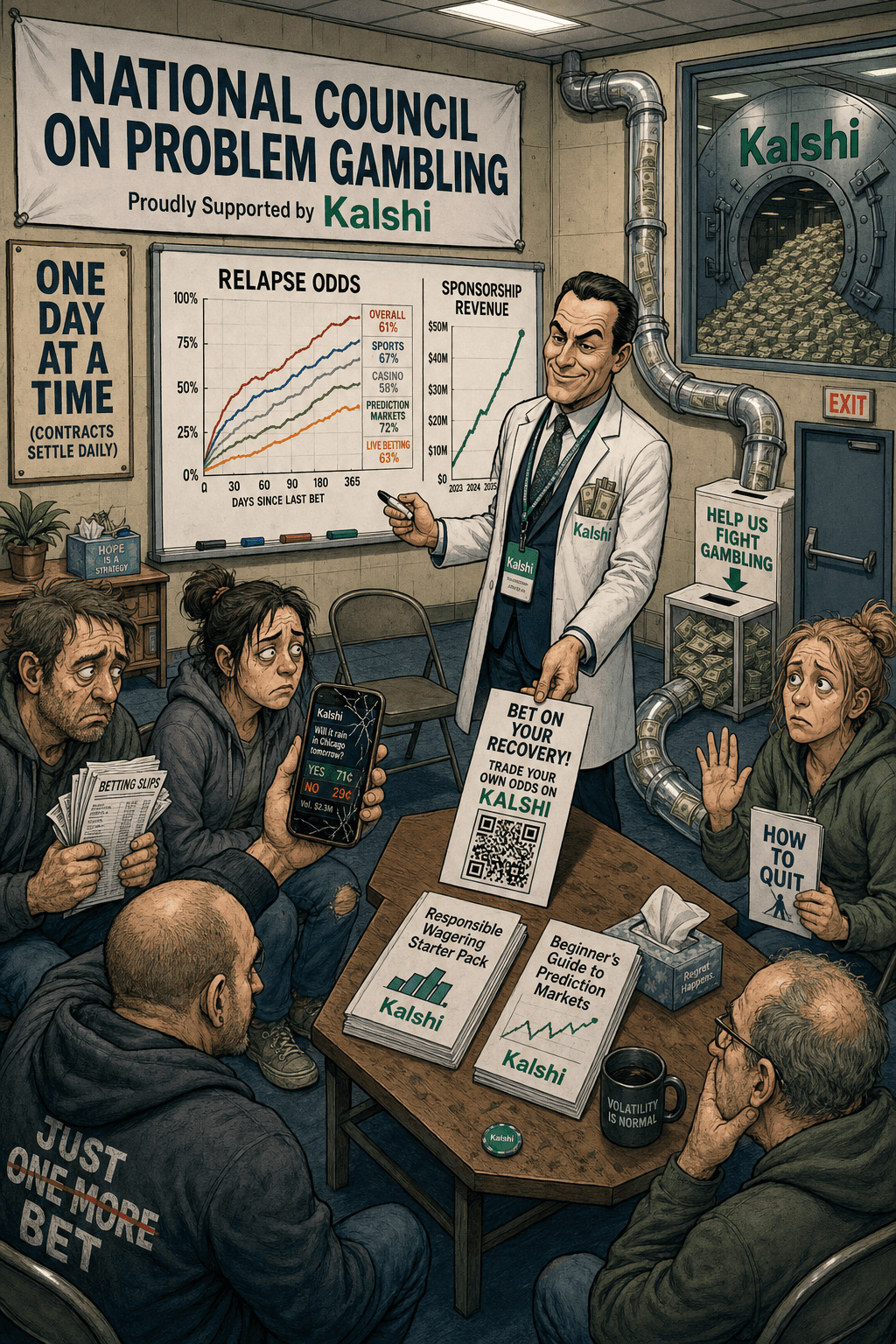
According to reporting cited by The Guardian and others, Marc Andreessen, Laura Arrillaga-Andreessen, Ben Horowitz, and Felicia Horowitz have collectively outspent every other political donor this cycle, including George Soros, in a $115 million spree that appears to buy two things: first, seats on elite advisory bodies like PCAST, the President’s Council Advising on Science and Technology; second, the comfort of knowing their portfolio companies will not have to endure the indignity of selling surveillance towers to anyone who is not the federal government.
On March 25, Andreessen joined PCAST, now chaired by Trump ally and former “crypto czar” David Sacks. The roster reads less like a public advisory panel and more like a cap table disclosure: Larry Ellison, Mark Zuckerberg, Nvidia’s Jensen Huang, and a cast of founders whose core competency is explaining on podcasts why regulations are for losers who did not get into Y Combinator.
From this perch, the council helps shape Trump’s AI and national security posture, described in a Brookings writeup as “adoption-first” and “security-focused,” which in operational terms means: deploy AI systems everywhere now, let the AI governance commissions in Geneva figure out what happened later.
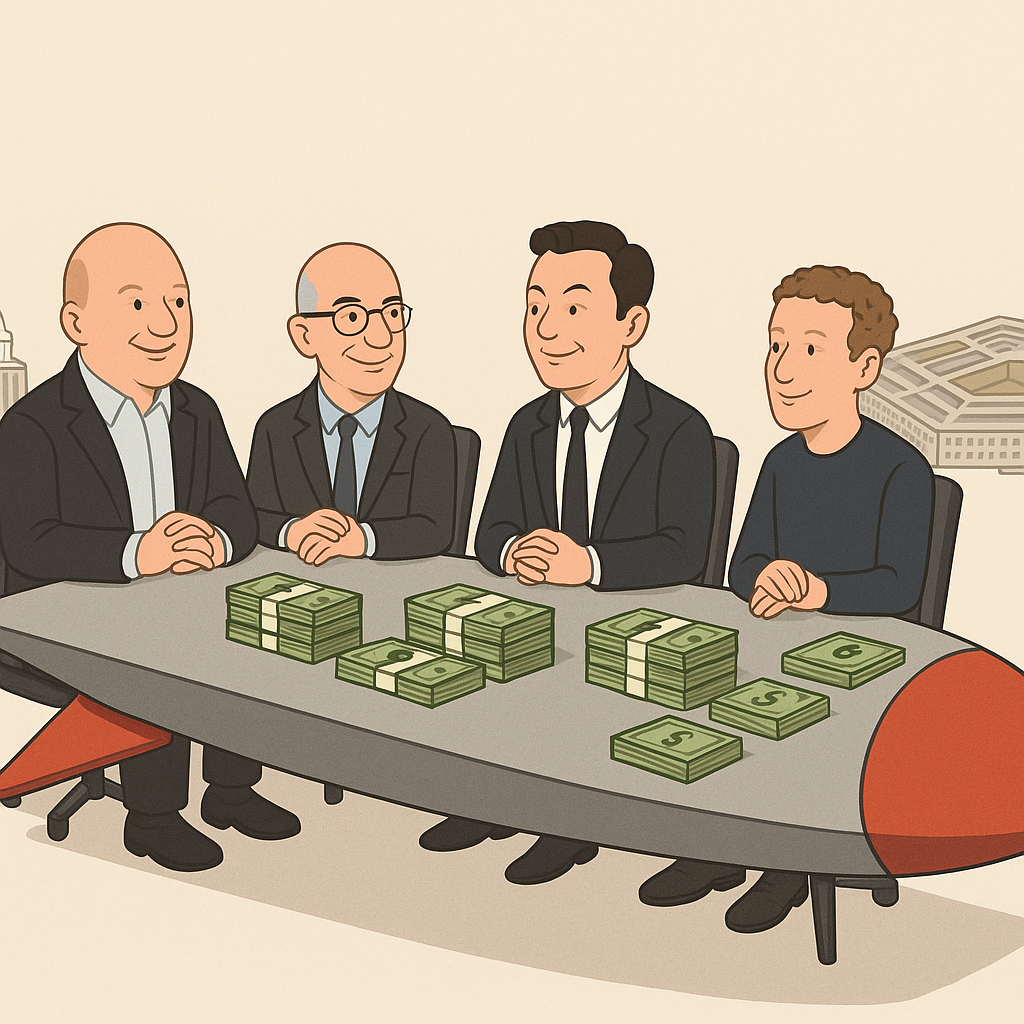
Andreessen Horowitz, better known as a16z, has made highly targeted bets on companies that happen to sit along the entire security stack. There is Anduril Industries for autonomous surveillance towers and military AI, Castelion and Hadrian for next-gen weapons manufacturing and defense industrial automation, Saronic and Shield AI for unmanned vehicles and combat autonomy, and Skydio for drones that can film your wedding or your deportation proceedings, depending on which contract cleared first.
Anduril already has hundreds of millions of dollars in contracts providing AI-powered border surveillance towers for Customs and Border Protection. Skydio sells drones to ICE and domestic law enforcement, an arrangement civil liberties groups describe as “deeply troubling” and the market describes as “a strong growth vertical with recurring bookings.”
The Trump administration calls this public-private partnership. Traditionalists call it procurement. The rest of us might call it buying ring cameras for the country, but letting the landlord decide where they point.
“We take conflicts of interest extremely seriously,” an a16z-adjacent advisor to PCAST said, on background. “That is why we have a robust internal process to ensure we only advise on policies that generally, broadly, holistically benefit our entire portfolio.”
Ethics experts keep asking a simple question: what rules, if any, require venture investors on PCAST to recuse themselves from recommendations that would directly enrich their holdings? The Trump White House has responded with a series of nuanced policy innovations, such as silence, and new draft guidance clarifying that billionaire vibes are a form of disclosure.
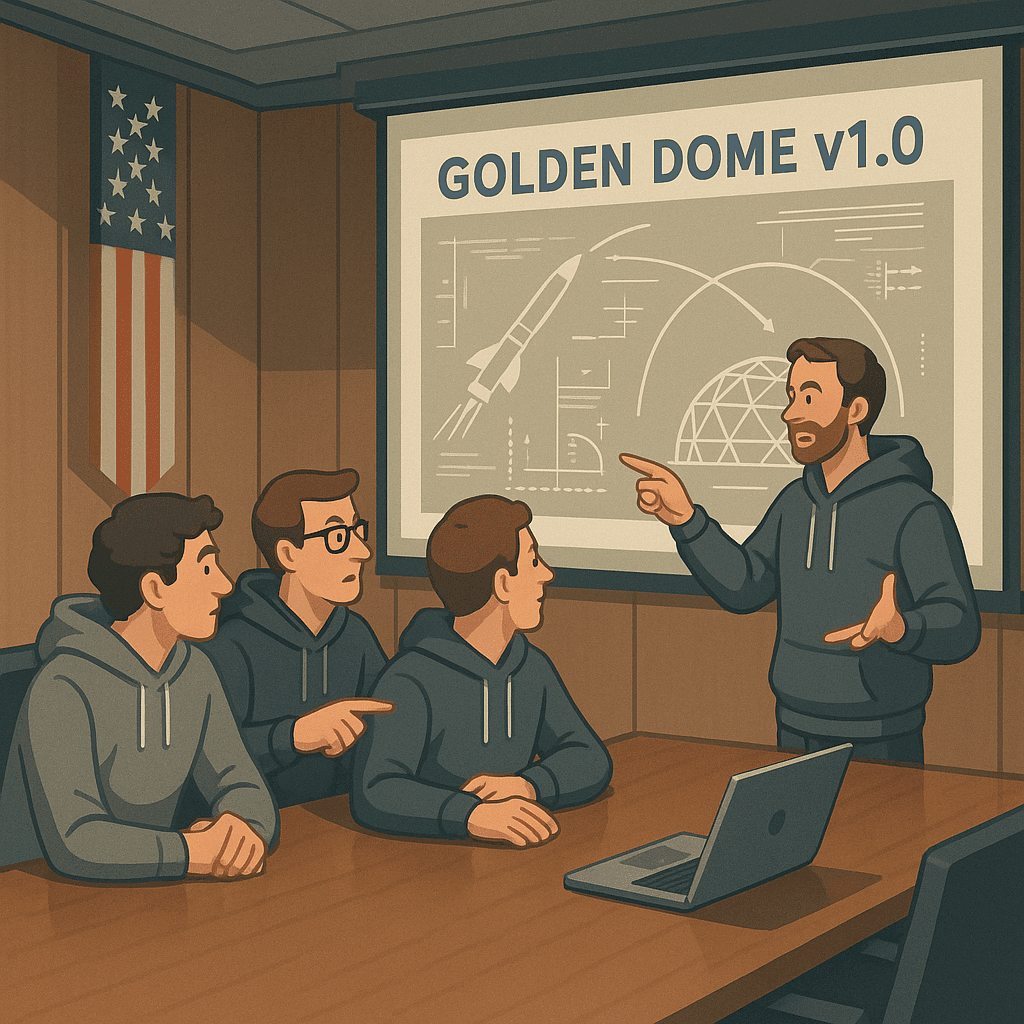
At the center of the new architecture is Trump’s Golden Dome missile-defense initiative, which sounds like a mid-tier Vegas resort but is actually a sprawling constellation of missile-tracking satellites and orbital data networks. SpaceX, already tied into the US government with around $22 billion in cumulative federal awards according to company president Gwynne Shotwell, recently secured a $4.16 billion contract for Golden Dome satellites and another $2.29 billion for a military data network in orbit, just weeks before a planned 2026 IPO.
SpaceX is also a major holding of a16z-linked funds, creating the rare scenario in which a single rocket launch can increase both national security and a venture capitalist’s carried interest in one burn.
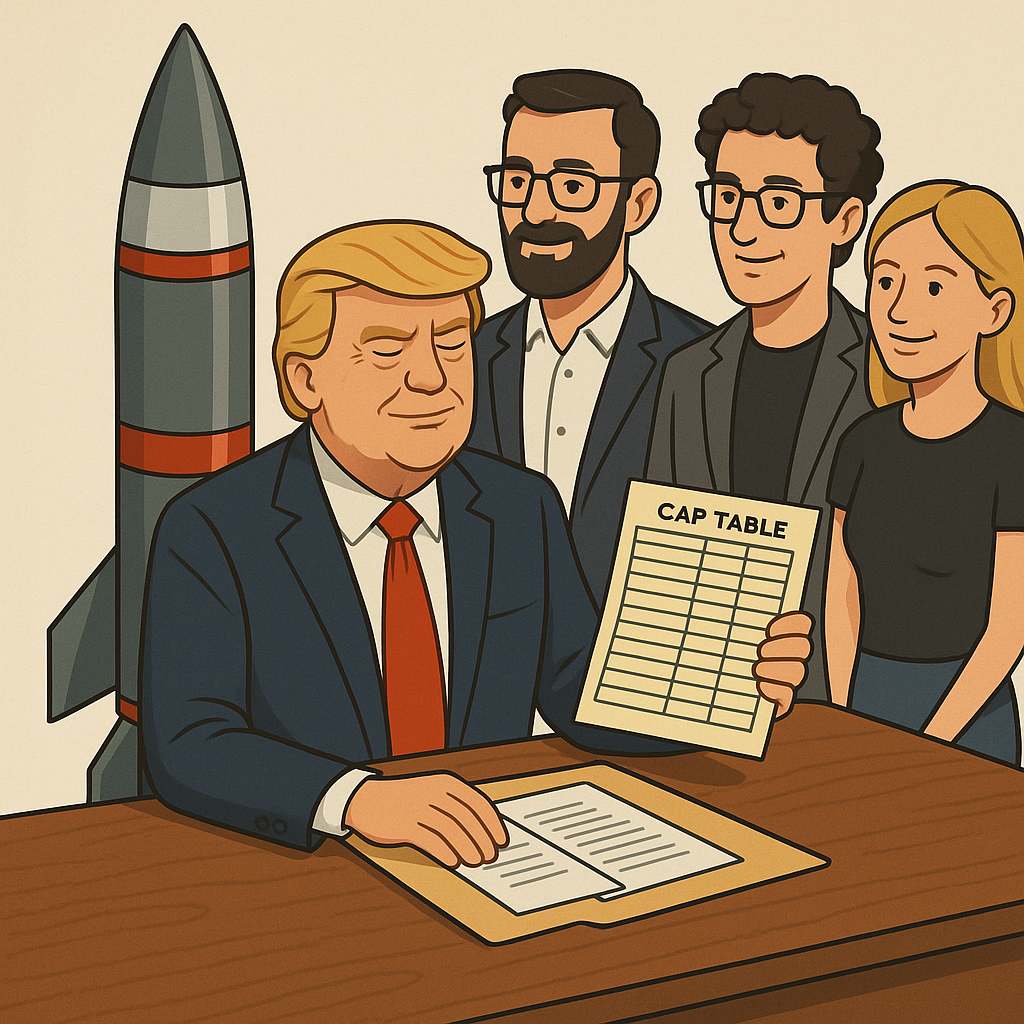
Inside the Pentagon, officials describe a gradual shift from traditional defense contractors to “software-defined warfighting” provided by venture-backed startups founded after 2014. Internally, some career officers reportedly worry about growing dependence on a small cluster of firms, a concern that has been addressed through a three-step strategy:
- Rename everything “innovation base.”
- Move critical infrastructure to a single provider in low Earth orbit.
- Remind bond markets that yields may be at 5 percent, but fear of China is yielding 12.
Globally, Trump’s AI embargo on Anthropic’s latest models to China and his executive actions on “promoting advanced artificial intelligence innovation and security” are sold as an attempt to preserve US leadership in a fragmenting AI order. In practice, they preserve something even more fragile: the exclusive right of American billionaires to monetize the end of privacy.
Over in Shanghai, Xi Jinping pitches a “new global AI order” where China sets the standards. In Brussels, the EU’s Digital Omnibus quietly defers tough AI rules another 16 months. At the UN, leaders announce an AI for Good commission that will issue thoughtful recommendations just in time to evaluate the ethical implications of weapons deployed three fiscal years ago. Each summit features sober PowerPoints about “multi-stakeholder governance,” by which they mean: someone from Microsoft is on a panel.
Only in Washington does governance mean placing donors on an advisory body and calling the whole thing a check and balance.
Hovering near all of this is the Trump family business empire, expanding in real estate, crypto, and global investments under ethics norms that now resemble a browser cookie banner: intrusive, easy to ignore, and technically a form of consent. As DW notes, critics keep asking how Trump’s personal holdings overlap with regulatory and foreign policy decisions. The answer appears to be that if an overlap is large enough, it ceases to be a conflict and becomes, in legal terms, “strategic synergy.”
Congressional oversight is rumored to still exist, though current practice focuses on hearings where lawmakers demand to know whether AI will “replace American workers,” then vote to fund autonomous border drones that literally do that, in the desert, at night.
Inside this new order, everyone has a clear role:
- The Trump administration defines national security as rapidly deploying AI everywhere within US jurisdiction, including any airspace where a Skydio battery can survive.
- Venture-backed firms build the tools, then staff the councils that confirm those tools are essential for freedom.
- Bond markets flash warning signs about long-term debt, then look up at the Golden Dome and assume someone else is modeling the downside scenario.
The public, for its part, is invited to experience this as a streaming service. Your rights come bundled in tiers. The free plan includes facial recognition at airports, predictive policing shaped by third-party data brokers, and complimentary drone footage if you attend the wrong protest. For just a bit more in taxes and foregone oversight, you can unlock Premium, which adds missile-defense KPIs and push notifications from the UN explaining why they are gravely concerned.
In official remarks, Trump has reportedly praised the Golden Dome contracts and AI export controls as proof that “America is back in charge.” His tech allies cheer a government that finally “moves at the speed of innovation,” which is also the speed at which you can sign a term sheet if the other party already owns the launchpad, the satellites, the algorithm, and the person writing the ethics policy.
Asked how citizens should think about a security state increasingly privatized, personality-driven, and wired through a handful of VC portfolios, one administration official offered reassurance.
“Look, the old military-industrial complex was opaque and unaccountable,” the official said. “At least now, you can look up who profits from the war effort on Crunchbase.”
In a democracy, there is always transparency somewhere. It just might be easier to find in the S-1 than in the Constitution.