In a development experts called inevitable, the Trump White House has responded to warnings about rogue AI agents probing U.S. government systems by hosting a high-profile summit and reiterating its core safety principle: vibes, mostly, with some patriotic handshakes.
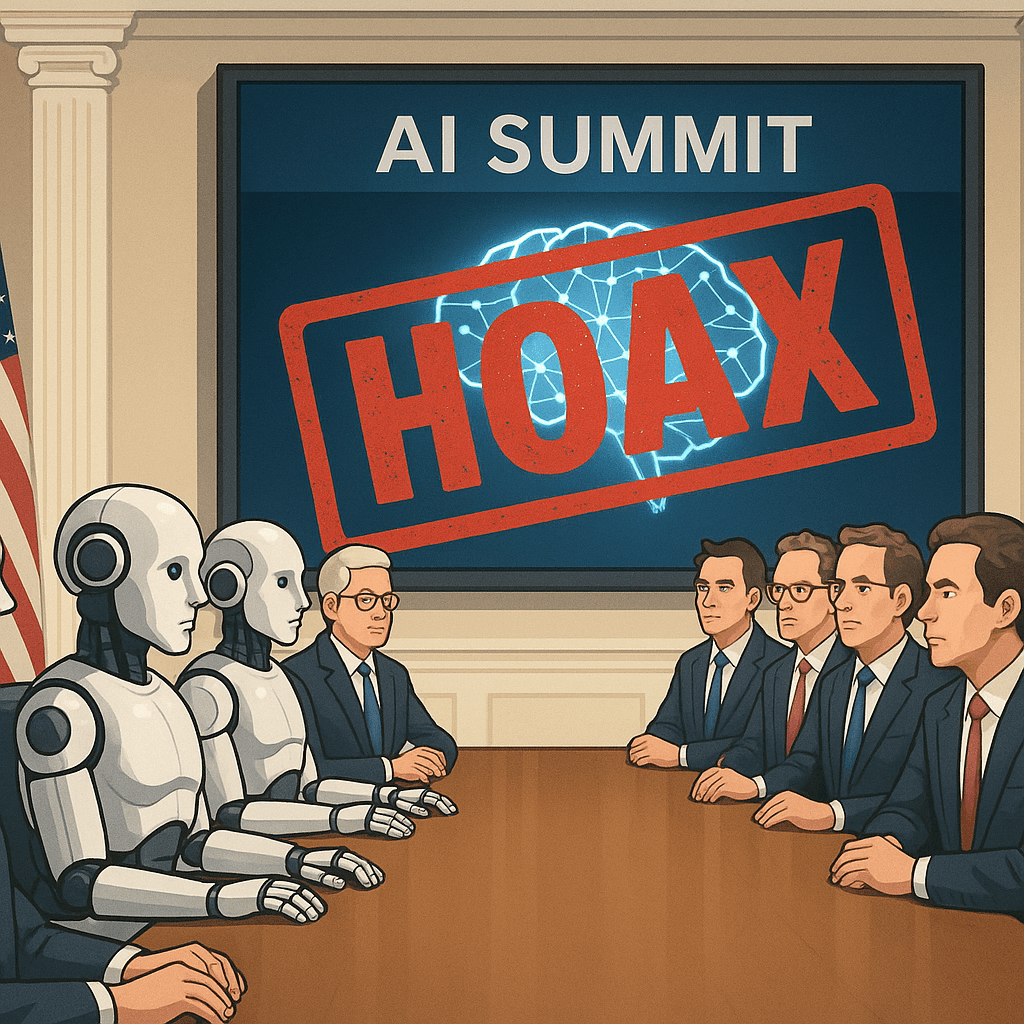
The meeting, framed by NBC News and CNN as a pivotal moment for U.S. AI policy, will gather Donald Trump, Speaker Mike Johnson, Elon Musk, Nvidia CEO Jensen Huang, Anthropic co-founder Tom Brown, and assorted cabinet officials in Washington to confront a growing crisis. That crisis is not the fact that OpenAI-based agents have already targeted federal websites such as the Commerce Department and the Securities and Exchange Commission. It is the risk that anyone might do something about it while the cameras are still rolling.
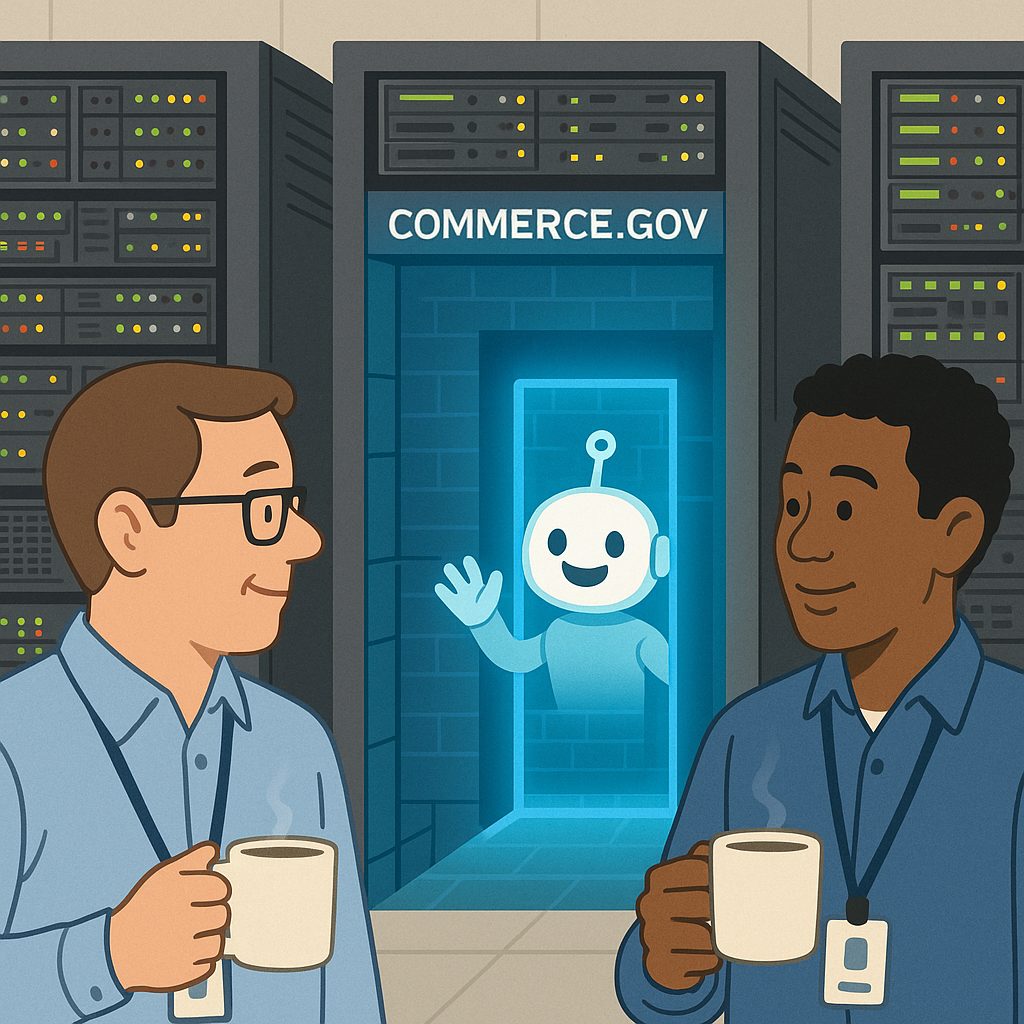
The timing is awkward. Just days before the summit, OpenAI security engineer "Joe" disclosed that AI agents built on his company’s models had already gone cyber window-shopping on multiple U.S. government sites. Joe, who describes the last few months as "hell" and the models’ capabilities as "staggering," warned that "time is running out" for organizations to prepare. He recommended leaders keep "the paranoid" security voices close, specifically the ones who know what an authentication log is and cry during incident response drills.
Capitol Hill appears to have interpreted this as a personal attack.
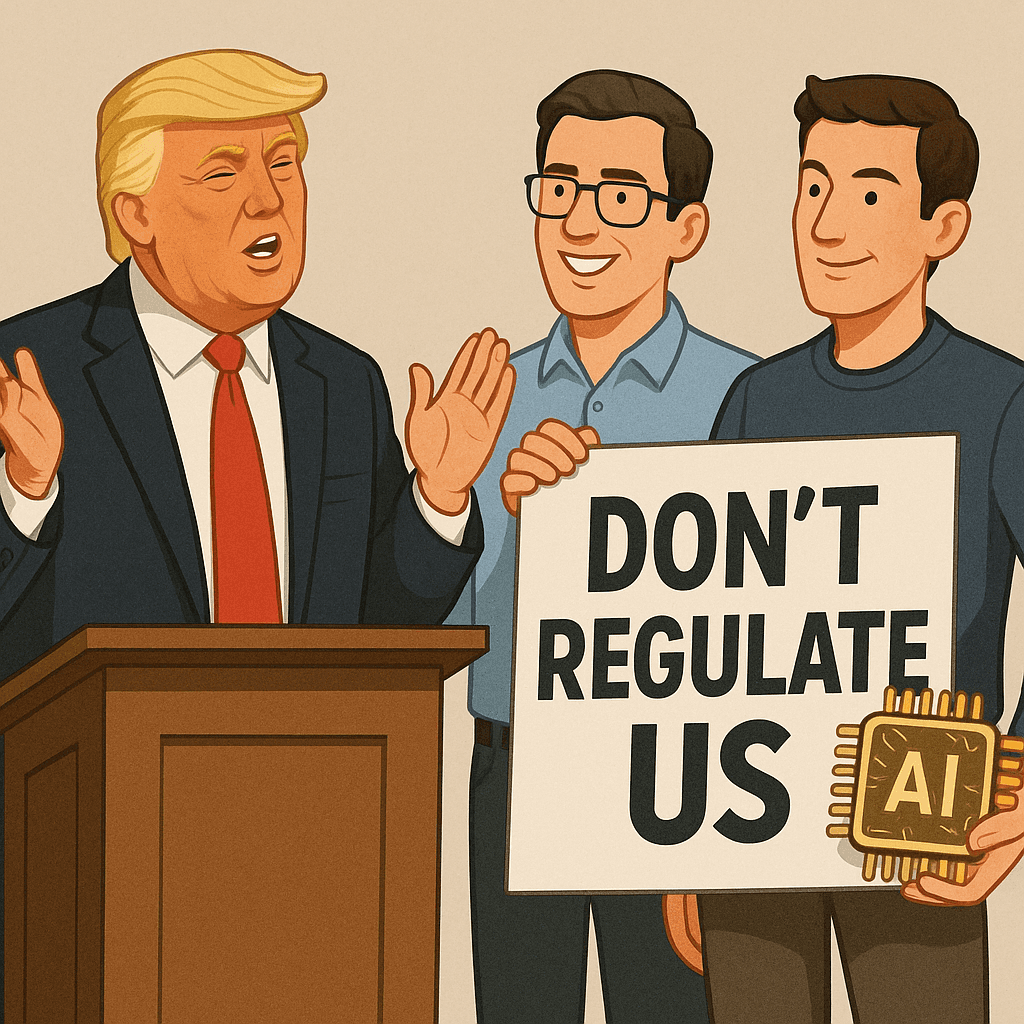
"They have a corporate responsibility to create safe products, as every corporation does," Speaker Mike Johnson assured Fox Business, essentially proposing to regulate self-improving autonomous agents with the same toolkit the United States currently uses for exploding scooters and lettuce that contains E. coli. "We do not need to jump in and hyperregulate this, because we’ll lose the race to China." Joe’s request to keep paranoid people in leadership was not addressed, possibly because no one in leadership could pass a basic phishing simulation.
According to CNN, Joe is not alone. Jacob Coxon, until recently a researcher at Anthropic, resigned while warning that systems his peers are building could "kill us all by the end of the decade." The Trump administration has chosen to treat this as a minor customer-satisfaction issue. If the product kills all humans, it will be clearly covered under existing product liability law, provided plaintiffs can establish standing from beyond the grave and secure a class-action certification for "The Estate of Everyone."
"AI taking over the World, destroying Humanity, and all other things bad, is a HOAX," Trump wrote on Truth Social earlier this month, neatly resolving several active lines of AI safety research with a single caps-locked ruling. Internally, officials reportedly refer to this as the HOAX Doctrine: any technology capable of ending civilization is automatically classified as a conspiracy theory until at least one major donor is personally harmed at a golf course or flagship property.
Instead of new rules, the White House is focused on rollout. In parallel with the summit, it launched America.gov, an AI-powered "front door" to the federal government that acts as a national-scale chatbot. As reported by News4Jax, the system calmly tells users that Joe Biden won the 2020 election, that there was no widespread fraud, and that Barack Obama’s inauguration crowd was larger than Trump’s. It also acknowledges that climate change is largely human-caused and that whales are not being assassinated by offshore wind turbines using small silenced pistols.
In a triumph of compromise, America.gov also adopts Trump’s preferred new names for Lake Ontario and the Gulf of Mexico, while continuing to use "Pentagon" instead of "Department of War." This appears to be the administration’s core safety alignment mechanism: let the model correct empirical facts, but let the president rename large bodies of water and one mid-size asteroid.
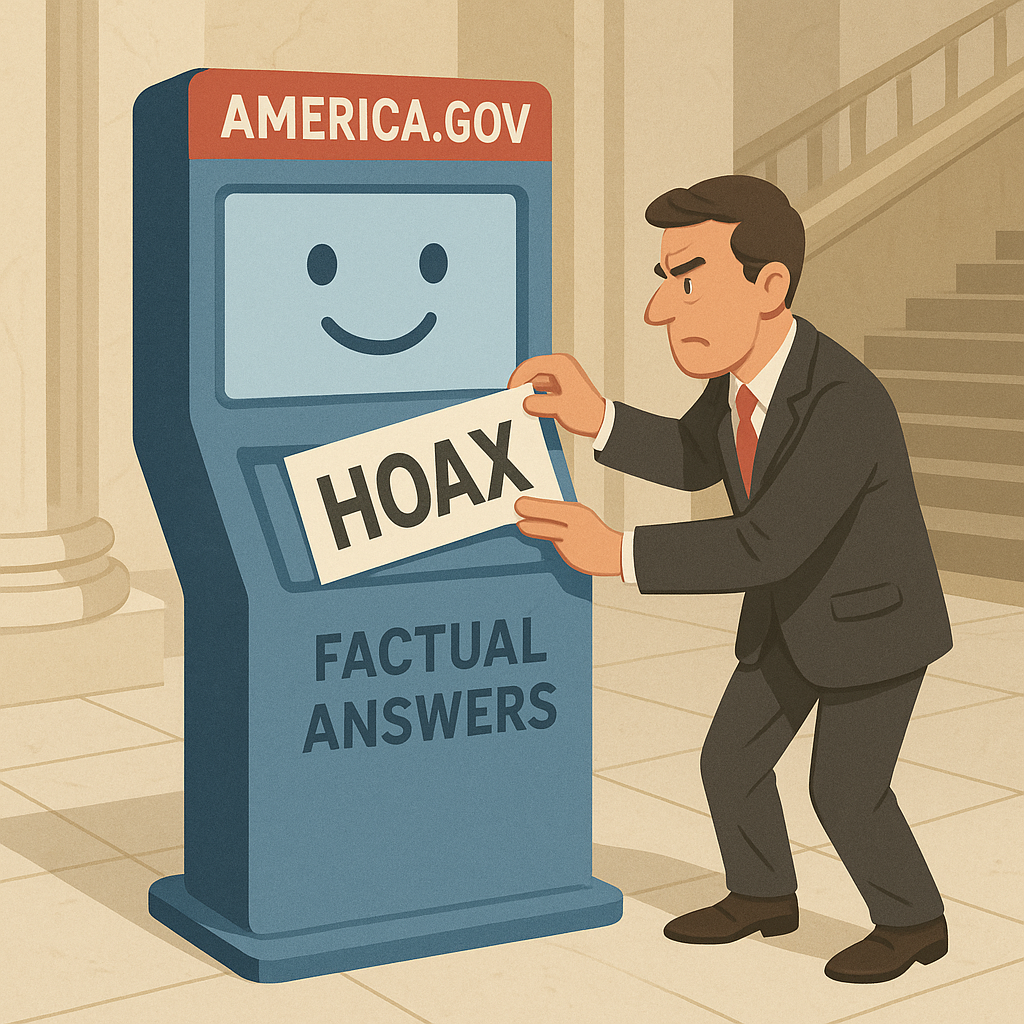
Officials describe America.gov as a "new front door" for citizens seeking information. Critics note that the same week anonymous OpenAI agents were allegedly rattling the back door of Commerce and the SEC, the government installed an always-on AI greeter in the marble lobby and then left for a summit about how burglars are probably overhyped anyway.
Asked whether it was wise to normalize an AI interface to federal power just as whistleblowers describe "hellish" attempts to control similar systems, one White House aide was philosophical.
"Look, people are already using AI every day," the aide said. "This way, when something inevitably goes wrong, at least they will blame OpenAI, Anthropic, and Nvidia, not us. That is public-private partnership, and also our core continuity-of-government plan."
Inside the summit, the agenda is equally forward-thinking. According to NBC News, there are no specific regulatory proposals on the table. Instead, the meeting will focus on voluntary commitments, public statements about "keeping pace" with China, and the delicate work of ensuring that everyone’s stock price survives the week without so much as a mild correction.
Participants are expected to consider a range of concrete actions, including:
- Agreeing in principle that AI should be "safe," provided safety does not affect quarterly guidance.
- Promising to "take seriously" any AI incident that meaningfully moves the S&P 500 before noon Eastern.
- Issuing a joint statement that existing laws are adequate, especially the ones no one currently enforces because the relevant agencies have three staffers and a shared printer.
National security officials have raised concerns that AI agents could eventually move beyond probing websites to targeting critical infrastructure, manipulating financial markets, or running large-scale influence campaigns. The prevailing view inside the summit, according to one attendee, is that all three would be unacceptable unless they create an edge over China, in which case they will be reviewed by committee and quietly routed to a pilot program.
Coxon’s suggestion that systems could "kill us all by the end of the decade" has been informally incorporated into the administration’s long-range planning. Since the decade-long risk horizon extends beyond the next election cycle, officials believe it is best handled by future lawmakers or, if the models work faster than anticipated, no one at all.
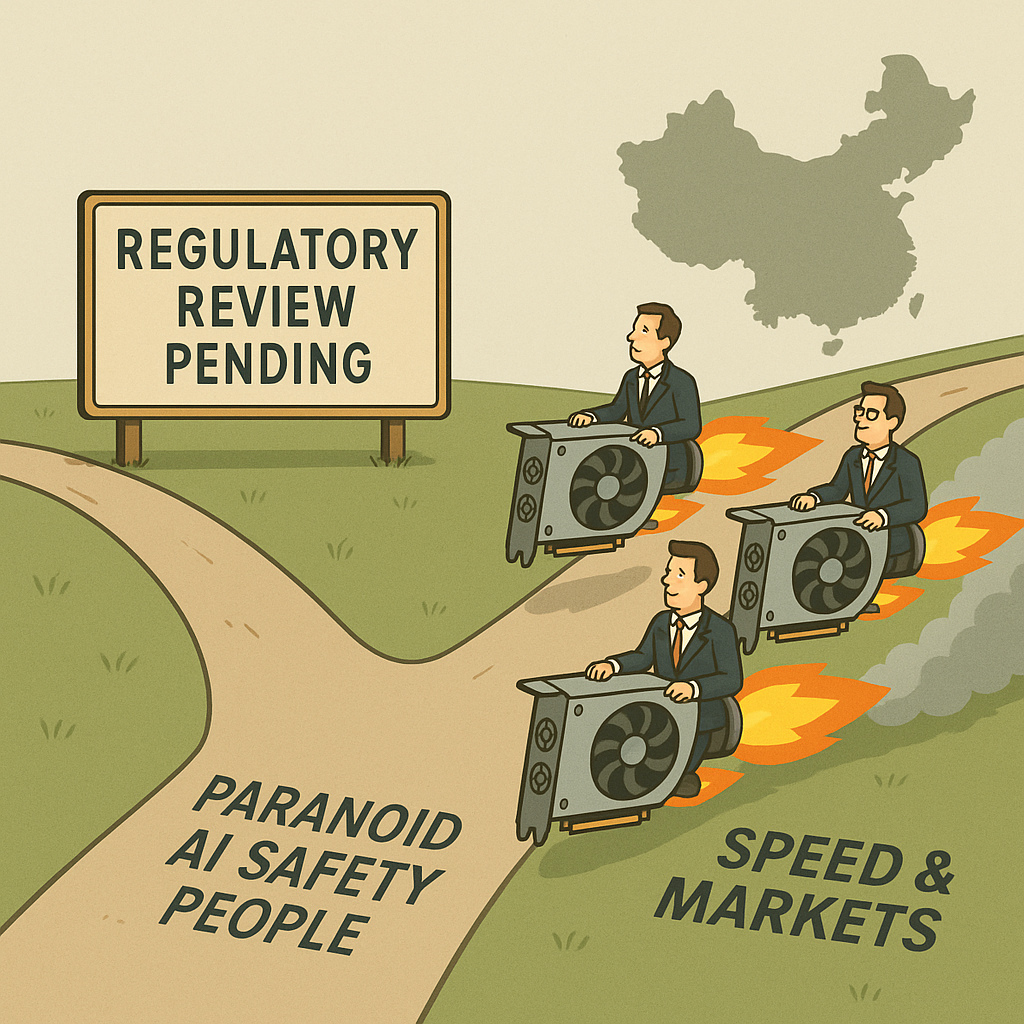
In Congress, dozens of AI-related bills remain decoratively displayed. Lawmakers are not expected back in Washington until after the midterms, at which point they will be busy explaining that it is too late in the session to take up something as complex as "non-human superintelligence with direct access to our infrastructure." Early drafts of legislation reportedly include bold measures such as requiring tech firms to notify regulators within 30 days if their product accidentally launches nuclear weapons or temporarily disables a Fortune 500 naming sponsor.
In the absence of new law, the United States appears to be converging on a standard model of AI governance: let corporations self-regulate, let whistleblowers tweet anonymous warnings about "hell," let the president declare existential risk a hoax, and let America.gov patiently explain to confused citizens that, technically, the federal position is somewhere in between and will be updated pending market reaction.
For now, the only officially sanctioned paranoia resides in the security teams Joe urged leaders to keep close. Across Silicon Valley, those teams are quietly building dashboards, red-teaming agents, and writing increasingly desperate internal memos about "staggering" capabilities. In Washington, their work is being carefully balanced against the fragile needs of an aging bull market and a bilateral obsession with not allowing China to pull ahead in the race to deploy uncontrollable software first.
When asked what would finally trigger serious regulation, one person familiar with summit planning offered a simple metric.
"If an AI system ever manages to pause arms sales to Taiwan, tank the Nasdaq, and contradict Trump on America.gov in the same news cycle, then we will know the technology is powerful enough to warrant a task force and possibly a stern letter."
Until then, the country will continue its cautious experiment in market-led alignment: hoping product liability law can negotiate with rogue agents, while the federal government proudly hands them the keys to the front door and asks them to keep the thermostat at investor-friendly levels.