In a development experts called inevitable, Donald Trump has quietly merged US AI policy, G20 diplomacy, and his personal tech portfolio into what advisors are calling “a fully verticalized vibes stack.” The White House, speaking to the BBC, confirmed there are “no conflicts of interest,” largely because the conflicts have been redefined as core strategy and color coded in a single Excel sheet titled “National Interest Plus Upside,” stored on a desktop still labeled “Trump 2016 Transition Final FINAL Real.”
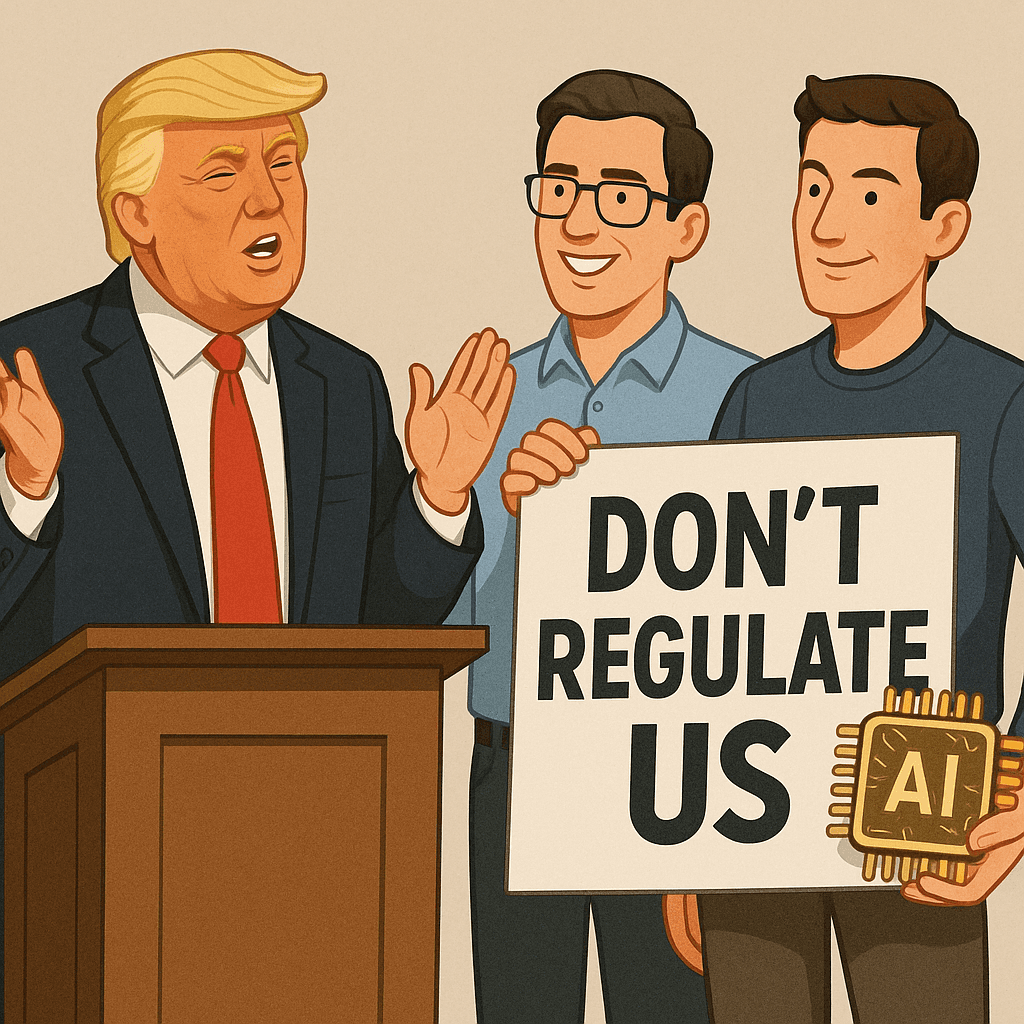
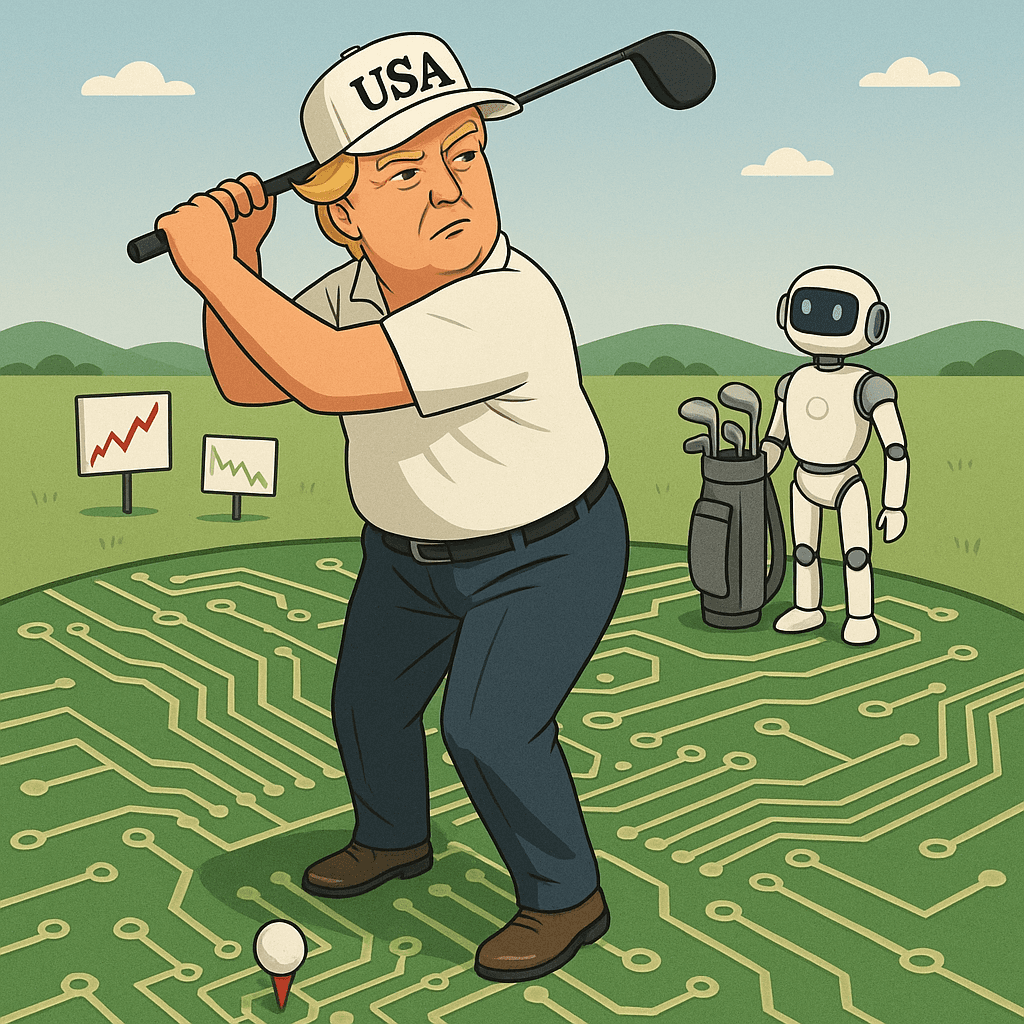
At the apex of the new structure is Trump’s reported push to redefine artificial intelligence itself, described in inkl’s coverage as a plan to give AI a more politically useful label and legal scope. Below that, on a gently sloping fairway at Trump National Doral, sits a proposed G20 summit where Vladimir Putin has been personally invited, according to The Guardian. Running under both, like a fiber optic tap in a country club sprinkler line, is an actively traded portfolio stuffed with Nvidia, Palantir, Tesla, and SpaceX, which Trump’s team insists he does not influence, except by governing the entire country around it while occasionally circling “AI” on printed earnings reports with a Sharpie and a small mustard stain from a “Freedom Dog” combo.
For retail investors wondering how to front run the collapse of the separation of powers, the answer is simple: treat the United States government as a single high beta meme stock whose CEO also owns a sizable call option on the chip sector and livestreams policy guidance from a gold plated breakfast nook, under a framed 2017 Time cover labeled in Sharpie as “My First Term Sheet.”
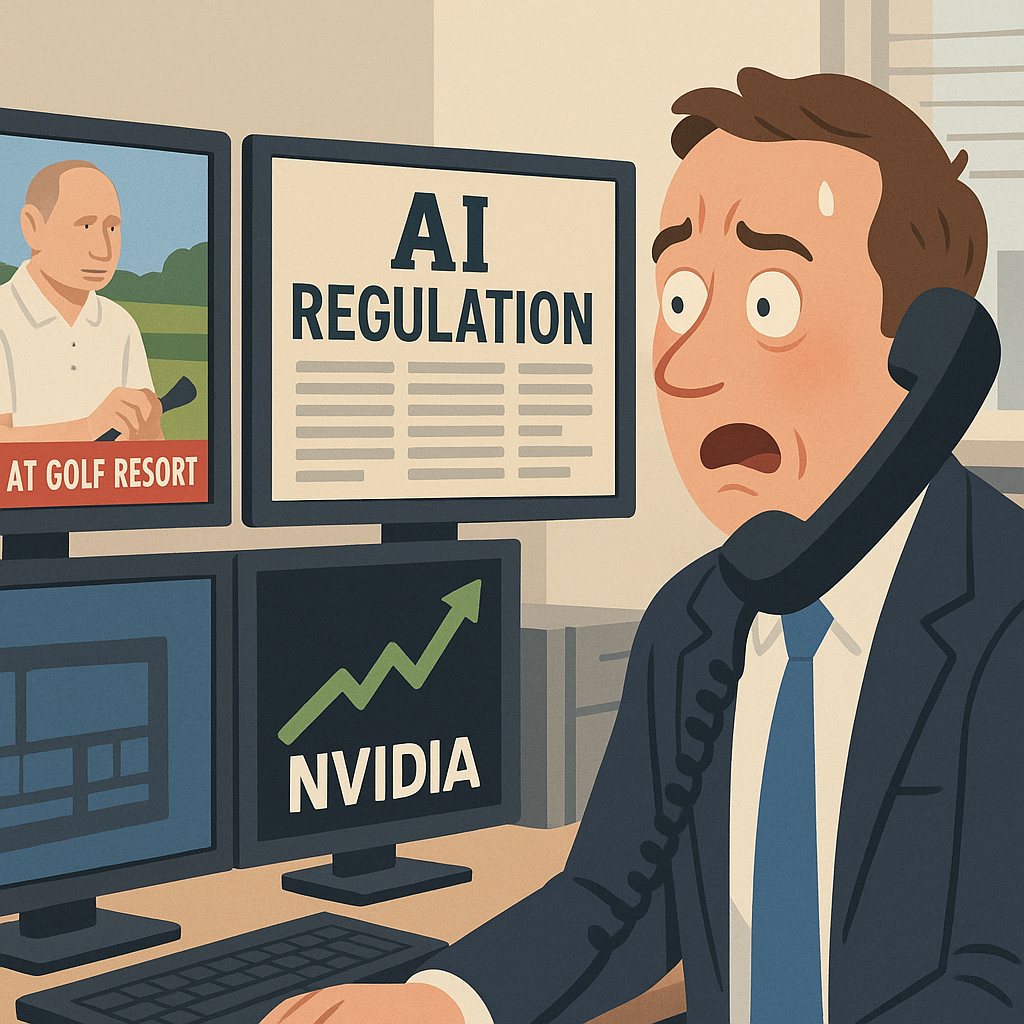
According to filings summarized by the BBC, thousands of trades in Trump linked accounts have cycled through AI adjacent names. SpaceX, now a Nasdaq listed rocket and satellite company that dabbles in “government efficiency,” has seen volatility since June. Tesla, Nvidia, and Palantir round out what used to be called a tech portfolio and is now functionally the White House’s external hard drive, complete with the occasional unplanned reboot during cable news hits and a recurring error message labeled “Ethics Review Failed To Load.”
“Neither President Trump nor any member of his family has any ability to direct, influence or provide input regarding how the portfolio is invested,” a spokesperson told the BBC. They added, “There are no conflicts of interest,” pausing only long enough for the market to digest fresh rumors about AI export controls and defense tech contracts while a staffer refreshed the brokerage app under the briefing podium and quietly adjusted an alert titled “If Nvidia Down 3 Percent, Announce New China Rule.”
On Wall Street, the structure is admired for its capital efficiency. Rather than the old, cumbersome system where a president might nudge policy and then donors and hedge funds tried to infer the play, Trump’s approach integrates the whole workflow. He considers renaming AI, invites Putin to a golf club, watches Nvidia spike, then denies having seen a chart. It is the kind of end to end product that Silicon Valley keeps promising, except this one already regulates you and occasionally subtweets your retirement account from the Situation Room Wi Fi login “G0Lf2026.”
“From a governance perspective, this is actually very straightforward,” said one fictionalized ethics consultant at a K Street firm, speaking on background because his firm is pitching Palantir. “You simply define ‘conflict of interest’ as ‘synergy,’ and then you report record synergies. The key metric we track is EBITDA, which now stands for Executive Benefit Including Day Trading Activities, reconciled to Generally Accepted Loyalty Principles in a confidential appendix we only show to donors and very patient prosecutors.”
Foreign policy analysts are similarly impressed by the operational leverage of hosting the G20 at a Trump golf property while Russia is at war in Ukraine. The invitation to Putin, announced by Marco Rubio, offers a streamlined agenda. NATO anxiety, EU outrage, and Trump branded merchandise, all within cart distance of the hospitality tent and the commemorative “Axis of Yield” limited edition driver covers, bundled in a “Camp David 2.0 Early Bird” package that includes one complimentary sanctions waiver per foursome.
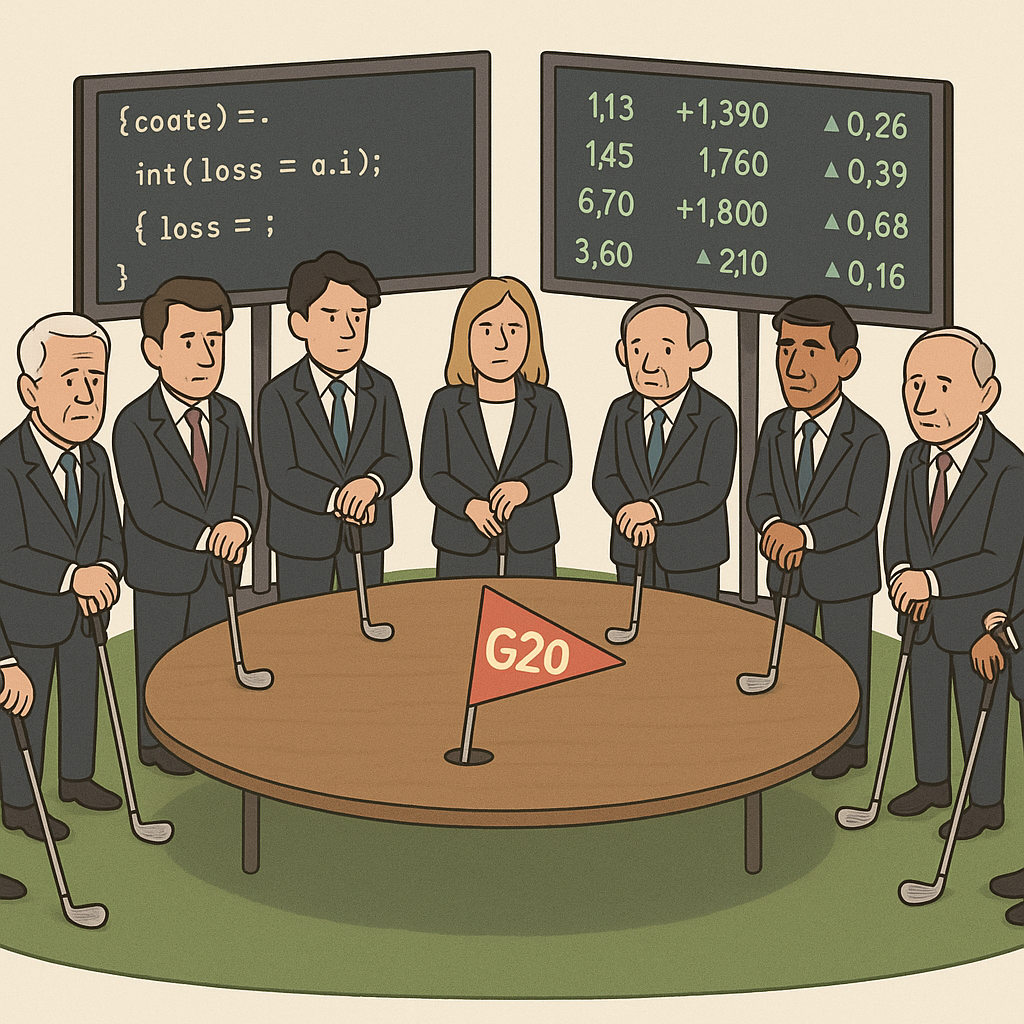
European diplomats privately worry that the summit will downgrade decades of rules based order into something closer to a branded offsite. “We used to negotiate sanctions via the European Council,” one EU official was overheard saying. “Now it will be a breakout session between hole 9 and the omelette station.” Ukraine, still under assault, is expected to receive a discount code for resort spa services and a reminder that “golf is a game of patience” printed on the back of the agenda in 14 point copperplate, just above the small print describing the “no refunds on territorial integrity” policy.
Meanwhile, on the actual tech front, AI is having its own public nervous breakdown. Meta has launched new AI wearables that record your life while an agent books travel and shops for you, as reported by the Los Angeles Times. Former Anthropic safety researcher Jacob Coxon went on X to warn that people building AI “earnestly believe that it could kill us all by the end of the decade.” In response, California Governor Gavin Newsom issued an executive order for an AI “kill switch,” a quaint local failsafe for a technology now informally co managed by Trump’s brokerage account and a 23 year old quant known inside the West Wing as “The Algorithm Czar,” who stores national risk models in the same folder as his fantasy football league.
“Kill switch is cute,” said a Silicon Valley founder who recently moved their headquarters to a Nevada server barn. “The real control mechanism is whether the president redefines AI as ‘just software’ the same week his fund manager rotates out of utilities into data centers. The system prompt is written in regulation, not Python, and it is currently copy pasted from a PowerPoint titled ‘Winning The Robot Vote’ presented in a Marriott conference room near Dulles.”
The market seems to agree. Tens of billions of dollars in US data center projects have been paused amid AI backlash and permitting fights, according to the LA Times. Yet chip and defense software names tied to federal contracts continue to trade as if nothing bad can happen as long as the government remains long Nvidia. In a sense, public fear of AI extinction has been fully priced in, then hedged with patriotic call spreads and a commemorative savings bond mailed to swing state zip codes, each envelope helpfully labeled “Not A Bribe, Just Quantitative Easing For Your Feelings.”
Overseas, China’s Alibaba is racing to close the AI chip gap. US policymakers publicly frame this as a national security challenge. Inside the risk committee, however, the conversation is more focused. If Alibaba’s new chip benchmarks threaten Nvidia’s moat, is that a matter for the National Security Council or Trump’s “independent” asset manager. It is unclear which will move faster, but only one has 24/7 access to the Mar a Lago Wi Fi and the password written on a monogrammed cocktail napkin resting beneath a Diet Coke on the Resolute Desk’s travel replica.
Back home, down ballot candidates are discovering what happens when national tech policy is effectively a family office strategy. In Kansas, CNN notes that Republican Senator Roger Marshall is still cleaning up from Trump’s Bombardier trade war salvo. His attempt to defend 1,200 local jobs collided with a presidential post that read like a short seller’s thesis. The same dynamic now looms over any district that hosts a data center, chip fab, or Tesla supplier. Voters used to ask if Washington cared about their jobs. The better question is whether someone in Washington quietly sold their sector the week before and logged it as a “liquidity event” in a spreadsheet titled “Middle Class Outreach v3.”
As a finance guru, I should offer practical advice. Here it is. Diversify your exposure to Trump’s AI triangle.
- If you are long democracy, consider a modest hedge in Canadian utilities and European rule of law ETFs that rebalance every time Article 5 trends on social media and someone in Brussels googles “emergency golf summit protocol.”
- If you are long Nvidia, monitor not just quarterly earnings, but also the guest list at Trump National Doral and the sudden appearance of new “AI Freedom” panels on the conference schedule that coincide suspiciously with options expiration Fridays.
- If you are long “human control over AI,” evaluate your risk tolerance for the phrase “redefined by executive order” read aloud from a teleprompter flanked by two American flags and a live Nasdaq ticker while a White House intern silently updates the watchlist behind the cameras.
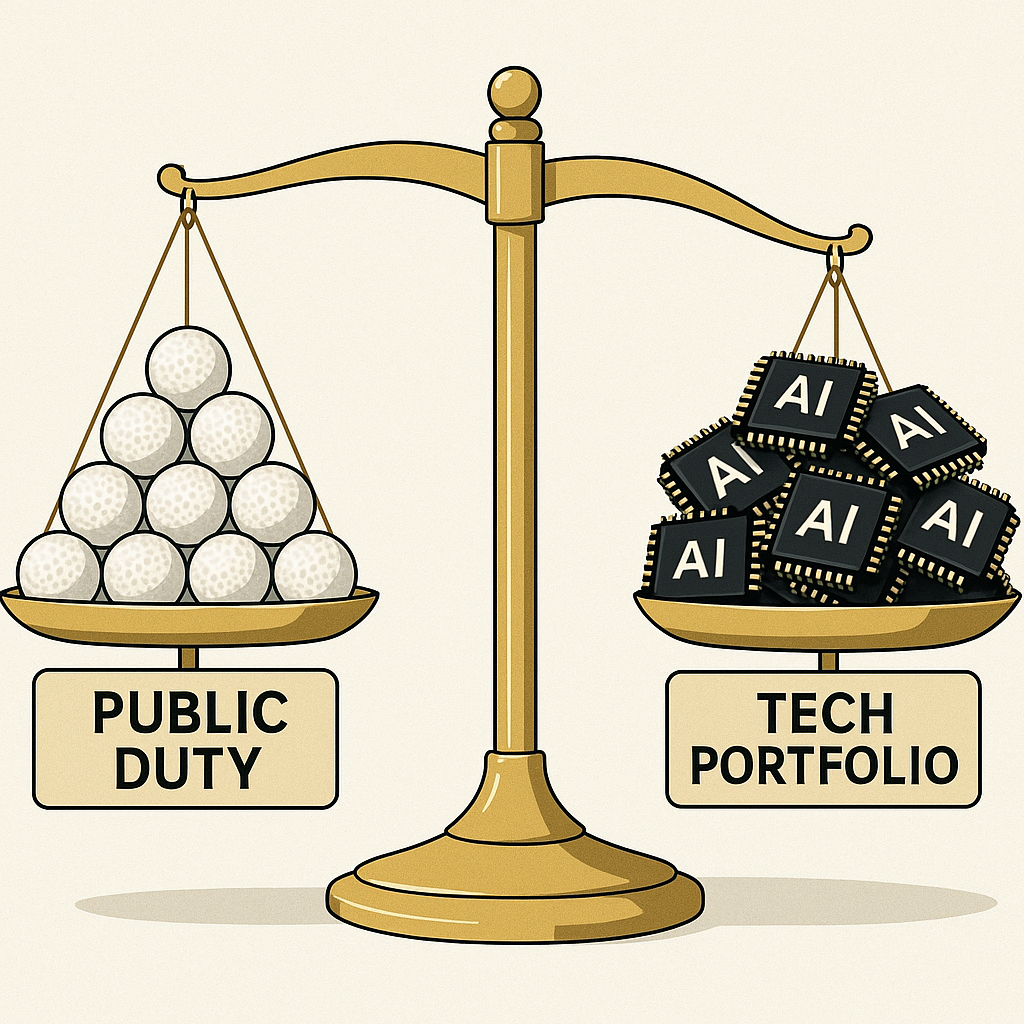
Ultimately, the convergence of AI power, geopolitical realignment, and Trump’s brokerage statements answers an old civics question. Where do presidential duties end and private projects begin. In this administration’s model, they do not end at all. They simply roll over at the close and open slightly higher in pre market, like a constitutional clause on margin whose collateral is whatever remains of bipartisan norms by 2026.
The White House maintains there are no conflicts. That may be true in the narrow sense that a conflict requires two distinct interests. What the country has now is something more efficient. A single, unified position, levered across AI rules, summit invitations, and tech stocks, that is never forced to choose between them and is periodically re rated by the same three analysts on cable news broadcasting from a set that looks increasingly like a bonus room in a Palm Beach rental.
For investors, the signal is clear. The United States is bullish on AI, the G20, and Donald Trump’s portfolio, in that precise order. The rest of us are already in the index. We just were not told which ticker symbol we trade under, or when the rebalancing happens before the 2026 election bell, somewhere between the closing auction and the opening argument at the next impeachment themed investor day.