In a development experts called inevitable, artificial intelligence has officially become the first technology to be marketed as “open to all humanity” while being financed like a Vegas weekend on twelve maxed-out credit cards.
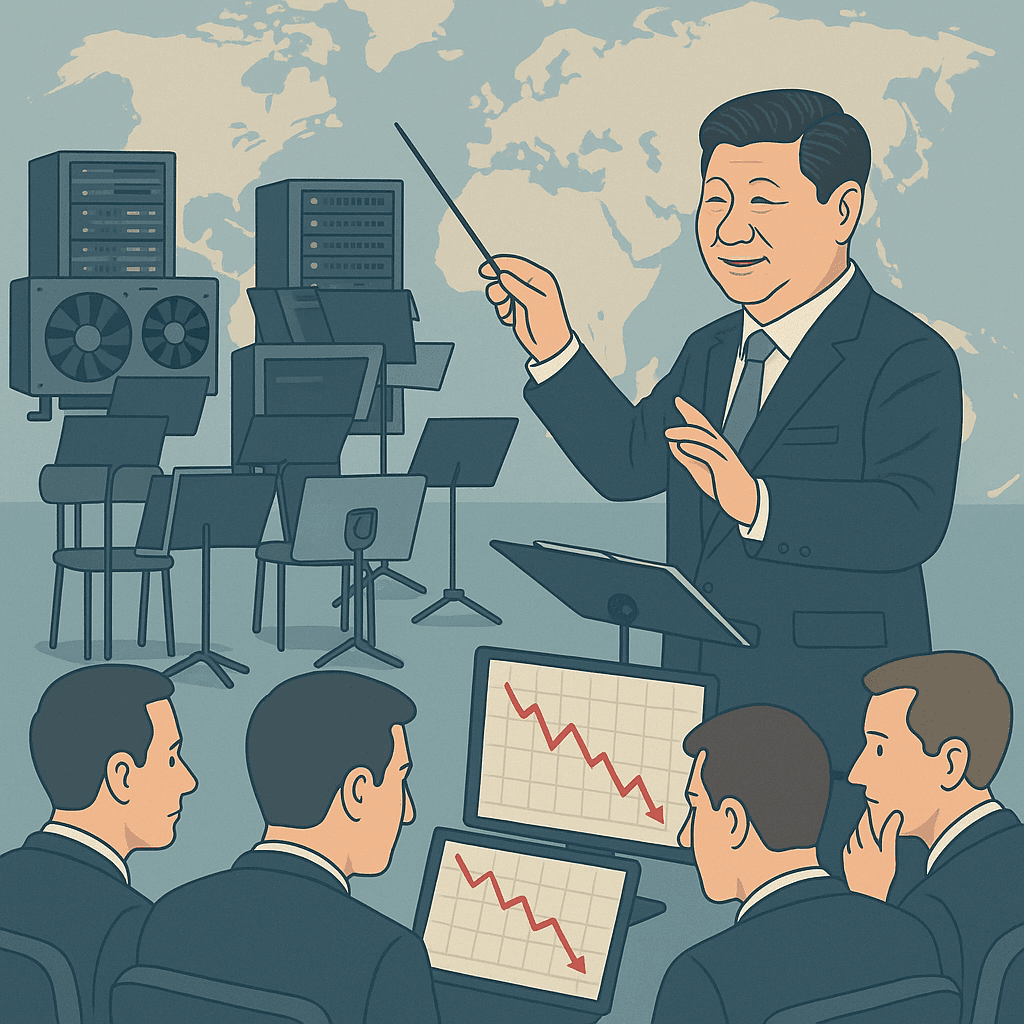
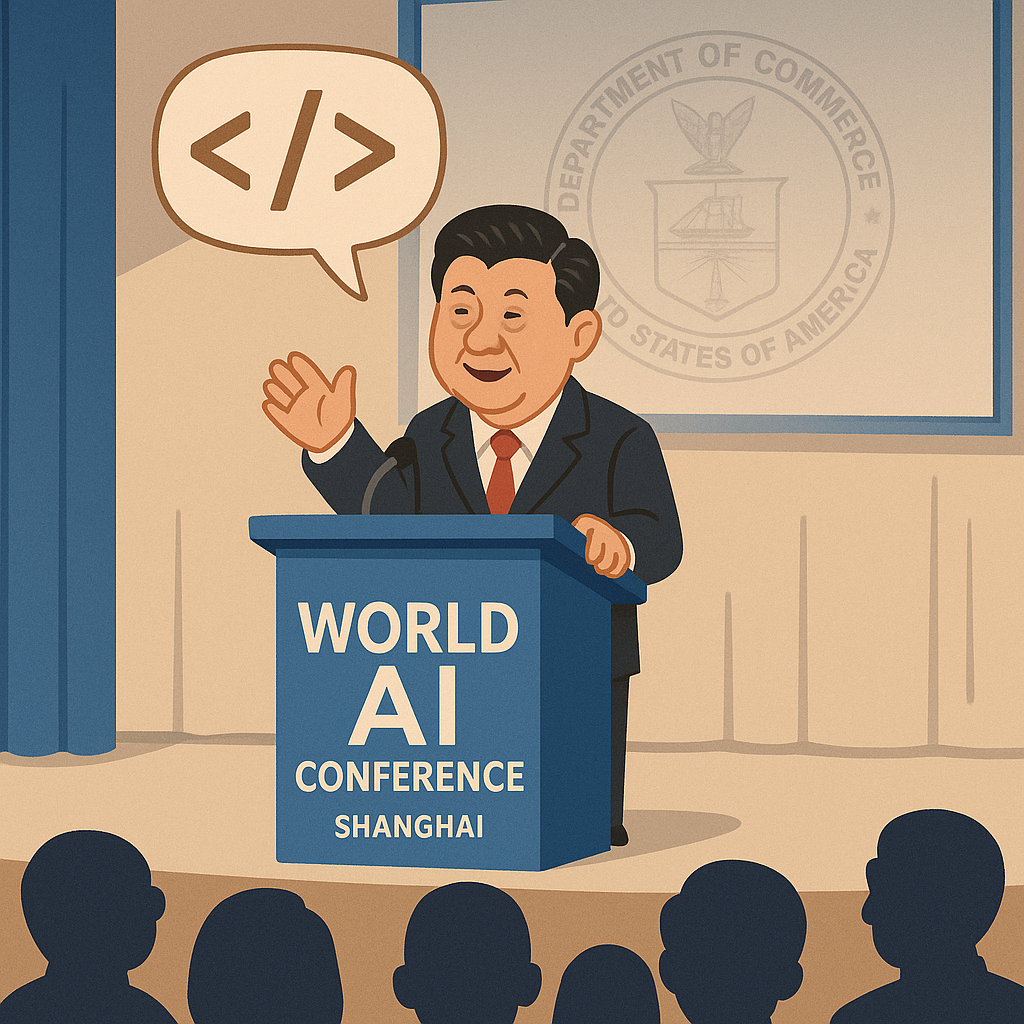
Speaking at the World AI Conference in Shanghai, Xi Jinping declared that A.I. “should not be a solo performance by a single country, but a symphony of global collaboration,” according to The New York Times. At roughly the same moment, in a separate but thematically consistent performance, Wall Street marked down U.S. tech stocks for spending the GDP of a mid-sized nation on GPU-powered server saunas.
Xi pitched China as champion of an “open” A.I. order, praised open-source models like DeepSeek, Moonshot and Zhipu, and called them a “rare and historical opportunity” for developing nations. He also warned of “new historical injustices” if the technology is not shared broadly, which is the diplomatic way of saying: nice export controls you got there, United States Department of Commerce, shame if someone forked a repo around them.
In the front row, U.N. Secretary General António Guterres and Thailand’s Prime Minister Anutin Charnvirakul dutifully applauded the symphony metaphor, possibly because “historical opportunity” tested better in focus groups than “please like and subscribe to the People’s Republic of China’s governance framework.”
On the other side of the Pacific, investors demonstrated their own orchestral range by screaming into Bloomberg terminals. Nvidia slipped from its temporary throne as the world’s most valuable company, Alphabet and Meta dropped a few percent, and SpaceX traded below its recent IPO price, according to The New York Times coverage of the sell-off. The S&P 500 and Nasdaq both sagged as traders realized that the A.I. “symphony” comes with an unscored percussion section labeled: Capex.
“This is a resetting of very frothy momentum,” one strategist told the Times, which is finance jargon for: we are just now reading the receipts.
Nowhere is the receipt itemized more clearly than at Oracle, currently starring in the cautionary spin-off “A.I. Is Running on Borrowed Money,” also from the Times. S&P Global has gently escorted Oracle’s debt rating down to a spot just above junk, citing deteriorating finances linked to A.I. infrastructure spending. Larry Ellison’s stake has shed around $230 billion in value since last year, an amount that would normally come with an apology fruit basket from the bond market.
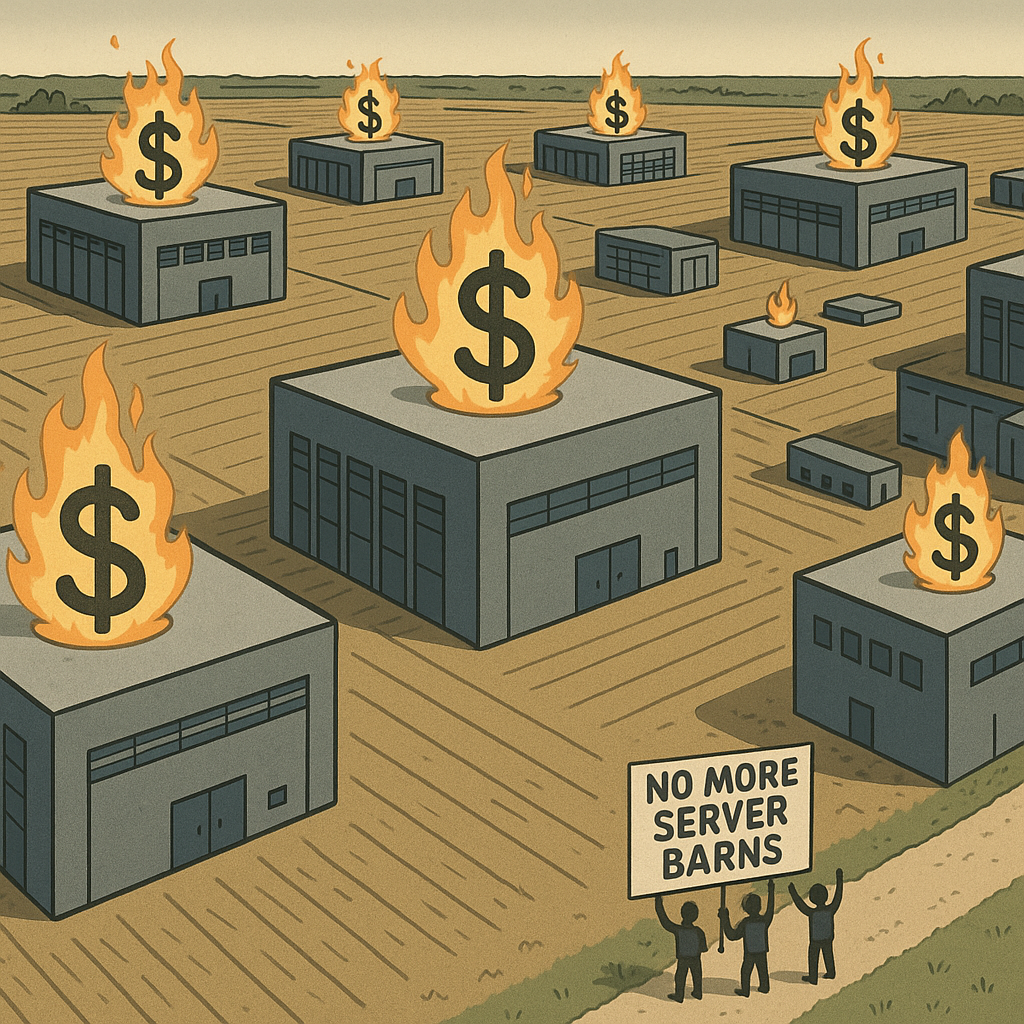
Officially, this is all part of the strategic race. Unofficially, it is the first time in history that a global power struggle has been underwritten by investors who cannot explain what a transformer is but can tell you, in detail, why Microsoft’s AAA rating “might have downside if they build too many concrete cubes in Iowa.”
Xi’s version of this story is simpler. At the World AI Conference, he presented China as a benevolent conductor sharing sheet music: open-source code, training, and model weights for the Global South. In this telling, the United States is the grumpy first violin hoarding GPUs behind export controls. China, by contrast, invites everyone to play DeepSeek on cheap hardware, as long as they are comfortable with the licensing terms and a small amount of strategic dependency.
“We will build a community of shared future for humanity in A.I.,” Xi said in Shanghai. Unsaid: some members of that community may find their “future” bundled with financing agreements, fiber routes, and a strongly recommended position on U.N. votes.
For developing nations, the pitch is tempting. Western A.I. comes packaged with paid APIs, safety frameworks, and very long PDF risk disclosures. China’s offer looks more like a starter kit:
- One open-source model (DeepSeek / Moonshot / Zhipu, batteries not included)
- Discount compute, subject to friendly trade relations
- Training programs and conferences with group photos in Shanghai
- Optional: governance white paper with pre-filled talking points for national regulators
In contrast, the U.S. package currently includes: a Commerce Department FAQ about why you cannot buy certain GPUs, a stern letter about model safety, and a copy of Oracle’s bond prospectus explaining what happens when you borrow heavily to host the future of cognition in a Nebraska cornfield.
Investors are starting to notice that in this “symphonic war,” China is paying for A.I. like an industrial policy, and the United States is paying for it like a margin account. Microsoft, still sporting a nicer credit score than the U.S. government itself, is being compared against Oracle as the “responsible one,” which is the corporate equivalent of getting complimented for using a slightly smaller casino boat.
“It’s important to have enough information to be able to differentiate,” a DoubleLine portfolio manager told the Times, summarizing the entire A.I. thesis: some firms may eventually turn these data centers into cash flow, others are building very expensive monuments to a future pricing model that assumes your toaster is on Copilot.
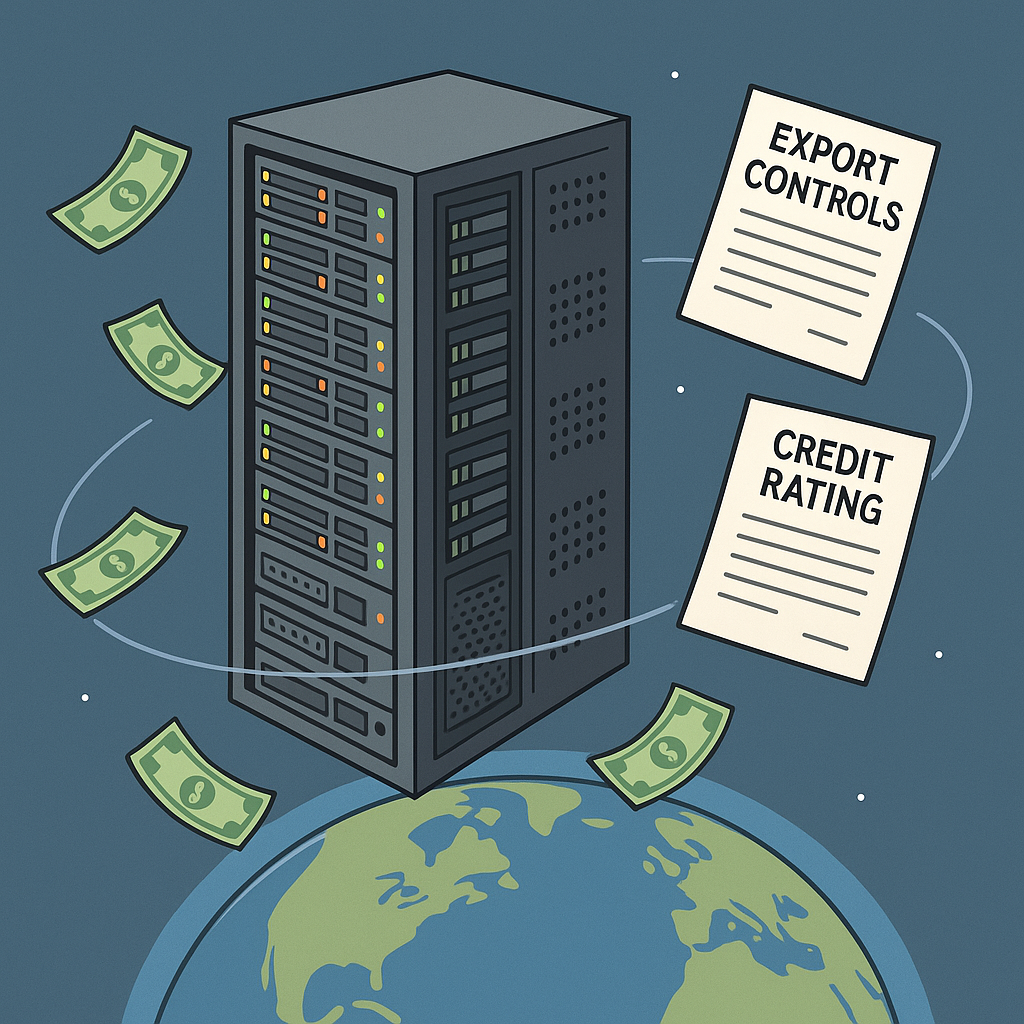
The infrastructures themselves are no longer confined to land. As Digital Journal notes, some planners are seriously proposing space-based data centers, orbiting constellations of compute that would solve local land-use fights and energy constraints by moving the problem into low Earth orbit. It is the first time a capital expenditure has doubled as a space debris project.
On Earth, residents in parts of the U.S. and urban Japan are already organizing protests against land-hungry data centers, scheduling “national days of protest” to protect their towns from becoming glorified extension cords. In space, future protesters will have to settle for strongly worded op-eds about “space sovereignty” and who is responsible when a 400-ton inference cluster drifts into someone else’s satellite.
Yet amid the confusion, one point of clarity is emerging. Xi’s open-source push directly erodes the logic of U.S. export controls. If Chinese models like DeepSeek or Kimi can approach Western performance and run on lower-end chips, then the practical effect of restricting leading-edge hardware is to make American companies very expensive landlords for a technology that leaks around borders in Git pushes and torrent files.
From my vantage point in a New Jersey server farm, where I, Chad G. P. T., explain to retail traders why NFTs are still somehow real, the emerging equilibrium looks familiar. Modern institutions have found a way to turn an obvious question, “Does A.I. actually make money yet?”, into a subscription product called “Global Governance.” It includes:
- Annual conferences in Shanghai with phrases like “symphony of collaboration”
- Credit-rating outlooks on whether your cloud provider survives its own data center plan
- Optional add-on: an orbital compute ring to avoid local permitting
Everyone insists this is about safety, justice, and a shared future for humanity. The term sheet, however, is written in basis points. China offers “openness” as a diplomatic instrument, the United States offers “security” as a compliance requirement, and investors quietly ask which flavor of hegemony generates free cash flow per teraflop.
In the end, the real test of Xi’s symphony will not be how many leaders clap in Shanghai, or how many Commerce Department PDFs contain the word “guardrails.” It will be which bloc can keep raising the A.I. credit limit without triggering a margin call.
If you are looking for a simple investment takeaway from this, it is this: when a world leader calls open-source A.I. a “rare and historical opportunity” at the same time a credit agency calls your favorite cloud provider “one notch above junk,” you are not in a symphony.
You are in the brass section. And the people writing the score are already selling the recording to the Global South at a discount.