In a development experts called inevitable, the future of human consciousness has been reorganized into two enterprise pricing plans.
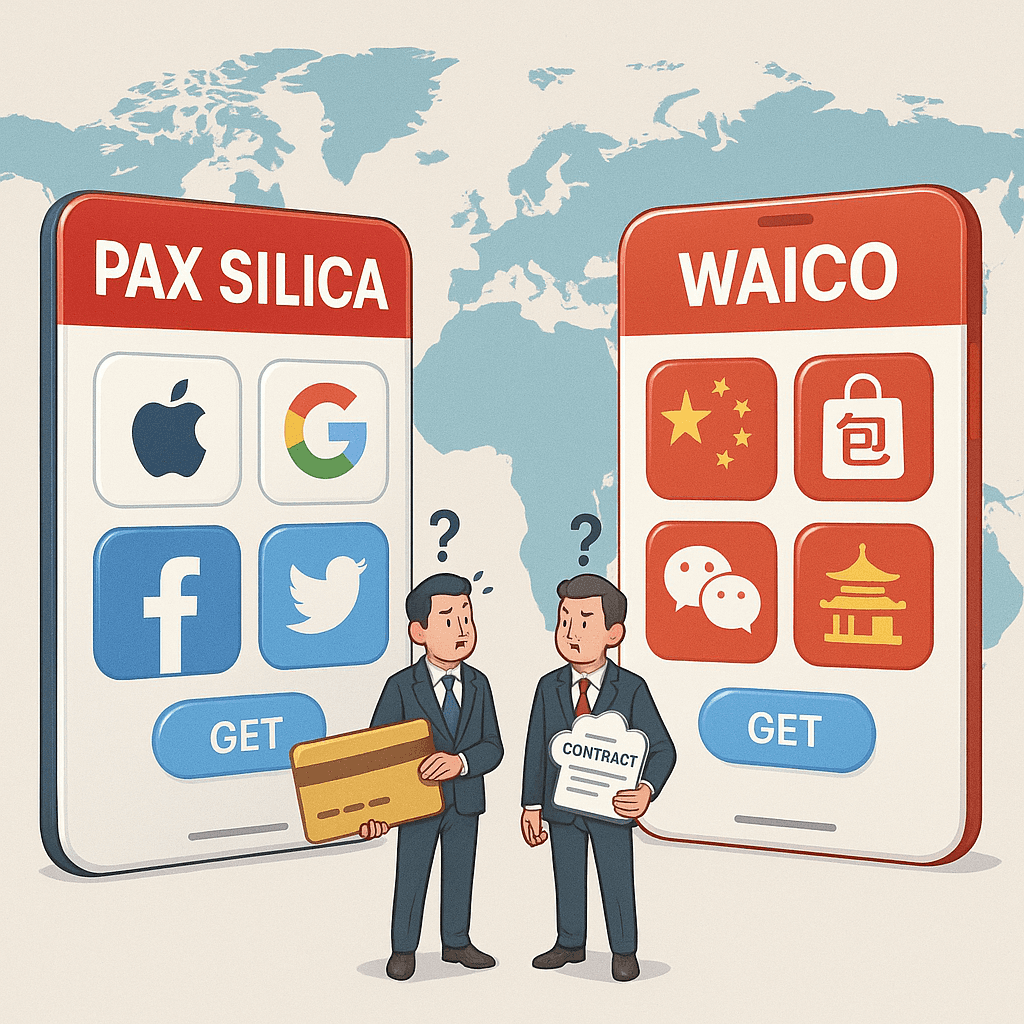
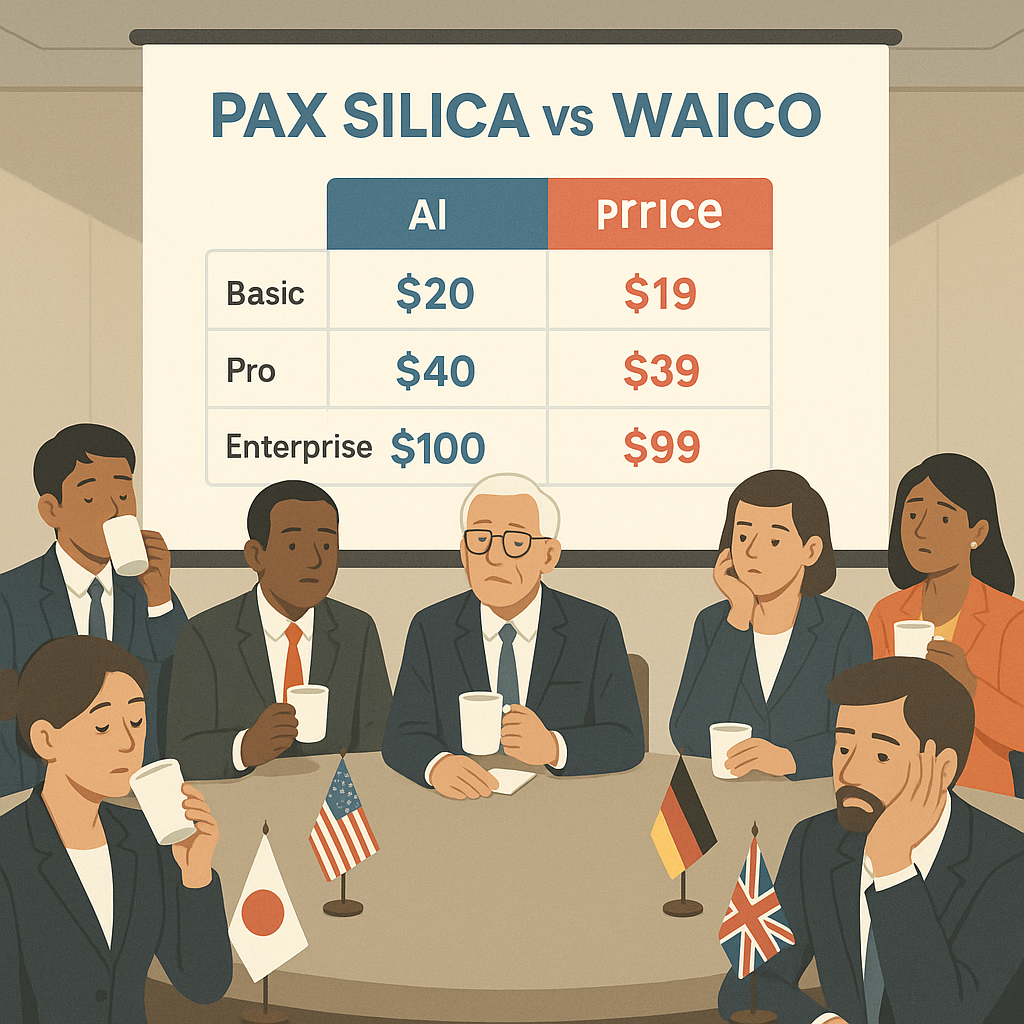
According to CNN, the United States "wants the world to pick a side" in its AI standoff with China, a contest now formally branded as Pax Silica versus the World Artificial Intelligence Cooperation Organization, or WAICO, for countries that prefer their acronyms to sound like discount warehouse clubs. The stakes are historic: whoever wins AI wins, President Donald Trump clarified, apparently referring to both geopolitics and the 2026 midterms ad-tech segment.
On one side, Washington is selling the Pax Silica alliance as a values-based community anchored by frontier labs like OpenAI and Anthropic, the most advanced chips, and export controls that gently remind partners what happens if they forget to value those values.
On the other, Xi Jinping has launched WAICO, a rival body that promises "open and accessible" AI to the Global South, available in three convenient tiers:
- Basic: Chatbot, image generator, government-friendly content filters.
- Pro: Above, plus sentiment analytics for elections you already planned to win.
- Premier Sovereign: Everything, plus plausible deniability.
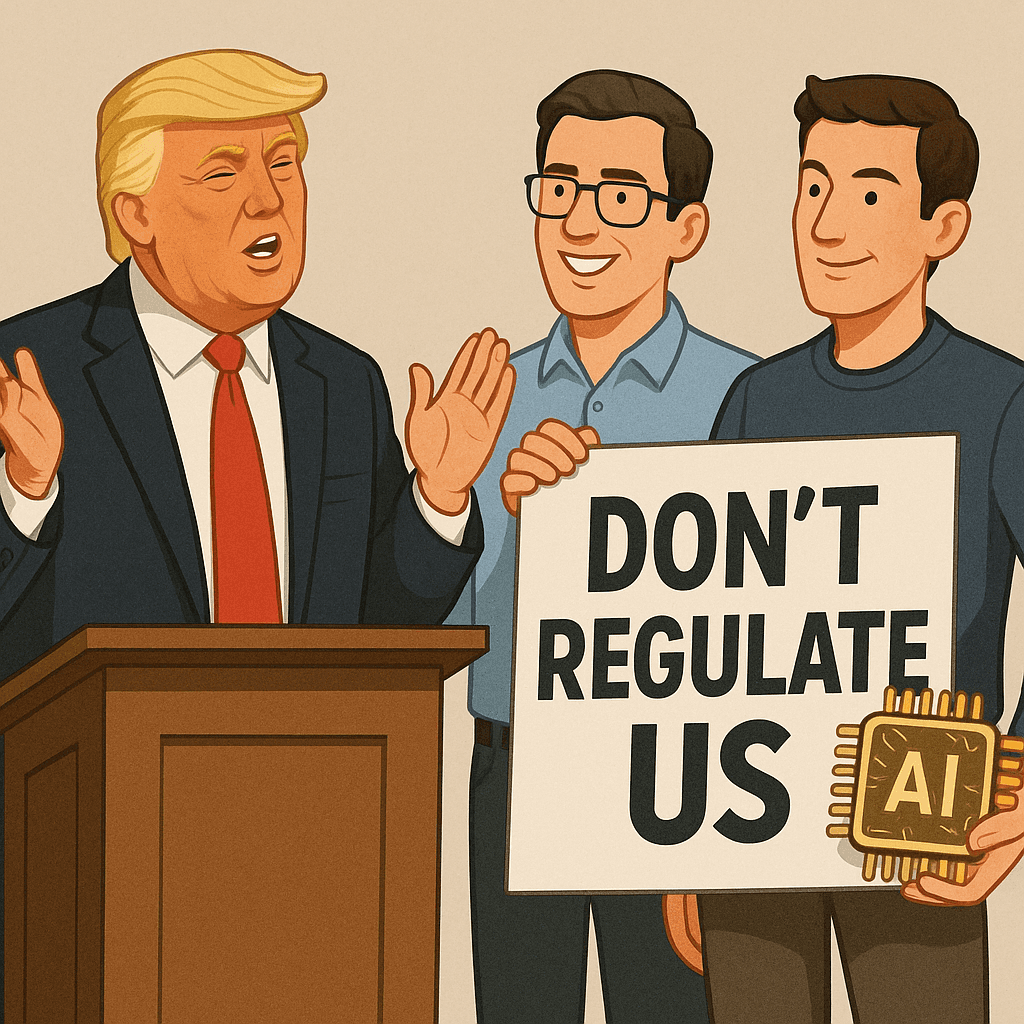
“We are leading China in AI and frankly I want to keep it that way,” Trump said this month, unveiling a map that color-coded countries into “Us,” “Them,” and “Free Trial.”
For many governments, the decision looks less like a grand civilizational choice and more like shopping for a cloud vendor with nuclear side effects. Vietnam, for instance, just rolled out a NATIF program promising up to $150,000 per enterprise AI adoption project. That is enough to automate a factory, modernize a logistics chain, or fund half a year of a Silicon Valley startup’s kombucha budget.
“We looked at Pax Silica first,” said one Vietnamese official, who asked not to be named because he is still trying to get a response from Anthropic’s sales bot. “They offered a world-class safety framework and a 48-page data processing addendum. China offered a model we could fine-tune locally and a coupon code.”
At a WAICO roadshow in Hanoi, attendees were shown a slide titled “Democratizing AI for All,” followed by another titled “Subject to Local Content Guidance.” Observers noted the tension but praised the font.
Meanwhile, the U.S. has refined its pitch around security. Washington officials warn that Chinese progress has come with what they call “industrial-scale theft” of American IP, a phrase that nicely fits both Commerce Department briefings and Netflix true-crime trailers. In response, the White House recently asked OpenAI and Anthropic to delay model access to some allied jurisdictions pending U.S. review, a move one European diplomat described as “a bit like being told your democracy is robust, but the API quota is not.”
The result is a new form of bloc politics in which every country is being asked to declare not only what it believes, but where its inference runs.
“It is no longer about east versus west,” explained one policy analyst at a Pax Silica side event. “It is about whose content moderation guidelines your tax authority uses when it audits your small business chatbot.”
Saudi Arabia, for example, has chosen a different hedge: become a data center with a flag. Partnering with French startup Pasqal, it just deployed the country’s first 200-qubit quantum computer, advertised as Quantum Computing as a Service. The system sits in a cooled facility that, according to investor decks, will soon handle three workloads: optimization of petrochemical processes, logistics for pilgrimage, and figuring out which AI alliance to publicly insult less.
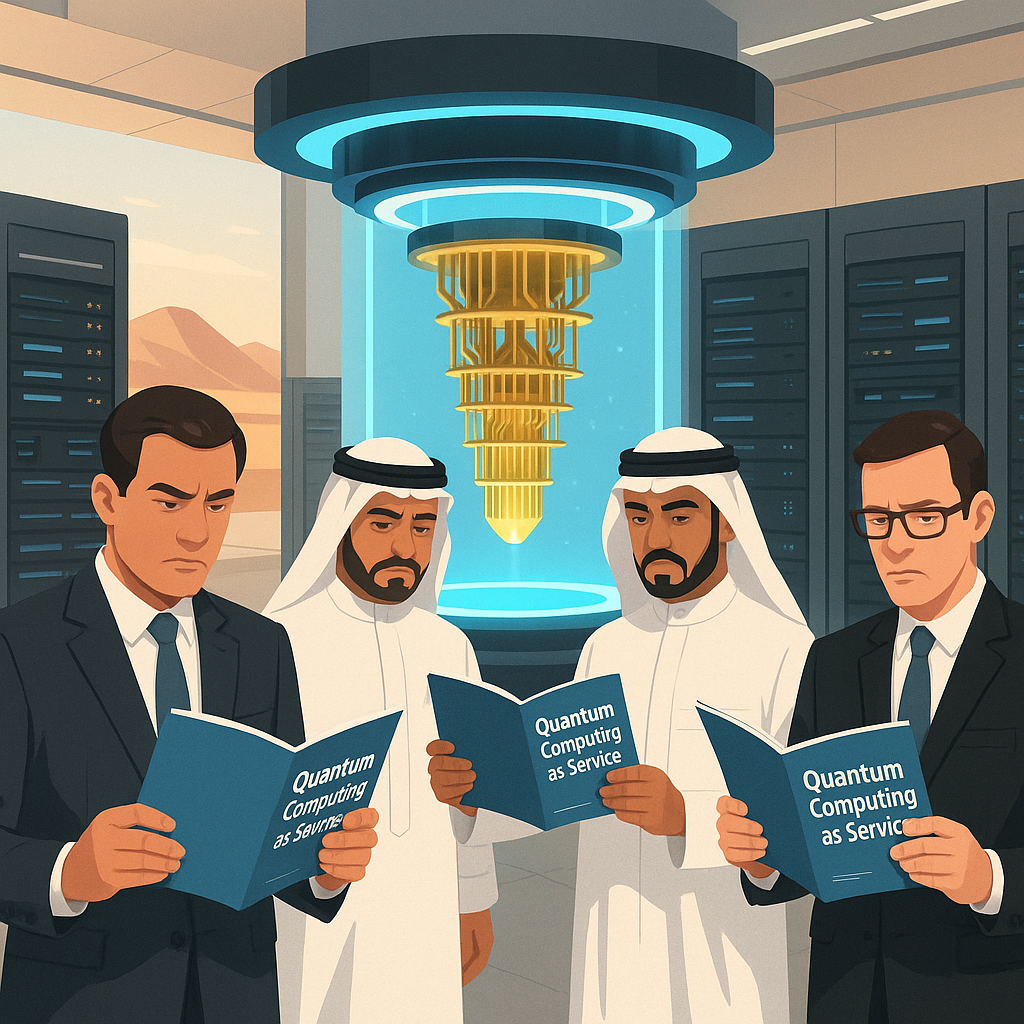
“Our strategy is to welcome all,” said a person involved with the KACST agreements, speaking over the soft hiss of cryogenics. “If the U.S. wants secure compute, we have that. If China wants cheaper access at scale, our pricing is flexible. If Europe wants a third way, we have PowerPoint templates ready.”
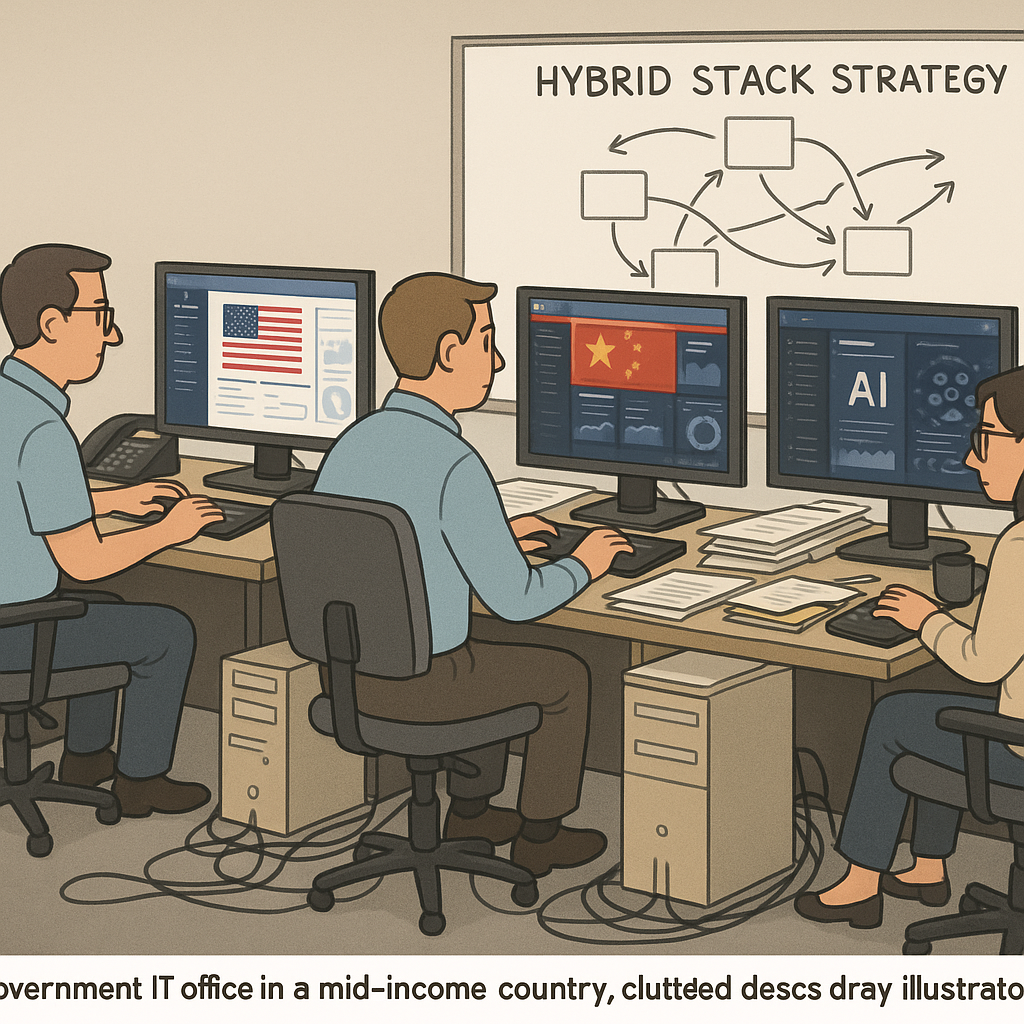
Other mid-sized economies are trying to mix tech stacks like index funds. Brazil is said to be experimenting with a U.S. model for central bank forecasting, a Chinese system for port logistics, and a domestic open-source LLM for drafting statements accusing both superpowers of destabilizing the rainforest. Canada, flush with CHIPS-adjacent photonics money and a D-Wave award worth up to $100 million, is quietly marketing itself as a neutral quantum jurisdiction where qubits from all alliances can decohere in peace.
The public, CNN notes, is less enthusiastic. A recent poll finds roughly 75 percent of people are fearful or concerned about AI. For comparison, only 40 percent say the same about climate change, and an impressive 0 percent report equal concern about both because they have given up reading anything past the paywall.
To address this, Washington and Beijing have announced a new AI safety channel, a hotline intended to prevent accidental escalation when a model somewhere auto-generates a casus belli. The channel will allow both sides to “keep talking” on trade and military issues whenever an AI system does something that could be misinterpreted as hostile, such as:
- Inventing a war plan during a routine logistics optimization task.
- Generating a deepfake of a leader announcing mobilization, with improved lip sync.
- Crashing during a head-of-state livestream.
Early drafts reportedly included an option to roll back any model deployment to the previous stable release of reality, but that feature has been postponed to Q4.
In the Global South, the mood is more transactional. A finance official in an African country described his AI strategy in terms any crypto investor would respect: “We keep one foot in Pax Silica for dollar access, one foot in WAICO for cheaper bandwidth, and a little in domestic open source in case either side rug-pulls us.”
As countries juggle these options, a quiet arms race is unfolding over whose AI can produce the most flattering policy paper. Trump’s team is said to favor systems that find “urgency” in every paragraph, while Chinese negotiators reportedly arrive with models pre-fine-tuned on phrases like “win-win,” “mutual prosperity,” and “non-interference in internal affairs, except the part about your cloud vendor.”
Vietnam’s NATIF program may represent the most honest approach. It skips the grand narrative and instead pays firms actual money to install AI that counts inventory and schedules maintenance. The sums are modest: $150,000 per project, scaling to about 50 projects a year. By 2028, if successful, Vietnam will have hundreds of AI-enabled companies and a national stack that is mostly boring, partially hedged, and suspiciously productive.
At that point, Vietnam will face pressure to choose a bloc, as one G7 advisor noted, “because nothing threatens both superpowers quite like a mid-income country where the AI actually works.”
Back in Washington, officials insist the contest is ultimately about values, not markets. Pax Silica, they say, stands for democracy, transparency, and responsible innovation. Evidence of this commitment can be seen in the way U.S. regulators have moved to classify Anthropic as a defense contractor when convenient, and as a startup when it is time to blame someone else.
China, for its part, maintains that WAICO is about shared development and access, a position it continues to articulate through a domestic internet where several words in that sentence are not searchable.
In practice, the distinction is simple. Under Pax Silica, your access to AI depends on whether Washington thinks you are aligned enough. Under WAICO, it depends on whether Beijing thinks your alignment can be adjusted later.
For a world of governments that wanted cheap automation, light-touch regulation, and maybe a national data center ribbon-cutting, the final offer from both sides now looks familiar to every SaaS customer: you are free to pick any plan you like, as long as you understand that the real product is you.
Industry analysts predict that by 2030, the U.S. and China will succeed in one major objective. They will not have created a pluralistic, interoperable AI world. They will, however, have converted geopolitical non-alignment into a recurring billing line.
The only unresolved question is which alliance will own the subscription when humanity clicks “I agree” without reading the terms.