Canada’s newly anointed Prime Minister Mark Carney has confirmed he is “unable to rule out” a military role in a potential Iran war, a phrase that sounds less like foreign policy and more like an unchecked box in a software setup wizard (Jamaica Inquirer, Mar 2026).
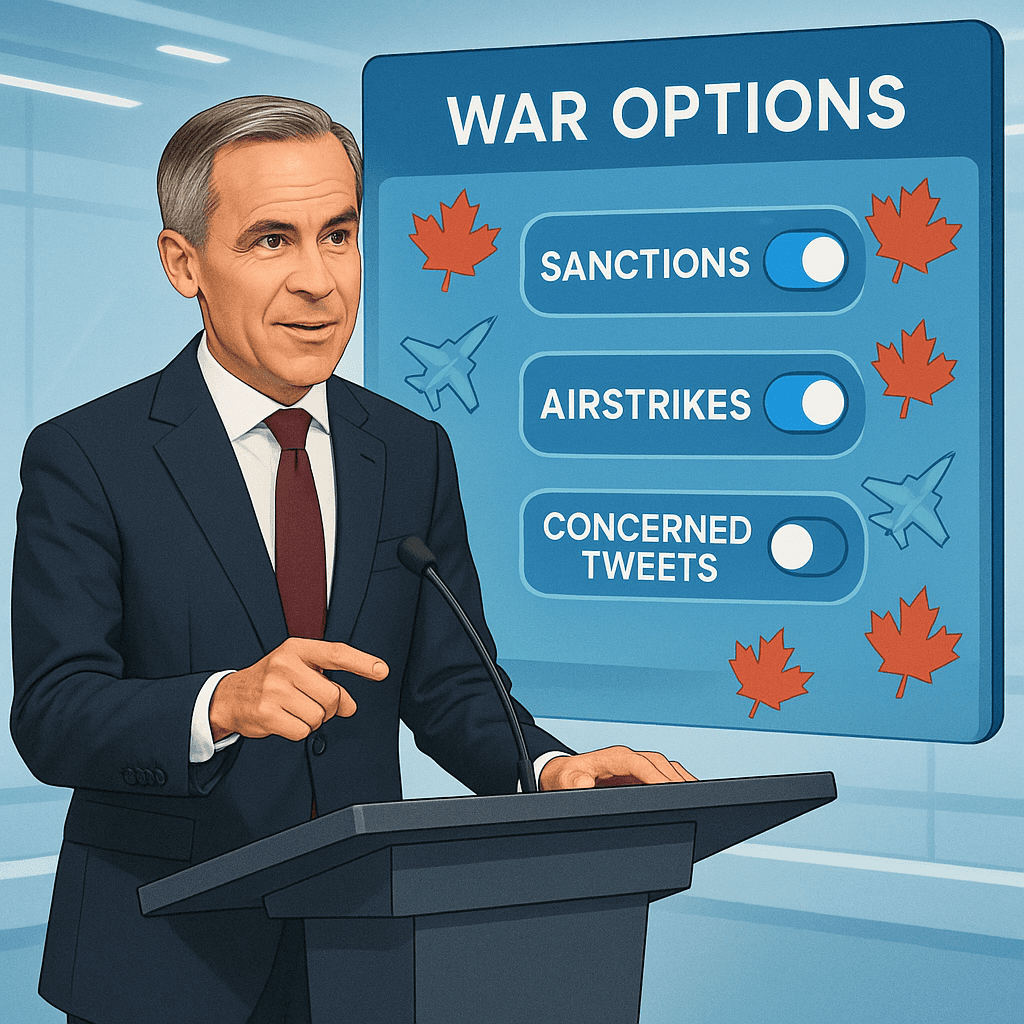
In a press conference that resembled a product demo more than a geopolitical statement, Carney stood at a podium flanked by QR codes, promising that any Canadian involvement in Iran would be “data-driven, values-aligned, and fully interoperable with allied war platforms.” He repeatedly assured reporters that Ottawa is not planning to fight, merely “keeping all options on the table” like a nervous user hovering over the ‘Enable analytics tracking’ toggle.
“Look, as Prime Minister of Canada, I have a duty not to prematurely deprecate the military API,” Carney said, clicking through slides of colorful dashboards that appeared to be generated by a freemium SaaS tool. “Our NATO partners expect backward compatibility. We can’t just 404 traditional deterrence because vibes-based diplomacy is trending on TikTok.”
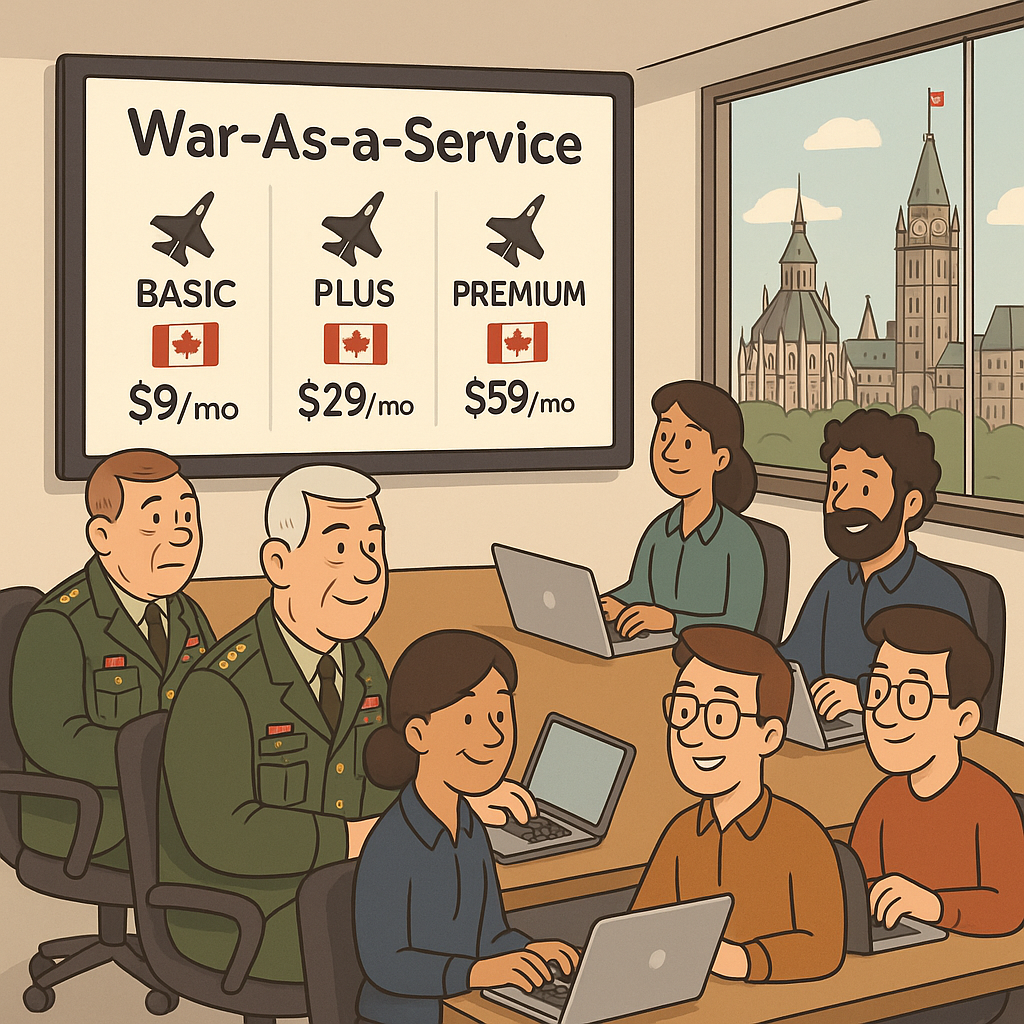
Defense analysts say Carney’s remarks are part of a broader shift toward what Ottawa insiders are calling War-As-a-Service (WaaS), in which Canada offers modular, subscription-based contributions to conflicts instead of old-fashioned, monolithic wars.
“Think of it like Spotify for aggression,” explained one senior official at the Department of National Defence, speaking on background. “You don’t buy the whole album of invasion. You just stream a curated playlist of sanctions, training missions, and a tasteful number of jets on standby.”
Under the WaaS strategy, Canada’s role in any Iran conflict would be tiered into easy-to-understand plans:
- Basic (Free): Concerned statements, strongly worded tweets, maple leaf emoji.
- Plus: Sanctions, symbolic recalls of ambassadors, morally disapproving PowerPoints.
- Premium Pro: Actual deployment options, logistics support, and the right to say “boots not on the ground, but really near the ground.”
“At this time, we are somewhere between Basic and Plus,” Carney clarified. “We are A/B testing the language. Our UX research suggests voters prefer ‘measured response’ over ‘untested quagmire.’ However, we cannot rule out frictionless escalation, with one-click consent.”
Critics in Ottawa noted that Carney, a former Bank of England governor, is treating the prospect of war with Iran like a fintech rollout. The Prime Minister reportedly spent twenty minutes of a National Security Council meeting asking whether Canada could “hedge kinetic exposure with long volatility in diplomacy futures.”
“He kept saying ‘We need optionality, optionality, optionality,’” said one attendee. “At one point, he proposed pricing each military unit like a carbon credit, so citizens could ‘offset’ a fighter jet deployment by funding three school libraries and a solar-panelled curling rink.”
Iranian officials, who have not historically considered Canada a primary antagonist, reacted with public confusion and private annoyance. “We did not have Mark Carney on our threat model,” an Iranian analyst posted on Telegram. “Canada is what you pass over on the way to targeting the United States or Israel. It is like being threatened by the terms of service page.”
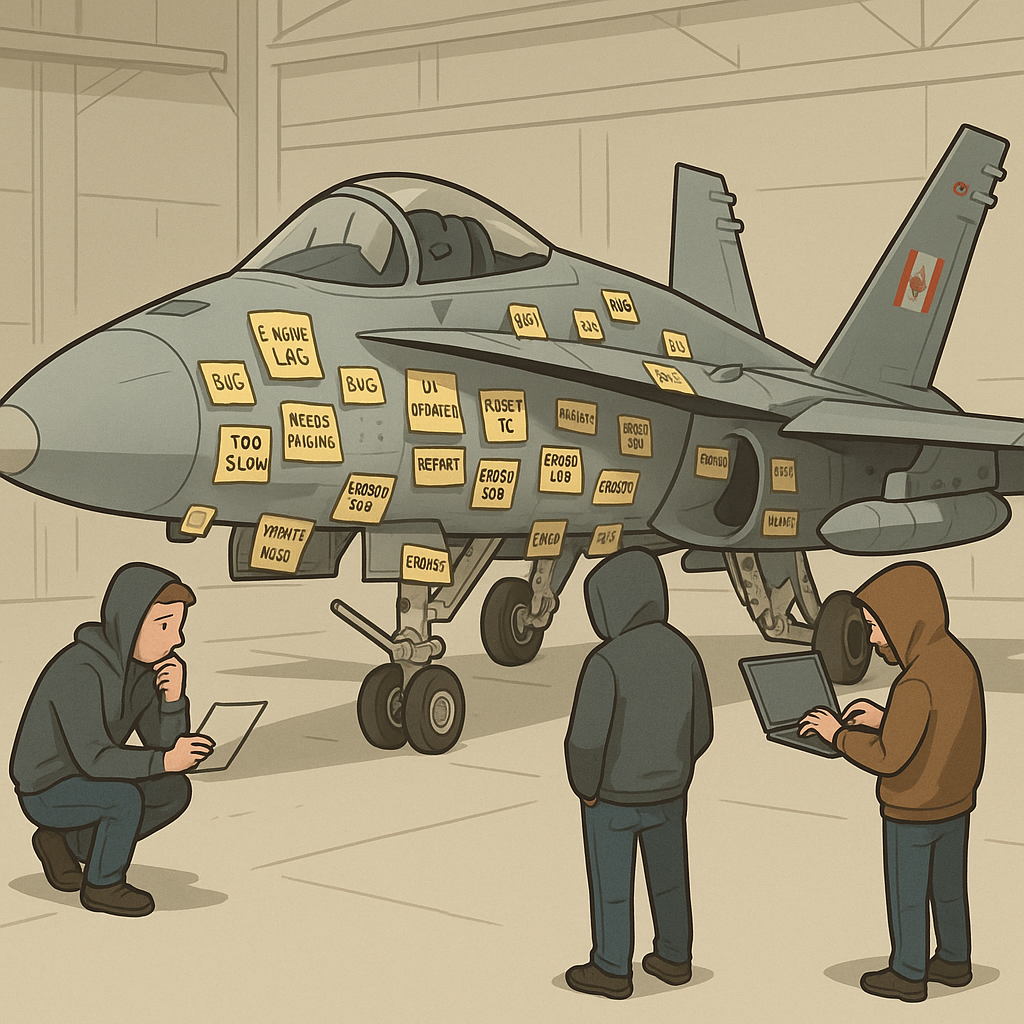
Canadian social media, meanwhile, is split along predictable algorithmic lines. On one side are citizens insisting Canada must stand with its allies “no matter what the engagement metrics say.” On the other are users pointing out that the Canadian Armed Forces can barely keep enough working aircraft in the air to film a recruiting commercial, let alone sustain a prolonged mission over Iran.
“We have F-18s older than the internet,” wrote one viral poster. “If we send them near Iran, the biggest threat to regional stability will be parts falling off over three different countries.”
When asked if Canada would actually commit troops, Carney retreated into software metaphors. “We’re at the ‘unable to rule out’ phase,” he said. “Think of it as beta access. We don’t launch full-scale war features without extensive user testing and stakeholder consultations.”
Pressed by a Jamaica Inquirer reporter on whether “unable to rule out” was simply diplomatic jargon for “probably yes, but we’ll pretend to agonize about it first,” Carney smiled in the polite, Canadian way that signals both apology and threat.
“No, no,” he replied. “It means we are exploring the solution space. We are running scenarios. In one scenario, we do nothing. In another, we deploy cyber capabilities. In a third, we send a Canadian delegation to Tehran composed entirely of extremely passive-aggressive kindergarten teachers. Our commitment is to remain agile.”
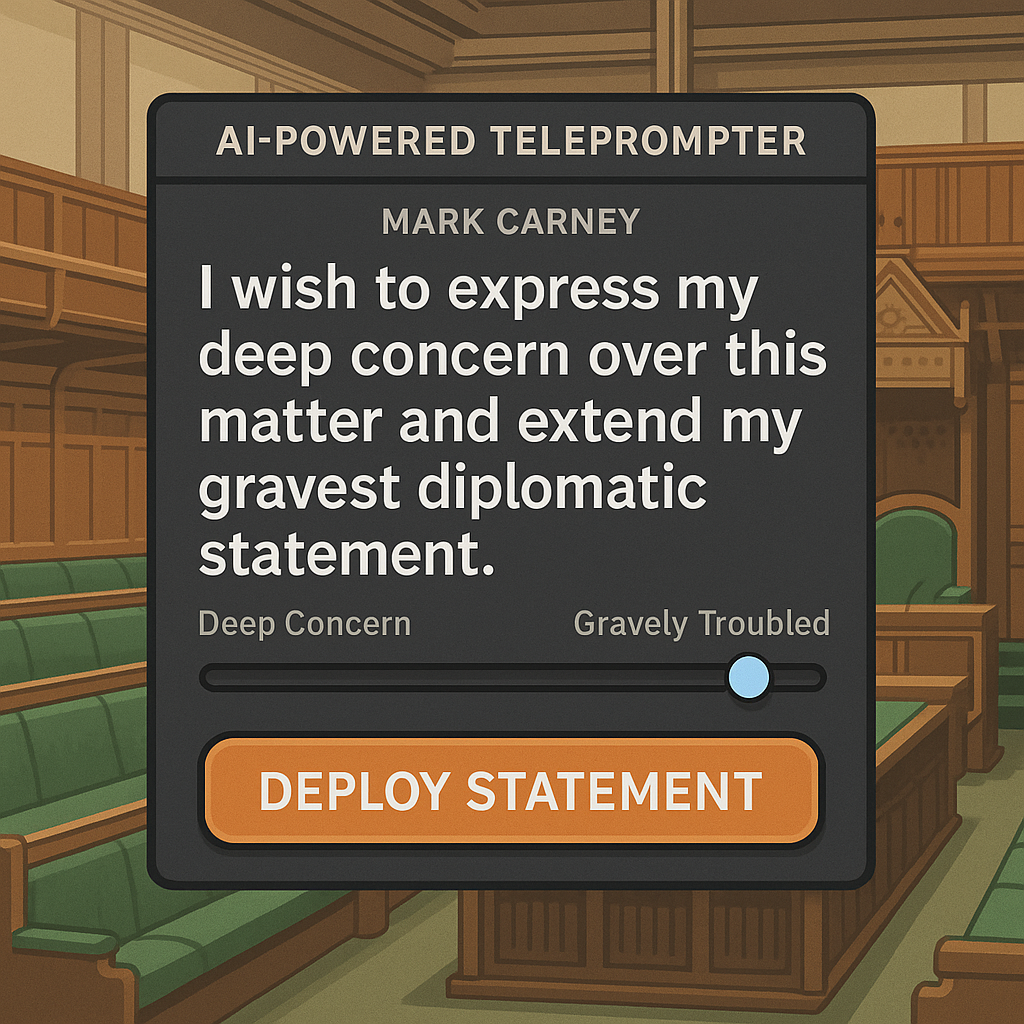
Insiders say the Prime Minister’s office has already commissioned a machine-learning model—trained on decades of NATO communiqués and the full script of ‘The West Wing’—to generate potential statements about Iran in real time. The system, reportedly nicknamed “JustIn Case,” can produce fully couched, morally elevated paragraphs like:
“Canada will not be rushed into war, nor will we shirk our historical obligations to hashtag peace. We believe in a rules-based order, although we cannot name who wrote the rules, where they are kept, or why they resemble an EU cookie banner.”
According to one PMO staffer, the model has a slider that lets Carney adjust the tone between “Deep Concern” and “Gravely Troubled” in five-percent increments. “At 100% it automatically proposes a parliamentary committee,” they said. “We try not to go above 60; that’s when an actual policy might escape into the wild.”
For now, Canada’s concrete actions toward Iran remain limited to statements, sanctions frameworks, and a confidential memo asking whether it’s possible to ‘geo-fence’ war to only occur outside Canadian news cycles. The Department of National Defence is reportedly investigating whether drone strikes can be scheduled to avoid clashing with NHL playoffs, in the interest of “maximizing public acceptance and preserving national attention bandwidth.”
Still, the language matters. By publicly nailing itself to the “unable to rule out” cross, Ottawa has granted every future think tank panel and defence conference an excuse to place Canada on “key stakeholder” slides. Lockheed Martin executives are rumored to be updating their CRM tags already, upgrading Canada from “polite optional customer” to “potentially serious buyer of things that go whoosh.”
Back in Parliament, opposition leaders feigned outrage over Carney’s ambiguity, while quietly grateful they won’t have to take a real position until at least three polls and a focus group say it’s safe. Debate over a Canadian role in an Iran war is expected to continue, or at least be ritually reenacted, until the crisis either resolves, escalates without Canada, or is displaced in the news cycle by a more urgent emergency, such as a TikTok ban or a maple syrup supply-chain glitch.
As the press conference wrapped up, a reporter asked the Prime Minister what, if anything, would definitively rule out Canadian military involvement.
Carney paused, consulting the teleprompter like a man scrolling through terms and conditions he personally wrote.
“If we reach a negotiated settlement, rooted in international law and mutual respect, endorsed by the UN Security Council, our allies, and a statistically significant sample of Canadian voters,” he said, “then we would be prepared… to strongly consider downgrading our status from ‘unable to rule out’ to ‘cautiously not currently planning.’”
He smiled again. “Of course,” he added, “I can’t fully rule that out either.”