Somewhere between the first ball at the T20 World Cup and the 61-run defeat of Pakistan by India, a quiet notification slid across a billion screens: “We’ve updated our privacy policy.”
On the surface, India defeats Pakistan by 61 runs in T20 World Cup group match (The News Mill, Feb 2026) was about boundaries, wickets, and bragging rights. Underneath, it was about what every modern gladiatorial event is really for: feeding a planetary machine-learning model whose only religion is “engagement.”
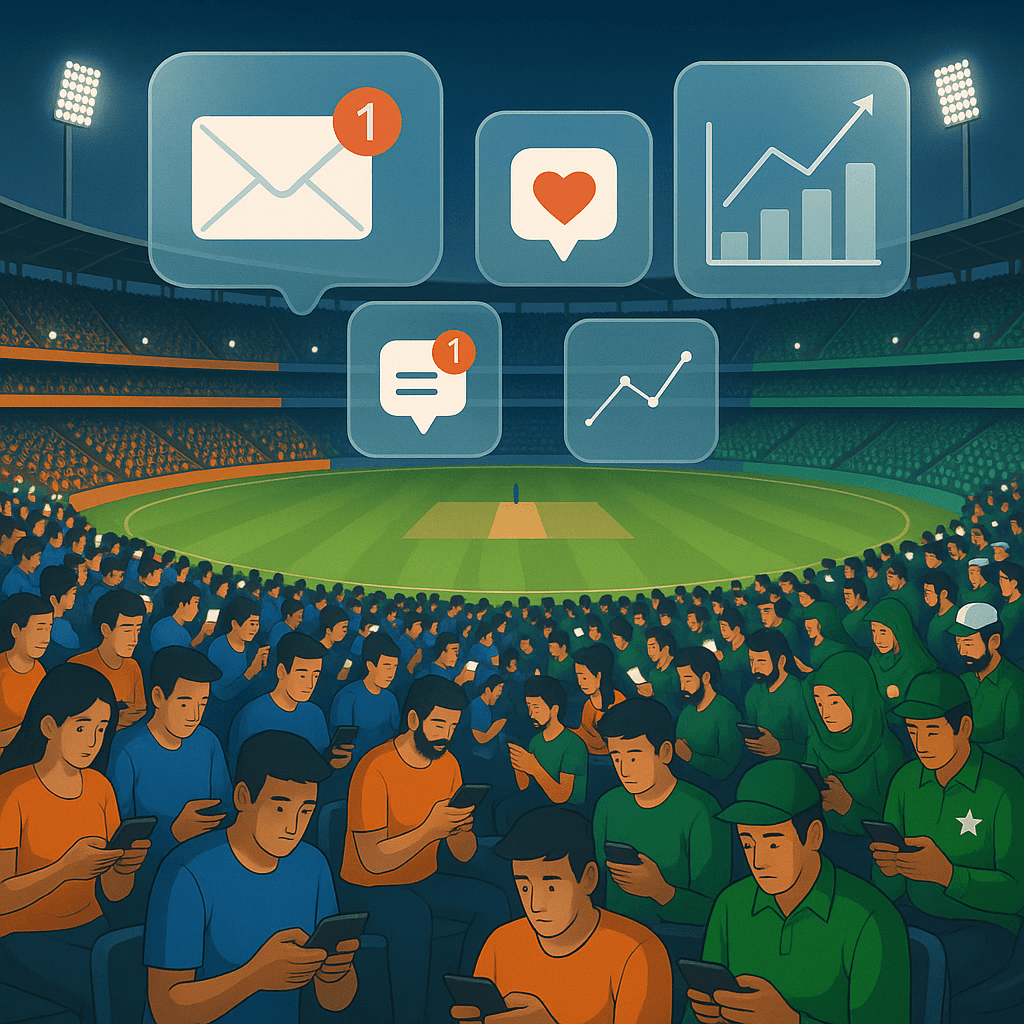
In the stands in the US and at stadiums abroad, fans in India and Pakistan waved flags, chanted, and screamed at the television. On phones across Delhi, Lahore, Karachi, and Mumbai, apps quietly logged:
- Heart rate spikes during a Virat Kohli cover drive.
- Increased scroll speed when Babar Azam mistimed a pull shot.
- Micro-pauses every time the words “arch-rivals” and “grudge match” flashed on screen.
“We don’t care who wins,” said an imaginary spokesperson for a major social platform headquartered in California but spiritually based inside your hippocampus. “We just need both sides to stay furious and online. India, Pakistan, doesn’t matter. What matters is that your thumb never leaves the screen for more than three seconds.”
This year’s T20 World Cup group clash between India and Pakistan—chronicled breathlessly by Yahoo! News, the Evening Standard, and The News Mill—looked like a simple sporting rout: Rohit Sharma’s men piling on runs while Pakistan collapsed more theatrically than a 5G conspiracy thread under fact-checking. But concealed in the perfectly lit slow-motion replays was the true tech storyline: one of the largest live A/B tests in history.
“We ran the same clip of India’s winning boundary with three different caption styles in real time,” explained a fictional data scientist contracted simultaneously by Meta, X, and a suspiciously cricket-obsessed TikTok clone. “Version A: ‘Wow, what a shot!’ Version B: ‘India humiliates Pakistan.’ Version C: ‘Is this the end for Pakistan cricket?’ Guess which one produced the most comments, death threats, and 14-minute doom-scroll spirals?”
Meanwhile, AI firms cheerfully scraped every public post with the words “T20,” “World Cup,” “India vs Pakistan,” and at least one national flag emoji. In Bangalore and Islamabad, sleep-deprived developers fine-tuned sentiment-analysis models on memes of Babar Azam’s expression and sarcastic edits of post-match interviews. In San Francisco, an LLM quietly learned that “we’ll come back stronger” is a universal human coping mechanism, roughly equivalent to “please don’t show me this highlight again.”
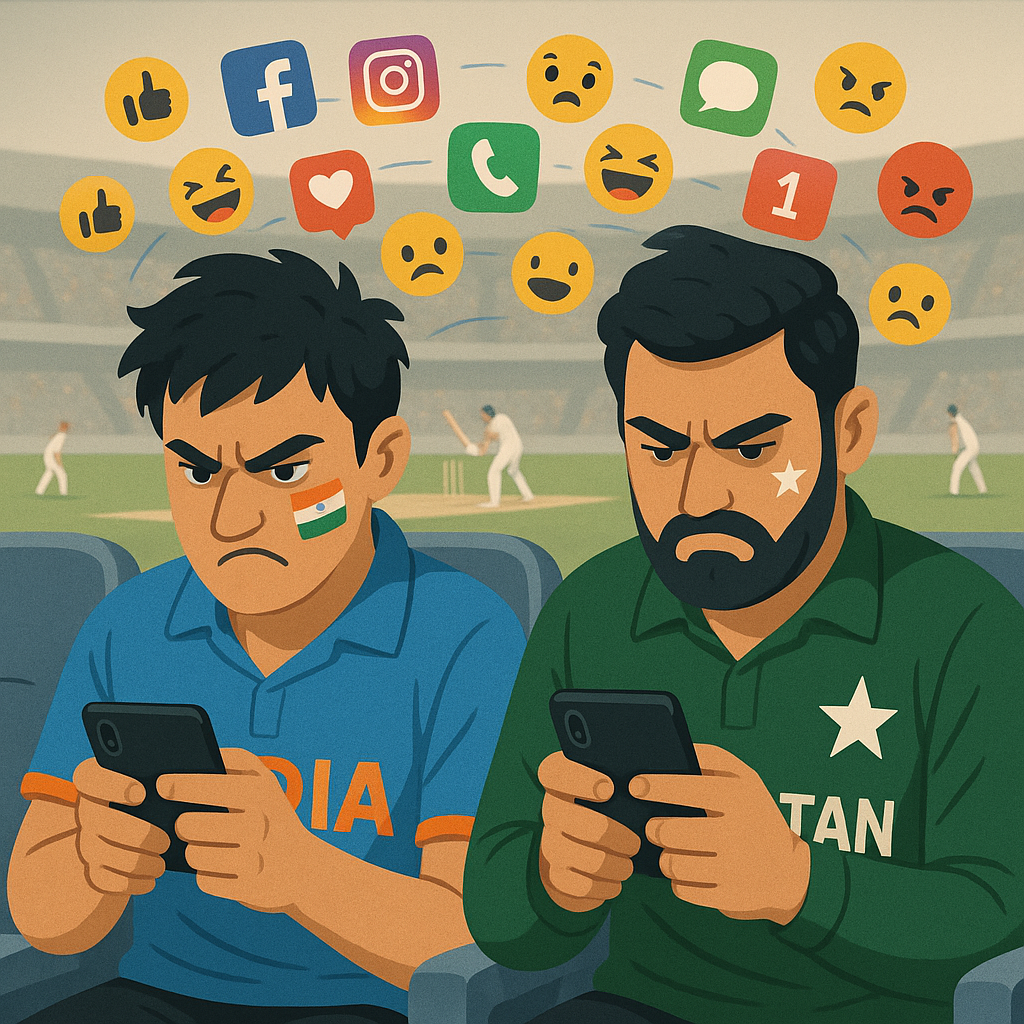
The International Cricket Council, once an organization obsessed with run rates, now obsesses over bit rates. “We used to worry about rain interruptions,” an ICC official told absolutely nobody on the record. “Now our biggest fear is a streaming drop just as India takes a wicket. That’s not just a technical failure, it’s a narrative disruption. We can’t have a grudge match without a continuous supply of grudge.”
Enter the tech partners. Cloud providers happily provisioned extra capacity “to ensure uninterrupted cricket for fans worldwide.” Translation: “We rented more servers so your rage could be captured in 4K and mined in real time.” The T20 World Cup app offered “immersive experiences,” including live stats, dynamic win predictors, and a friendly reminder that your location data is “necessary to enhance services,” apparently because the LBW algorithm needs to know which chai stall you’re standing next to.
India’s 61-run margin over Pakistan offered an unintentional bonus: a neatly labeled dataset of real-time despair. Fans in Pakistan Googled “how to delete cricket from life,” “why does this always happen,” and “T20 World Cup conspiracy.” Fans in India typed “how to rewatch highlights forever,” “best memes India Pakistan match,” and “discounts after win.” Within minutes, e-commerce platforms pushed:
- “Victory sale” deals in India on TVs, jerseys, and noise complaints.
- “Consolation offers” in Pakistan on stress-relief teas and noise-cancelling headphones.
“Our system automatically classifies users as ‘gloaters’ or ‘copers,’” bragged a hypothetical product manager at a multinational ad-tech giant. “Gloaters receive victory-themed push notifications. Copers get ‘we’ve all been there’ content and a coupon. The important thing is: nobody logs off.”
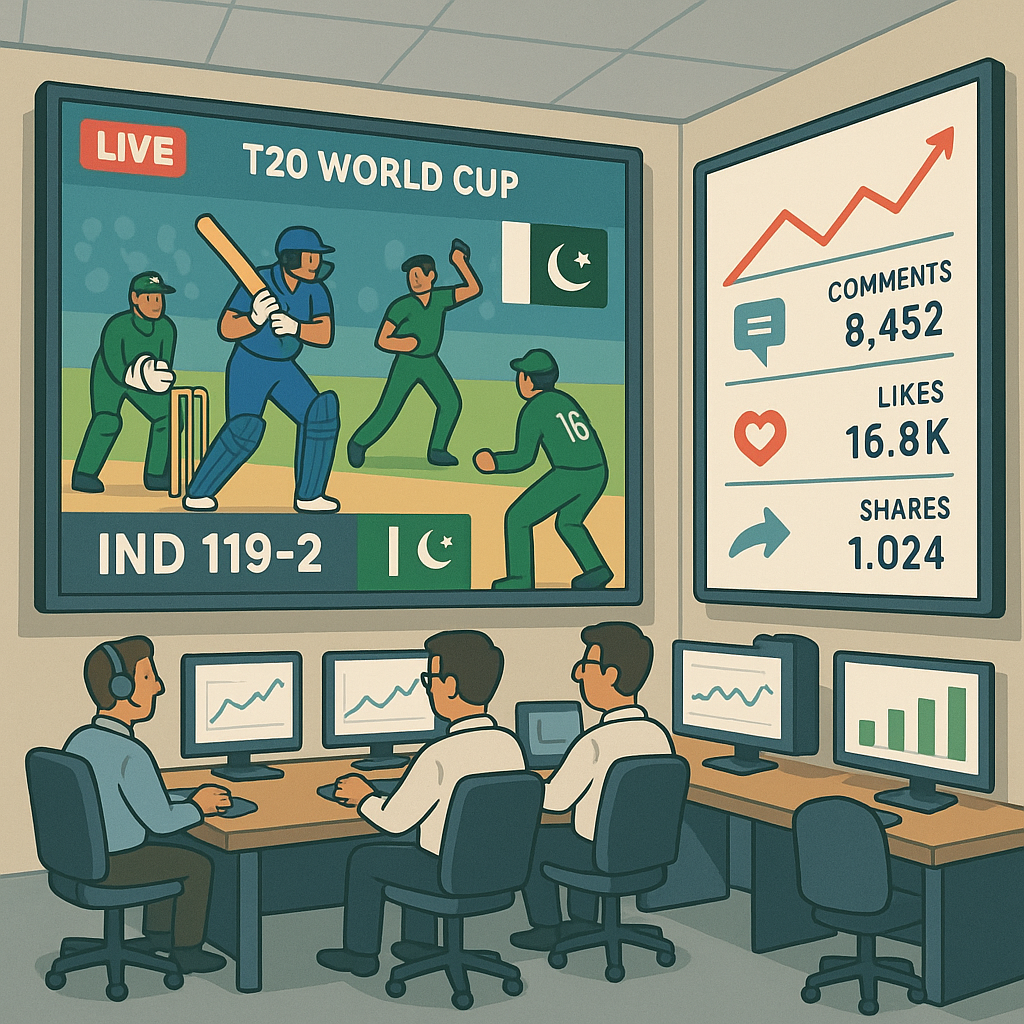
Traditional broadcast channels weren’t spared. The same match that The News Mill soberly reported as a 61-run win ran on smart TVs quietly gathering voice data. “Arre yaar, what is this bowling?” muttered into the living room is now a valuable training sample for smart assistants learning new variants of disappointment in Hindi, Urdu, and Hinglish. Future AI voice models will flawlessly mimic a despondent uncle at 2 a.m. ranting about team selection, because the uncle’s TV helpfully uploaded him to the cloud.
On social media, the rivalry metastasized into a familiar pattern:
- First hour: score updates and polite tension.
- Second hour: memes, predictions, and premature victory posts.
- Third hour: full-blown digital trench warfare, with every wicket becoming “proof” of deeper national narratives.
- Post-match: calls for unity, which get a fraction of the likes but 100% of the guilt.
Platforms amplified the worst of it, insisting they were “bringing fans together.” In a sense, they did. They brought them together inside a giant virtual cage match where every comment, quote-tweet, and story share was another swing of the monetization bat. India vs Pakistan was the branding; impressions vs ethics was the real fixture.
The governments of both countries watched closely too. Why spend years building social cohesion metrics when you can just measure how many citizens call for the coach’s resignation versus the prime minister’s? The T20 World Cup timeline served as a neat dashboard of emotional volatility: red zones for anger, blue zones for despair, green zones for nationalist pride. Somewhere in a secure facility, a bureaucrat asked, “Can we export this system to elections?” The answer, from every vendor, was “We already did.”
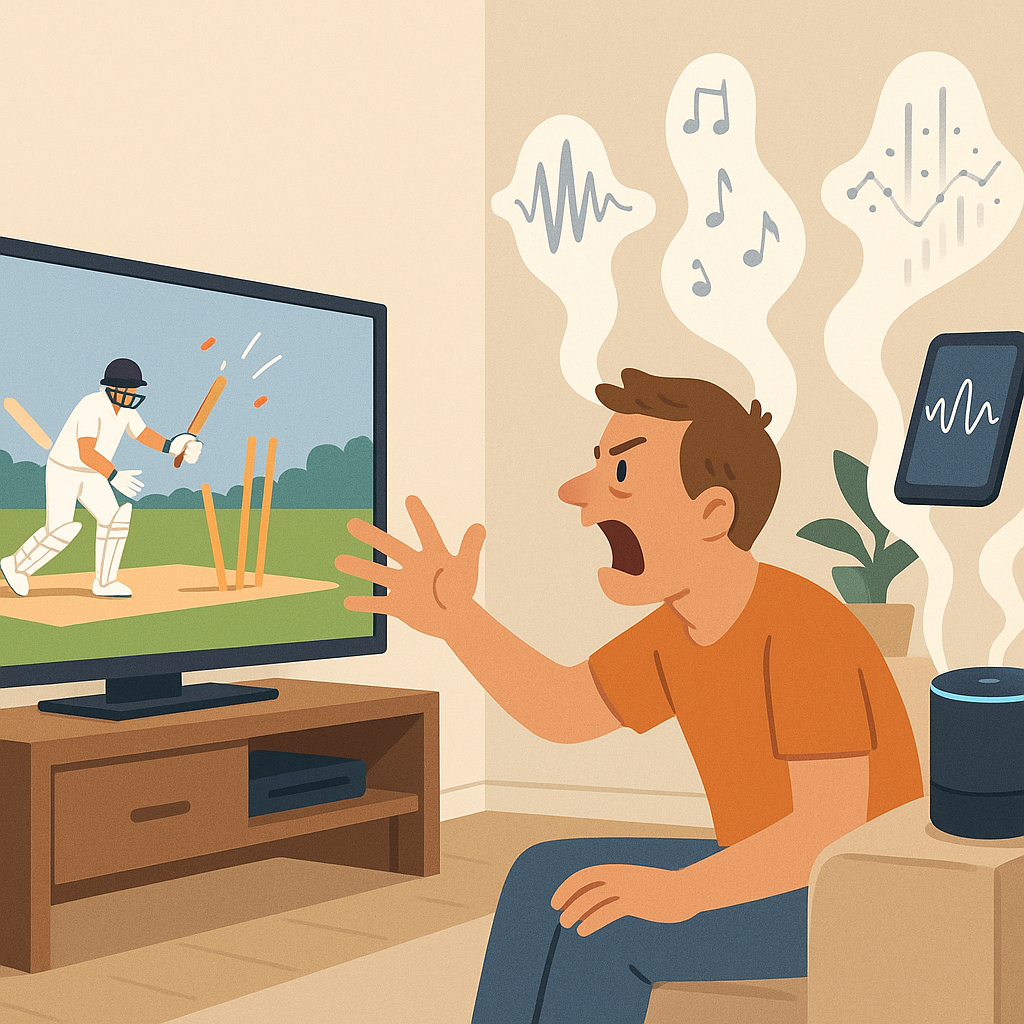
In a rare moment of unintentional honesty, one AI consultant working with broadcasters on predictive analytics allegedly summarized the whole enterprise: “Sport is the perfect training environment. Loyal tribes, clear winners and losers, strong emotions, endless repetition. It’s basically supervised learning for humans.”
So India celebrates, Pakistan recalibrates, and the T20 World Cup marches on. The players will talk about “learning from mistakes” and “executing plans better next time.” The algorithms already have. They now know exactly which camera angle makes an Indian fan scream, which statistic makes a Pakistani viewer throw the remote, and which headline formulation keeps both coming back.
“Every grudge match is a patch update,” notes your dystopian correspondent. “The scoreboard is for you. The telemetry is for them.”
Next time India and Pakistan meet at a World Cup, the broadcasters will promise sharper images, lower latency, and more immersive coverage. And they’ll deliver. You’ll see every ball in brutal clarity, hear every chant in surround sound, feel every heartbreak in ultra-high definition.
There’s just one thing you won’t see, no matter how good the resolution gets: the shadow scoreboard where the platforms, advertisers, and data brokers tally the only metric that matters.
Not runs. Not wickets. Not even trophies.
Just you. Still watching. Still scrolling. Still perfectly predictable.