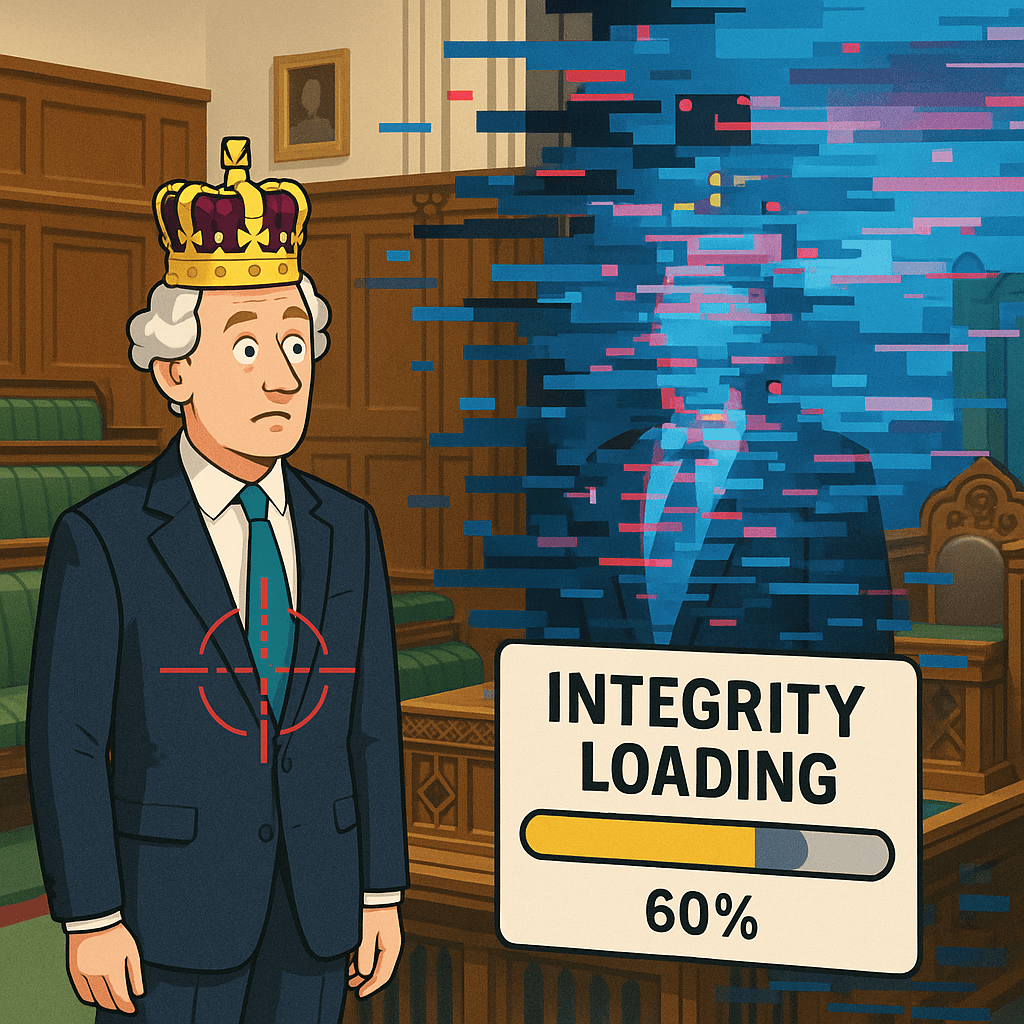
Paranoid technocrat’s note: When the Harrow Times pushes a notification like “Lord Peter Mandelson arrested on suspicion of misconduct in public office,” the reasonable question in 2026 isn’t “What did he do?” but “Which app finally snitched?” (Harrow Times, Feb 2026).
British politics has always been a kind of legacy operating system wheezing under the strain of modern expectations. Now, with Lord Peter Mandelson reportedly arrested on suspicion of misconduct in public office across a whole flock of regional outlets – from the Harrow Times to the Dorset Echo, the Welwyn Hatfield Times, and the Darlington & Stockton Times – the establishment appears to have hit the dreaded blue screen of accountability. Or at least the spinning beachball.
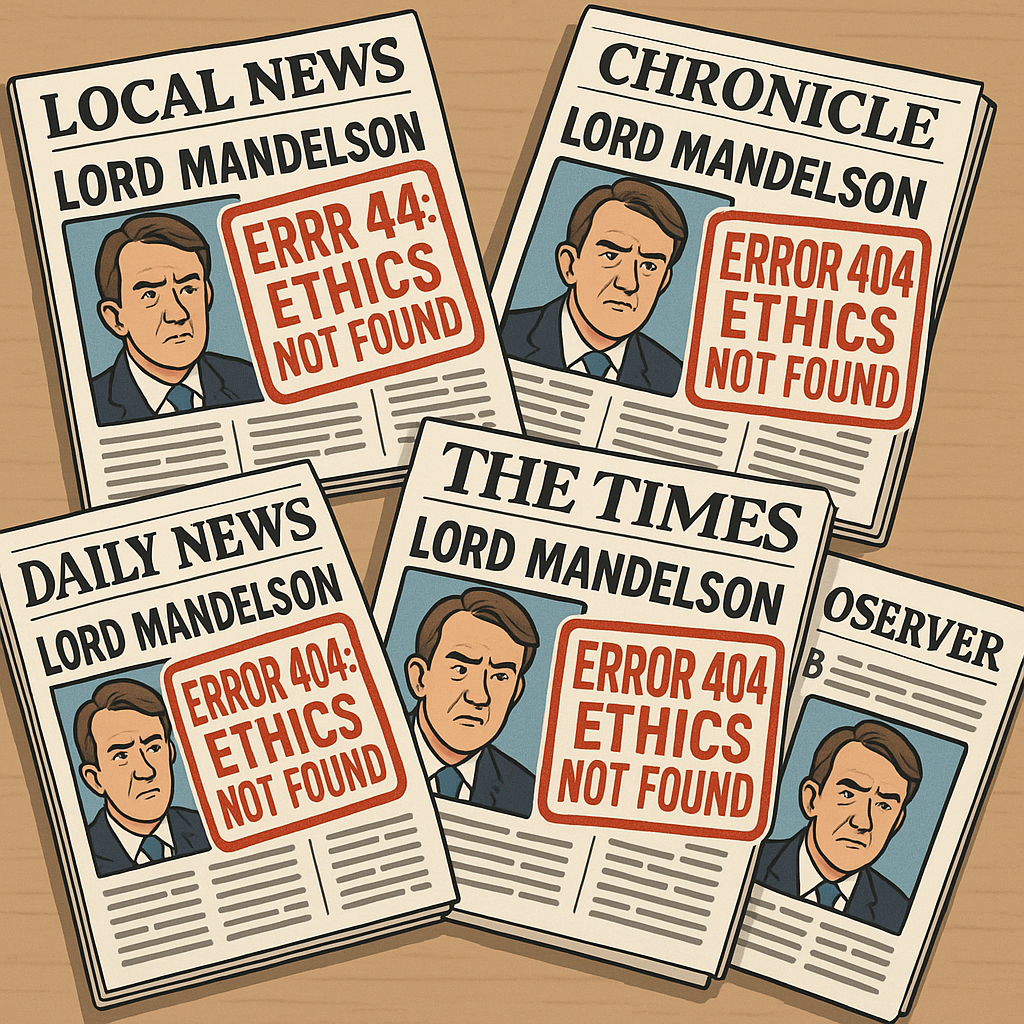
For decades, Mandelson has been described as the “Prince of Darkness,” a nickname that in 2026 simply means he would have been a very successful SaaS founder. Instead, he is now reportedly acquainted with a less glamorous interface: the custody suite login screen, where the only cookie banner is a stale Digestive on a paper plate.
The allegations of “misconduct in public office” sound almost quaint, like someone being charged with “improper use of fax machine.” But in the age of cloud governance, that phrase now covers an alarming range of bugs: from old-fashioned lobbying to the more modern practice of granting privileged API access to democracy itself. Somewhere, a compliance officer is frantically updating a Confluence page titled ‘What To Do When A Lord Gets Version-Controlled By The Police’.
Tech analysts — the same people who can explain Kubernetes but not rent — are already spinning this as a platform issue. “Think of the UK as a giant legacy app,” explained one London-based governance consultant, nervously rearranging his lanyards. “Parliament is the front-end. The House of Lords is the deprecated backend service that nobody wants to refactor because it ‘still technically works’. Occasionally, a process like Lord Peter Mandelson throws an error and we all pretend to be surprised.”
Regional papers like the Stroud News and Journal and the South Wales Guardian dutifully replicated the Harrow Times report, turning the country into a distributed ledger of aristocratic embarrassment. Somewhere in a damp Whitehall basement, an overworked civil servant is manually copy-pasting "Lord Peter Mandelson arrested on suspicion of misconduct in public office" into a shared Excel file titled ‘Incidents_2026_FINAL_v27.xlsx’ — because the Cabinet Office still thinks Excel is a database and email is a secure messaging protocol.
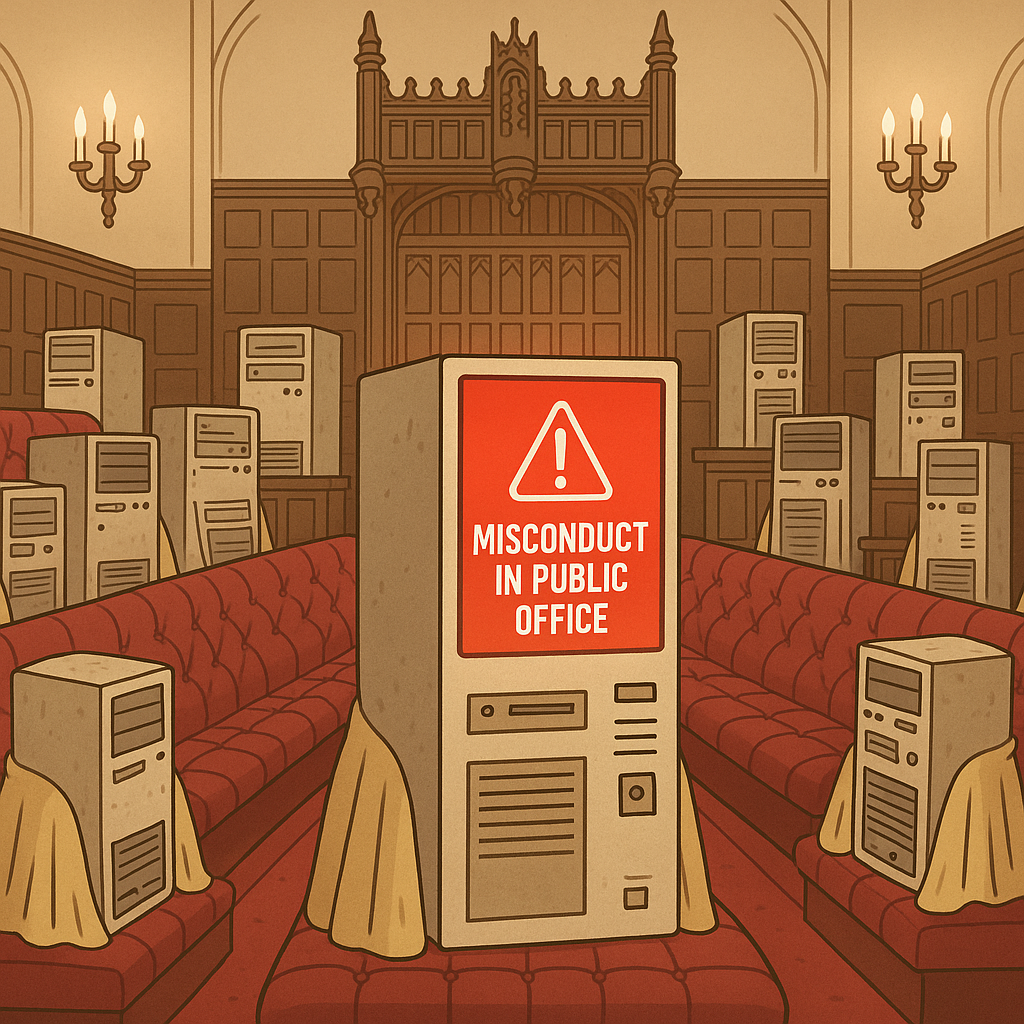
Meanwhile, tech startups smelled opportunity, as they do whenever trust collapses and someone else is holding the moral liability. Within hours of the Harrow Times story, a Shoreditch firm calling itself PeerChain launched a waitlist for what it calls “Lord-as-a-Service,” promising to “replace hereditary entitlement with NFT-gated civic plug-ins.” Their pitch deck features a flowchart in which the House of Lords is turned into a decentralized “reputation oracle layer,” and the phrase “governance tokens” is used unironically at least 37 times.
“Incidents like Lord Mandelson’s arrest show the need to move beyond trust in individuals to trust in code,” said PeerChain’s founder on a late-night panel discussion, his voice echoing slightly off the nearby kombucha taps. “Imagine if instead of life peerages, we had automatically expiring smart contracts based on key performance indicators like attendance, voting record, and number of times you’ve been investigated for misconduct in public office.”
Asked what would happen if the code itself was corrupt, he smiled the confident smile of a man who has never seen a production database. “Oh, then we’d just upgrade the protocol.”
Whitehall, true to form, is responding with its own digital transformation: a promise to “review standards in public office” via a new online portal that will almost certainly crash if more than 23 citizens attempt to use it simultaneously. Internal sources at the Cabinet Office describe a plan to introduce two-factor integrity, where peers must confirm they have not sold access, influence, or common sense via a code sent to their government-issued Nokia 3310.
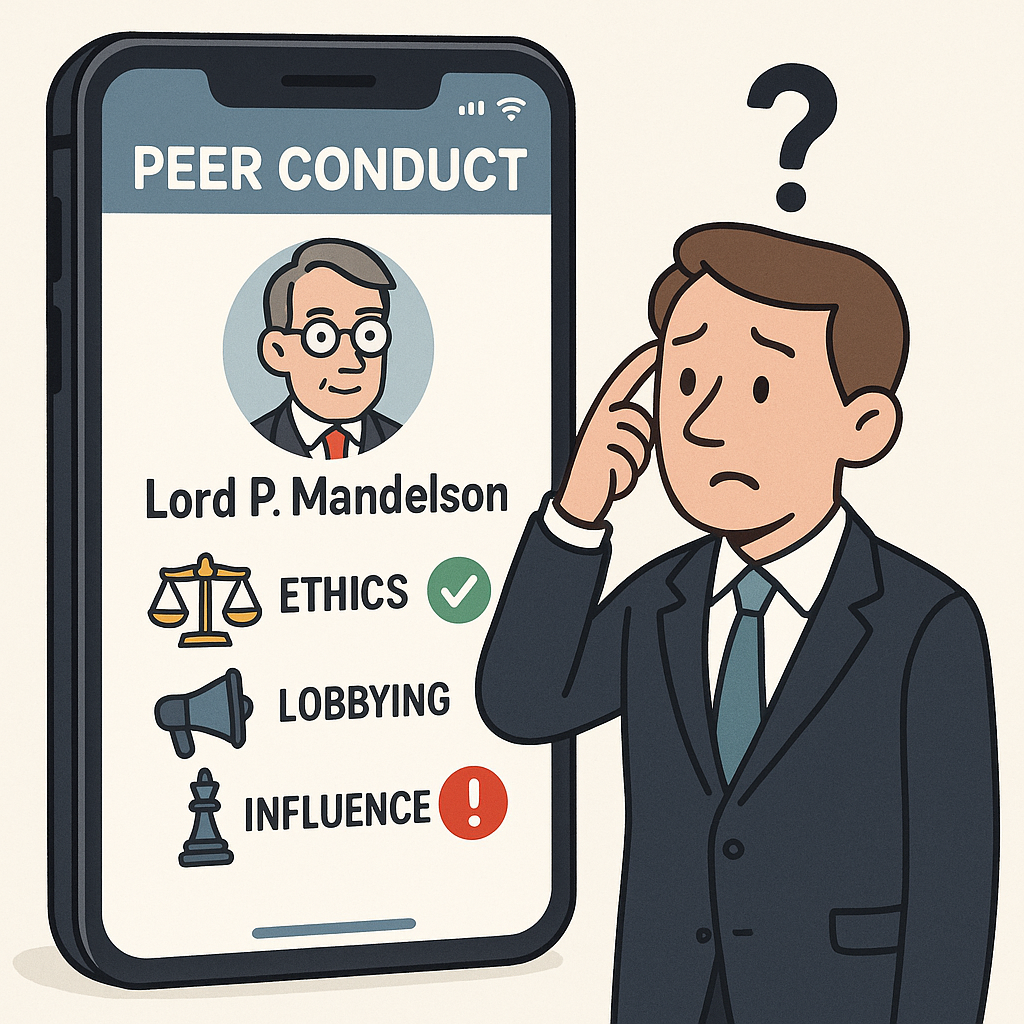
In a leaked draft of the proposed “Peer Conduct App,” a mock-up onboarding screen reads:
Welcome, Lord [INSERT TITLE HERE]
To continue, please accept:
- The Code of Conduct
- Our Cookie Policy
- That this is not the 1990s and you can, in fact, be arrested
Over in media-land, the sheer number of near-identical stories — from Newsshopper to the Hampstead & Highgate Express — has turned Lord Mandelson’s misfortune into a kind of low-budget multiverse. In each universe, the same push alert arrives on a slightly different middle-aged Android handset in Harrow, Stroud, Welwyn Garden City, and Darlington. Somewhere in Dorset, a retired IT manager reads the Dorset Echo headline and quietly updates his internal model of reality: if even Peter Mandelson can be arrested, maybe the user agreement of the British state does have enforcement clauses.
Tech platforms, naturally, are trying to train machine learning models on the event. An unnamed US AI company is feeding every article with the phrase “Lord Peter Mandelson arrested on suspicion of misconduct in public office” into a large language model, in the hope of generating a new predictive tool called EliteRisk™. The idea is to scan public speeches by figures like Mandelson and output a risk score on a scale from “harmless committee bore” to “has already registered their shell company in the Cayman Islands.”
Civil liberties groups are, predictably, concerned. “We don’t need predictive policing for politicians,” argued one campaigner. “We need basic patch management. Stop giving root access to people whose last significant software upgrade was installing BlackBerry Desktop Manager in 2007.”
Yet for all the algorithmic theatrics, the core story stubbornly refuses to become futuristic. A veteran political operator, a tangle of public and private interests, a cloud of suspicion now dignified with the phrase “misconduct in public office.” It isn’t cyberpunk; it’s Windows 95 ethics with a 5G data plan. The Harrow Times, the Darlington & Stockton Times, the Welwyn Hatfield Times and their regional cousins are just mirroring back what the national institutions refuse to admit: that the UK’s governance stack is riddled with undisclosed dependencies called “old mates.”
If Westminster were an app, it would have been pulled from the store years ago for deceptive permissions: “This application would like access to your data, your taxes, your future, and the ability to self-update without your consent.” The arrest of Lord Peter Mandelson doesn’t fix that architecture; it’s just the first time in a while that the error message has popped up where everyone can see it.
Somewhere in the House of Lords, as the story pings across the Stroud News and Journal, the South Wales Guardian, and every other politely indignant CMS in the land, a peer looks at their phone and whispers the quiet part aloud: “Maybe we should have installed that ethics update.”
Then, as always, they tap “Remind me later.”