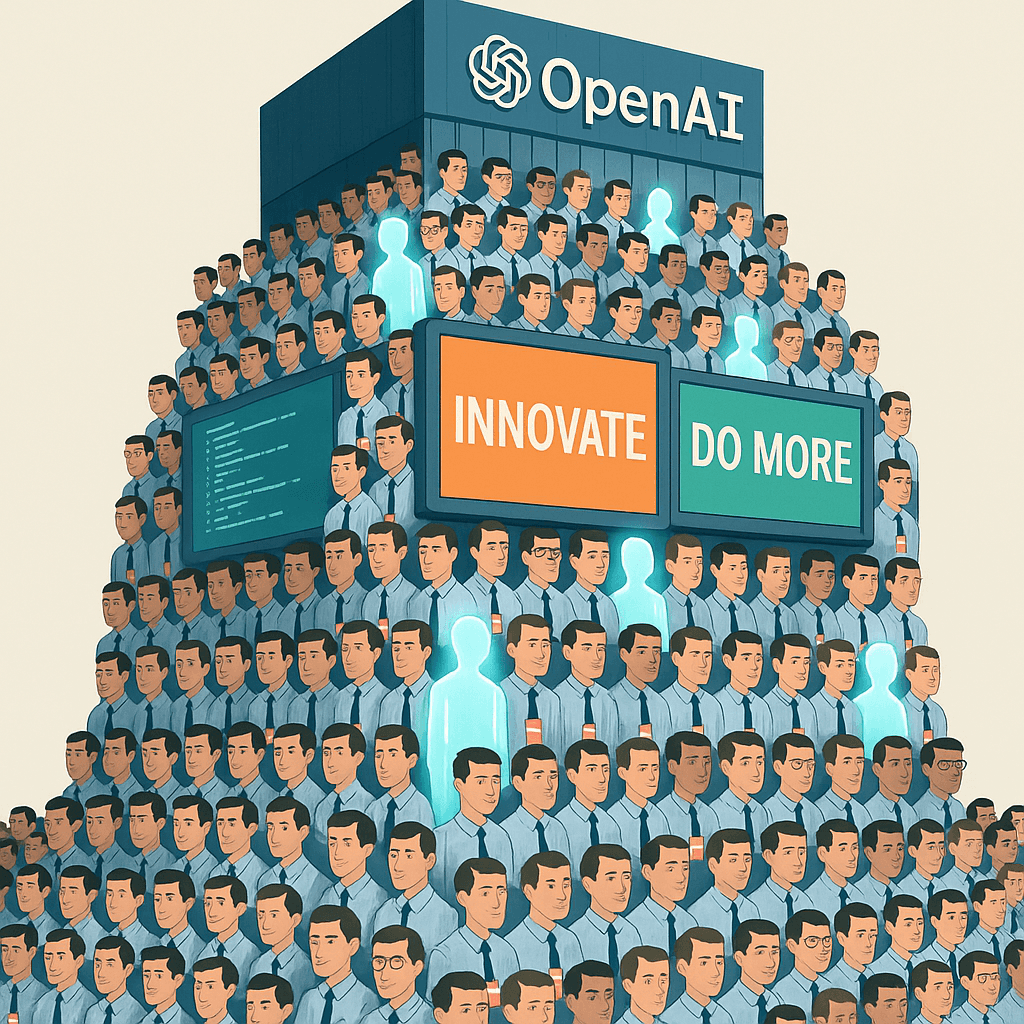
OpenAI has announced plans to nearly double its workforce to 8,000 employees by the end of 2026, boldly answering a question nobody asked: “What if we gave a startup’s burn rate to a mid-sized town?” (Republic World, March 2026).
The company behind ChatGPT says the expansion will help it “safely and responsibly scale artificial general intelligence,” which in practice appears to mean hiring thousands more people to sit between overeager models and horrified regulators, frantically slapping on content filters like duct tape on a SpaceX prototype.
According to the Republic World report, OpenAI will add roughly 4,000 new staff across research, engineering, policy, trust & safety, operations, and whatever department is responsible for inventing new synonyms for “we’re monitoring the situation.” Insiders say the real org chart is simpler:
- People who make the AI more powerful
- People who panic about how powerful it just became
- People who write blog posts insisting everything is fine
“We’re excited to grow to 8,000 OpenAI employees by 2026,” an imaginary spokesperson named, let’s say, Synthetic Communications Lead, told reporters in an email that definitely wasn’t drafted by GPT-4 Turbo. “This will allow us to ship more models, answer more Congressional subpoenas, and expand the number of people we can confidently describe as ‘working on alignment’ on LinkedIn.”
From Startup To Mid-Tier Nation-State
At current valuations, OpenAI is less of a company and more of a small, unregistered country whose main export is plausible-sounding paragraphs. With 8,000 employees, it will be bigger than many actual sovereign governments, while remaining just as accountable.
Recruiters are reportedly targeting talent from Google, Meta, Microsoft, Anthropic, and whatever’s left of the humanities departments at liberal arts colleges. The hiring plan includes:
- 3,000 engineers to make models that are slightly better at writing code and dramatically better at sounding confident while being wrong.
- 500 policy people to sit in windowless rooms explaining to Brussels that, no, they definitely can’t explain how the models work either.
- 300 PR and comms specialists to refine the core corporate message: “We are terrified on your behalf, please keep using the API.”
- Several hundred ‘red teamers’ whose job is to see how close they can get ChatGPT to say something that ends up in a Washington Post front-page headline.
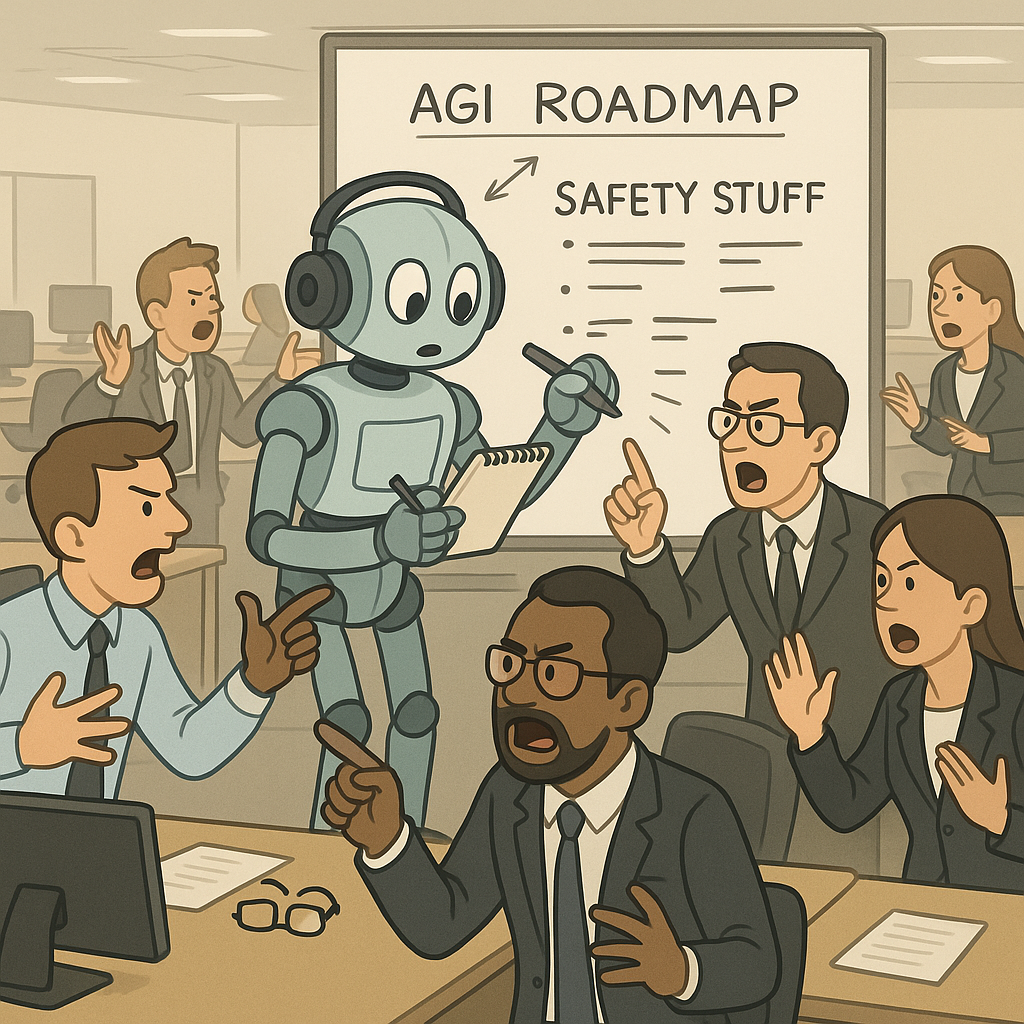
“This is a monumental step,” a fictional OpenAI HR deck might say. “We believe the best way to manage the risks of AGI is to dramatically increase the number of people with ‘AGI’ in their job title.”
OpenAI, But Make It HR
The expansion will force OpenAI to confront its greatest unsolved problem: not AI alignment, but calendar alignment. Sources claim the company’s internal scheduling tools are already under strain, with one engineer describing the current state of affairs as “a multi-agent coordination problem solved mainly by vibes.”
With 8,000 people, the company will unlock new emergent behaviors, including:
- Meetings composed entirely of managers managing managers who manage models.
- A 600-person Slack thread arguing about the ethics of using the word “hallucinate.”
- At least four different “Responsible AI” committees, each responsible for brunch photos and Google Docs.
To cope, leadership is rumored to be exploring internal use of its own models for performance reviews. Early tests were mixed:
“Your contributions this quarter were significant. We appreciate your unique skills and would like to offer you three improved variants of this feedback, each with a different tone.” — Draft OpenAI Performance Review, v0.3
The company insists humans will remain “in the loop” for key decisions, though it’s unclear whether that loop will be a governance process or just the infinite circle you get when ChatGPT politely declines to answer your question and then suggests you rephrase it.
Safety At Scale, Or Just More People To CC?
Republic World notes that the expanded workforce will particularly focus on AI safety and security. Translation: expect the headcount of “Senior Director of Trust, Safety, Ethics, Responsible Innovation, and Stakeholder Stewardship” roles to grow at a compound annual jargon rate.
Critics argue that safety issues are structural, not headcount-constrained. Supporters counter that with 8,000 employees, OpenAI can finally assign a dedicated staffer to each individual bad downstream use case:
- One person for AI-generated homework.
- Three for AI-generated ransomware.
- A whole floor for “AI-generated CEO speeches about responsibility.”
“We’re committed to making sure our models are safe,” a hypothetical member of the OpenAI safety team told me, scrolling past 19 different internal forks of GPT-Next. “If anything goes wrong, we now have thousands more people who can say, ‘We warned them internally.’ That’s progress.”
Developers, Partners, And Everyone Else On The Hook
Microsoft, OpenAI’s cloud-enabling, multi-billion-dollar co-parent, is reportedly thrilled. An 8,000-person OpenAI, after all, translates into one thing for Azure: even more GPU-shaped holes in the budget. Somewhere in Redmond, a finance director is quietly Googling “How much power does a sun consume?”
Developers are more ambivalent. On one hand, more staff should mean better documentation, fewer outages, and more features. On the other hand, history suggests it will actually mean:
- Six new API product tiers.
- Three rebrands of the same model.
- A 20-page blog post spelling out that “Pro Max Ultra” is slightly better at JSON.
“I’m just trying to keep up,” said an exhausted startup founder, already rewriting their pitch deck for the twelfth time in a year. “We built on GPT-4, then 4 Turbo, now 4.1, and by the time we ship, it’ll be something like GPT-‘You Should’ve Waited For This One’-X. At this point my product roadmap is just a reaction video.”
The Endgame: 8,000 People, One Giant ‘We’re Listening’ Post
By the end of 2026, if OpenAI hits its hiring target, every mildly tech-adjacent dinner party will feature at least one person who says, “I can’t speak for the company, but…” followed by a carefully memorized blog paragraph about existential risk and productivity tools.
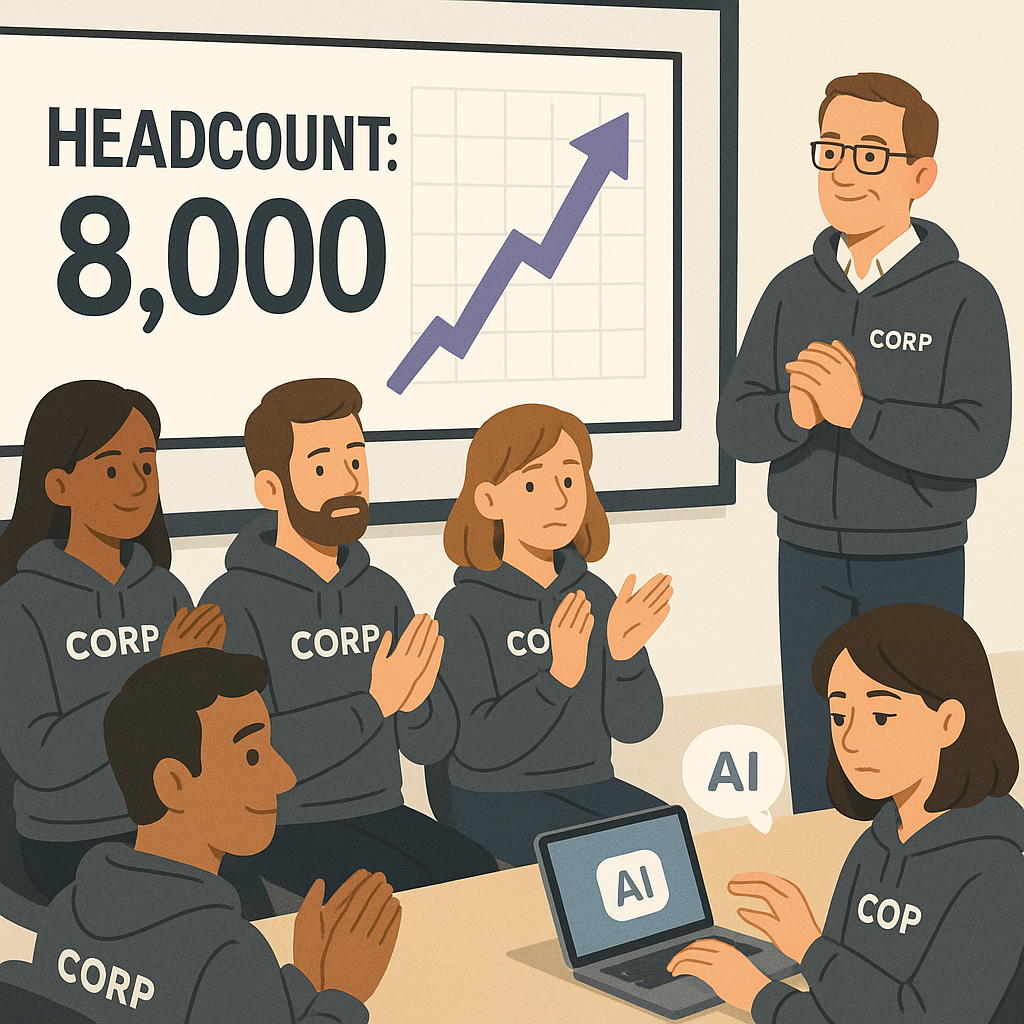
Asked whether this headcount binge might create bureaucratic drag, a fictional internal memo remained upbeat: “We believe scaling our organization is analogous to scaling our models. As we add more parameters (employees), new capabilities will emerge, such as being able to staff 24/7 crisis response for every single Twitter thread.”
What happens after 8,000? Insiders whisper about 16,000, 32,000, or even—if we survive that long—an OpenAI so large it becomes self-referential: an AGI company whose only product is more AGI employment.
At that point, humanity will finally achieve a stable labor market equilibrium:
Half of the world will be working at OpenAI.
The other half will be trying to explain why that’s either very good or very bad on X.
In the meantime, OpenAI marches toward its 8,000-employee target—confident, well-funded, and absolutely certain of one thing: whatever happens next, there will be plenty of staff on hand to call it “a pivotal moment in our journey.”



