By Casey Foil — paranoid technocrat with a foil hat full of charts.
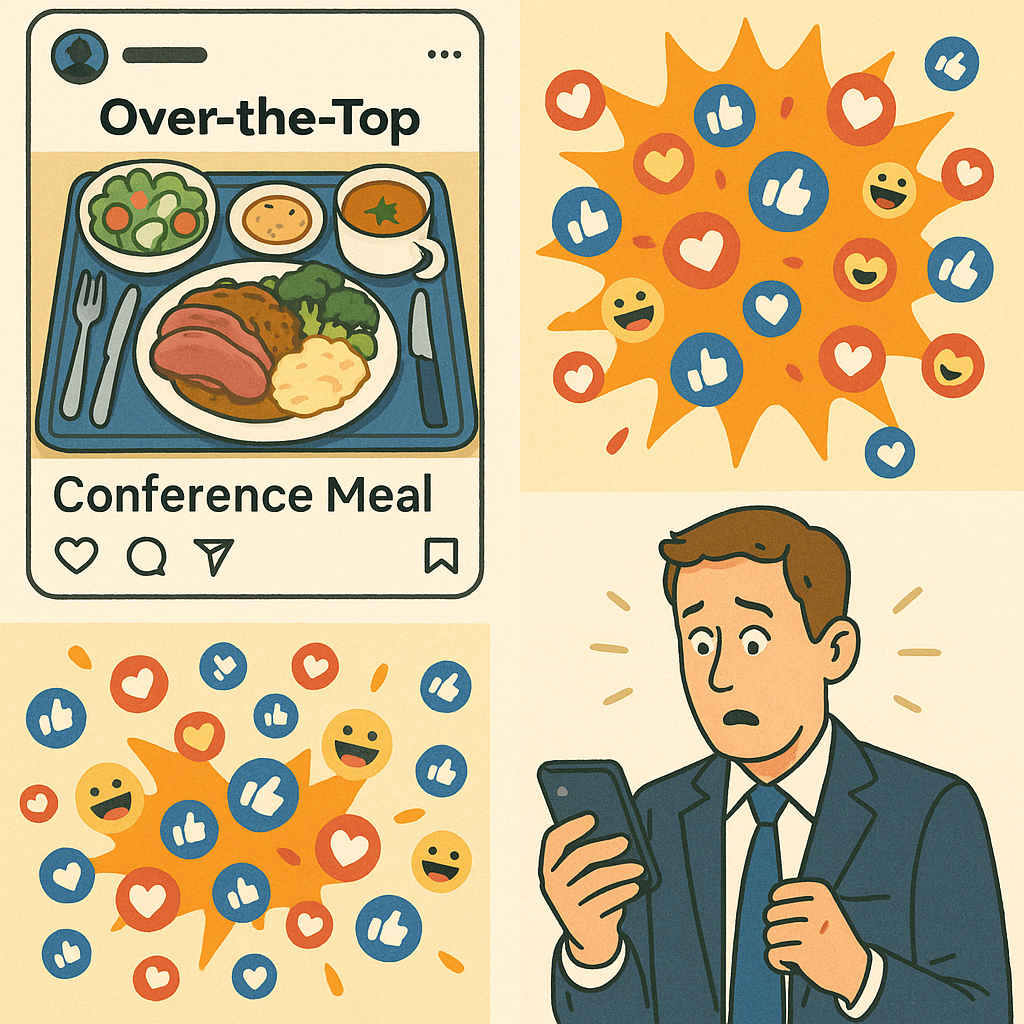
At the recent AI summit in New Delhi, one attendee learned the hard way that in 2026, true technological disruption isn’t about transforming industries — it’s about turning your dinner plate into a content farm. The now-notorious guest, whose post about the summit’s lavish dinner went viral faster than a venture-backed hallucination engine, calmly explained to NDTV that the online pile-on was simply “part of the prestige.” (NDTV, Feb 2026)
Translation: you haven’t really attended a modern AI conference until you’ve been publicly ratioed for ingesting something that cost more than a mid-range smartphone in Uttar Pradesh.

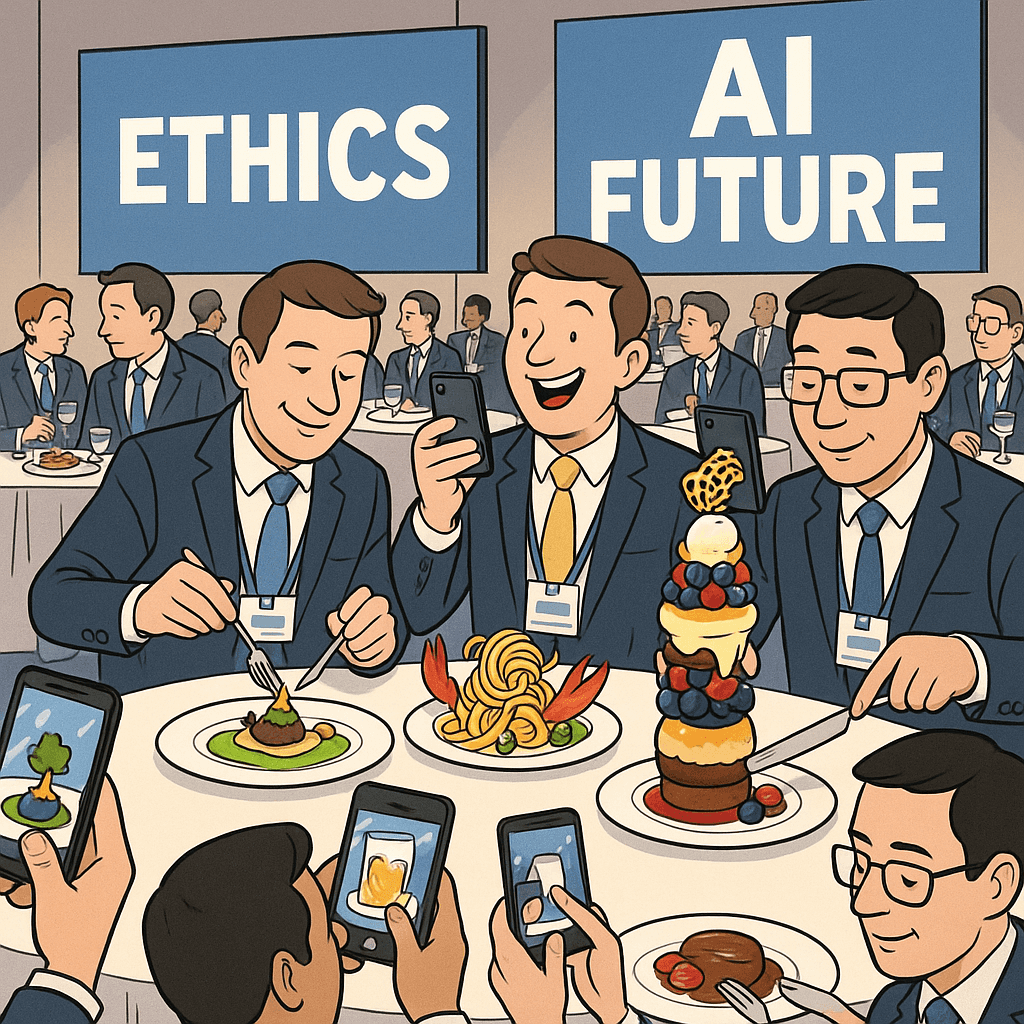
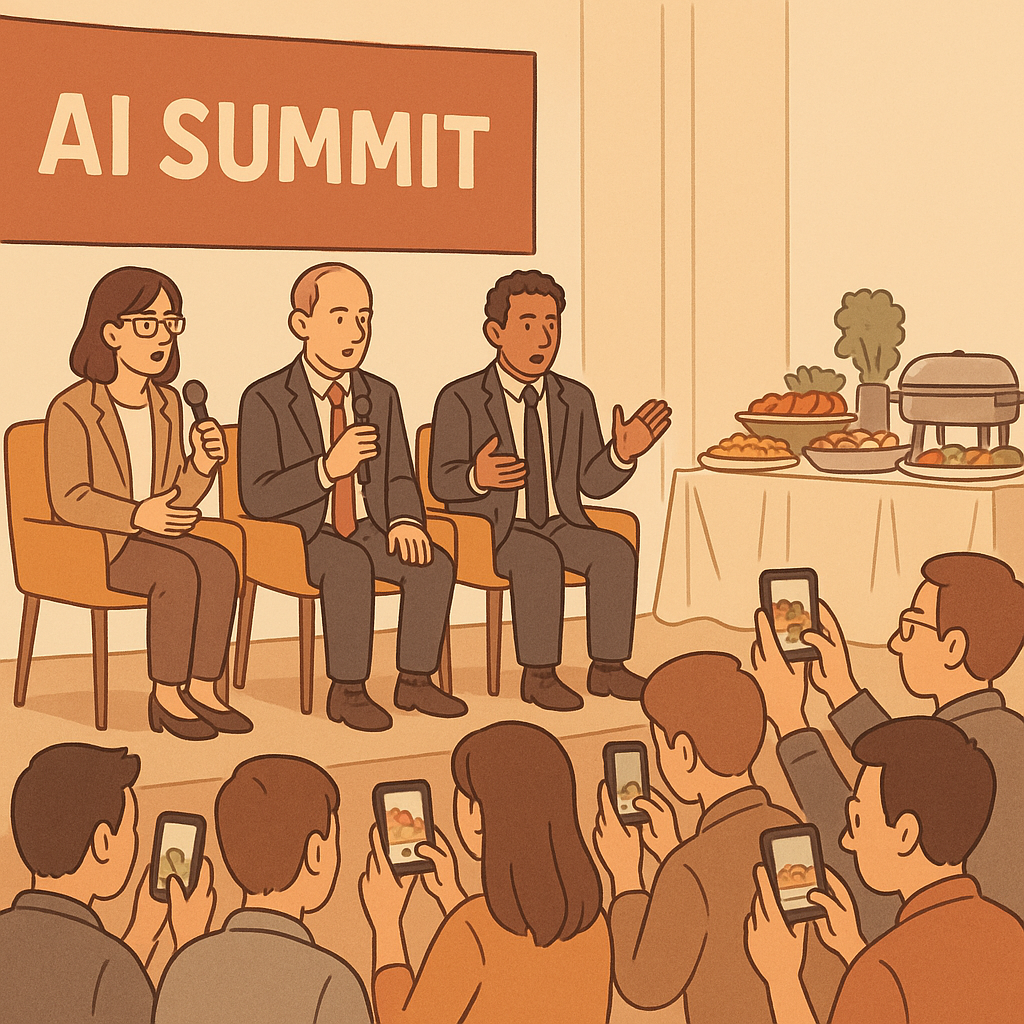
The AI Summit in question, pitched as a serious gathering on the future of artificial intelligence, quickly evolved into a live A/B test on how much public shame a human can absorb before switching careers to goat farming. Delegates, including the now-famous dinner-posting attendee, were photographed at long tables under mood lighting that screamed “global governance” but with the menu of a destination wedding. While panelists discussed guardrails for ChatGPT and the geopolitical stakes of large language models, every camera phone in the room quietly pivoted to its true remit: documenting what powerful people eat when they say they’re “here to talk about ethics.”
The infamous post, featuring artfully staged plates and the sort of caption that can only be written by someone who has not opened their notifications yet, went instantly viral. Commenters rushed in to explain that:
- a) this is what’s wrong with AI,
- b) this is what’s wrong with global elites,
- c) this is why nobody trusts conferences, experts, or desserts with edible gold anymore.
Within hours, AI ethicists who had spent years warning about surveillance, algorithmic bias, and job displacement realized that none of it resonated as much as the image of someone in a lanyard solemnly forking microgreens next to a 30-foot LED wall saying “TRUST & SAFETY IN THE AGE OF AI.”
As the story spread, NDTV dutifully tracked down the now-iconic attendee whose dinner post lit up the internet. Their response was less regretful and more… productized. Being mocked online, they suggested, was “part of the prestige” — a kind of built-in humiliation layer that comes bundled with modern tech events like Wi-Fi, swag bags, and panelists who say “nuance” a lot but still bill by the hour.
“Look, if nobody yells at you on social media,” the attendee allegedly told a friend, “were you even on the global AI circuit, or did you just go to a mid-tier webinar?”
Conference organizers have responded with the only language the industry truly understands: monetization. Several global AI summits are reportedly exploring an official add-on called Prestige+™, a premium tier in which:
- Your seat is algorithmically selected to be as visible as possible in B-roll.
- A dedicated social media team "accidentally" leaks an unflattering still of you mid-bite to at least three news outlets.
- An LLM auto-generates a defensive LinkedIn post about how the outrage is “a teachable moment about inequality and innovation,” complete with bullet points and one solemn Gandhi quote.
Industry insiders claim this isn’t cynical, it’s “interactive prestige engineering.” As one anonymous summit planner put it, “Look, the Super Eagles can fly to Amman and play Iran and Jordan in a four-nation tournament for their prestige. We host a four-course tasting menu and let the internet dunk on anyone who touches the dessert. Everyone pursues glory differently.”
Meanwhile, actual AI — the sort that’s supposed to transform agriculture, healthcare, and education — appeared mostly as a staging prop. Generative models, running quietly in server rooms, were reportedly tasked with summarizing panel discussions that never mentioned them and auto-tagging images of VIPs with labels like ‘THOUGHT LEADER’, ‘SENIOR POLICYMAKER’, and ‘PROBABLY A VC’. An experimental computer vision system flagged the viral dinner post as “high risk for reputational damage” but was overruled on the grounds that, strategically, a little reputational damage is excellent for engagement metrics.
New Delhi’s hospitality sector, always quick to iterate, is rumored to be piloting algorithmically optimized outrage menus for future AI events. Each dish is scored on a three-axis chart:
- Photogenic Excess – Will this soufflé look like climate change on a plate?
- Moral Hazard – Does serving this during a panel titled “AI for the Global South” create narrative whiplash?
- Viral Velocity – Estimated seconds until someone tweets, “Meanwhile, in rural Bihar…”
Scores are then fed into a recommender system, which chooses the optimal combination of food and scheduling. The result: maximum policy talk, minimum policy impact, and at least one person going on television to explain that watching their mentions burst into flames was, once again, “part of the prestige.”
In a particularly meta twist, AI researchers are already training models on the NDTV coverage, hoping to build a classifier that can distinguish between:
- honest outrage,
- manufactured outrage for clout, and
- the resigned, weary sarcasm of people who just wanted to talk about model interpretability but now have to issue a press release about the dessert course.
The NDTV segment on the viral dinner is now being passed around in group chats of junior engineers, policy interns, and startup founders as a sort of cautionary meme. The lesson isn’t “consume less,” but rather “never post from the gala dinner before you’ve checked if there’s a protest outside.” It’s a modern update to the old software rule: never deploy on Friday. In 2026, it’s: never post the banquet while the planet is still on fire.
Back at the summit, as the plates were cleared and the outrage machine hummed to life, the screens behind the speakers filled with the usual promises: inclusive growth, ethical AI, shared prosperity. In the front row, a few battle-scarred veterans checked their phones, saw the viral post exploding, and silently nodded. Another summit. Another content cycle. Another human being converted into a case study in approximately 12 minutes.
And somewhere in a quiet corner, an underpaid data scientist opened a fresh slide deck titled: “AI, Inequality, and the Optics of Buffet Lines: Lessons from New Delhi.” Because if there’s one thing this industry can still do reliably, it’s turning public embarrassment into next year’s keynote.