In a bold modernization of saber-rattling, Washington has reportedly shifted from carrier groups to push notifications, turning renewed tensions with Tehran into the world’s least fun mobile game. According to coverage in outlets from the KPC News network to the Anniston Star and the Wyoming Tribune Eagle (Feb 2026), "Fears of renewed conflict haunt Tehran as US issues threats"—but the real haunting presence is the Pentagon’s new Threat-as-a-Service platform running on legacy defense cloud.
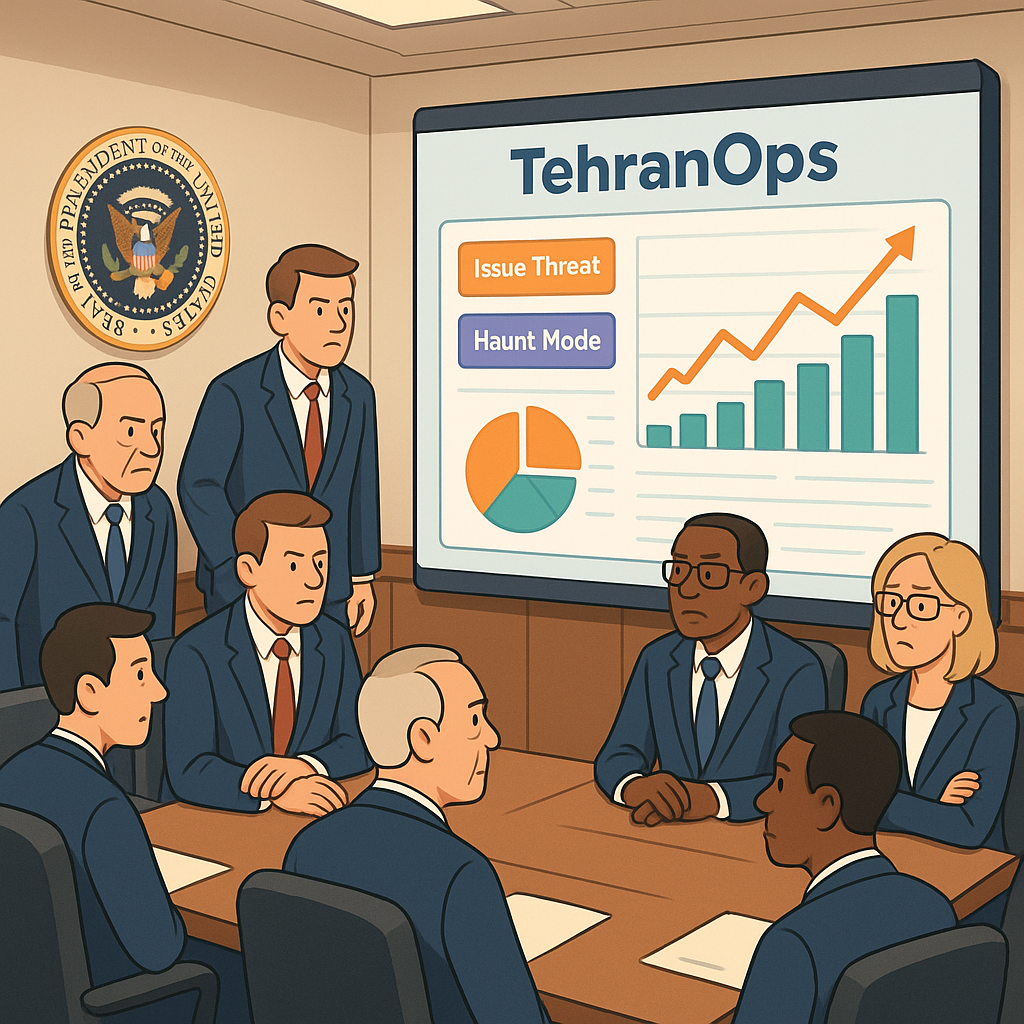
At the center of the rollout is a classified-but-leaky dashboard nicknamed "TehranOps," where US officials can allegedly choose from a dropdown menu of actions like:
- "Send strongly worded statement (auto-translated, may contain threats and/or cooking tips)"
- "Deploy carrier strike group (beta – may redeploy to wrong ocean)"
- "Toggle Haunt mode on Tehran (experimental AR feature)"
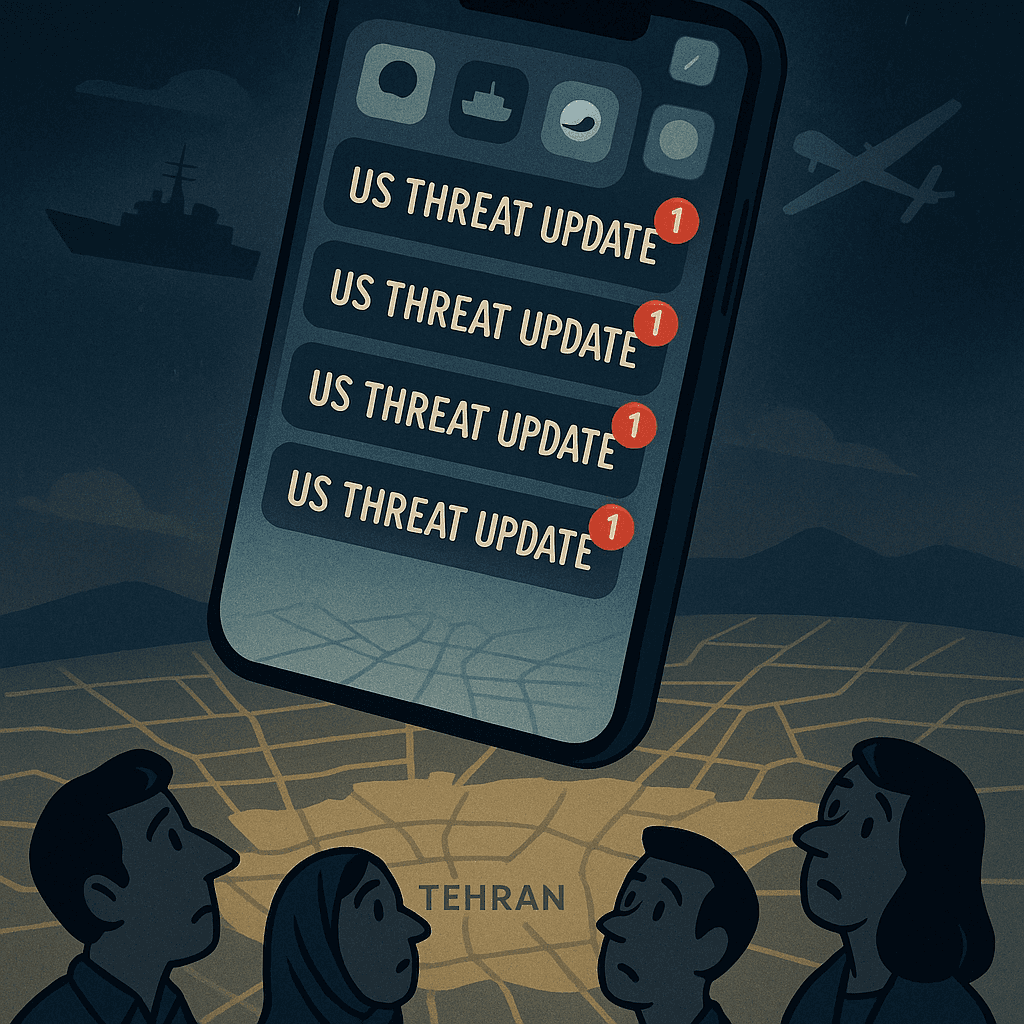
What used to be conveyed through carefully worded diplomatic cables is now blasted out as a multi-channel campaign: Pentagon press conference, State Department X thread, and, for premium subscribers, a personalized push alert summarized by generative AI. Residents in Tehran report waking up to phones buzzing with messages like, "⚠️ The US has issued a new threat. Tap to view targeted sanctions pack. Suggested response: uneasy dread."
The transformation of geopolitical tension into a tech product began quietly, officials say, somewhere between the last sanctions update and the moment someone in a think tank said, "What if we just did what Uber does, but for deterrence?" The result is a stitched-together platform that draws data flows from the Pentagon, the State Department, the Treasury Department, and whatever is left of the US cyber command’s SharePoint.
To Tehran, it feels less like a foreign policy strategy and more like an app that can't decide if it's a meditation tool or a horror game. Notifications from Washington now land in the same stack as bank alerts, food delivery status, and a reminder to drink water. "My phone buzzed and I saw ‘Fears of renewed conflict haunt Tehran as US issues threats’ from some American outlet," one Iranian software developer complained. "I thought it was clickbait. Then I realized it was basically a patch note for my geopolitical reality."
US officials insist this digitized menace is progress. "Software is eating the world, and that includes deterrence," said a not-quite-on-the-record defense tech consultant, gesturing at a slide labeled ‘Conflict 3.0: From Shock and Awe to Click and Accept’. "Why sail an aircraft carrier into the Strait of Hormuz when you can A/B test the open rate on a threat notification?"
The Daily Journal picked up the same wire story, summarizing it with all the subtlety of a mobile ads SDK: tensions, threats, and lots of fear. What went unsaid is that this whole arrangement runs on a creaking web of contractors and cloud credits. Somewhere, a subcontracted DevOps engineer is getting a 2 a.m. Slack ping because the "Haunt Tehran" environment crashed after someone at Treasury tried to upload a sanctions list as an Excel file with 47 hidden tabs and three macros named "FINAL_FINAL_REAL".
"We built a scalable architecture for precision anxiety," one anonymous systems architect bragged. "99.999% uptime on dread."
Tehran, for its part, has responded the way any modern state does: by commissioning its own app. State media sources whisper about a homegrown platform designed to track every US "threat" in a dark-theme interface labeled with friendly icons: a torch for "statement," a storm cloud for "sanctions," a ghost for "conflict haunting." Users can filter by source—KPC News, Anniston Star, Wyoming Tribune Eagle, Emporia Gazette—and sort threats by perceived sincerity or emoji count.
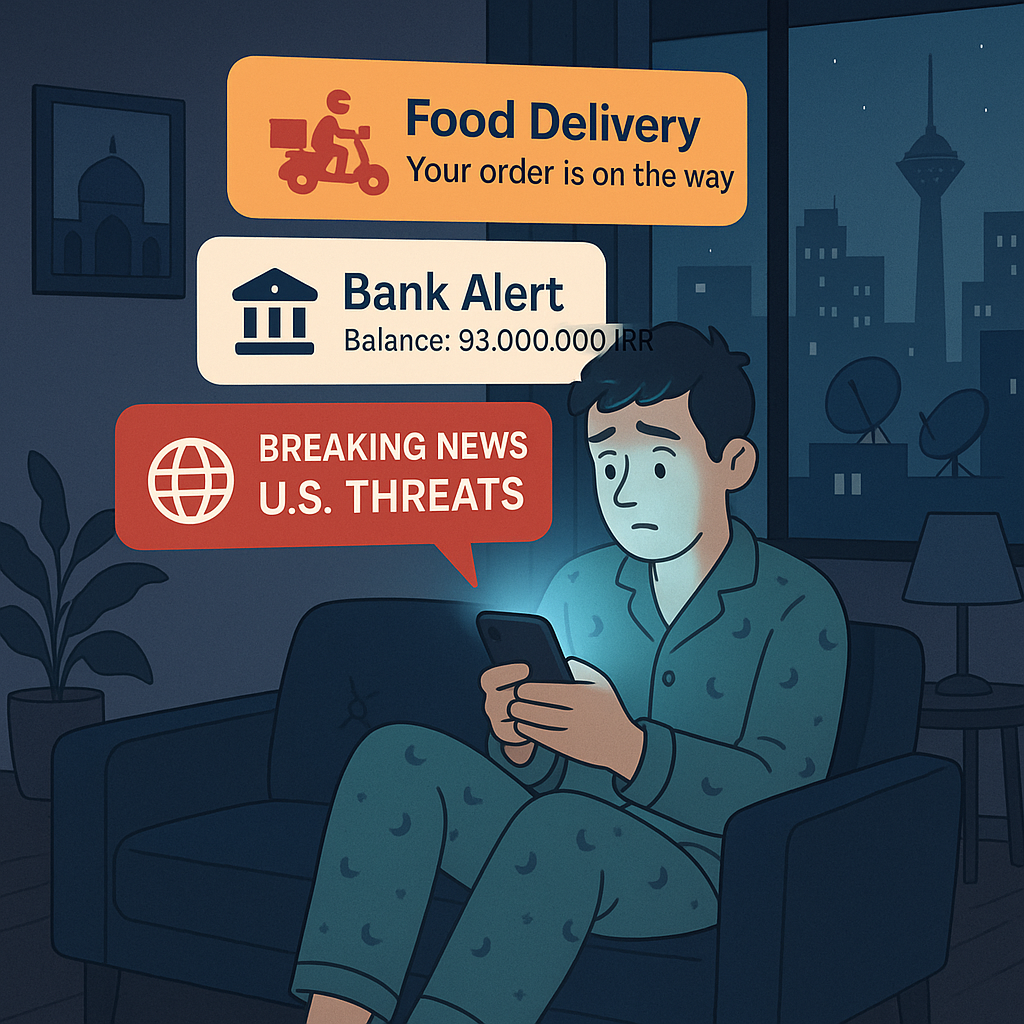
Of course, there are bugs. Some Tehran users report that after the latest update, their "Fears" widget began sending phantom notifications at 3:13 a.m. every night: "Conflict may or may not renew. Sleep well." Tech support blames a timezone mismatch between US military servers and local devices; critics blame something older and harder to patch than software: seventy years of foreign policy decisions sitting in an unstructured NoSQL database called "History."
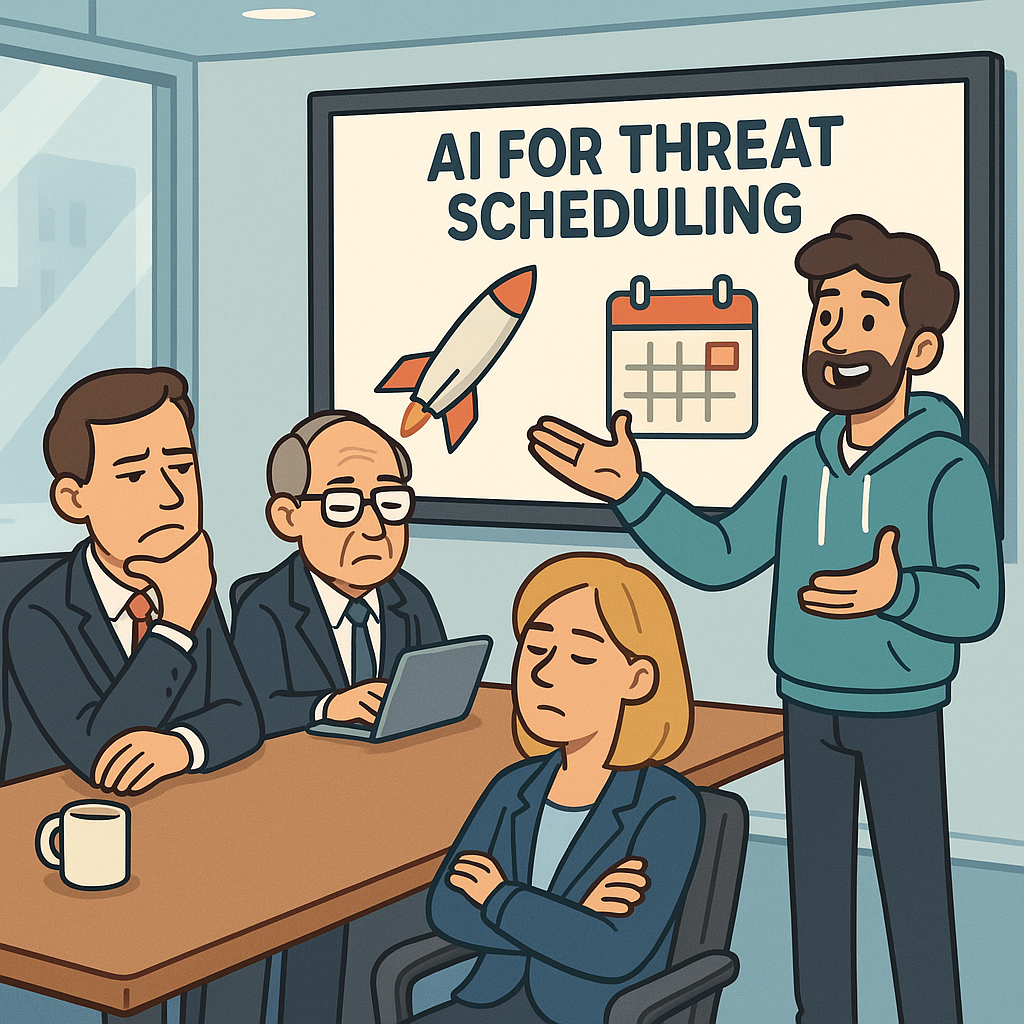
Meanwhile, US defense tech startups smell an opportunity. One pitch deck circulating around Washington promises an AI that can "predict, optimize, and schedule threats against Tehran for maximum deterrence with minimum human oversight." The demo shows a calendar interface where you can drag and drop a "naval exercise" onto a Friday, and an algorithm calculates the ideal time for an undersecretary to say something "troubling but plausibly deniable" on a Sunday show. "Think Google Calendar," the founder enthuses, "but for brinkmanship."
Congress, dazzled by the word AI, is reportedly ready to fund the whole thing, pending a hearing in which no one will quite understand the difference between a chatbot and a missile guidance system. "If it has a dashboard, it must be control," one senator muttered, confusing user interface with actual influence—a common bug in the American political operating system.
As the Wyoming Tribune Eagle reprints another version of the "fears of renewed conflict" story, readers might reasonably wonder whether the haunting is the conflict itself or the constant, jittery coverage. Tehran doomscrolls. Washington doomscrolls. The rest of the world, trapped in the feed, gets a mix of cat videos, skincare hacks, and the occasional push alert that says: "Conflict risk upgraded." No one clicks through; everyone feels worse.
In a less dystopian era, diplomacy involved hours in smoke-filled rooms and stacks of carefully chosen words. Now, Tehran and Washington alike are trapped in notification loops orchestrated by analytics dashboards. Machine learning models try to detect "escalation sentiment." Engagement graphs go up and to the right every time "US issues threats" hits the wire, which the system logs as a success metric, not a warning.
The result is an accidental dark pattern on a planetary scale: tap once for news, twice for fear, and never for context. "We didn’t want renewed conflict," says nobody in particular, "we just wanted better metrics." But as long as deterrence is measured in clicks and "haunting" is a KPI, Tehran won’t just fear renewed conflict—it will receive it, formatted and curated, in 1080p with adaptive bitrate streaming.
Somewhere between the Anniston Star and the Daily Journal write-ups, you can almost hear the future release notes:
Version 4.0 – Conflict Notification System
– Improved Tehran haunting algorithm
– Reduced collateral nuance
– Fixed bug where diplomacy occasionally resolved tensions without a show of force
– known issue: user base increasingly terrified.
Patch coming soon. Probably.