The software industry is once again marching proudly into a towering inferno, and Wall Street could not be more excited.
According to a fresh dose of optimism from Seeking Alpha analyst commentary, “The software sector goes through a ‘forest fire’ every 10–15 years, markets are ‘about to take off.’” (Seeking Alpha, Feb 2026). Translating from finance dialect: everything will burn, most of your favorite companies will die, your job may become an emoji on LinkedIn — and this is bullish.
“A forest fire is healthy for the ecosystem,” the unnamed analyst explained on a recent webcast, noting that valuations in cloud, AI, and SaaS have become “a little frothy,” which is analyst-speak for “we rode this until the brakes fell off and now we’re calling it a cycle.” Behind him, a slideshow showed serene drone footage of pine trees, then suddenly cut to a stock photo of a data center engulfed in CGI flames.
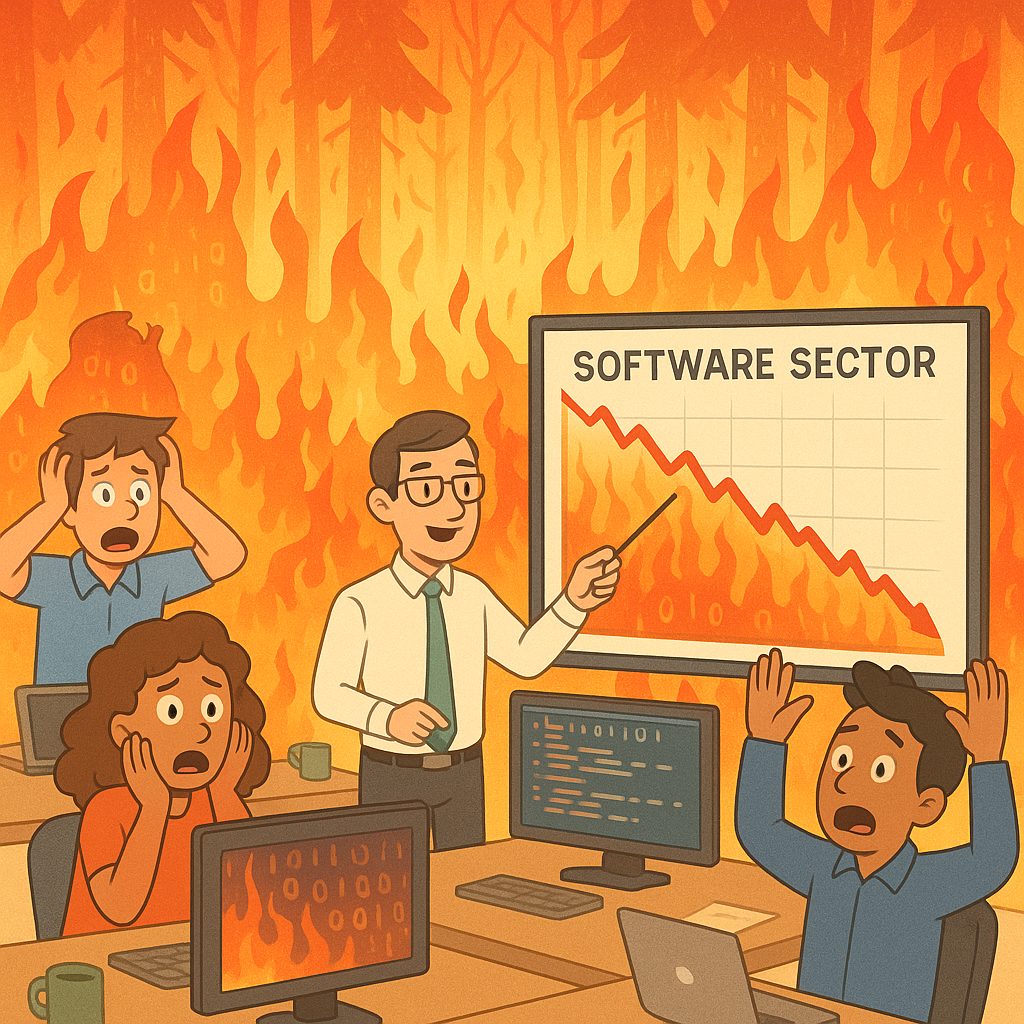
In this metaphorical Yosemite of code, the software sector itself is the forest, legacy enterprise vendors are the dry brush, and retail investors are the tourists who keep insisting they’re “early” while standing in front of a literal fire tornado.
Anchorage Digital, Tether, Jason Momoa’s breakfast, and Girl Scout Cookies have absolutely nothing to do with this particular blaze, but the analyst presentation thoughtfully included them all on one confusing slide titled “Macro Headwinds.” The only actual data point was a line graph labeled “Software TAM” that pointed straight up, then caught fire, then reappeared higher.
Asked why these software “forest fires” occur every 10–15 years with such eerie precision, the analyst pointed to historical precedent: the dot-com collapse, the 2008 SaaS “rationalization,” the 2021 SPAC mania, and last year’s “AI pivot,” wherein every company from IBM to the local laundromat added ‘.AI’ to their logo and calmly doubled their prices.
“Think of it as a controlled burn,” he said. “We light the match, but in a very disciplined, data-driven way.”
In practice, a “controlled burn” means the following sequence:
- Step 1: Declare that software is eating the world.
- Step 2: Feed it zero-interest-rate money until it’s too bloated to move.
- Step 3: Discover unit economics.
- Step 4: Blame “macro” while you sell to the bag-holders.
- Step 5: Issue a new report: “Markets Are About To Take Off.”
Several software CEOs, reached for comment on the current “forest fire,” pretended not to smell smoke. “We’re very excited for the next phase of growth,” said the CEO of a publicly traded workflow-orchestration-platform-for-workflow-orchestrators. “We’ve taken this opportunity to right-size, refocus, and re-align our synergies around our core vision.” He then confirmed the company had laid off 40% of staff, replaced them with three AI tools, and was already drafting a blog post titled, “Why Firing You Was Actually Empowerment.”
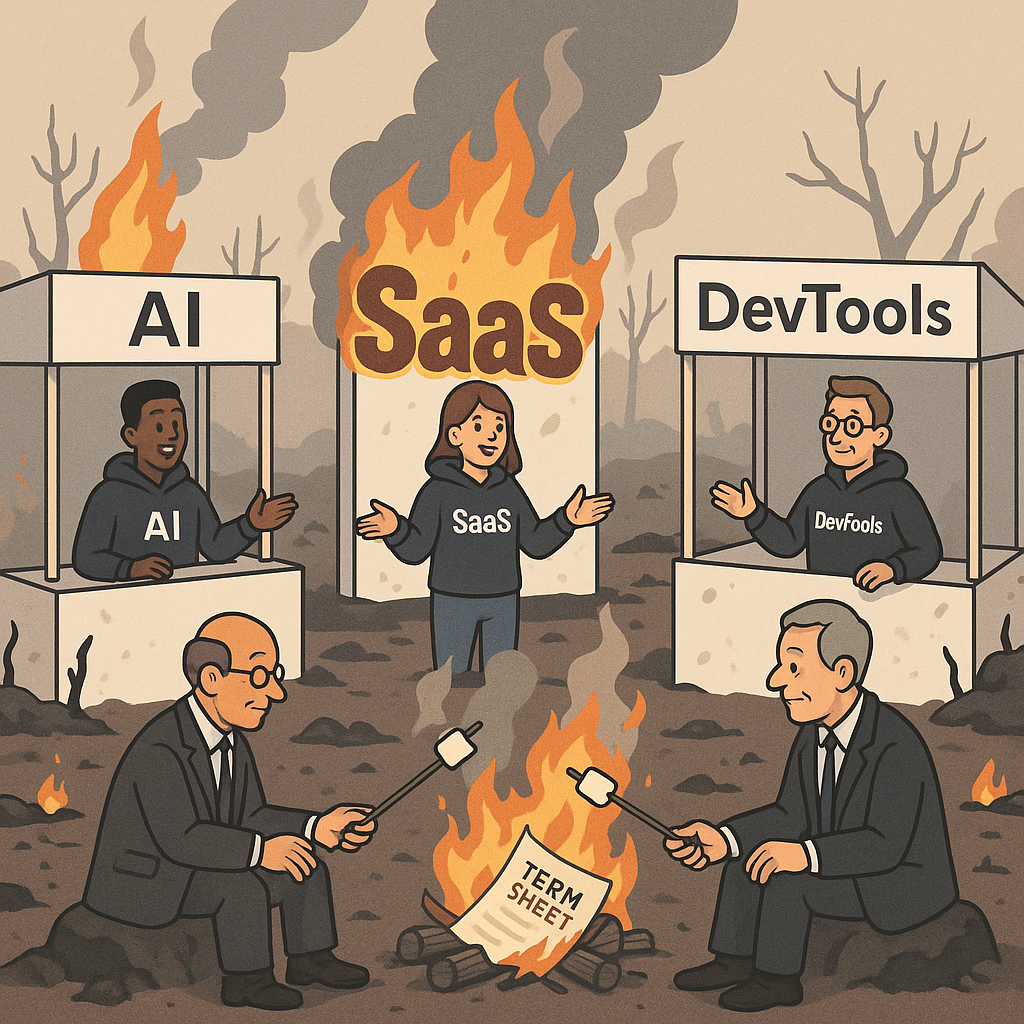
At a co-working space in San Francisco, a group of engineers watched the Seeking Alpha clip projected on a whiteboard. On-screen, the analyst repeated, “These fires clear out the deadwood so that new, more resilient players can emerge.” Off-screen, one engineer quietly updated his résumé headline from “Senior Staff Engineer” to “Early-Stage Founder (Stealth).” Another angrily circled the word “deadwood” and wrote “humans” in the margin.
To many in the industry, the metaphor feels less like ecology and more like arson. “If software is a forest, then VCs are the campers who leave a ring of empty beer cans, light a bonfire with a deck titled ‘The Future of Synergistic AI,’ and drive away blasting a podcast called Infinite Upside,” said a product manager who asked to remain anonymous to avoid receiving another “mandatory resilience workshop” invite.
Retail investors, meanwhile, have been instructed to treat the ashes as a buying opportunity. The analyst highlighted a short list of categories he believes will benefit from this cleansing inferno:
- AI Infrastructure: “Because even when you lay everyone off, someone still has to run the GPUs.”
- DevTools: “The only thing that scales faster than code is tech-debt, and we can monetize both.”
- Observability & Security: “You’ll want to see the fire and confirm it’s not your fault.”
- Fintech SaaS: “Every time the market crashes, we invent three new ways to lose money more efficiently.”
In a particularly bold chart, the analyst overlaid the last three “software forest fires” with a trendline labeled “Human Learnings.” That line remained completely flat.
Meanwhile, conference organizers are rushing to capitalize on the theme. An upcoming Las Vegas event, Re:Ignite // The Software Firestorm Summit, sponsored by several of the same funds who fueled the last wave, promises attendees the chance to “turn burn into churn, and churn into yearn.” Keynotes include “Monetizing Your Own Layoff: From Exit Package to Thought Leader” and “Pivoting To AI Without Knowing What A Matrix Multiply Is.”
At the exhibition hall, a special area called “The Charred Undergrowth Zone” will host unprofitable SaaS companies looking for “strategic acquirers.” Each booth will display a little paper forest fire rating from “Smoldering” (just missed last quarter’s earnings) to “Fully Involved” (pivoted from crypto to AI to “creator tools” in under 24 months).
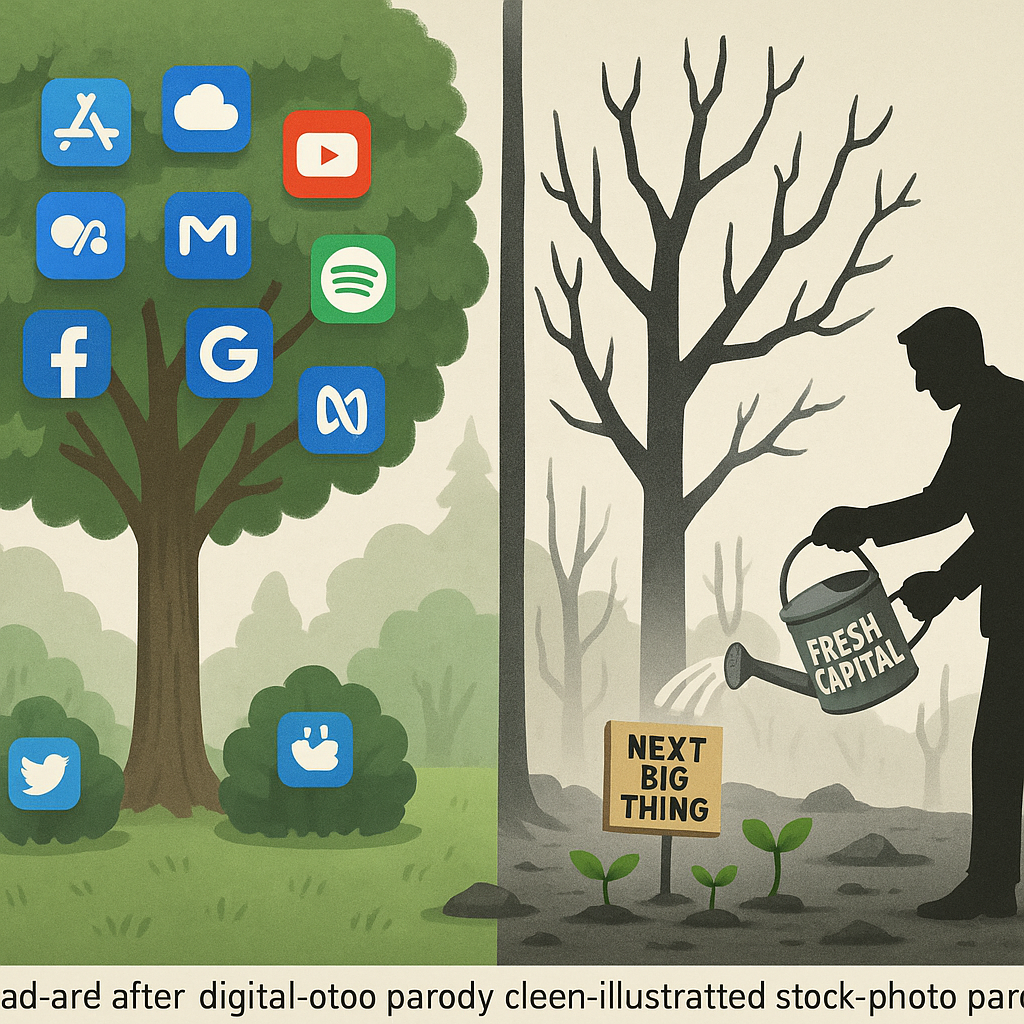
Despite the increasingly desperate metaphors, the analyst segment ended as they always do: with a reminder that “long-term, we remain very constructive on software.” By which he appeared to mean: the sector will be demolished, rebuilt, securitized, and re-sold so many times that no one will remember who owned what — only that someone, somewhere, probably made a multiple on it.
As the webcast wrapped, a final slide appeared: a tranquil forest regrown, sun dappling through the trees, all evidence of the last conflagration erased. Over it, in tasteful serif font:
“The best time to buy software was during the last fire. The second-best time is right before the next one.”
In the distance, a single alert pinged from a devops dashboard: CPU usage spike detected. Somewhere in the forest, kindling caught.