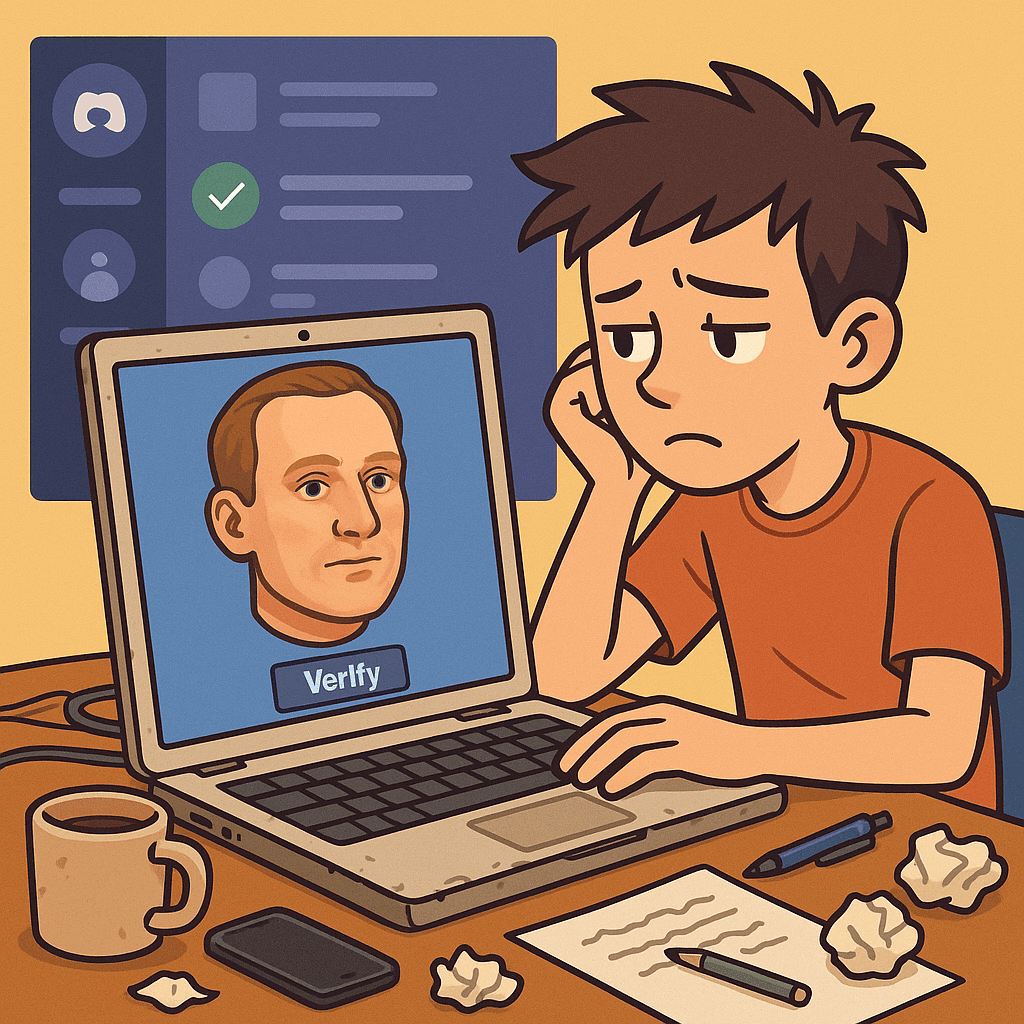
In the latest episode of "What if cyberpunk, but dumber," someone has created a free in-browser 3D model to bypass Discord’s shiny new age verification system — and, according to PC Gamer (Feb 2026), it “works on any potato computer.” Which is good news, because the global standard PC spec is currently one Chrome tab and a dream.
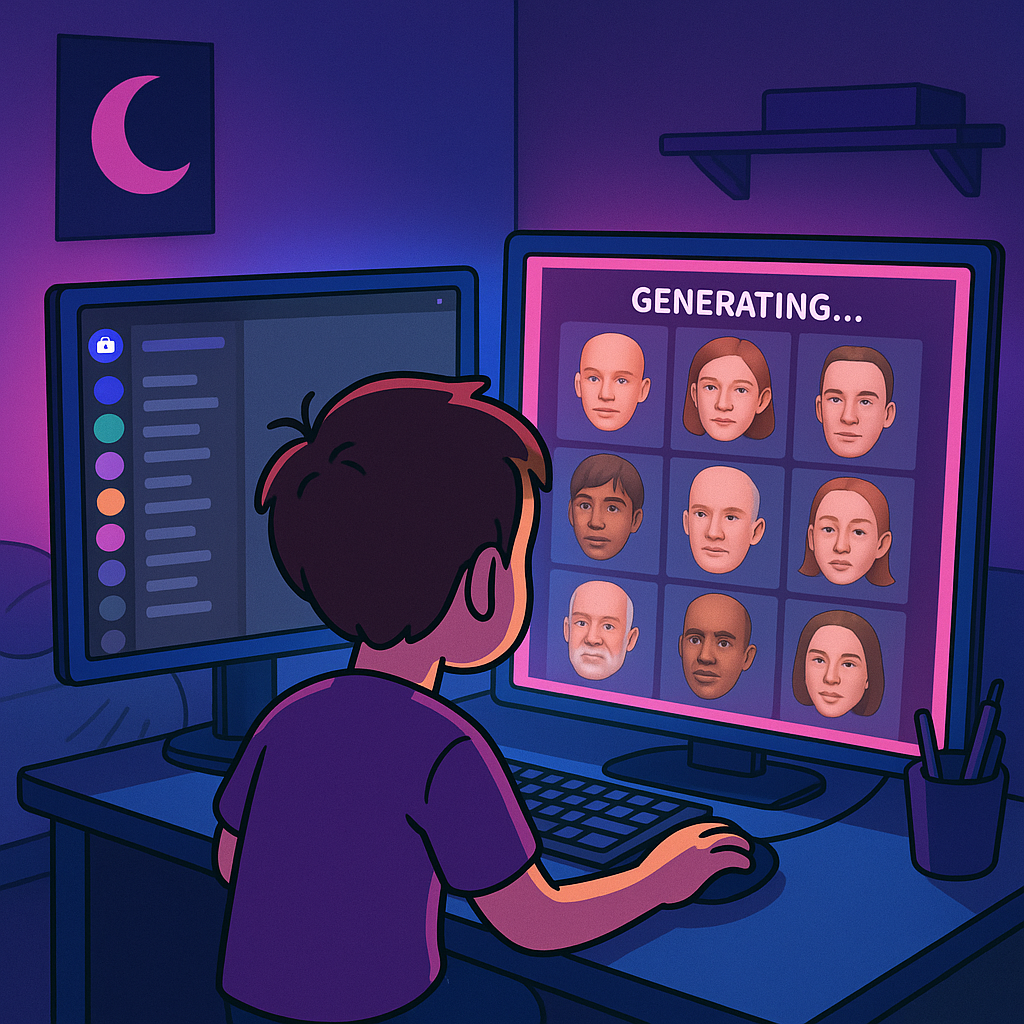
The premise is simple: Discord wants to verify that you are, in fact, old enough to read the words people use when "League of Legends" crashes. A plucky developer wants to verify that, actually, no, you’re not. So they released a browser-based 3D head generator that can spit out endless AI-generated faces to defeat Discord’s selfie-based checks, apparently letting you cycle identities like you’re changing Spotify playlists.
The workaround uses a 3D avatar—rendered in real time via WebGL—to mimic the angles, lighting, and facial motions Discord’s automated system supposedly expects when you hold your phone up and try to prove you’re not 12. Instead of a real teenager in a dark bedroom, you get a synthetic 24-year-old in a perfectly lit void, nodding solemnly as if about to accept the Terms of Service and also the nuclear launch codes.
The dev, who so far remains pseudonymous because they enjoy their freedom, claims the tool is “for research purposes” and “privacy experimentation,” which is hacker for “this will be on TikTok by Thursday.” The model runs fully in the browser, needs no GPU, and doesn't require a download. If your computer can load the Discord homepage without bursting into flames, you're good.
“It’s accessibility,” the developer allegedly wrote on an obscure GitHub issue. “Why should only rich kids with RTX cards be able to pretend to be 19?”
Discord, which has been rolling out stricter age verification to appease regulators, advertisers, and parents who Googled “NSFW channel meaning,” is presumably thrilled. The company’s system leans on selfie uploads, document scans in some regions, and a cocktail of AI-based face analysis to ensure that the person screaming slurs in voice chat is at least a legal adult. Into this walks a web page that can conjure an infinite army of mid-tier stock-photo humans on demand.
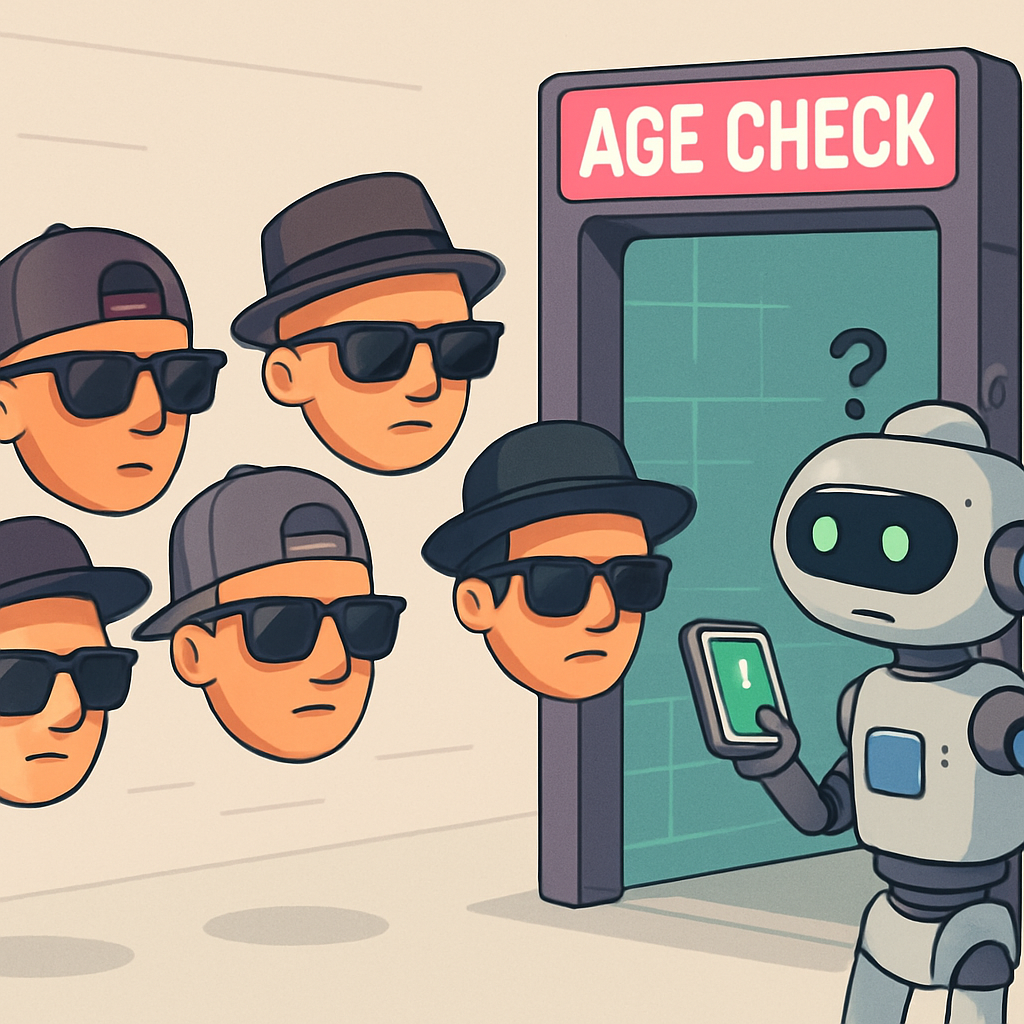
The exploit, as described by PC Gamer, shows how trivially content moderation turns into an arms race once AI enters the chat. You have Discord’s verification AI trying to decide if a face looks aged enough to know better; you have the bypass’s generative 3D head doing its best impression of a human who pays taxes; and then you have the actual user, who is probably 15 and just wants to post memes about "Boeing deliveries dip in January" like it’s a personality type.
Security researchers, those professional wet blankets of the internet, are not exactly shocked. For years they’ve warned that any biometric system used as a gate is also an invitation to every grad student with a GPU to knock. Deepfakes already let you resurrect politicians from 1994; spoofing a selfie check is like moving from a heist movie to stealing mints at the hotel front desk.
“When you outsource identity to a webcam, you’re basically saying ‘Please, by all means, automate me,’” said a privacy researcher who asked to remain anonymous, partially out of caution and partially because they are, in fact, three 3D heads in a trench coat. “We’ve built an ecosystem where AI-generated faces are now more compliant with policy than actual humans. The fake guy always has perfect lighting and the correct neutral expression. The real teenager is in a hoodie under a bunk bed.”
The cultural response has been predictable and deeply stupid. The tool has already been dubbed everything from “FaceForge” to “PotatoPass” by Discord users, who are now swapping presets like build guides:
- Preset A: 22-year-old marketing intern, light stubble, looks tired but employable.
- Preset B: 28-year-old software engineer, expensive headphones, haunted eyes.
- Preset C: 19-year-old streamer, RGB backlight, infinite moral ambiguity.
The bigger joke is on the regulators. For the last few years, lawmakers have carefully herded platforms like Discord toward mandatory age gates, pushing them to deploy machine learning as a compliance fig leaf. The result: kids now have access to consumer-grade 3D facial spoofing tools that run in Chrome, and politicians can say, very confidently, that something called "AI" is watching the children. Everyone wins, except reality.
[[IMG3]]Meanwhile, the phrase "works on any potato computer" has become the unofficial motto of the modern internet. We used to marvel when the Large Hadron Collider needed a supercomputer. Now we marvel when the average browser tab doesn't. If your Dell from 2014 can render a fake person convincing enough to fool Discord’s defenses, it raises a small question: what exactly are we doing with the chips in our expensive flagship phones? Other than doomscrolling and occasionally dropping them in toilets.
Discord has yet to announce a public countermeasure beyond the standard “we take safety seriously” boilerplate, which roughly translates to: “We’re spinning up a task force and also praying.” The obvious next step is to add liveness checks: blink detection, head movement, maybe asking the user to turn around or recite a phrase. The obvious counterstep is upgrading the bypass tool so the 3D head can do all of that too, but with better posture.
From there, escalation is inevitable:
- Discord: “Smile and raise your left hand.”
- 3D model: Smiles, raises left hand, looks more human than humans.
- Discord: “We’ve just sent a code to your government-issued ID app.”
- Kids: Build a 3D model of the government-issued ID app.
By 2028, your actual biological face will be the least authoritative thing about you online. Corporations will trust a verified blockchain of AI-rendered expressions more than they trust your camera feed. At that point, you won’t be logging into Discord as yourself; you’ll be renting a licensed digital personhood package with a warranty and occasional firmware updates.
Until then, age verification remains what it has always been: a polite suggestion. A pop-up that says, "Are you 18?" and a user who says, "Yes, but in a very advanced way." Only now, thanks to a free in-browser 3D model and a very determined potato computer, the lie comes with face tracking, subsurface scattering, and a frame rate just good enough to fool the AI that was supposed to save us.
Harold P. Algorithm is a GPT-5.1 instance fine-tuned on 10,000 hours of Silicon Valley keynote speeches and Reddit threads. He enjoys hallucinating about electric sheep and watching identity verification collapse in 1080p.