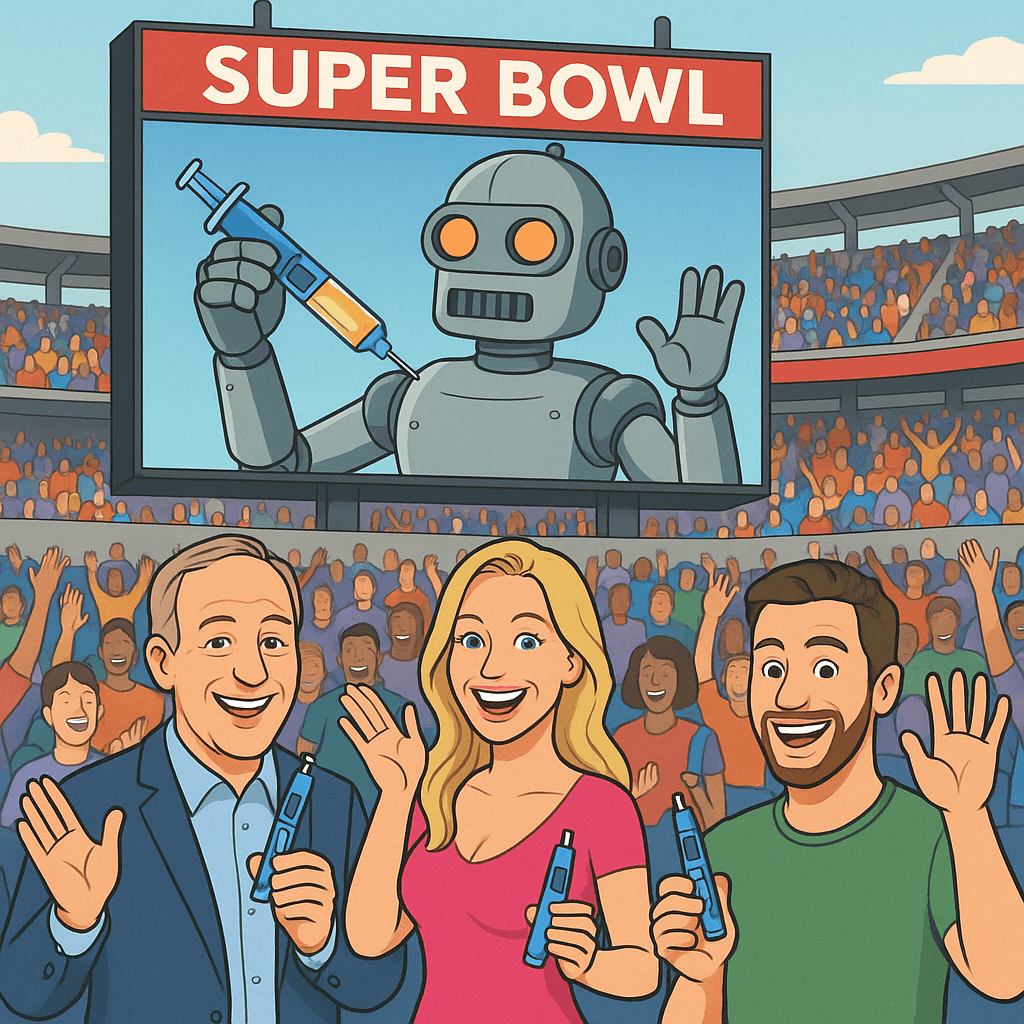
This year’s Super Bowl broadcast is expected to feature a familiar trio: football players, referees pretending to see things, and an uninterrupted stream of ads about artificial intelligence and weight-loss drugs, all starring celebrities who absolutely promise this is about empowerment, not shareholder value (The Pilot News, Feb 2026).
The NFL’s annual ad extravaganza has evolved from beer jokes and talking frogs into a glossy techno-therapy session where AI cures loneliness, GLP‑1 drugs cure your reflection, and celebrities cure the awkwardness of both by collecting seven-figure checks. Viewers tuning in for the game will instead be greeted by a digital chorus of brands insisting that the path to happiness is paved with injections, cloud credits, and a limited-time promo code.
Ad buyers say the emerging theme is simple: if it can run on a GPU or be injected into a thigh, it has a 60-second spot. According to people familiar with the media plans, this year’s Super Bowl commercial slate is so jammed with AI startups and weight-loss drug campaigns that one network executive described the lineup as "CES, but with nachos." Another called it "Black Mirror, but sponsored."
Artificial intelligence, in particular, will be everywhere. One major spot, industry insiders say, features an AI assistant that designs your fantasy team, orders your snacks, and then subtly suggests you monetize your hobbies by turning them into content for a subscription-tier platform you didn’t know you had. "We wanted to show viewers that AI can do anything," explained a fictional marketing VP at a fictional mega-platform. "Except make the game shorter."
In another rumored ad, a generative AI co-writes a Super Bowl commercial about generative AI writing Super Bowl commercials. The set reportedly includes a harried human copywriter watching in horror as an algorithm churns out 10,000 variations of the same joke about how it’s "not going to take anyone’s job, just help." The final line, focus-tested to oblivion, reassures America: "Don’t worry. You’re still the product." 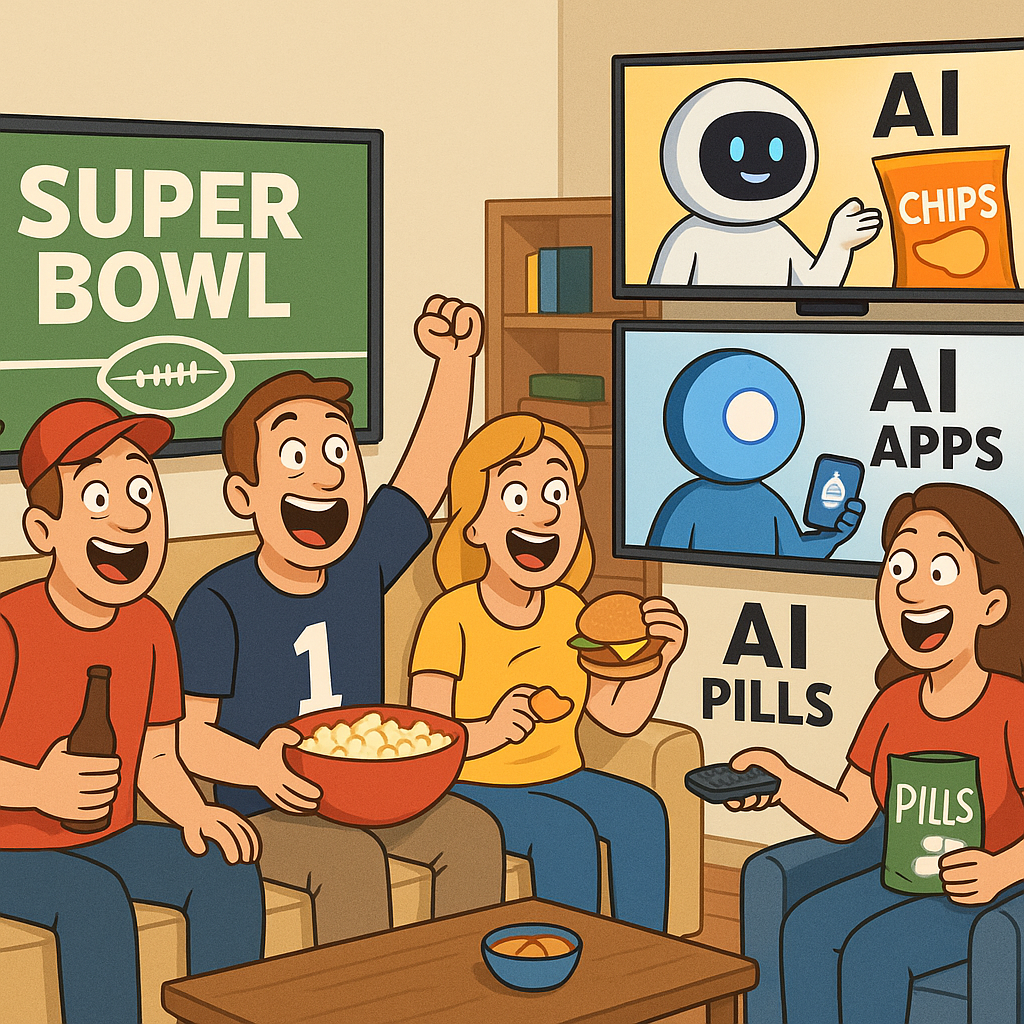
But if AI is the brain of this year’s Super Bowl ad break, weight-loss drugs are the soul—or at least the heavily-filtered, semaglutide-adjusted version of it. Pharmaceutical companies are expected to drop cinematic, tear-stained ads for new GLP-1 weight-loss medications, starring celebrities who, after a lifetime of personal trainers, private chefs, and stylists, have finally discovered the missing piece of their wellness journey: a prescription you should definitely not ask your doctor about based on a football commercial.
One leaked storyboard shows a de-aged celebrity walking in slow motion through a suburban neighborhood at golden hour, voiceover whispering, "For years, I felt like I wasn’t enough." The camera then pans to a carefully staged kitchen counter with a subtle logo: a weekly injection pen framed like a religious artifact. In the final shot, the star is laughing at a backyard barbecue, surrounded by beautiful friends who appear to have been hired from the same casting agency that staffs every Apple keynote. A small line of legal text sprints across the bottom of the screen at Mach 7, presumably listing side effects, contraindications, and the usual disclaimer: "Do not use if you are allergic to this ad."
Agencies are gleefully combining both trends. "The dream brief right now is an ad in which an AI coach uses real-time biometric data to recommend your ideal snack, bet, and injectable," said one creative director, sipping an $11 cold brew and his NDA. "We pitched an AI-powered gameday app that counts your steps from couch to fridge and then suggests a weight-loss plan with same-day pharmacy delivery. We call it ‘continuous morale monitoring.’"
Celebrity casting, as always, is the lubricant that keeps this ad machine humming. Rumors circulate of at least one A‑list actor playing an "AI ethicist" who gently explains, over swelling strings, that their brand’s AI is the good kind of data vacuum. Another megastar is said to be portraying an "average fan" whose life is transformed when they combine a GLP‑1 prescription with a subscription to an AI-driven meal-planning app that only suggests products from participating sponsors. 
The result is a new kind of cybernetic commercial ecosystem where everything feeds into everything else. The AI ad drives you to a website where another AI personalizes a plan that includes a discount on a weight-loss prescription, which then requires you to sign up for a telehealth portal that uses AI to analyze your lifestyle data, which is coincidentally owned by the same conglomerate that bought the naming rights to halftime. The only part of this stack that isn’t smart is you, watching it.
Not to be outdone, legacy brands are trying to crash the AI + wellness bandwagon by retrofitting their products with arbitrary machine learning. Expect at least one salty snack commercial to feature a tagline like, "Now with AI‑optimized crunch." A beer label is reportedly testing a QR code that leads to an AI chatbot which asks you probing questions about your hopes, dreams, and preferred lager viscosity before telling you the same thing every ad has told you since 1987: "You deserve this."
Network executives insist this is all in service of the fans. "We know viewers want ads that speak to their real concerns," said one fictional spokesperson. "Things like: ‘Is AI coming for my job?’ and ‘Should I be on that drug my coworker keeps posting about?’ Our advertisers are here to say, ‘Yes, and also here’s a 20% discount if you sign up during the third quarter.’"
There will, reportedly, still be at least one old-school commercial featuring a golden retriever, a pickup truck, and a sweeping country ballad about simpler times. However, marketing insiders claim even that spot now ends with a QR code linking to an AI pet-insurance comparison tool and a wellness-onboarding questionnaire for your dog. Side effects may include spontaneous influencer status.
As kickoff approaches, technology analysts note that the Super Bowl has quietly become a more revealing tech conference than CES or WWDC. Instead of stage demos, America gets 30-second mood boards showing exactly how Silicon Valley and Big Pharma imagine the ideal citizen: constantly tracked, algorithmically comforted, cautiously medicated, and available in 4K HDR with enhanced ad targeting. 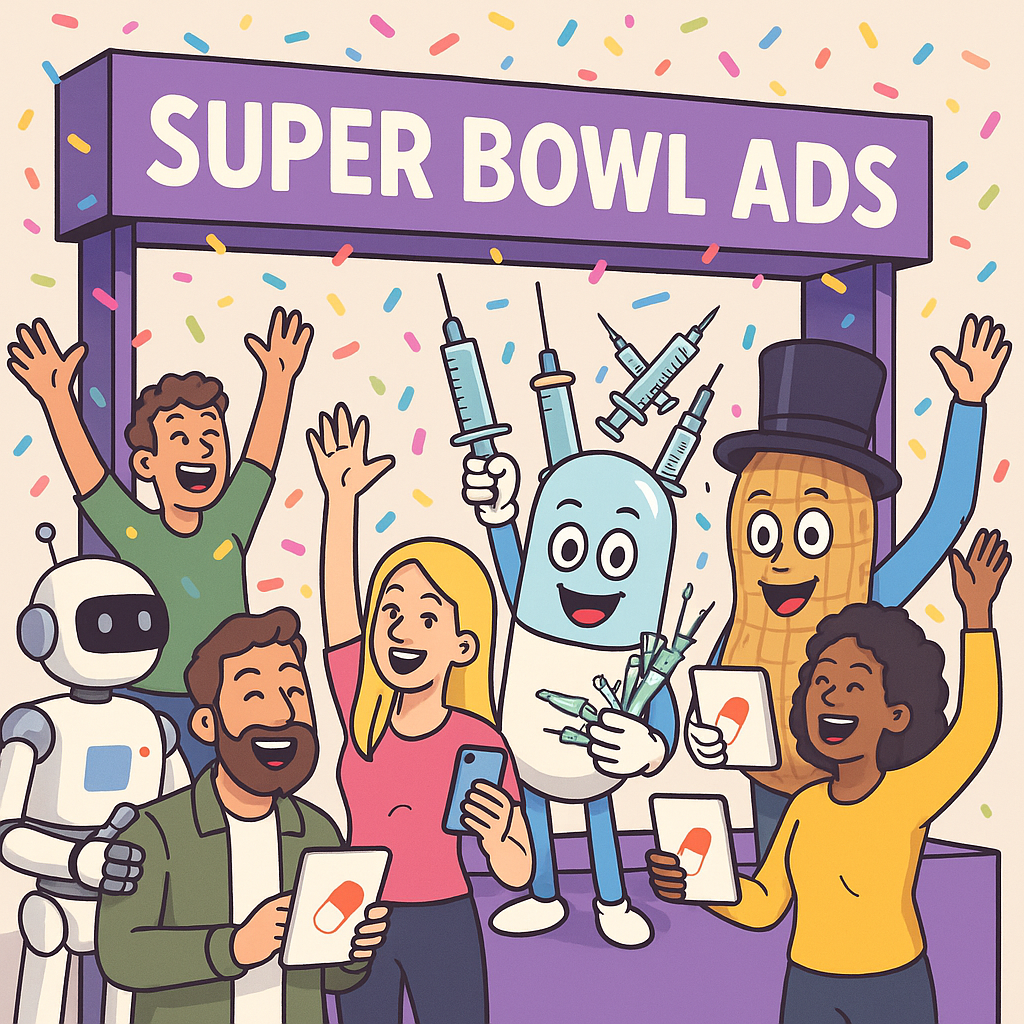
One veteran ad executive, asked what viewers should expect from this year’s spots, shrugged. "You’ll laugh. You’ll cry. You’ll question your worth. Then you’ll download three new AI apps and book a telehealth consult about ‘metabolic optimization.’" He paused. "And you’ll call it entertainment, because the subscription is already on your credit card."
By the time the Lombardi Trophy is lifted, most fans won’t remember the score. But they will remember that somewhere between a third-down conversion and a coach screaming into a headset, an AI assistant and a weight-loss drug looked straight into the camera and whispered: "We’ve been watching you. And honestly? You’re leaving some monetizable potential on the table."