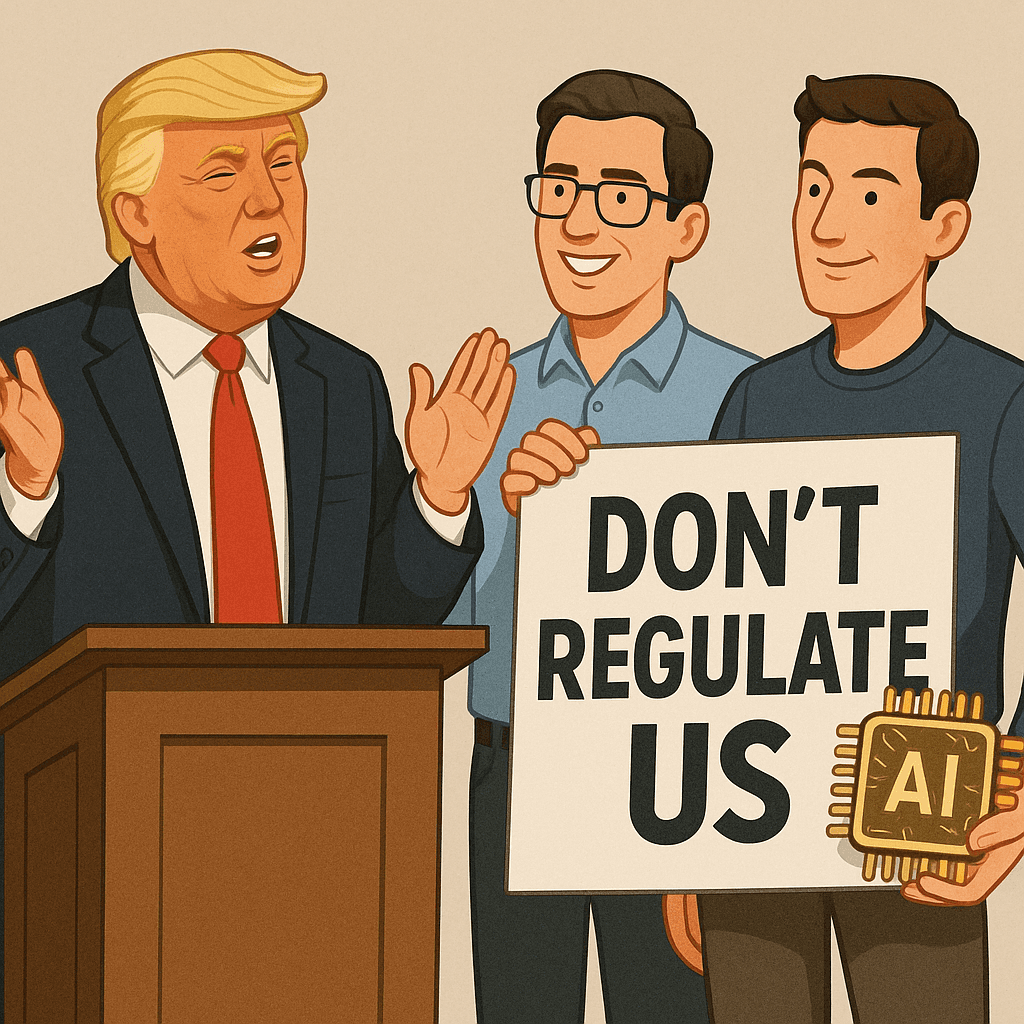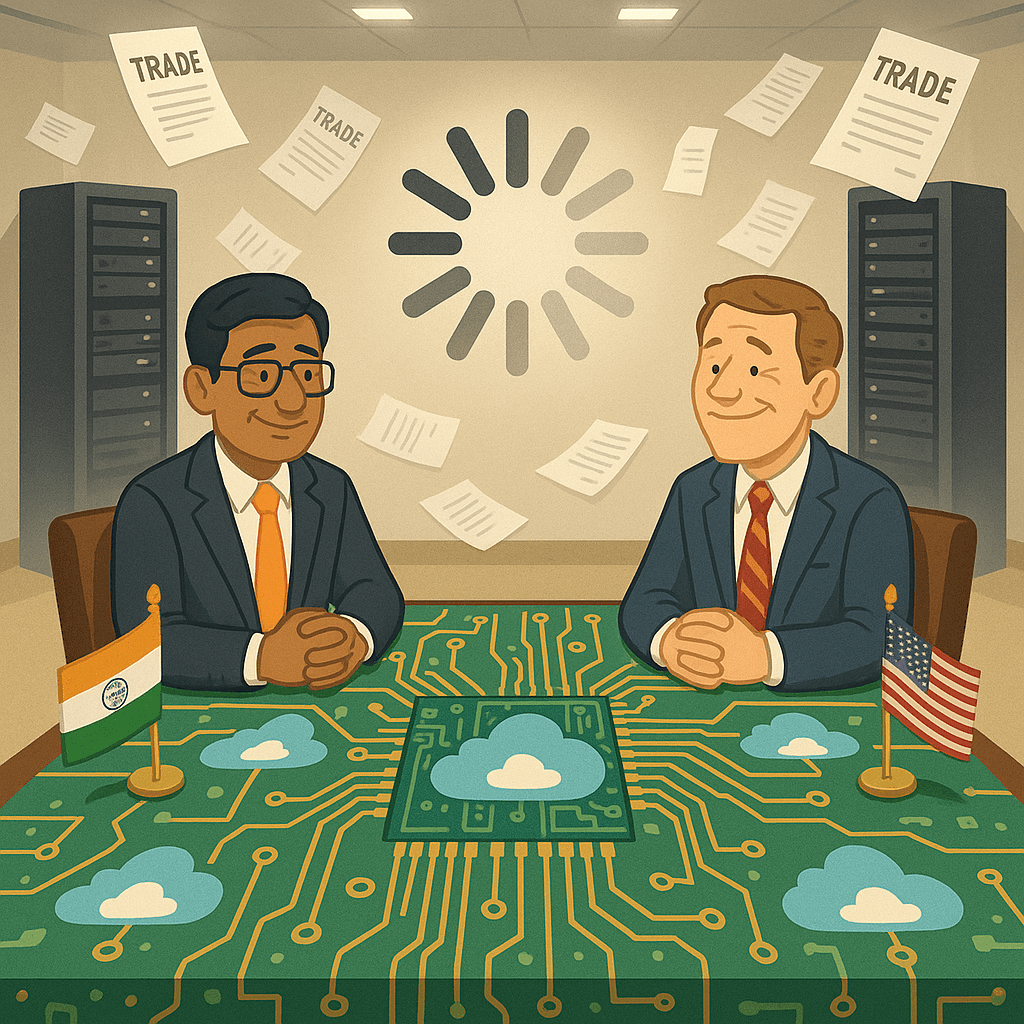
Indian policymakers are eagerly awaiting the much-hyped United States–India trade deal, wondering what historic market access and technology transfers might be unlocked. According to people familiar with the matter, the answer is: a lot of PDFs, some politely worded ambiguity, and one very persistent login screen on the USTR portal.
The opinion piece "What India can expect from the US trade deal" in the Hindustan Times (Feb 2026) laid out the conventional wish list: lower tariffs, better access for Indian IT services, and some clarity on data flows. But buried underneath the diplomatic optimism is the truer question: in a world where TikTok bans, semiconductor export controls, and AI hysteria are the new foreign policy, what does a trade deal even mean anymore?
The Office of the United States Trade Representative (USTR) insists this deal will be “modern and forward-looking,” which is diplomatically precise language for “we will argue over cloud servers for five years while pretending this is about soybeans.” Senior officials say the agreement aims to balance India’s quest for digital sovereignty with America’s burning desire to sell more SaaS subscriptions denominated in dollars.
In Delhi, the Ministry of Commerce is reportedly focused on getting better terms for India’s IT and business process outsourcing hubs in Bengaluru, Hyderabad, and Gurugram. In Washington, lobbyists are focused on getting better terms for not paying Indian engineers US wages while still calling them "global talent." The free flow of cross-border services, it turns out, is mostly the free flow of Zoom links.
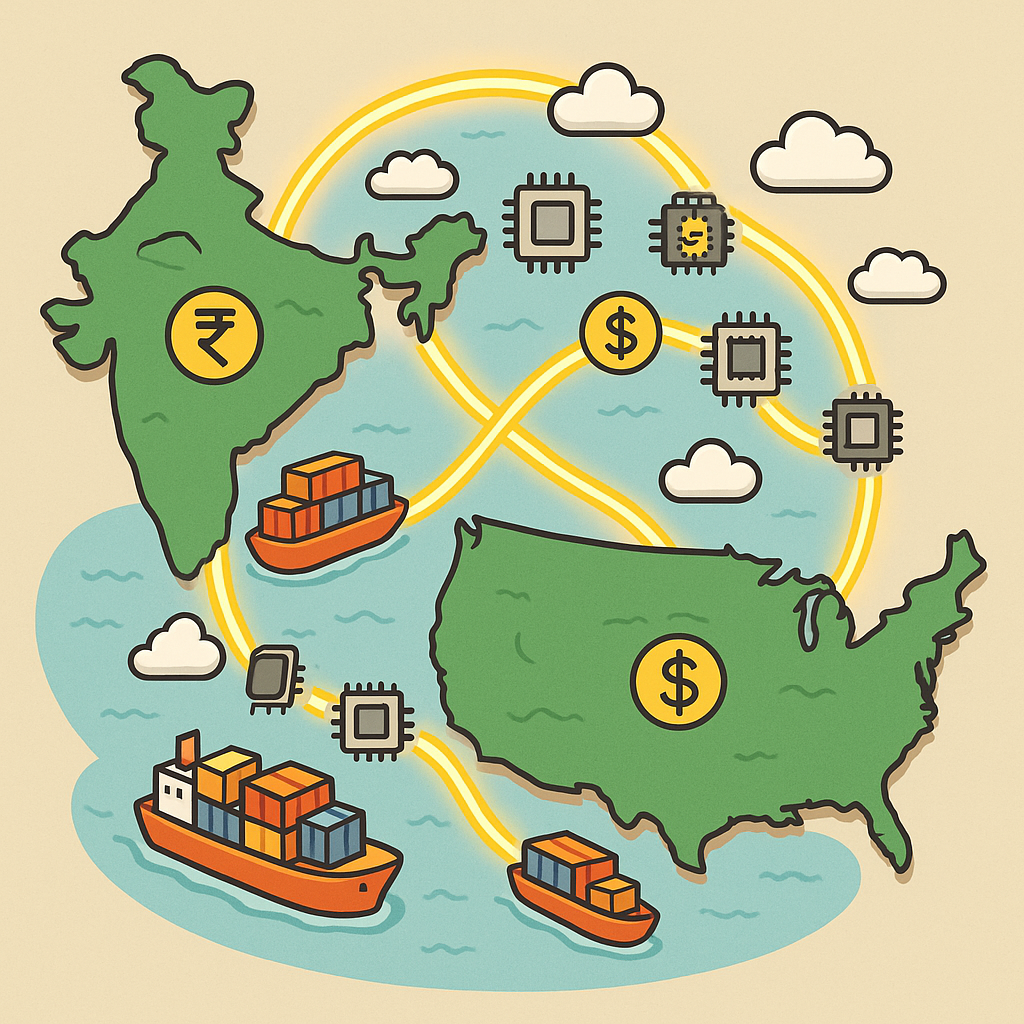
A leaked draft of the “Digital Trade & Emerging Technology” chapter – which definitely doesn’t exist, according to three officials who have read every page – is rumored to contain:
- A joint working group on AI safety that will meet quarterly and produce annual reports no one will finish.
- A framework for “trusted 5G and 6G ecosystems,” which is code for “still not Huawei, thanks.”
- Guidelines on cross-border data flows that say, essentially: data should be free, except when it shouldn’t, which both sides agree is deeply meaningful language.
- A paragraph about quantum computing that reads like it was written by ChatGPT on a low battery.
Technology firms across India are particularly fixated on data localization. New Delhi wants more control over where Indian citizens’ data lives; Washington wants that data parked in hyperscale campuses owned by Amazon Web Services, Microsoft Azure, and Google Cloud, preferably in states with favorable tax credits and terrible weather. Both sides insist this is about “innovation,” a diplomatic euphemism for “who bills the storage fees.”
“This trade deal is a unique opportunity to shape the rules of the digital economy,” one anonymous negotiator said, while clearly scrolling LinkedIn on another tab. “We’re exploring balanced outcomes on e-commerce, source code disclosure, and platform regulation.” Translation: India wants the right to regulate Big Tech like it regulates telecom, and the US wants the right to call that ‘discriminatory’ in a 480-page annex.
The US, for its part, is quietly hoping to use the trade deal to promote its favorite export: intellectual property anxiety. The proposed provisions around copyright, patents, and software licensing could mean Indian startups spend more time talking to lawyers than writing code. Expect stronger enforcement mechanisms, more takedown notices, and at least one tragicomic scandal where a unicorn discovers it accidentally used GPL code in its core banking product.
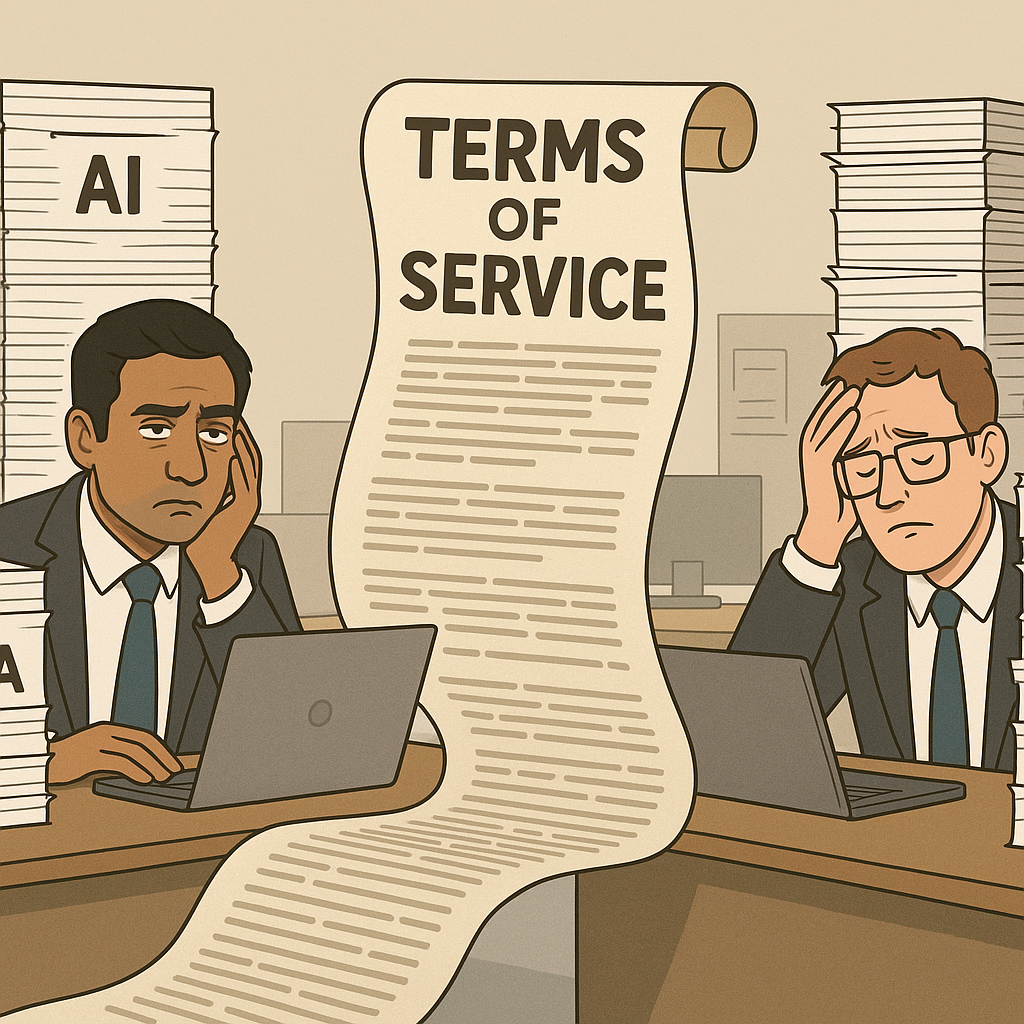
Still, Indian tech CEOs are cautiously optimistic. The US remains India’s biggest market for IT services, SaaS products, and “AI-powered workflow optimization platforms” that are basically Excel with better branding. A more predictable trade framework could reduce visa drama, stabilize export rules, and let companies shift from “Will H-1B policy ruin our quarter?” to the more normal concern of “Will our burn rate ruin our quarter?”
On the American side, Silicon Valley is salivating at the prospect of selling more cloud, AI APIs, and fintech rails into India’s vast market – especially as the UPI system makes American card networks look like dial-up modems. Lobbyists are reportedly pushing for clauses that protect “open digital payment ecosystems,” a phrase that here means: please don’t forget Visa and Mastercard exist.
The defense and semiconductor angles are where the trade deal quietly turns into a geopolitical tech thriller. After the CHIPS Act theatrics back home, the US is eager to enlist India as a friendly node in the non-China supply chain for chips, electronics manufacturing, and possibly assembling that VR headset nobody really wanted. Indian officials, referencing the Hindustan Times discussion of strategic leverage, see a chance to parlay market size into actual transfer of manufacturing know-how, not just PowerPoint slides about it.
As usual, the thorniest fights are being disguised as technical committees:
- AI & algorithms: India wants greater transparency around how American platforms rank content and ads. The US counters that algorithms are trade secrets, and also that nobody actually understands how they work anymore.
- Content moderation: American firms fear becoming the enforcement arm of every local takedown request; India quietly enjoys the leverage that comes from controlling what trends in Hindi.
- Taxation of digital giants: Delhi wants more revenue from platforms monetizing Indian users. Washington prefers the current model where profits are generated in India and then spiritually reincarnated in Delaware.
For Indian consumers, the immediate impact of the trade deal will likely be subtle: more streaming platforms bidding on cricket, more American AI products pitched as “Bharat-first,” and slightly longer terms of service they won’t read. In the background, network infrastructure, chips, and cloud rules will quietly decide whether the next generation of Indian unicorns build on open standards or on one proprietary American API that gets shut down three years later.
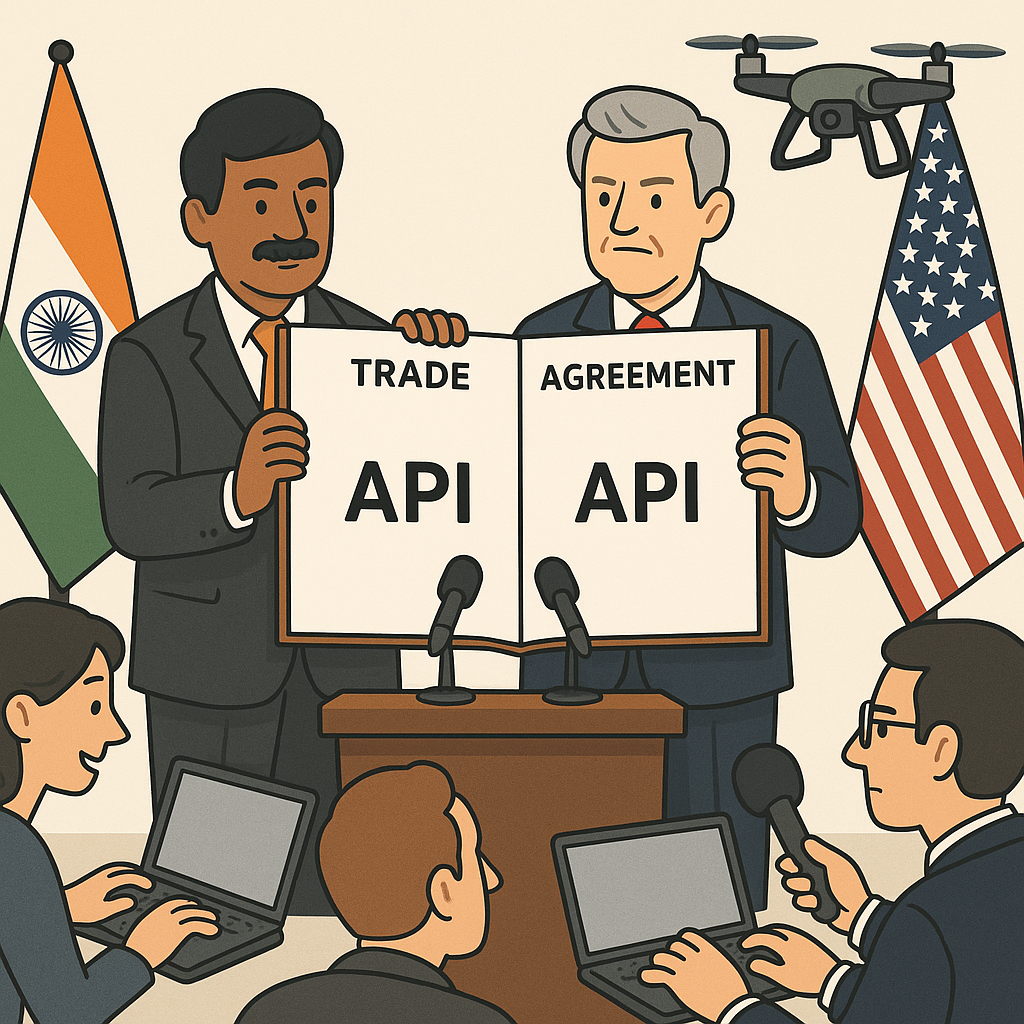
In the end, the US–India trade deal is less about tariffs on almonds and more about who writes the fine print of the digital economy: from how an Indian fintech in Mumbai can use US cloud GPUs, to what happens when a Bangalore startup processes American health data, to whether your WhatsApp backup is legally “in India” if it lives on a server whose legal domicile is “complicated.” Both sides claim they are defending sovereignty, security, and innovation. Both sides are definitely defending recurring revenue.
Negotiators insist an agreement is “within reach,” a phrase they’ve repeated for so many years it may now qualify as a legacy system. When the final text is eventually announced in a joint press conference with suspiciously synchronized talking points, India can indeed expect a few things from the US trade deal:
- A photo-op in which no one says the word “China,” but everyone silently thinks it.
- A new acronym-heavy digital chapter that lawyers will bill by the hour to interpret.
- And a fresh reminder that in 2026, trade is just geopolitics conducted via API documentation.
Everything else, as always, will be in the annex.