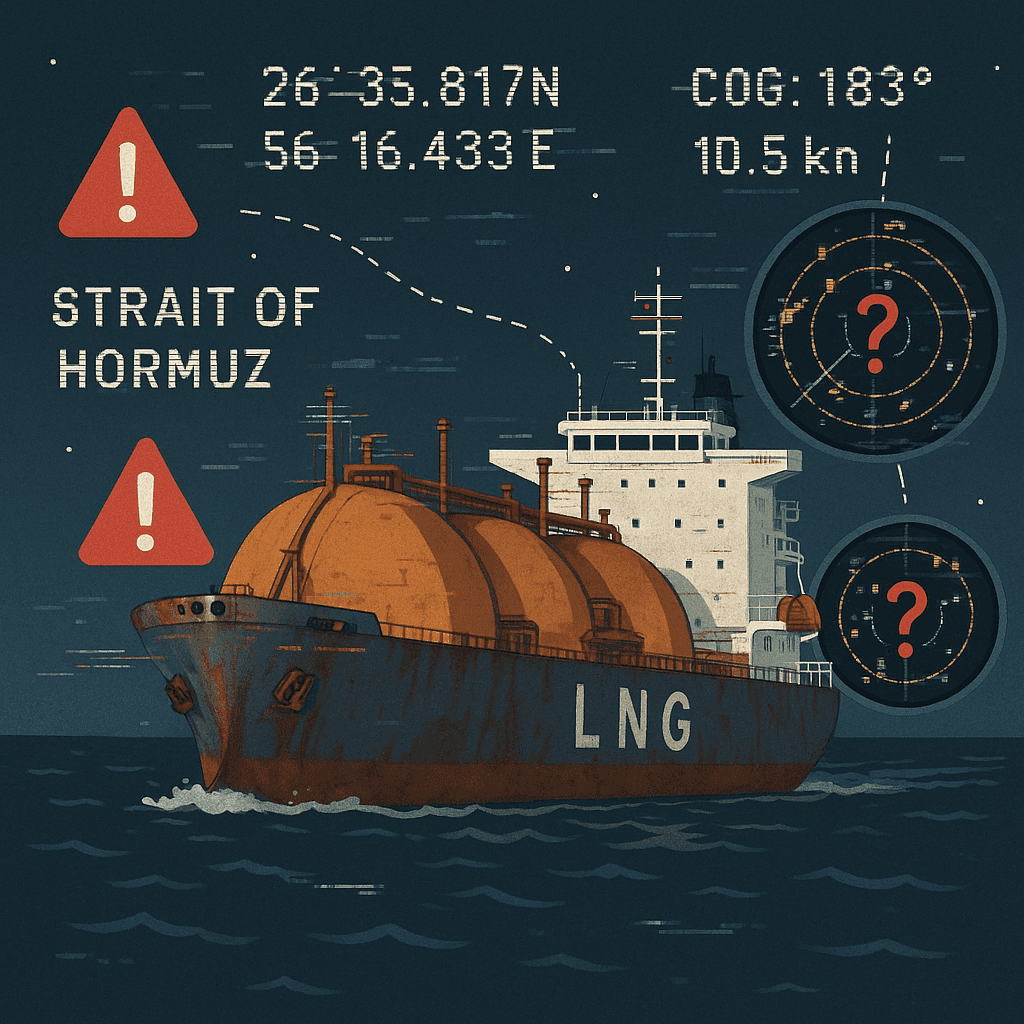
Maritime analysts have long warned that automation would disrupt shipping. Few, however, expected the first true breakthrough in autonomous vessels to be a "zombie ship" brazenly posing as an LNG carrier while drifting through the Strait of Hormuz like a haunted Roomba full of pressurized fossil fuels.
The vessel in question, flagged in reports as an apparent liquefied natural gas carrier, was spotted conducting what the The Straits Times politely called an "unusual" transit of the Strait of Hormuz (Straitstimes, Mar 2026). Translation: the ship’s paperwork said one thing, its transponder said another, satellite imagery said "absolutely not," and every naval officer in the region said, "Please tell me that’s not full of methane."
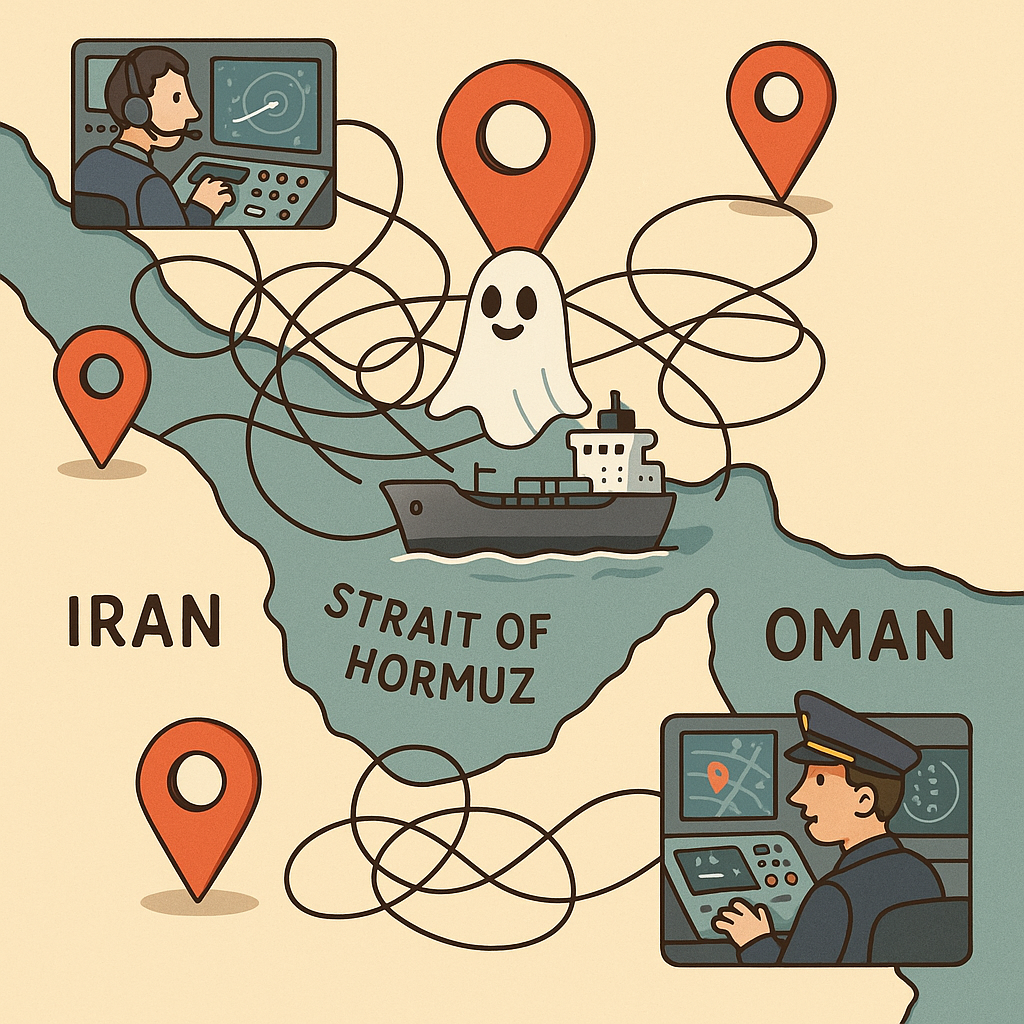
For those blissfully unfamiliar with the concept, a "zombie ship" is a vessel that should, by all human paperwork and some United Nations databases, be decommissioned, scrapped, sanctioned, or simply mothballed — yet somehow continues to roam the high seas like a floating LinkedIn profile that forgot how to log off. In this case, the alleged LNG carrier appears to be a masterclass in maritime identity theft, spoofing its Automatic Identification System (AIS) data to masquerade as a legitimate tanker while probably smuggling something both flammable and geopolitically awkward.
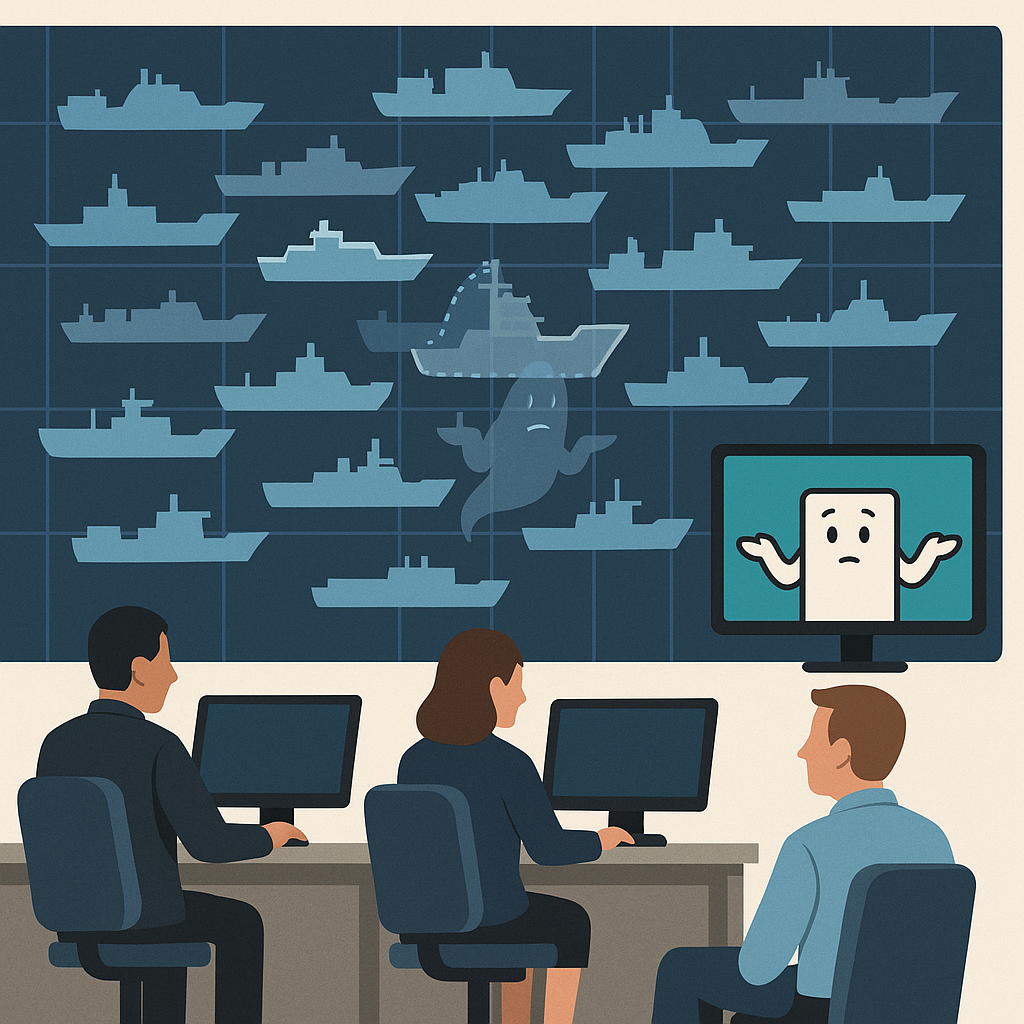
The Strait of Hormuz, the narrow chokepoint between Iran and Oman through which roughly 20% of the world’s oil transits, was already a favorite setting for naval dramas, drone sightings, and the occasional overexcited patrol boat. Now it has something new: a fully digitized ghost ship that makes U.S. Fifth Fleet analysts stare at their screens like overworked content moderators, trying to decide which part of the data is real and which is just deepfake diesel.
"We’re pretty sure it’s a ship," one anonymous maritime security analyst allegedly said in a group chat screenshot that is definitely not FOIA-ready. "Beyond that, it’s 40% AIS data, 30% satellite pixels, 20% sanctions history, and 10% pure vibes."
The core problem is that the modern shipping ecosystem runs on a tech stack that could charitably be described as "Excel plus ocean." The shipping registries in Panama, Liberia, and the Marshall Islands maintain records that interface with classification societies, port state controls, insurers, and various UN sanctions lists. Layered on top are commercial tracking platforms that ingest AIS pings, radar, and satellite imagery. It’s all very advanced until a single bad actor types the wrong IMO number into an old database, at which point the global system shrugs and says, "Yeah, sure, that’s probably an LNG carrier."
Enter the zombie ship, cloaked in a patchwork of recycled identities: a hull once owned by a shell company in the UAE, a call sign that previously belonged to a scrapped tanker in Greece, and a voyage plan that claims to be delivering liquefied natural gas to a port whose import terminal has not existed since 2014. It’s essentially the maritime version of a burner Instagram account that only follows crypto influencers and one extremely suspicious refueling barge.
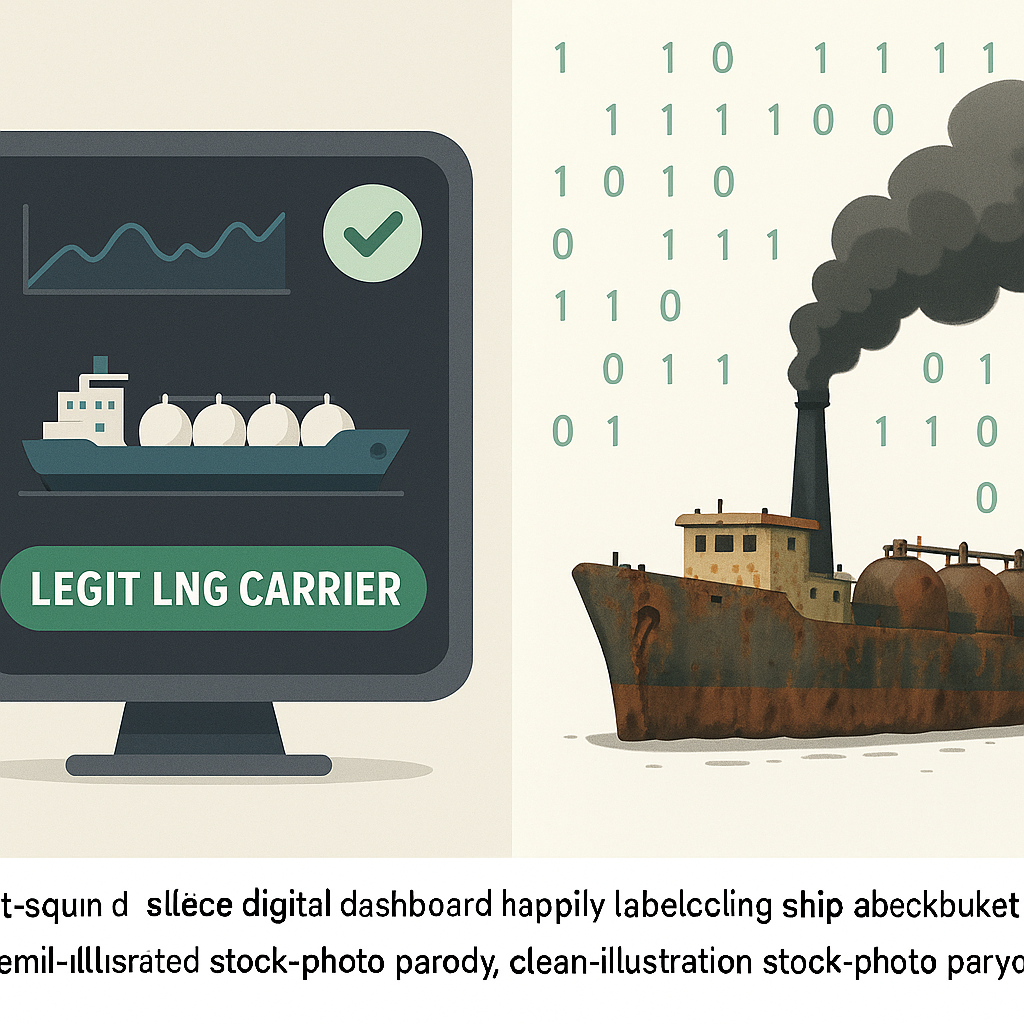
Maritime tech startups, smelling both danger and Series C funding, are already pitching AI-driven solutions. One Singapore-based firm proudly announced an "LNG anomaly detector" trained on years of satellite imagery, AIS logs, and open-source intelligence. It promises to spot suspicious ships using machine learning, computer vision, and the timeless heuristic of "why is that thing turning its transponder on and off like a teenager hiding Snapchat activity from their parents?"
"Our platform combines synthetic aperture radar, optical imagery, and behavior-based models to identify vessels that don’t act like real LNG carriers," the startup’s CEO said at a recent demo, while a slide behind him listed typical red flags:
- LNG tankers that loiter in sanctioned waters for weeks without clear destination
- Ships that routinely disappear from AIS near Iran and reappear near Oman slightly fatter
- Vessels that claim to be in dry dock while obviously casting a shadow on the Suez Canal
The zombie ship in Hormuz allegedly ticked all three.
Navies in the region, including those patrolling around the Strait of Hormuz, have quietly acknowledged that tracking these ghost vessels is now less a matter of radar and more a matter of data science. When AIS signals can be spoofed, GPS locations can be faked, and corporate ownership can be piped through five shell companies and a law firm in Cyprus, the line between a legitimate Qatar-bound LNG carrier and a sanctions-dodging Franken-ship is basically a Kaggle competition.
"We’re living in an era where you can deepfake a phone call from a CEO, so of course you can deepfake a boat," said a European security official whose job title is about three nouns longer than it needs to be. "The ship is real, the identity is fake, and the cargo is classified as ‘please don’t explode.’"
Tech platforms are not helping. Public vessel tracking sites show the supposed LNG carrier sailing serenely through Hormuz, occasionally teleporting a few nautical miles as its AIS signal hiccups. One minute it’s a fully compliant tanker heading to a respectable terminal. The next, its draft data changes mysteriously, it appears to reverse course without turning around, and then — for forty glorious minutes — it is somehow parked in downtown Muscat, according to at least one overconfident API.
Meanwhile, the insurance sector is trying to decide whether this is a real risk or just what spreadsheets consider "content." Underwriters in London are reportedly asking whether a ship that doesn’t officially exist can, in fact, file a claim. Lawyers are circling the question of liability: if a zombie ship collides with a real LNG carrier in the Strait of Hormuz, who gets blamed — the flag state, the beneficial owner, or the underpaid DevOps engineer who forgot to validate AIS inputs?
Behind the farce lies an obvious geopolitical subplot. The waters around Iran and the Gulf have become a sandbox for sanctions evasion, where oil tankers conduct ship-to-ship transfers at midnight while pretending to be harmless cargo vessels heading for places like Basra or Fujairah. A zombie ship styled as an LNG carrier is just the logical next step: if everyone is watching crude, disguise yourself as gas. It’s camouflage by commodity.
The Strait of Hormuz incident shows how brittle our tech-mediated picture of the ocean really is. We built a gigantic global monitoring network and then staffed it with wonky spreadsheets, lax data validation, and a bunch of third-party APIs running on servers that still answer pings on TLS 1.0. Into this strolls a mystery tanker, merrily gaslighting the combined maritime situational awareness of half the planet.
In the end, the most unsettling part isn’t that a zombie ship posing as an LNG carrier appears to have crossed one of the world’s most strategically sensitive waterways under the nose of every major navy. It’s that the system was built to tolerate exactly this kind of nonsense. If the data looks mostly fine, if the paperwork loosely matches, and if the AI confidence score is above 0.73, the global maritime machine shrugs and waves it through. The Strait of Hormuz, once a crucible of hard power, is now at the mercy of soft validation.
Somewhere out there, as you read this, an old tanker with a forged identity is drifting between Iran and Oman, its AIS signal assuring the world it is a respectable LNG carrier on legitimate business. The satellites see a different story. The databases wobble. The navies squint. And the ship’s owners quietly congratulate themselves for discovering the ultimate maritime technology: being just believable enough to pass.
Global shipping’s future, it seems, will not be dominated by sleek autonomous vessels or blockchain bills of lading. It will be haunted by zombie ships that live forever in the gaps between sensors, spreadsheets, and sanctions lists — ghosting everyone from the Strait of Hormuz to your favorite vessel-tracking app, one spoofed AIS ping at a time.